
Updated
Distance
144 km
Duration
approximately 4h 5min
Max altitude
2,253 m
Tunnels
55
Bridges
196
Gauge
1000mm
A 144-km (89-mile) panoramic train across UNESCO World Heritage alpine landscapes from Chur, Switzerland to Tirano, Italy over 196 bridges and through 55 tunnels.
Watch this route live
A railway webcam covers this route — see what is running right now.
- Watch live
Filisur — Station Platforms from the Hotel Grischuna
Filisur station's forecourt and platform edge on the Rhaetian Railway, seen from the Hotel Grischuna
About This Journey
A single panoramic train, two UNESCO railways.
The Bernina Express is operated by the Rhätische Bahn (RhB) and runs on two combined lines: the Albula Line from Chur to St. Moritz, completed in 1904, and the Bernina Line from St. Moritz to Tirano, built between 1908 and 1910. Both were jointly inscribed on the UNESCO World Heritage List on 7 July 2008 under the name Rhaetian Railway in the Albula / Bernina Landscapes. The complete route is 144 km (89 miles) long, crosses 196 bridges and 55 tunnels, and takes approximately 4 hours end-to-end.
Geography: Three climate zones in one morning.
From Chur at 585 metres (1,919 ft), the train follows the Posterior Rhine south to Thusis, then climbs the Albula Valley through spiral tunnels and viaducts to Filisur, where it crosses the famous Landwasser Viaduct. After Samedan it reaches St. Moritz at 1,775 metres (5,823 ft), then heads south via Pontresina and Morteratsch to the summit at Ospizio Bernina (2,253 metres / 7,392 ft), the highest adhesion railway point in Europe. From there it drops almost 1,800 metres (5,900 ft) in altitude to Tirano at 429 metres (1,408 ft) — moving through glaciers, high pastures, Italian-speaking Val Poschiavo, and finally the vineyards and palm trees of the Valtellina.
Engineering: a 1,000 mm metre-gauge spectacle.
The line is single-track, metre-gauge (1,000 mm), and electrified at 1,000 V DC on the Bernina section and 11 kV 16⅔ Hz AC on the Albula section — which is why the RhB trainsets used on the Bernina Express are dual-voltage. Because the Bernina climbs unassisted, with gradients of up to 7%, it ranks among the steepest adhesion railways in the world, a record the line has held since 1910.
The panoramic experience.
The Bernina Express uses dedicated coaches with enlarged windows extending into the roof and a multi-language audio guide (English, German, French, Italian, Chinese, Japanese). Seat reservations are mandatory on these coaches. The same infrastructure is served year-round by regular red Rhätische Bahn regional trains, which are slower, make more stops, and do not require reservations — a budget alternative for visitors with a Swiss Travel Pass.
Why This Journey Is Iconic
UNESCO-inscribed and record-setting.
The Bernina Express is the only scenic train in the world whose entire infrastructure is a UNESCO World Heritage Site, inscribed in 2008 for its exemplary early-20th-century engineering that opened the Central Alps to year-round settlement. No other railway combines such a vertical drop — 1,824 metres (5,984 ft) between Ospizio Bernina and Tirano — with views of a live glacier (Palü), a high-altitude reservoir (Lago Bianco at the pass), palm trees in Tirano, and an Italian-speaking Swiss valley all in a single 4-hour ride.
A bucket-list engineering landmark.
Two structures on the route are recognised civil-engineering icons in their own right. The Landwasser Viaduct, a 136-metre (446 ft) long, 65-metre (213 ft) high six-arched curved limestone bridge built in 1901–1902 by Alexander Acatos, plunges directly into a tunnel carved into a cliff face. The Brusio spiral viaduct, opened on 1 July 1908, is a nine-arched 360° stone spiral that lets the line drop 20 metres (66 ft) in altitude without exceeding its 7% gradient limit.
What to Expect
Panoramic coaches with sealed windows and a minibar trolley.
Bernina Express carriages have large panoramic windows that extend into the roof, providing glare-reduced sightlines in all directions. The windows do not open, but each carriage has a small opening window in the luggage vestibule at the opposite end of the entrance door — this is the go-to spot for reflection-free photographs. There is no restaurant car; instead a movable minibar trolley serves snacks, sandwiches, Graubünden cheese plates, Swiss pastries, wine, beer and hot drinks throughout the journey.
Multi-language audio guide and bilingual crossings.
Each seat has an audio guide available in English, German, French, Italian, Chinese and Japanese that narrates the stations, engineering highlights and landscape as the train moves. Announcements and signage shift from German and Romansh on the Swiss side to Italian as the train enters Val Poschiavo.
Seats, atmosphere and duration.
The full Chur–Tirano run takes around 4 hours with 13 scheduled stops; the shorter St. Moritz–Tirano segment takes approximately 2h 15min. Seats are assigned at booking. The train is almost always full during summer high season, and because the most dramatic viewpoints — Landwasser, Alp Grüm and Brusio — come up quickly, most passengers keep their cameras out for the entire ride.
History
Two railways, two eras, one World Heritage Site.
The Albula line, from Thusis to St. Moritz, was begun in September 1898 and opened in two stages: the main section to Celerina on 1 July 1903 and the final extension to St. Moritz on 10 July 1904. Its northern extension down to Chur had been built earlier by the Landquart–Davos Railway. The Bernina line, from St. Moritz to Tirano, received its concession in 1906 and was built between 1908 and 1910 by the Bernina-Bahngesellschaft (BB) — financed privately by the hydro-electric firm Kraftwerke Brusio AG without cantonal subsidy. The first sections opened on 1 July 1908 between Pontresina and Morteratsch and between Tirano and Poschiavo; service to the summit at Ospizio Bernina began in 1910.
Absorption into the Rhätische Bahn.
The Bernina line was operated independently until 1944, when the Rhätische Bahn absorbed the bankrupt BB and took over operations. The Bernina Express itself, as a branded panoramic service combining both lines end-to-end, has run since 1973.
UNESCO inscription.
The combined Albula and Bernina lines were added to the UNESCO World Heritage List on 7 July 2008 as Rhaetian Railway in the Albula / Bernina Landscapes. The citation specifically recognised the 67-km Albula line (with 42 tunnels and 144 viaducts and bridges) and the 61-km Bernina line (with 13 tunnels and 52 viaducts and bridges) as an outstanding technical, architectural and environmental ensemble that enabled year-round life in the Central Alps.
Engineering Highlights
Landwasser Viaduct — the signature image.
Completed in 1902 to designs by Alexander Acatos, the Landwasser Viaduct is a six-arched curved limestone bridge 136 metres (446 ft) long and 65 metres (213 ft) high, built on a tight radius so that its southeastern abutment connects directly to the mouth of the Landwasser Tunnel. The stone was quarried locally and the piers were built without cofferdams using an innovative scaffolding system.
Brusio circular viaduct — the workaround for gravity.
Opened on 1 July 1908, the Brusio spiral viaduct is a single-track nine-arched stone bridge 110 metres (361 ft) long that forms a complete 360° loop with a horizontal radius of curvature of only 70 metres (230 ft). Its purpose is purely geometric: it lets the Bernina line descend approximately 20 metres (66 ft) in altitude while keeping the gradient within the 7% design maximum.
Gradient, gauge and altitude.
The Bernina section uses 1,000 mm (metre) gauge and climbs purely by adhesion — no rack, no gears — across gradients that reach 7% (70‰), making it one of the steepest non-cogged public railways in the world. The summit at Ospizio Bernina (2,253 m / 7,392 ft) is the highest point on any adhesion railway crossing in Europe. Electrification on the Bernina section uses an unusual 1,000 V DC overhead system (upgraded from 750 V DC in 1935), while the Albula section runs on standard RhB 11 kV 16⅔ Hz AC — so Bernina Express multiple units are dual-voltage.
Best Time to Travel
Late May through early October: glaciers plus colour.
The most spectacular window is June through September, when the Palü Glacier is fully visible from Alp Grüm, alpine meadows are in bloom, and Italian Valtellina vineyards are green. July and August are peak and panoramic seats can sell out 2–3 weeks ahead; book as early as possible if travelling then.
Shoulder seasons: fewer crowds, sharper light.
Late May and early October give you the summer high-season schedule (two daily Chur–Tirano services), dramatically lower crowds and often crisp, low-angle light that is ideal for photography. Autumn adds yellow larch forests on the Swiss side.
Winter: snow but fewer departures.
From 14 December 2025 to 1 May 2026 and again from 26 October to 12 December 2026, the winter timetable applies with only one daily Chur–Tirano service in each direction. Snow-covered Landwasser, Lago Bianco and Alp Grüm are breathtaking but daylight is short and the connecting Tirano–Lugano bus does not run (the bus operates daily 23 March–25 October 2026).
Practical Tips
Book the window seat, and book early.
Seat reservations are mandatory on Bernina Express panoramic coaches; they are not optional even with a rail pass. Reserve 2–8 weeks ahead for summer, further if your dates are fixed. When booking, request a window seat; the route is bidirectional and the dramatic views alternate sides, so any window works. Regular RhB red trains on the same line do not require reservations and are a cheaper fallback if panoramic seats are sold out.
Bring hand luggage only, or plan for the rack.
Large suitcases go on dedicated end-of-car racks and may be several rows from your seat; bring a small cabin bag with valuables, water, snacks, and a lens cloth. There is a minibar trolley on board but no restaurant car.
Photography: aim for the open window in the vestibule.
Panoramic windows are sealed. Each carriage has one small opening window in the luggage vestibule at the far end from the entrance door — this is the only place to shoot without reflections. Key photo moments come up quickly: the Landwasser Viaduct is a single turn of the camera; Alp Grüm's Palü Glacier view lasts only a minute or two; the Brusio circular viaduct is best shot from the tail of the train as it loops.
Passports.
The train crosses the Swiss–Italian border between Campocologno and Tirano with only occasional checks, but always carry your passport or EU ID. Only cashless payments are accepted on board; snacks and drinks are served at your seat.
Traveling with Pets
Dogs welcome
Dogs are welcome. Small dogs up to 30 cm at the shoulder travel free in a transport box or hand-held basket; a larger dog needs one 2nd-class half-fare ticket per animal even if the owner travels 1st class, or a dog travelpass — CHF 25.00 for a day, CHF 60.00 monthly, CHF 350.00 annually, issued personally and non-transferable. Because the Bernina Express serves food at the seat and has no dining car, the catering-hygiene ban that blocks dogs on other RhB products does not apply. Bring the documents required to cross into Italy at Tirano, such as an EU pet passport. The operator does not state whether the dog needs its own seat reservation.
Verified — operator's pet policy
Route Stages
- km 49.71,000 m alt.Passes through — do not blink
Six-arched, 65-metre (213 ft) high, 136-metre (446 ft) long curved limestone railway viaduct, completed in 1902 to designs by Alexander Acatos. Its southeastern abutment disappears straight into the mouth of the Landwasser Tunnel.
Signature image of the Rhaetian Railway, built 1901–1902
- km 50.41,080 m alt.Brief stop
Junction station in the Albula Valley at 1,080 metres (3,540 ft) where the line from Davos meets the Albula line. The village is the closest base for hiking to the Landwasser Viaduct viewpoint.
Junction with the Davos branch and closest village to the Landwasser Viaduct viewpoint
- km 891,775 m alt.Brief stop
Terminus of the Albula line, inaugurated on 10 July 1904. The highest urban railway station in Switzerland at 1,775 metres (5,823 ft). On the Bernina Express, trains normally pass through via Samedan rather than reversing at St. Moritz, but the short-route variant Bernina Express starts here.
End of the Albula line, start of the Bernina line, highest urban station in Switzerland
- km 116.12,253 m alt.Brief stop
Highest point of the entire journey and the highest adhesion-railway crossing in Europe at 2,253 metres (7,392 ft). The station sits on the shore of Lago Bianco beside the Bernina Pass; the lake feeds south toward the Adriatic and its neighbour Lej Nair feeds north toward the Black Sea — a continental watershed.
Highest station on the RhB and on any European adhesion railway; Lago Bianco reservoir
- km 122.22,091 m alt.Brief stop
First station south of the Alpine watershed at 2,091 metres (6,860 ft), reachable only by the Bernina Railway or on foot. From the 180° curve just south of the station, travellers see the Palü Glacier, Lago Palü and the full length of Val Poschiavo.
Palü Glacier panorama and first view south into Italian-speaking Val Poschiavo
- km 147.3780 m alt.Passes through — keep camera ready
Nine-arched stone spiral viaduct 110 metres (361 ft) long with a horizontal radius of 70 metres (230 ft), opened on 1 July 1908. The 360° loop lets the line drop approximately 20 metres (66 ft) without exceeding its 7% gradient limit. Iconic photograph spot — best captured from the tail of the train.
360° stone spiral, opened 1 July 1908
- km 154.6429 m alt.Arrival
Southern terminus at 429 metres (1,408 ft) in Italy's Valtellina wine region. The Rhätische Bahn station sits on Piazza delle Stazioni opposite the Italian RFI station; the two are separated only by the square. Onward Trenord RegioExpress trains to Milano Centrale take around 2h 30min.
Terminus, connections to Milan via Trenord RegioExpress
Getting to Chur
By Air
**Chur (departure):** the nearest major airport is Zurich Airport (ZRH), approximately 130 km (81 miles) north. Direct SBB intercity trains run from Zurich Airport to Chur roughly every 30 minutes and take around 1h 15min; the Bernina Express departs from the same Chur station with a 2–3 minute platform change. **Tirano (arrival):** the nearest major airports are Milan Malpensa (MXP) and Milan Bergamo (BGY), both approximately 160 km (99 miles) southwest. Trenord RegioExpress RE8 trains connect Tirano with Milano Centrale in approximately 2h 30min, from which Malpensa and Linate are reachable by shuttle or metro.
By Train
**To Chur:** SBB intercity IR and IC trains connect Chur with Zurich HB every 30 minutes (1h 15min journey). From Chur, the Bernina Express departs from the main station, which is shared with SBB services — cross-platform interchange. **To Tirano (for the reverse direction):** Trenord RegioExpress RE8 trains connect Tirano with Milano Centrale via Sondrio, Lecco and Monza in approximately 2h 30min. The Italian and Swiss stations in Tirano are on opposite sides of the same square — it is a 2-minute walk between the two.
By Car
Driving to either terminus is straightforward, but most travellers leave the car at one end and return by train. Chur is reached from Zurich via the A3 and A13 motorways in approximately 1h 30min. Tirano is reached from Milan via the A4 and SS36 / SS38 in around 3 hours; the SS38 climbs through the Valtellina. If driving to Tirano from Switzerland, the parallel Bernina Pass road (SS29 / H29) is open in summer and follows the railway closely.
Parking
**Chur:** paid underground parking is available at *Parkhaus City West* and *Parkhaus Quader*, both within a 5–10 minute walk of the station. Station-adjacent surface parking is limited. **Tirano:** the RhB Tirano station has a small adjacent car park and there is public parking in the piazza between the Swiss and Italian stations; rates are typically 1.50–2.00 EUR/hour.
Where to Stay
Find places to stay near Tirano.
This lodging map is provided by Stay22, a third-party service that may set cookies. It loads only with your consent.
Accommodation results are provided by Stay22; we may earn a commission on bookings made through this map.
Videos
More videos
Photos
The mythical Bernina Express-Grisons-Switzerland
Bernina Express views
External Resources
Official resources
Tourism info
Heritage & history
Frequently Asked Questions
Do I need a seat reservation for the Bernina Express?▾
Can I open the windows for photographs?▾
Is there a restaurant car?▾
How long does the full journey take?▾
Is the Bernina Express operated year-round?▾
Do I need a passport to cross into Italy?▾
What is the best seat side for the views?▾
Can I use the Swiss Travel Pass on the Bernina Express?▾
Help improve this page
Spotted something out of date or incorrect? Let our community know.
Related on Spotatrain
Journeys Near This Route
More Journeys Worldwide
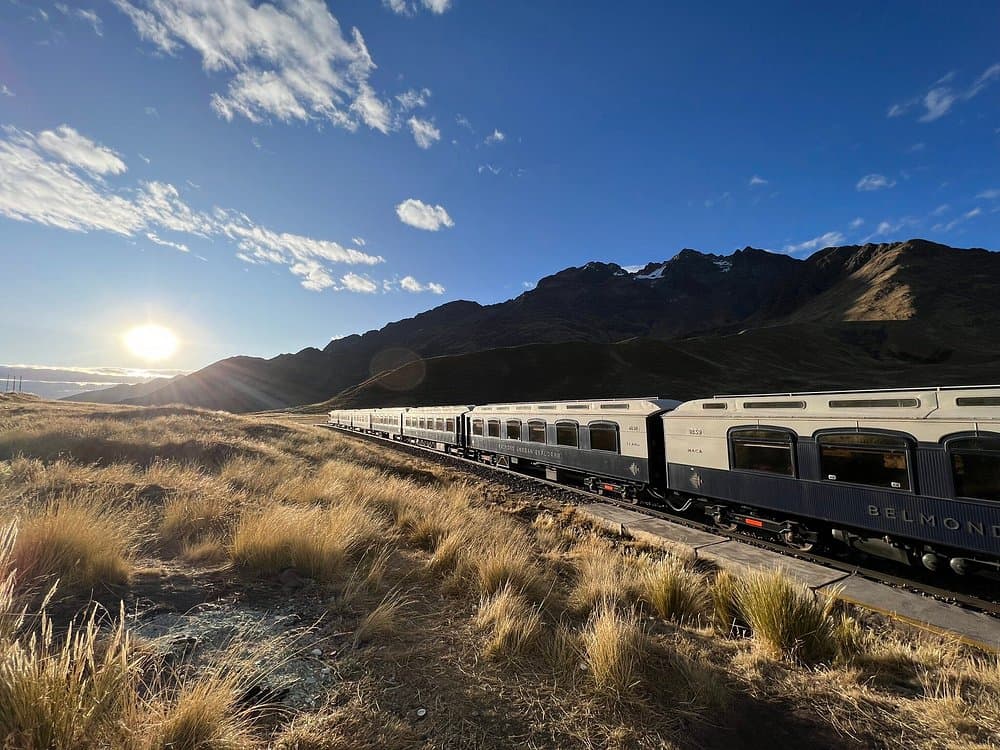
Belmond Andean Explorer
South America's first luxury sleeper train, across the roof of Peru
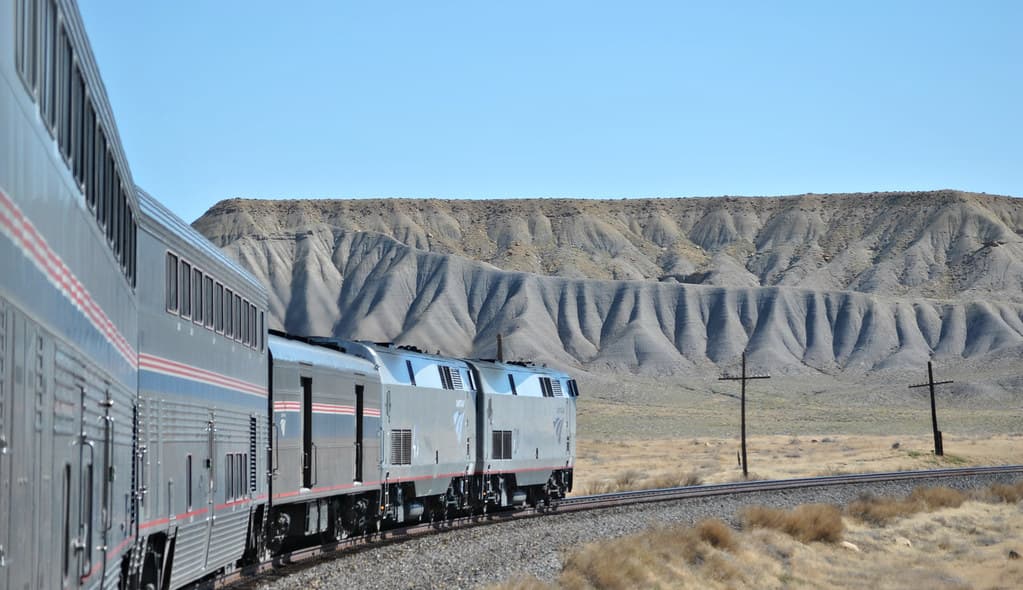

California Zephyr
Chicago to San Francisco across the Rockies and Sierra Nevada
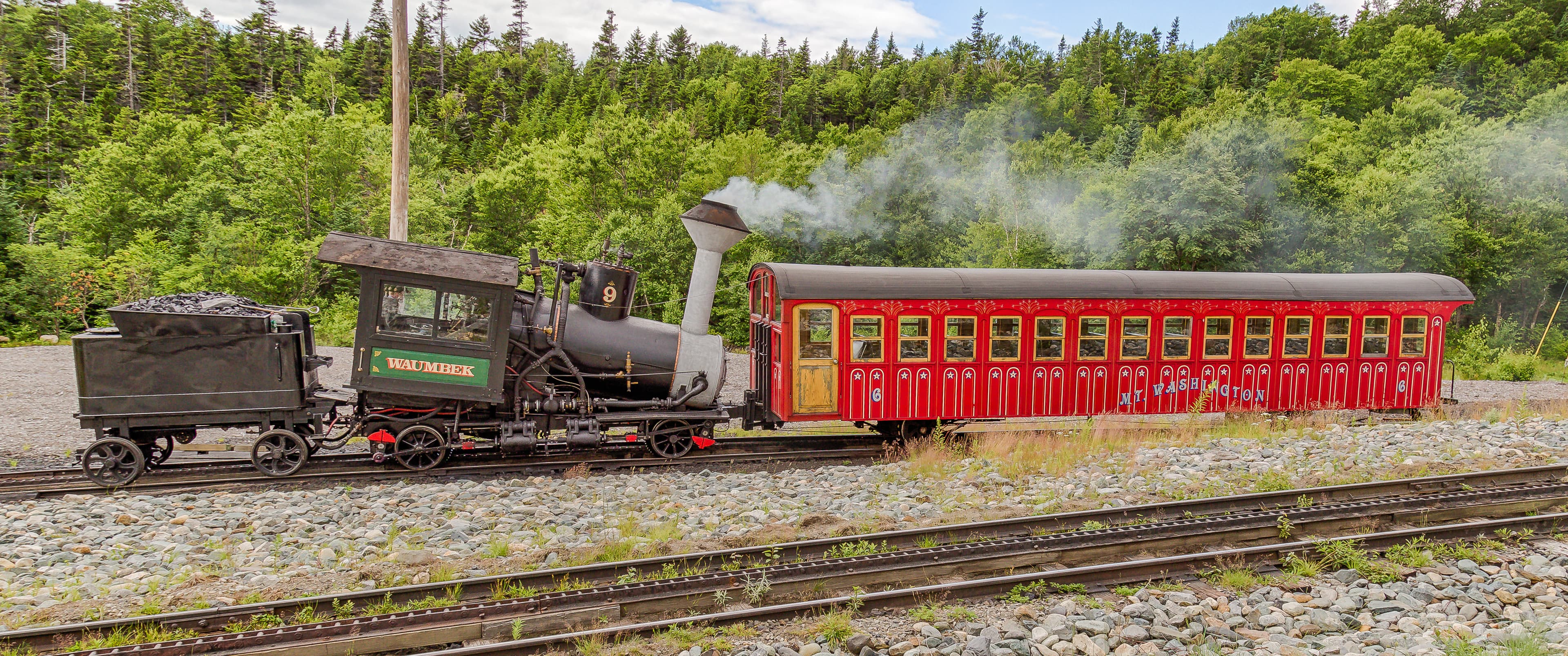
Mount Washington Cog Railway
World's first mountain-climbing cog railway — 1869, 37.41% grade, climbs to 6,288 ft
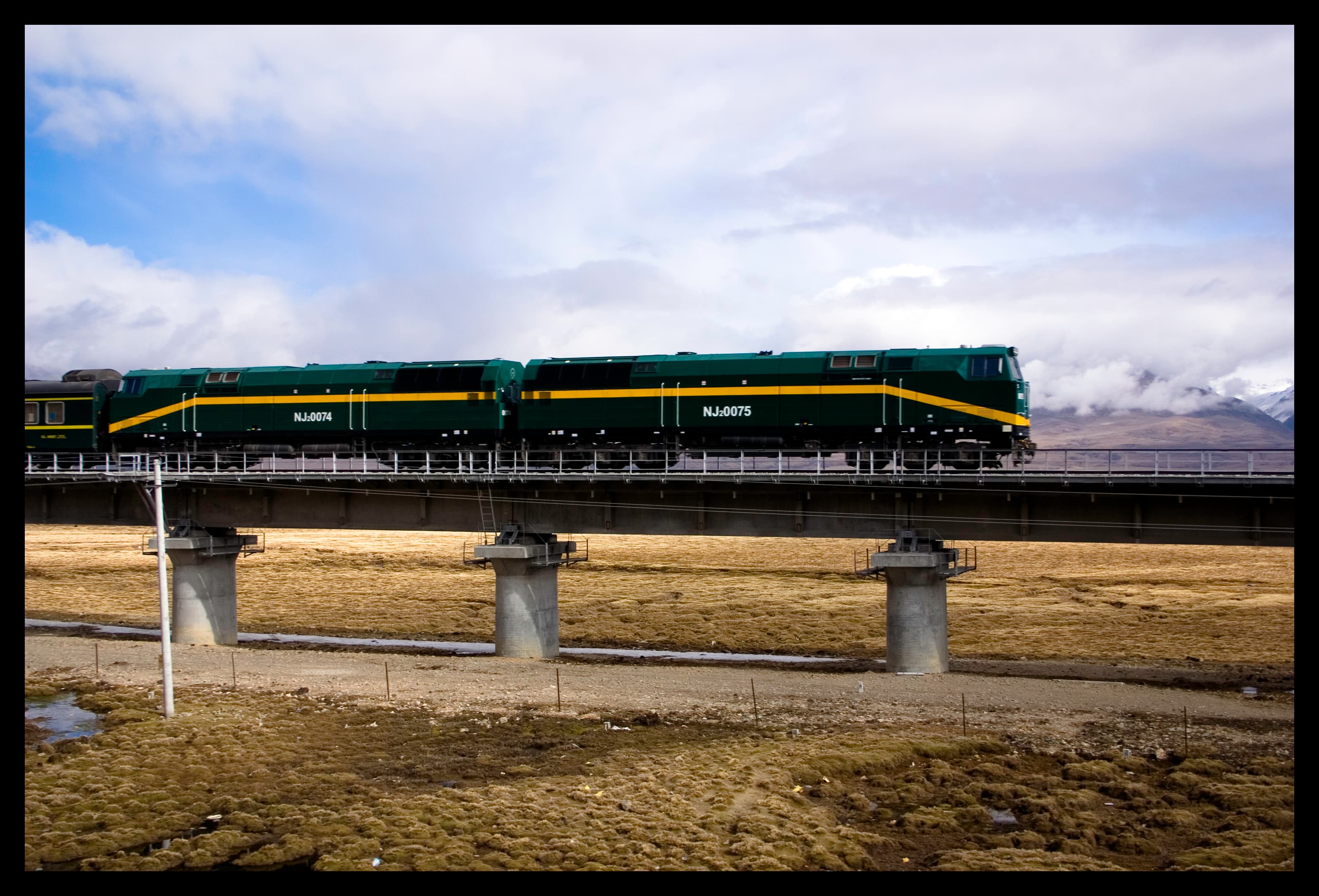
Qinghai-Tibet Railway
The world's highest railway, across the roof of the world to Lhasa

TranzAlpine
Coast to coast across the Southern Alps in a single morning

Tren a las Nubes
Argentina's rack-free climb to 4,220 m above the Puna
Spots Along the Route
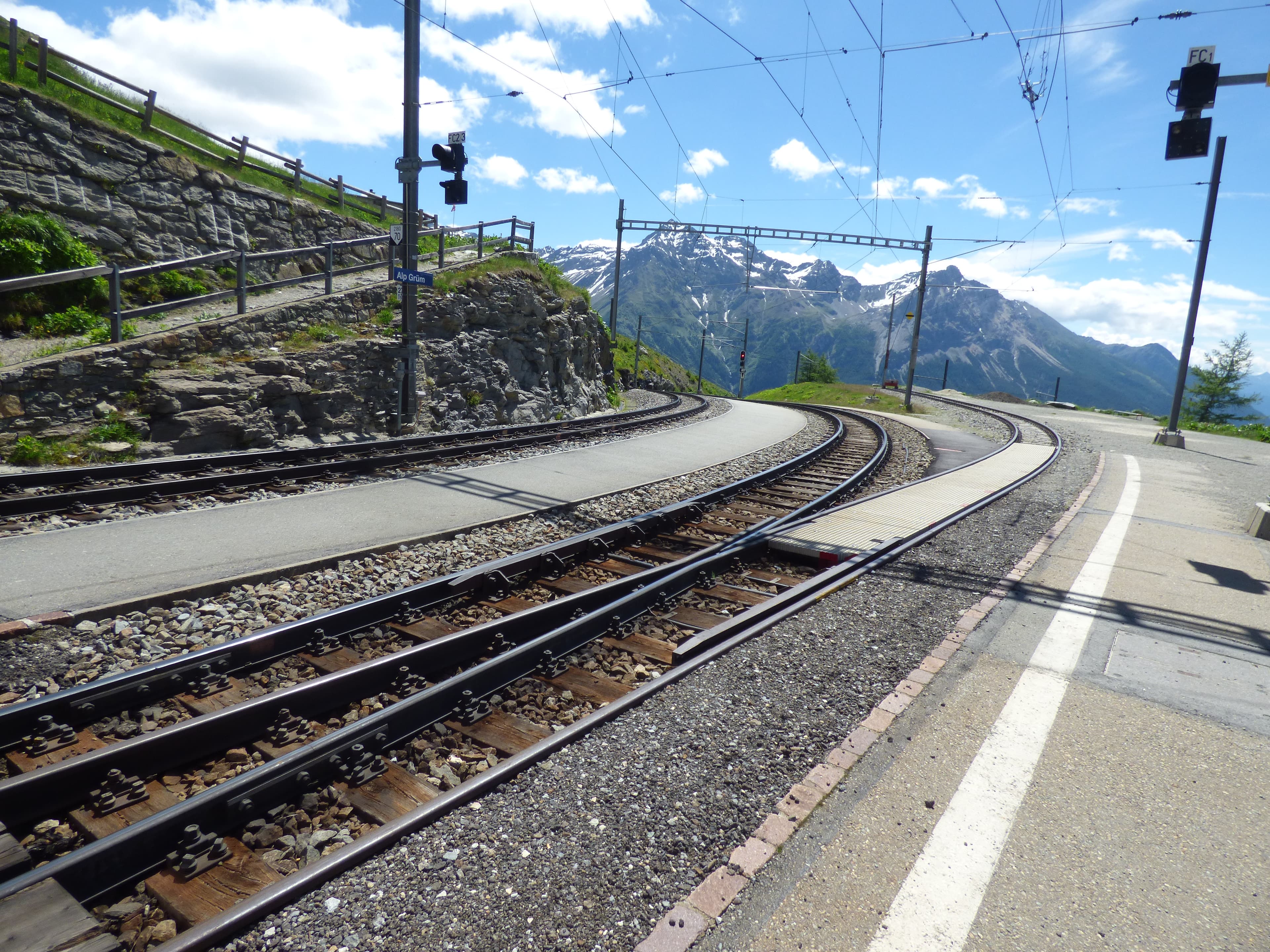
Alp Grüm
A Rhaetian Railway station at 2,091 m on the UNESCO-listed Bernina line, with no road access, where trains leave the platform through a 180-degree curve below the Palü Glacier.

Brusio Spiral Viaduct
A signposted viewpoint just south of the Brusio Spiral Viaduct in Switzerland, where the Rhaetian Railway's Bernina line turns a full circle on nine stone arches and passes over its own track.
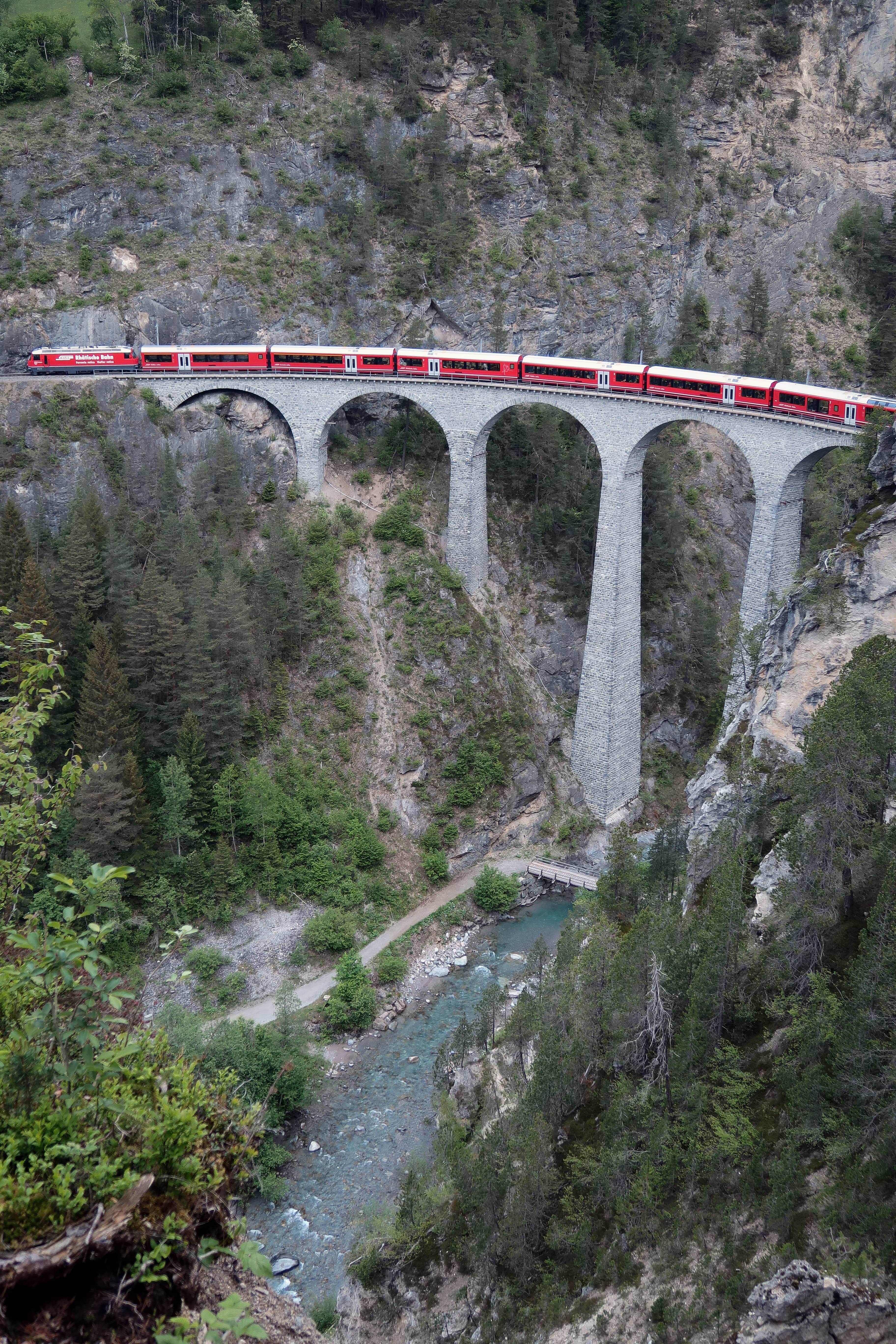
Landwasser Viaduct
Two free public viewing platforms, Acatos and Hennings, overlook the Rhaetian Railway's 65 m (213 ft) limestone Landwasser Viaduct on the Albula line near Filisur.
Related Experiences & Mega-Projects
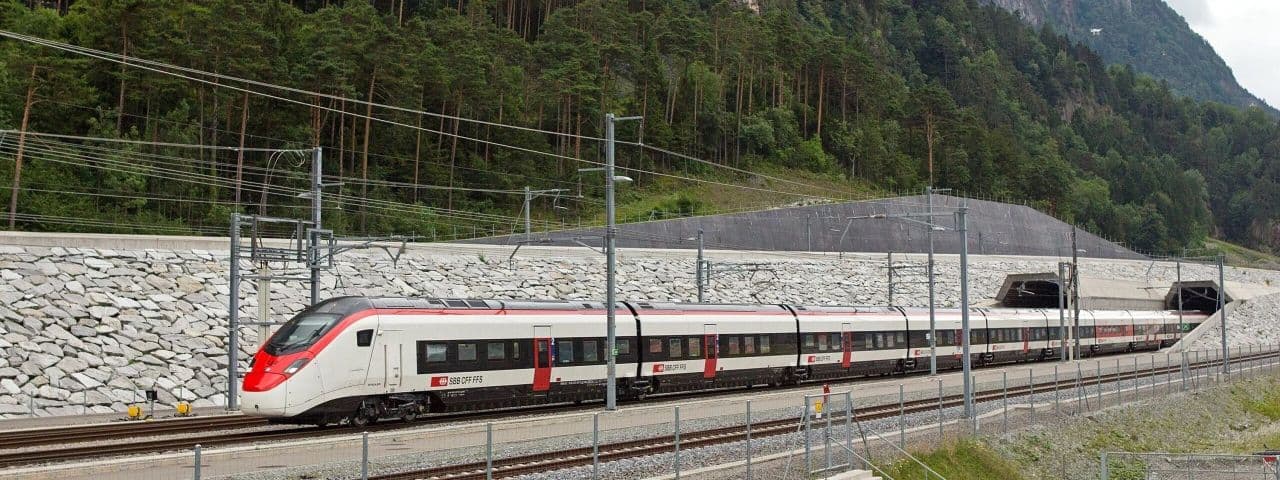
Gotthard Base Tunnel
The world's longest railway tunnel, slicing 57 km flat through the Swiss Alps.
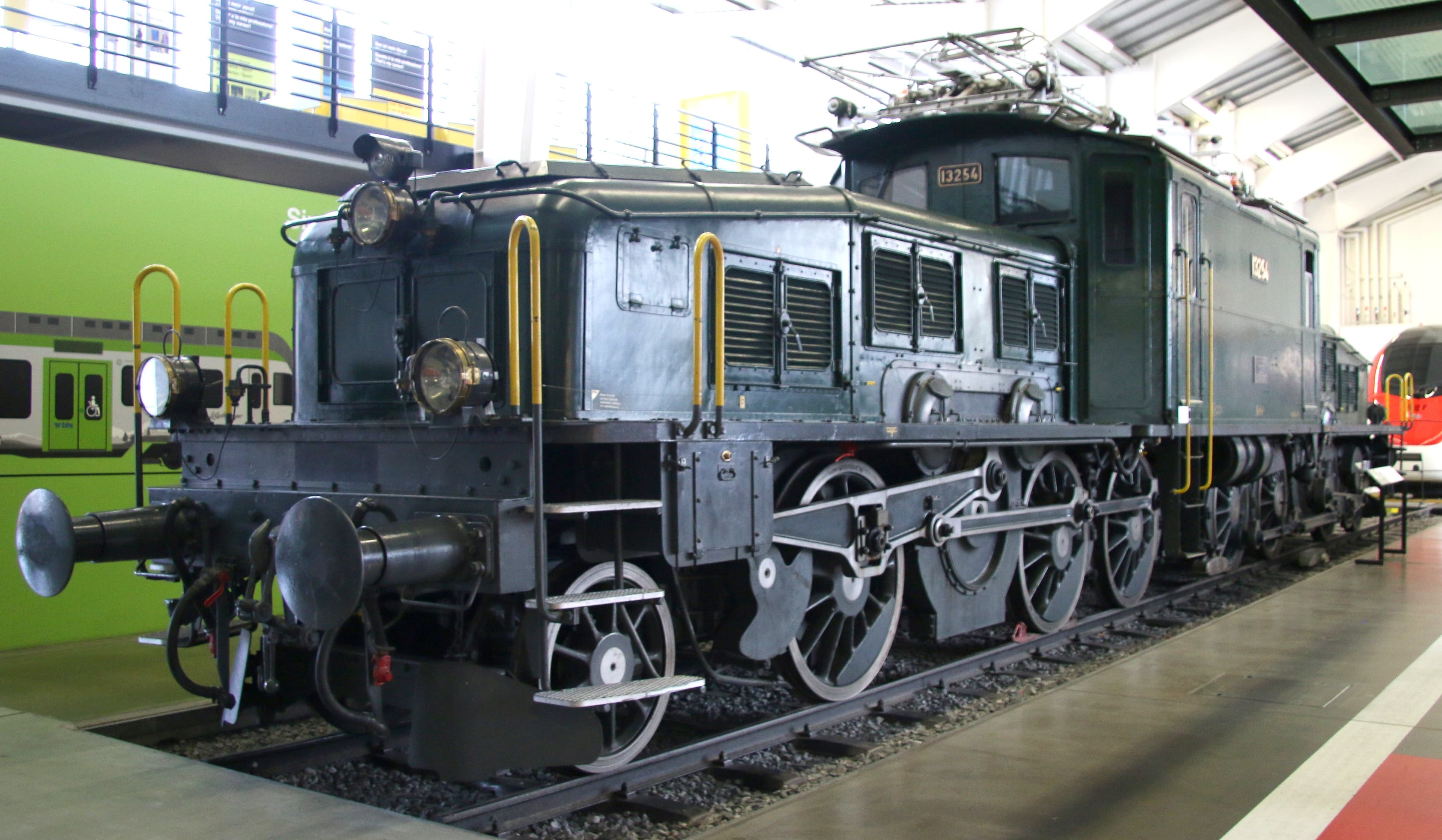
Swiss Museum of Transport
Switzerland's most-visited museum, with trains, planes, ships and the interactive Swiss Railway Experience on Lake Lucerne.
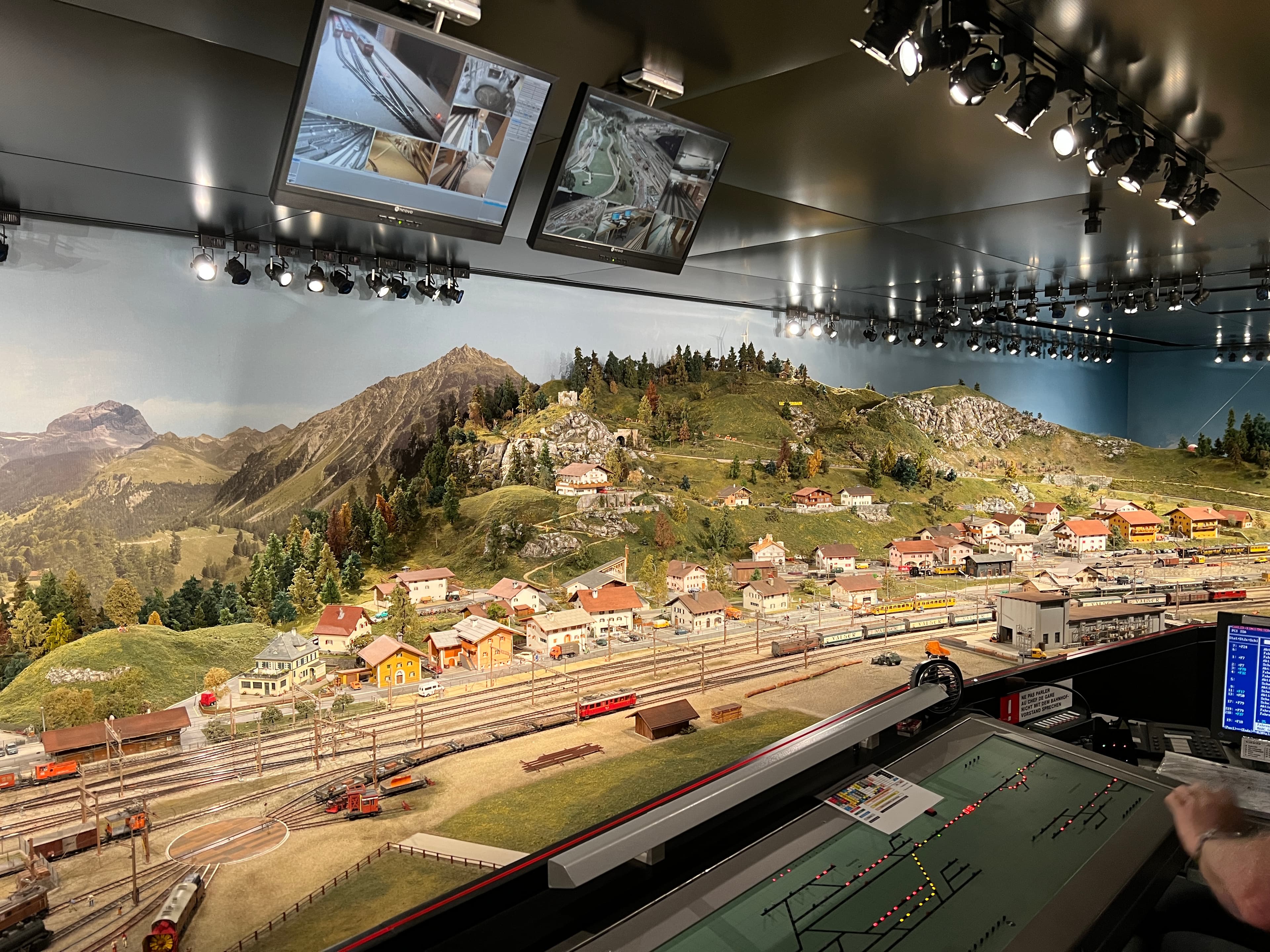
Chemins de fer du Kaeserberg
A 610 m² HO-scale model railway in Granges-Paccot recreating 1990s Switzerland over three levels.
Explore around this route
10 places on Spotatrain within 25 km of this route — 3 spots, 1 journey, 1 live cam and 5 events.
- Glacier Express 1 m
- Bernina Dampfschneeschleuder-Spektakel — Rhätische Bahn 2 m
- Engadiner Dampffahrt Scuol — Rhätische Bahn 4 m
- Engadiner Dampffahrt Zernez — Rhätische Bahn 4 m
- Alp Grüm 62 m
- Brusio Spiral Viaduct 98 m
- Filisur — Station Platforms from the Hotel Grischuna 122 m
- Landwasser Viaduct 184 m
- Samiklaus Express — Rhätische Bahn 13 km
- Reise ins Lichterland — Rhätische Bahn 13 km