
Rochelle Railroad Park
Illinois, United States
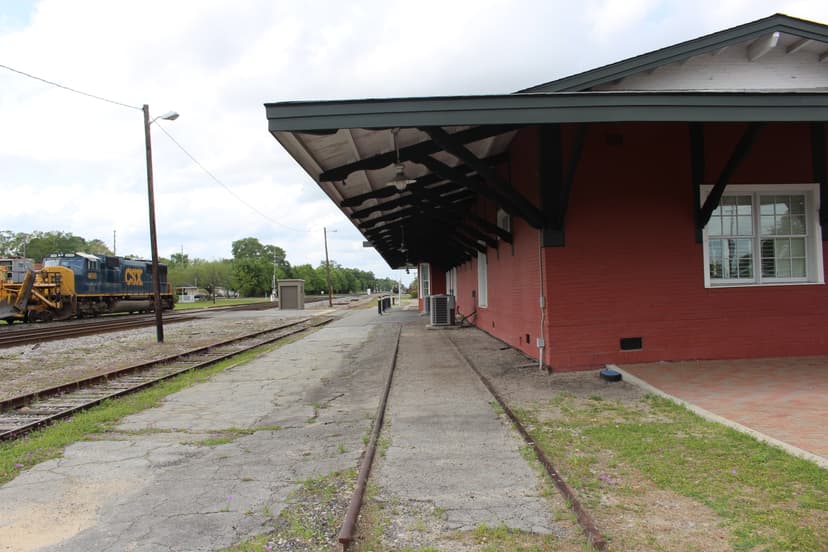
A city park at the point where BNSF and Union Pacific cross at grade.
Photo: David Wilson · CC BY
Railfan field guide
Where you can legally stand, what railroads and station operators allow, how to stay safe trackside and how to share a spot — by country, with the official sources.
Every rule on this page was read at its official source in September 2026. This is a guide, not legal advice.
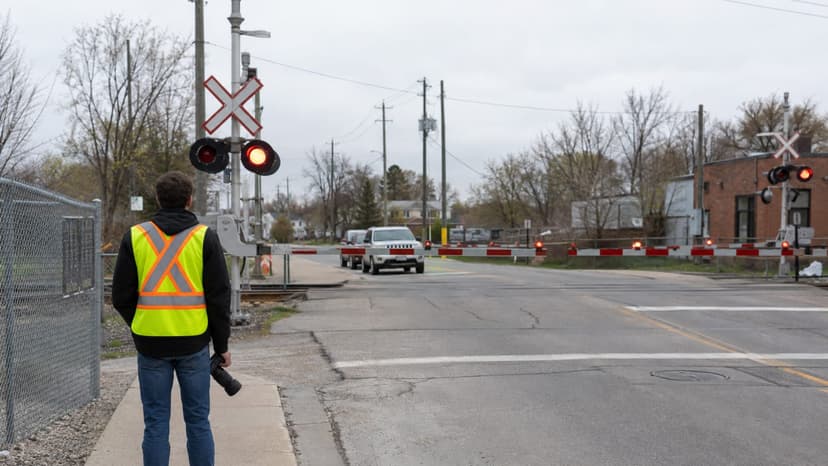
Yes — from public property. Watching and photographing trains from a sidewalk, a park, a public platform or a road overpass is legal in the United States, Canada and the United Kingdom. Three rules cover almost everything else:
The line between legal and illegal is a property line, not a distance. The Federal Railroad Administration puts it plainly: railroad right-of-way is private property, and it is illegal to access it anywhere except at a designated pedestrian or roadway crossing. Operation Lifesaver lists what that covers — tracks, trestles, yards and rights-of-way — and adds that walking on or beside railroad tracks is illegal.
The places that are open to you:
A worn path along the rails, a gap in a fence or a crowd of other photographers is not permission. If you cannot tell who owns the ground, assume the railroad does. Our scouting walkthrough shows how to check a location for public ground before you drive there.
Test yourself — can I stand here?
0 / 6 revealed
Illinois, United States
A city park at the point where BNSF and Union Pacific cross at grade.
Photo: David Wilson · CC BY
The principle is the same everywhere — railway land is off limits — but the law that says so, and the penalty, differ.
| Country | What the law says | Penalty, as published | Source |
|---|---|---|---|
| United States | Railroad right-of-way is private property; it is illegal to access it except at a designated pedestrian or roadway crossing. | Set by each state. The FRA names no federal penalty. | FRA |
| Canada | Railway Safety Act, s. 26.1: no person shall, without lawful excuse, enter on land on which a line work is situated. | Ticket raised from $100 to $500 on June 10, 2021. | Justice Canada, Transport Canada |
| United Kingdom | Trespassing on the railway is a criminal offence; the Railway Byelaws also apply to everyone on railway premises. | Network Rail: you could be taken to court and face a £1,000 fine. | Network Rail, Byelaws |
Why it is enforced: the FRA calls trespassing the leading cause of rail-related deaths in the United States, with more than 500 trespass fatalities a year. Preliminary FRA statistics for 2025, published by Operation Lifesaver, count 1,317 pedestrian trespass casualties — 793 deaths and 524 injuries. Transport Canada, citing the Transportation Safety Board, reported 39 trespassing fatalities in 2020.
Being allowed to stand somewhere and being allowed to photograph there are two questions. Stations are the operator's property, and each sets its own rules.
Amtrak's photography and video recording policy permits photos and video within public access areas of its property. Platforms are restricted to ticketed passengers, who may photograph while preparing to board or just after leaving a train, with hand-held equipment only. Restricted areas include the right-of-way and track areas, crew and employee work areas, maintenance facilities and unoccupied trains; people found there are subject to investigation and possible arrest and seizure of their equipment. Commercial photography needs Amtrak's permission in advance.
Network Rail publishes guidelines for taking photos at stations written for enthusiasts:
VIA Rail publishes no photography policy for the public. Ask station staff, and stay in the areas open to everyone.
The message is the same from each of them: photograph from outside our property. BNSF asks that any photography of its operations be done from off railroad property, and warns against photo sessions on the tracks. Union Pacific requires photographers to stay off all of its property — tracks, bridges, buildings and signal towers. Norfolk Southern's Protect the Line program invites enthusiasts to enjoy train watching from public locations, and to report trespassers.
Most of what feels safe near a railway is an illusion. These are the facts the safety agencies keep repeating, because they keep being ignored:
What “more than a mile to stop” looks like
Your photos teach other people where to stand
Operation Lifesaver makes a point that applies to every railfan with a camera: people mimic your behaviour when they see your photos online. A dramatic shot taken from the rails is an invitation to the next person. Shoot from public ground, and say so in the caption.
Sooner or later a railroad employee, a police officer or a resident will ask what you are doing. It is almost always curiosity or a routine check, and how you answer decides how it goes. What follows is our advice, not law:
Railfans are also extra eyes on the line. If you see someone on the tracks, damaged equipment or a blocked crossing, report it — section 07 explains how.
A good location is a shared one, and the hobby's welcome in a town depends on how the last group behaved. The unwritten rules are short:
Do
Don't
In the United States, highway-rail grade crossings carry a blue and white Emergency Notification System sign. It is the fastest way to reach the one person who can stop the trains: the railroad's dispatcher. The FRA's instructions:
Use it for a vehicle stuck on the tracks, a person on the line, a damaged signal or a gate that stays down. The same number identifies the crossing in the FRA's public inventory — our spot pages show it for the nearest crossing. Outside the United States, or for any immediate danger to life, call the local emergency number.
Your national aviation rules come first, and a railway adds a second layer. In the United States there is no rule specific to railway tracks, but a 2018 law made rail facilities eligible for the drone restrictions that protect critical infrastructure, and the FAA published a proposed rule on it in May 2026. Union Pacific requires drone operators to follow FAA rules and never to take off or land on its property. The practical rule: launch from public or permitted ground, never fly over a moving train or a yard, and keep the aircraft where a failure cannot drop it on the line.
Yes. Watching and photographing trains from public property is legal in the United States, Canada and the United Kingdom. What is illegal is being on the railroad’s own property: the FRA states that railroad right-of-way is private property and that it is illegal to access it anywhere except at a designated pedestrian or roadway crossing.
Usually, within limits the operator sets. Amtrak permits photography and video within public access areas of its property, and restricts platforms to ticketed passengers using hand-held equipment. Network Rail allows photography at its stations for personal use, asks enthusiasts to report to the reception desk, and bans flash at all times. VIA Rail publishes no photography policy.
Stay on public property and well back from the rails. The FRA notes that trains overhang the tracks by three feet or more on either side, and the ground beside the track belongs to the railroad. On a station platform, stay behind the yellow line.
It depends on the country and, in the United States, on the state — the FRA names no federal penalty. In Canada, the ticket for trespassing on railway property was raised from $100 to $500 on June 10, 2021. In the United Kingdom, Network Rail states that trespassers could be taken to court and face a £1,000 fine.
In the United States, get everyone out and away from the tracks, then find the blue and white Emergency Notification System sign at the crossing. Call the railroad on the phone number printed on it and give the crossing identification number from the sign. Elsewhere, call the local emergency number.
Follow your national aviation rules first. In the United States there is no rule specific to railway tracks, but a 2018 law made rail facilities eligible for drone restrictions near critical infrastructure, and the FAA published a proposed rule on it in May 2026. Union Pacific requires drone operators to follow FAA rules and never to take off or land on its property.
Picked against our published criteria. No brand pays to be listed here.
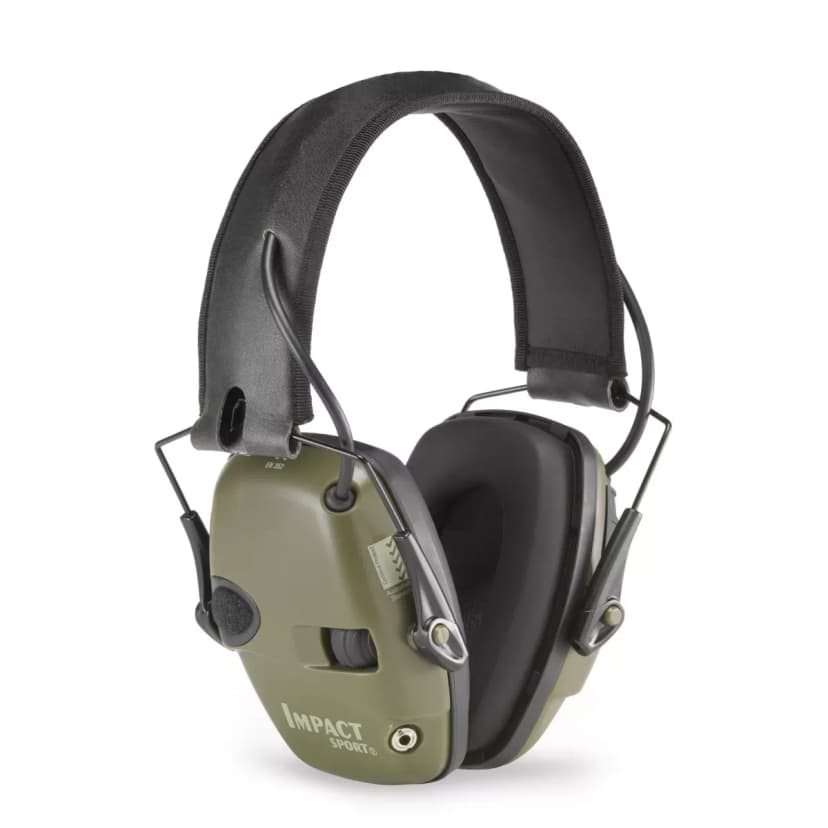
Image: Honeywell (Howard Leight) · source
Howard Leight (Honeywell) · Mid-range
Electronic over-the-head earmuffs whose directional microphones amplify ambient sound to a set ceiling while providing the maker's rated 22 dB of noise reduction.
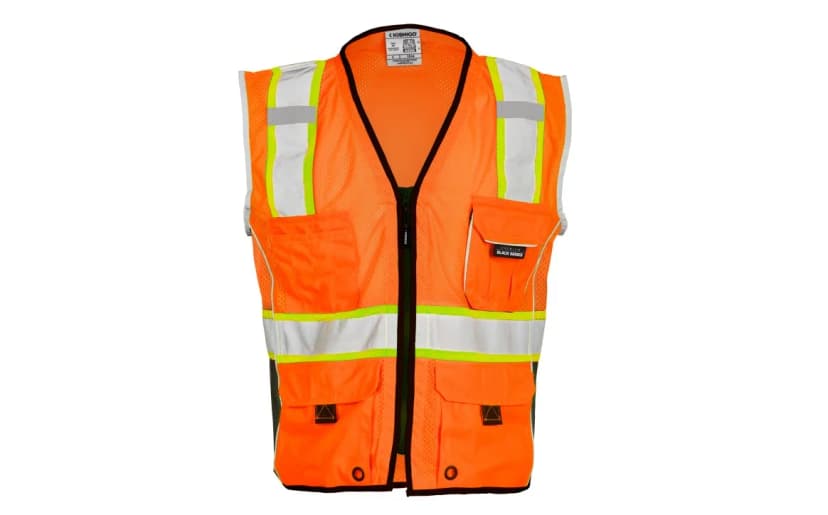
Image: Kishigo · source
Kishigo · Budget
A mesh high-visibility vest certified to the ANSI/ISEA 107 Type R, Class 2 standard, with a chest pocket made for a handheld radio.
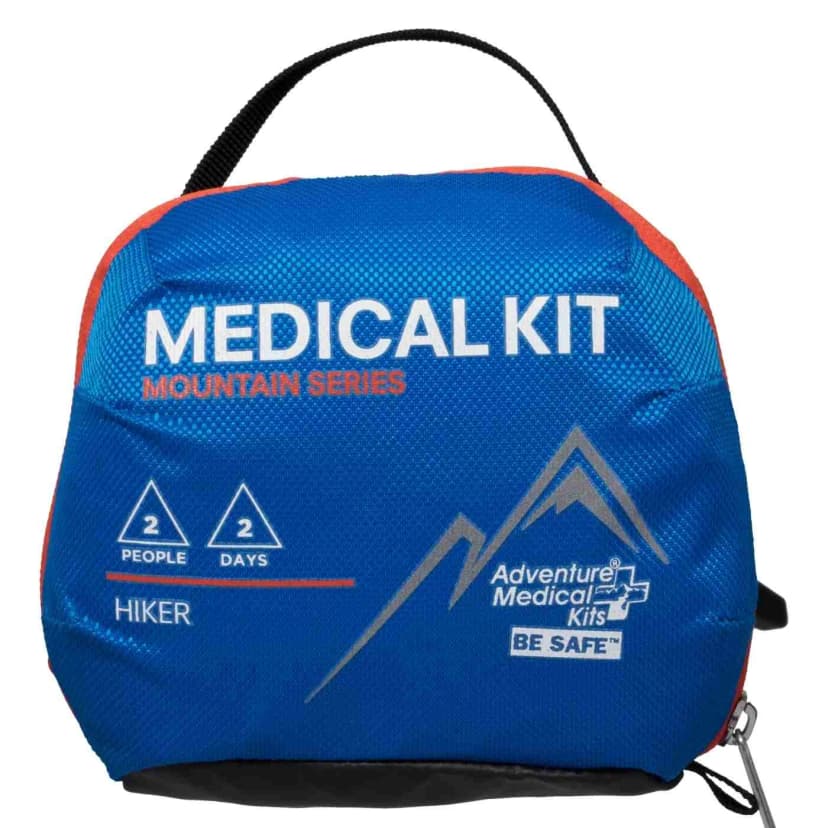
Image: Adventure Medical Kits · source
Adventure Medical Kits · Budget
A compact, injury-organised first aid kit for one or two people on a day or a weekend outing, with a wilderness first aid guide and a small set of over-the-counter medications.
Expert pick · OutdoorGearLab, May 2023
As an Amazon Associate I earn from qualifying purchases. How we pick our gear
Every rule and figure in this guide comes from a page we opened and read in September 2026. Laws change: follow the link before you rely on one.