SpotatrainSpotatrain

Traveling with a dog

Dog-Friendly Train Rides & Railways

Finding out which trains actually accept your dog is strangely hard: almost no operator puts it in the booking flow, and no travel site structures the answer. This page lists every journey and railway experience on Spotatrain whose pet policy we have read on the operator's own official page — 24 so far — with the conditions spelled out.

  • On heritage railways, the open-air carriage is often the only door into the ride for a dog — the enclosed saloon coaches stay off-limits. Check each entry's conditions before planning around it.
  • “Allowed on board” and “allowed on the grounds” are two different questions — and most operators answer them differently. A museum may welcome leashed dogs outdoors yet keep them out of the exhibition halls, or the reverse.
  • In the United States, admitting a service animal is a legal obligation, not a welcome policy. A pet page that only ever mentions service animals is telling you your dog stays home — which is why those operators are not listed here.

Policies change. Each detail page shows the date we verified the policy and links to the operator's source — re-check it before you travel.

Epic journeys you can ride with a dog

5 of the world's legendary train voyages accept dogs on board. Open the full journeys explorer →

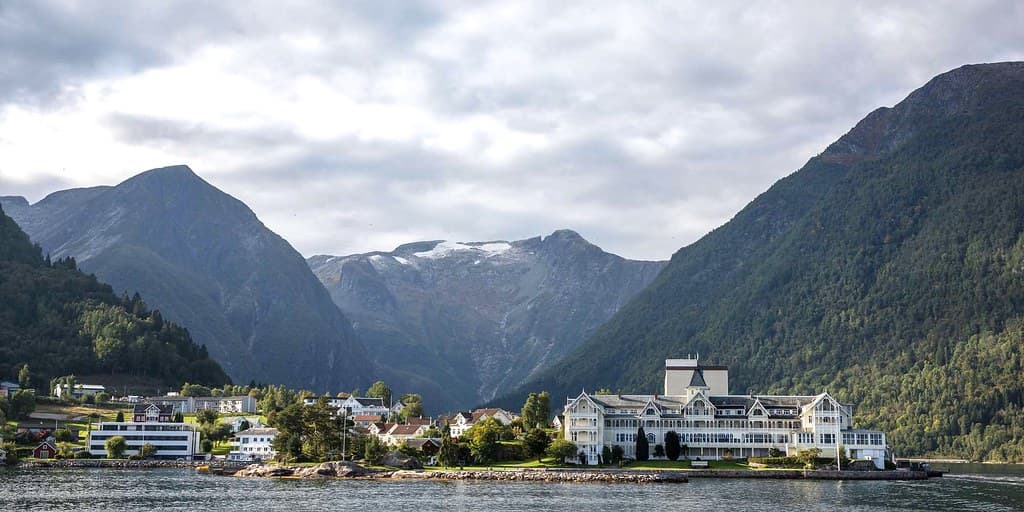
Vy's long-distance rules apply to the Bergen Line. Dogs, cats, caged rodents, caged birds and small turtles are permitted; dogs must be leashed and must lie on the floor — a pet may never occupy a seat. Pets are barred…
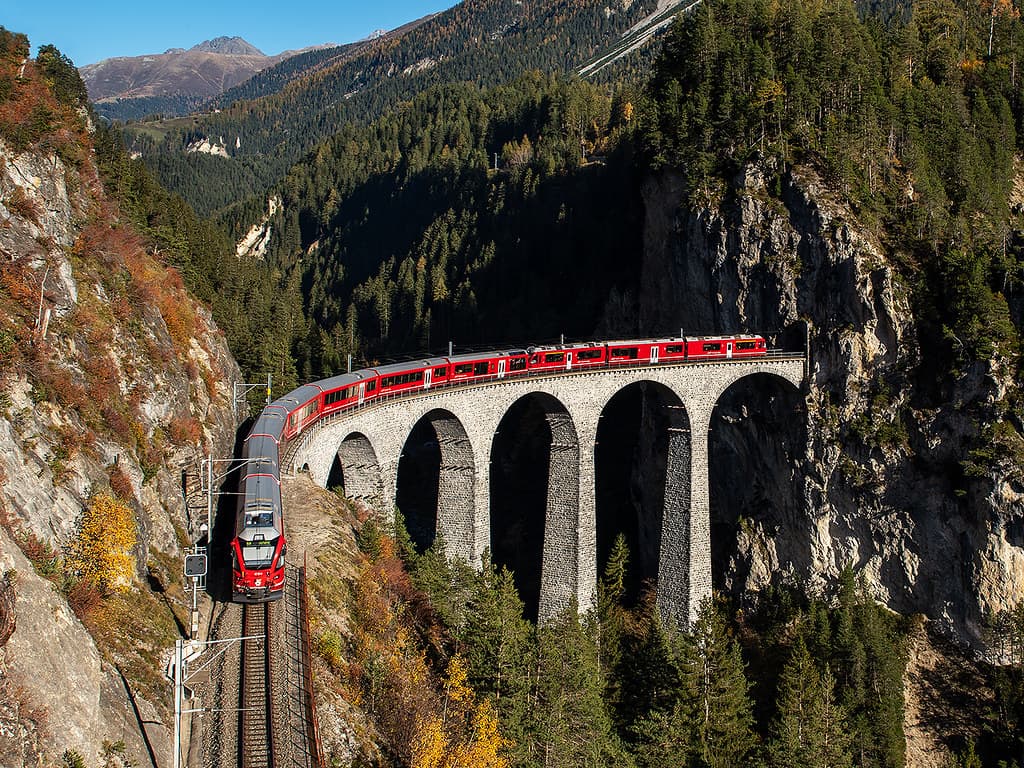
Dogs are welcome. Small dogs up to 30 cm at the shoulder travel free in a transport box or hand-held basket; a larger dog needs one 2nd-class half-fare ticket per animal even if the owner travels 1st class, or a dog…
The Flåm Railway's own FAQ could hardly be simpler: "Yes, all dogs can travel for free with The Flåm Railway." No size limit, ticket or booking condition is published. The page says nothing about leashes, other pet…
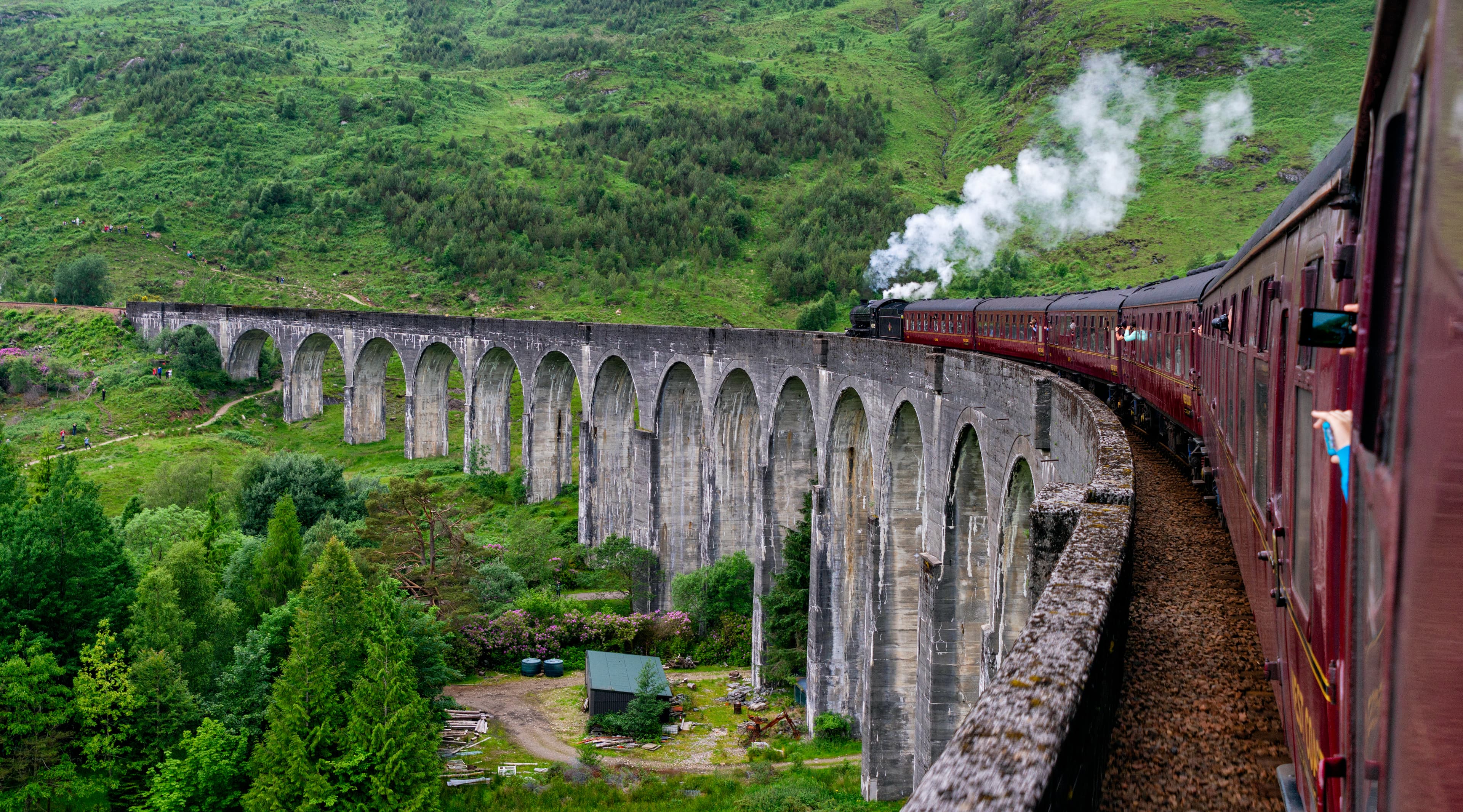
One of the few named steam excursions that takes dogs: "Medium sized family dogs are permitted to travel in the Standard Class section of our Jacobite service only (1 per booking). This may also include travelling with…
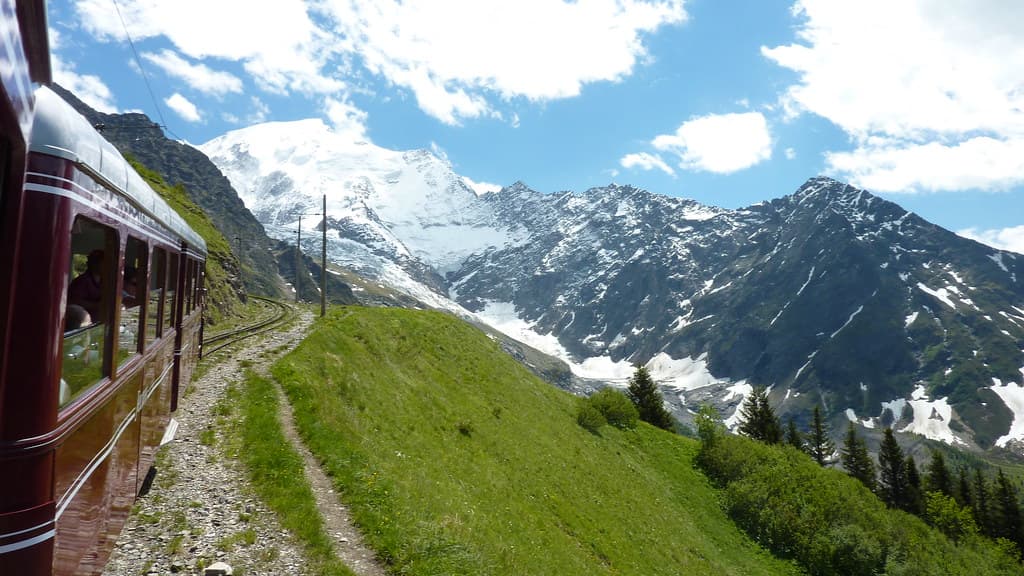
The operator's FAQ states, under the on-board restrictions: "Les animaux sont acceptés, mais ils doivent obligatoirement être tenus en laisse." No muzzle requirement, no dog fare and no seasonal ban are published;…
Heritage railways, museums & experiences

19 railway experiences welcome dogs, grouped by country. Open the full experiences explorer →

Canada
Revelstoke Railway Museum
Flickr
MountainSteam LocomotiveModel RailwayDogs welcome

Revelstoke Railway Museum

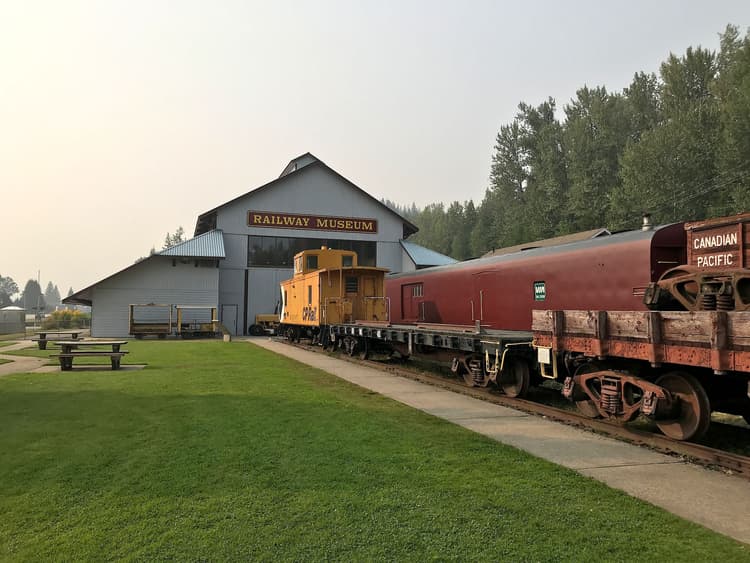
The Revelstoke Railway Museum sits at 719 Track Street West, alongside the Canadian Pacific (now CPKC) main line in Revelstoke, British Columbia, a divisional point where the railway crosses the Selkirk and Monashee mountains. The museum collects, preserves and interprets the history of the Canadian Pacific Railway through the mountains of western Canada, a story of avalanches, grade-fighting locomotives and the engineering of the Connaught Tunnel beneath Rogers Pass. The Revelstoke Heritage Railway Society was formed in 1988, construction of the purpose-built museum began in 1992, and it opened to the public on June 16, 1993. The centrepiece is Canadian Pacific 2-8-2 "Mikado" steam locomotive No. 5468, built by the Montreal Locomotive Works in 1948; its boiler was first pressured up that September, near the very end of CPR steam. One of a 12-engine Class P2k batch (road numbers 5462 to 5473) and one of only three of CPR's 334 Mikados to survive, No. 5468 worked in British Columbia until retirement in 1954, was stored at Delson, Quebec, and was donated to the museum in 1993. The building is effectively wrapped around the locomotive, with a second-floor balcony that lets visitors view it from every angle, alongside CPR business car No. 4. The museum's two floors of galleries combine restored equipment, artifacts and photographs from the Revelstoke Division. Outside, a seasonal rolling-stock yard displays heritage CPR cars, including SD40 diesel-electric No. 5500, the first SD40 the Canadian Pacific bought, built by General Motors in London, Ontario in 1966.

Be the first to rate

The museum's visitor guidelines welcome pets on one practical condition: "Pets that can be carried throughout the visit are welcome. Service animals are welcome in the museum. Water is available for animals to hang out…

France

RATP is markedly more permissive on the métro and RER than on its buses and trams: "Sur le métro et le RER, les animaux de petite taille peuvent être transportés selon les mêmes conditions, mais le sont également les…

Germany
Eisenbahnwelten im Kurort Rathen
Flickr
Model VillageModel RailwayRailfan PhotographyDogs on a leash

Eisenbahnwelten im Kurort Rathen

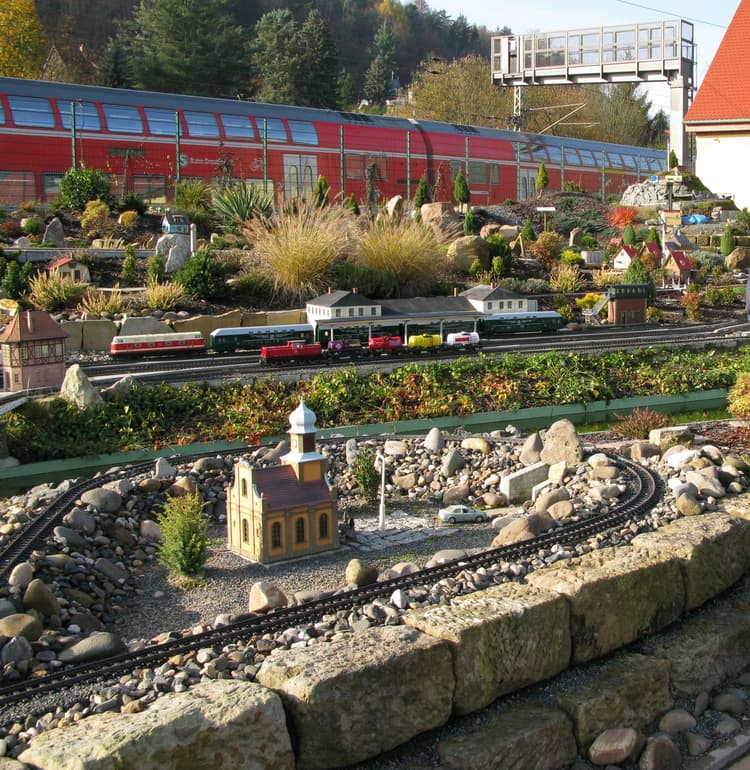
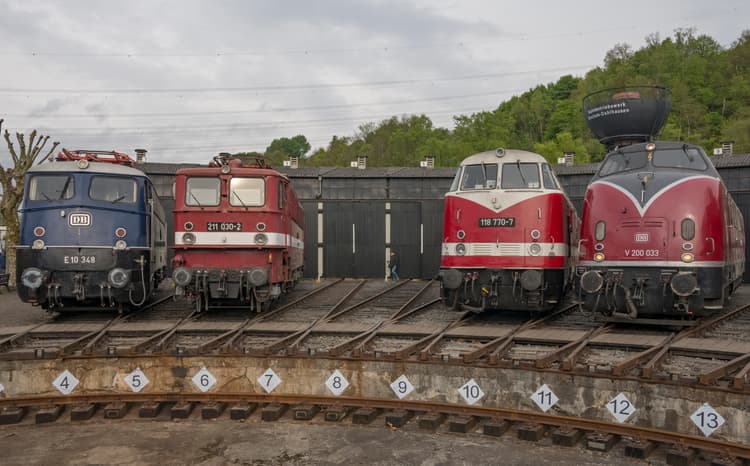
The Eisenbahnwelten im Kurort Rathen is an open-air garden railway laid out in the Oberrathen district of Rathen, on the left bank of the Elbe in the Saxon Switzerland National Park region, roughly 40 kilometres (25 miles) south-east of Dresden. The site sits directly beside Kurort Rathen station on the Dresden–Decin main line, and the real railway runs immediately behind the layout — a rare arrangement where full-size electric and freight traffic passes within earshot of the models it inspired. The layout was conceived by Lothar Hanisch, who from early 2005 bought a derelict three-sided Saxon farmstead (Dreiseitenhof) and the surrounding land with the intention of converting it into a garden railway exhibition with a small guesthouse. After two years of construction the Eisenbahnwelten opened in 2007; German Wikipedia records the investment at 1.9 million euros up to 2013. The Saxon Steam Railway Route notes that creating the scenery required moving some 1,500 tonnes of soil and over 50 tonnes of sandstone. The subject is deliberately local: the Eisenbahnwelten reproduces the railway landscape of the Upper Elbe between Decin in Bohemia and Meissen, built around a double-track main line with seven branch lines and models of 28 stations from the region. Modelled subjects include Moritzburg Castle, Decin Castle, Weesenstein Castle, Burg Stolpen, the Neumannmuehle in the Kirnitzsch valley and a miniature of the Karl May festival stage at the Felsenbuehne Rathen, alongside motifs from the Weisseritztalbahn, the Sebnitztalbahn, the Mueglitztalbahn, the Loessnitzdackel and the Zittau narrow-gauge lines. Since 2015 a model Matterhorn, reported at a little over five metres tall, and a stretch of Rhaetian Railway with the Landwasser Viaduct have extended the layout beyond Saxony.

Be the first to rate

This outdoor garden railway admits dogs: "Hunde sind in unserer Anlage nur angeleint oder auf dem Arm getragen zugelassen" — dogs are allowed on the grounds only on a leash or carried in your arms. A separate rule…

Unusually dog-friendly for a museum of this kind: "Hunde sind willkommene Gäste, müssen aber an der Leine geführt werden." Owners must also carry a means of picking up after the dog, and Hamburg's Hundeverordnung…
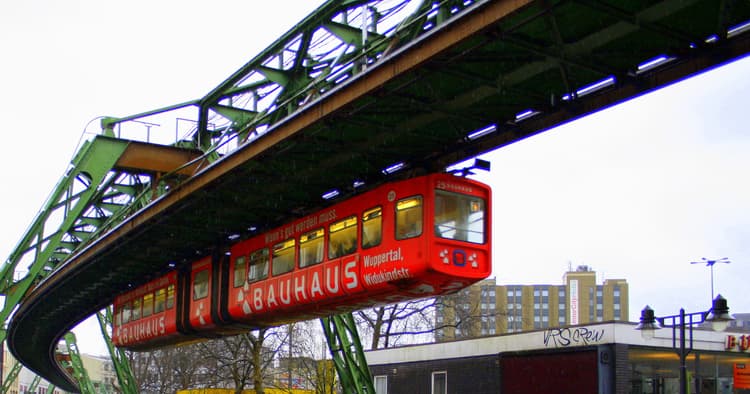
Dogs ride the Schwebebahn free — WSW states that dogs always travel free of charge when accompanied. The binding conditions come from the VRR network rules: animals are carried free but with no legal entitlement, only…

Portugal

Tram 28 (Eléctrico 28)
Flickr
Streetcar / TrolleyScenic RailwayHeritage RailwayDogs welcome

Tram 28 (Eléctrico 28)

Tram 28 is Lisbon’s most iconic tram line, officially known as route 28E in the Carris network. It has operated since 1914 and runs about 7 km (4.5 mi) from Martim Moniz Square in downtown Lisbon to Campo de Ourique (Prazeres) on the western hillslisbonportugaltourism.com. The line survived the closure of other tram routes thanks to its ability to navigate the steep, winding medieval streets where buses cannot pass. Riding Tram 28 feels like a trip back in time aboard vintage 1930s streetcars that remain part of the city’s everyday transit system. Winding through Lisbon’s oldest quarters, Tram 28 snakes from the historic hills of Graça and Alfama, through the downtown Baixa, then up again to Chiado and Estrela, finally ending near the Campo de Ourique neighborhoodvisitlisboa.com. Along the route, the petite yellow tram squeals around hairpin turns and creaks up sharp inclines, at times so close to buildings that riders could almost touch the tiled walls (not recommended!) as they pass. Major landmarks line the journey – from São Vicente de Fora monastery and the Sé Cathedral in Alfama to the Basilica da Estrela in late-route – offering postcard-worthy scenes at every bend. The constant rattling and the ding of the tram’s bell have become part of the soundscape of the city, and locals consider Tram 28 not just a transit line but a moving symbol of Lisbon’s heritage.

Be the first to rate

Carris carries pets free on all its services — trams included — on one absolute condition: the animal must be fully enclosed in a suitable carrier handled as hand luggage. One carrier per passenger; it must be clean,…

United Kingdom
Great Orme Tramway
Flickr
MountainScenic RailwayFunicularDogs on a leash

Great Orme Tramway

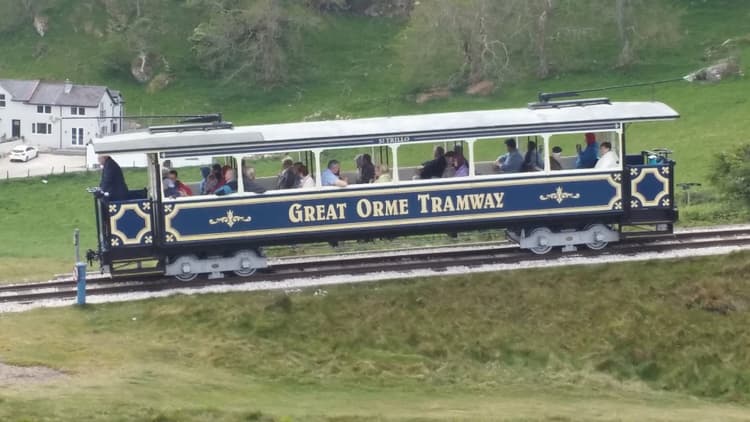
The Great Orme Tramway (Welsh: Tramffordd y Gogarth) is a cable-hauled 3 ft 6 in (1,067 mm) gauge tramway that climbs the Great Orme headland above Llandudno on the North Wales coast. Opened in two stages — the lower section on 31 July 1902 and the upper on 8 July 1903, under the authority of the Great Orme Tramways Act 1898 — it is Great Britain's only remaining cable-operated street tramway and one of only a handful surviving anywhere in the world. It is owned and operated by Conwy County Borough Council. The line runs for about a mile (1.5 km) from Victoria Station on Church Walks to the Summit Station, just below the 679 ft (207 m) summit of the Great Orme. It is built as two physically separate funicular sections, and passengers change cars at the Halfway Station, where the winding gear and control room sit. The lower section is an unusual street-running funicular laid in grooved rail within the public road, with gradients as steep as 1 in 3.8 (about 26%), while the gentler upper section (maximum 1 in 10) runs on its own right of way across open hillside. The tramway still operates with its four original 1902 bogie passenger cars — numbers 4 to 7, named St Tudno, St Silio, St Seiriol and St Trillo after local Welsh saints. The cars are permanently fixed to the haulage cable in the funicular manner and are controlled by winchmen in the Halfway power house, each car assisted by an on-board attendant.

Be the first to rate

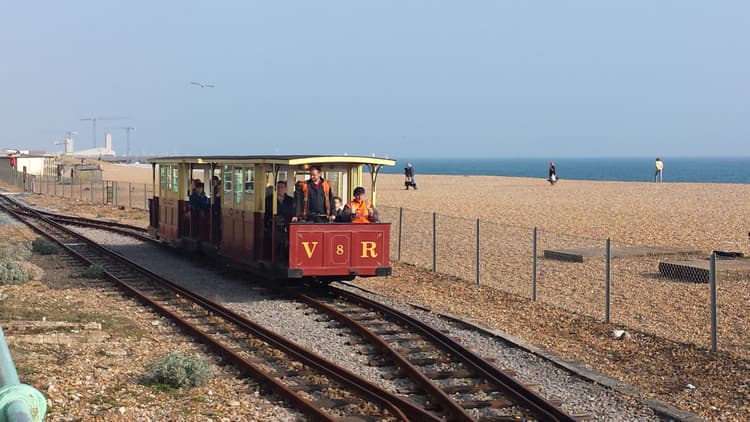
"Well behaved dogs on leads are welcome at the Tramway. Assistance dogs travel free of charge, for other dogs there is a small fee." The tickets page lists that fare: GBP 2.00 in high season (July–August 2026), GBP 1.55…
Ulster Transport Museum
Flickr
Interactive ExhibitsSteam LocomotiveDiesel LocomotiveDogs on a leash

Ulster Transport Museum

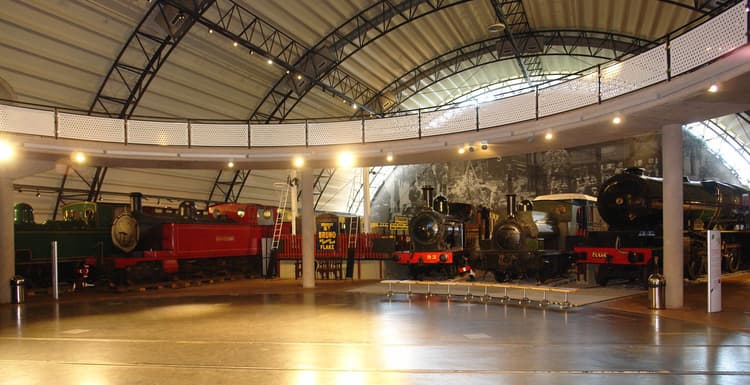
The Ulster Transport Museum sits on the wooded Cultra estate at Holywood, County Down, about 11 kilometres (6.8 miles) east of Belfast on the shore of Belfast Lough. It is one of four museums run by National Museums NI and holds the only comprehensive transport collection on the island of Ireland, covering land, sea and air from the mid-19th century to the present. The museum traces its origins to Belfast Corporation's preserved transport collection, first shown in the 1950s near Queen's Quay station and later at Witham Street (opened 1962); in 1967 it merged with the Ulster Folk Museum, and purpose-built galleries followed at Cultra — the Irish Railway Collection gallery in 1993 and the road transport galleries in 1996. Since splitting from the adjacent Ulster Folk Museum, it now operates as a standalone museum with two exhibition buildings, A Galleries and B Galleries. The heart of the site for railfans is the Irish Railway Collection, which tells over 150 years of Irish railway history across roughly 40 full-size locomotives, carriages and wagons. The centrepiece is Great Southern Railways Class 800 No. 800 Maeḋḃ, a 4-6-0 express engine built in 1939 and counted among the three largest and most powerful steam locomotives ever to run in Ireland. The collection spans both the Irish 5 ft 3 in (1,600 mm) broad gauge and 3 ft (914 mm) narrow gauge, with engines such as the County Donegal Railways 2-6-4T Blanche and the diesel Phoenix, the BCDR 4-4-2T No. 30 (the last surviving BCDR locomotive), the GNR(I) and the NCC Class U2 No. 74 Dunluce Castle built by the North British Locomotive Company. Beyond the railway, the road galleries display vintage trams, buses, cycles and cars, including the stainless-steel DeLorean DMC-12 built at Dunmurry near Belfast and made famous by Back to the Future. Other highlights are the TITANICa exhibition on the Belfast-built liner, the 120-ton schooner Result displayed outdoors, and the experimental Short SC.1 vertical take-off aircraft.

Be the first to rate

"Dogs are allowed in outdoor spaces at the Ulster Transport Museum however they must be kept on a short lead at all times. And we ask that you please pick up after your dog. Water bowls are in place outside B Galleries…

United States

Golden Spike National Historical Park
Flickr
Steam LocomotiveHeritage SteamNational ParkDogs on a leash

Golden Spike National Historical Park

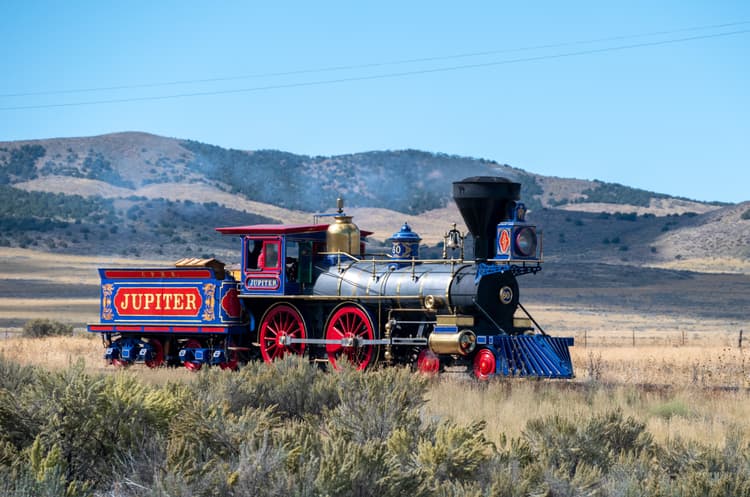
Golden Spike National Historical Park preserves 2,735 acres (1,107 ha) around a 15-mile (24 km) segment of the original first transcontinental railroad at Promontory Summit, on the remote high desert at the north end of the Great Salt Lake in Box Elder County, Utah. It marks the spot where, on May 10, 1869, the Central Pacific Railroad building east from Sacramento and the Union Pacific Railroad building west from Omaha met and drove the ceremonial last spike — the "Wedding of the Rails" that linked the United States coast to coast by rail. The original Promontory line was bypassed by the Lucin Cutoff in 1904 and its rails were pulled up in 1942 for the war effort. Today about 2 miles (3.2 km) of authentically rebuilt 1869-style track run from the Last Spike Site to the Engine House. Preservation of the site was championed for decades by Bernice Gibbs Anderson, whose Golden Spike Association held its first re-enactment on May 10, 1952. Congress authorized federal ownership in 1965, and the site was redesignated from national historic site to Golden Spike National Historical Park on March 12, 2019. The park's signature draw is its pair of fully operational replica steam locomotives — the Central Pacific's Jupiter and the Union Pacific's No. 119, both 4-4-0 "American" types. Built by O'Connor Engineering Laboratories of Costa Mesa, California, from more than 700 new drawings based on 1869 photographs, the replicas were commissioned on May 10, 1979, the 110th anniversary of the ceremony.

Be the first to rate

Pets are welcome in the park's outdoor areas but must remain on a leash at all times, and owners must clean up after them. Pets are not permitted inside the Visitor Center. The park asks that pets be closely supervised…
Golden Spike Tower & Visitor Center
Flickr
Classification YardInteractive ExhibitsDiesel LocomotiveDogs on a leash

Golden Spike Tower & Visitor Center

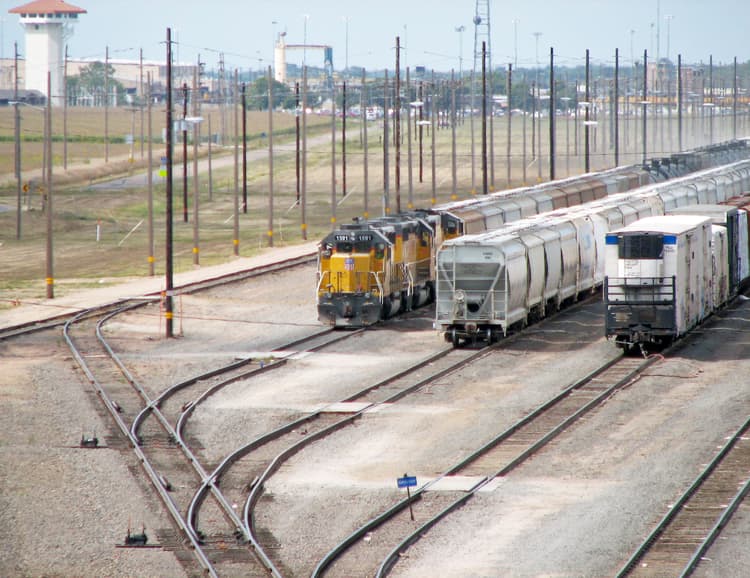
The Golden Spike Tower and Visitor Center is an eight-story observation tower on the south edge of Union Pacific's Bailey Yard in North Platte, Nebraska. Opened on June 26, 2008 after roughly eleven years of planning and construction at a cost of about $6 million, it was conceived in the mid-1990s when Union Pacific's earlier viewing platform fell into disrepair. The privately operated, non-profit tower draws around 30,000 visitors a year from all 50 states and nearly 40 countries. The tower overlooks Bailey Yard, recognized by Guinness in 1995 as the world's largest railroad classification yard. Named for former Union Pacific president Edd H. Bailey, the yard covers 2,850 acres, stretches eight miles (13 km) end to end and carries roughly 200 tracks totaling about 315 miles (507 km) of rail. An average of 139 trains and more than 14,000 rail cars pass through every day, with about 3,000 cars sorted over two hump yards — an eastbound hump 34 feet (10 m) high and a westbound hump 20 feet (6 m) high — that feed 114 bowl tracks. North Platte was platted as a railroad town by Union Pacific chief engineer Grenville Dodge, and its first train arrived in 1866. The location is woven into rail and frontier history, from Buffalo Bill Cody's nearby Scout's Rest Ranch to the WWII North Platte Canteen, which served more than six million service members between 1941 and 1946. Scheduled passenger service ended in 1971, but freight operations at Bailey Yard run around the clock.

Be the first to rate

The visitor center is pet-friendly: "Friendly pets are welcome on a leash or in a carrier. Dog bags are available for you to clean up after your pooches stretch their legs in our courtyard." No restriction is published…
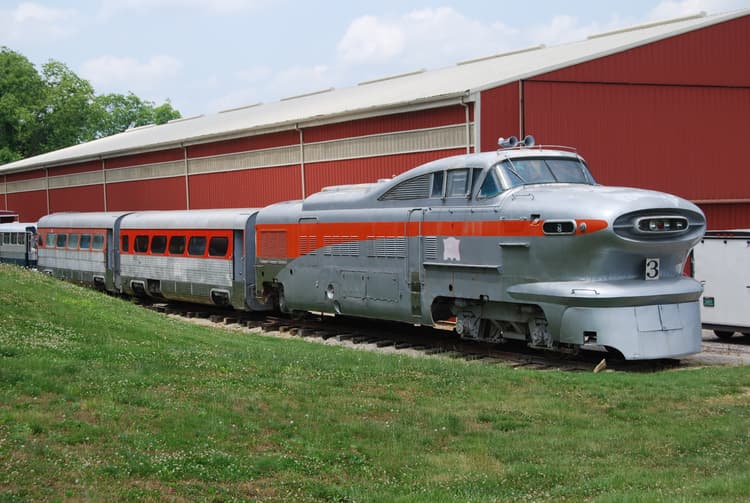
The museum answers "Can I bring my dog?" with "Sure! Dogs on leashes are welcome on our outside grounds, but not within the Museum's buildings." Nothing is published about dogs aboard the miniature train or the trolley.

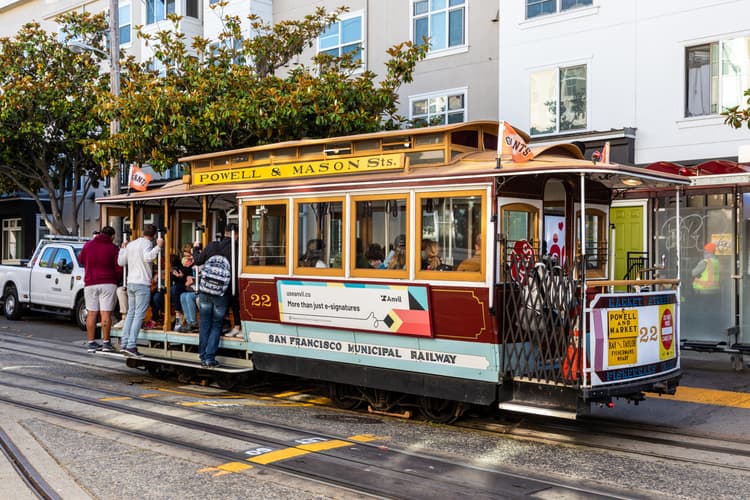
SFMTA's agency-wide rule covers the cable cars. Pets may not ride during peak hours (weekdays 5–9 am and 3–7 pm); off-peak, one pet per vehicle. Dogs must be leashed and muzzled and ride on the owner's lap or under the…
Powell-Mason Cable Car Line
Flickr
Scenic RailwayCable CarHeritage RailwayDogs on a leash

Powell-Mason Cable Car Line

The Powell-Mason line (shown as line PM on the Muni map) is the oldest of San Francisco's three surviving cable car routes, running essentially unchanged since it opened in early March 1888 under the Ferries and Cliff House Railway Company. It was the city's first north–south line to link Downtown directly to North Beach over Nob Hill, and the San Francisco Municipal Transportation Agency (SFMTA / Muni) describes it as the city's only transit line to operate virtually unchanged since opening day — likely the world's oldest continuously operated cable car line. The 1.6-mile (2.6 km) route climbs from the Powell & Market turntable up Powell Street, over Nob Hill past the Mason Street car barn, and down Mason and Taylor streets to a turntable at Bay & Taylor, a few blocks from Pier 45 and Fisherman's Wharf. Unlike many lines that were converted to streetcars after the 1906 earthquake and fire, the Powell-Mason line was kept because no other vehicle of the era could manage its steep grades; an attempt by the mayor to replace the cars with buses in 1947 was beaten back in a famous "cable car war." San Francisco's cable cars are the world's last manually operated cable car system and were designated a National Historic Landmark on January 29, 1964 (added to the National Register of Historic Places on October 15, 1966). The grip and conductor still work each car by hand, and at each end the single-ended cars are turned on manually powered turntables.

Be the first to rate

SFMTA's agency-wide rule covers the cable cars. Pets may not ride during peak hours (weekdays 5–9 am and 3–7 pm); off-peak, one pet per vehicle. Dogs must be leashed and muzzled and ride on the owner's lap or under the…
St. Charles Streetcar Line
Flickr
StreetcarHeritage StreetcarTrain RidesDogs welcome

St. Charles Streetcar Line

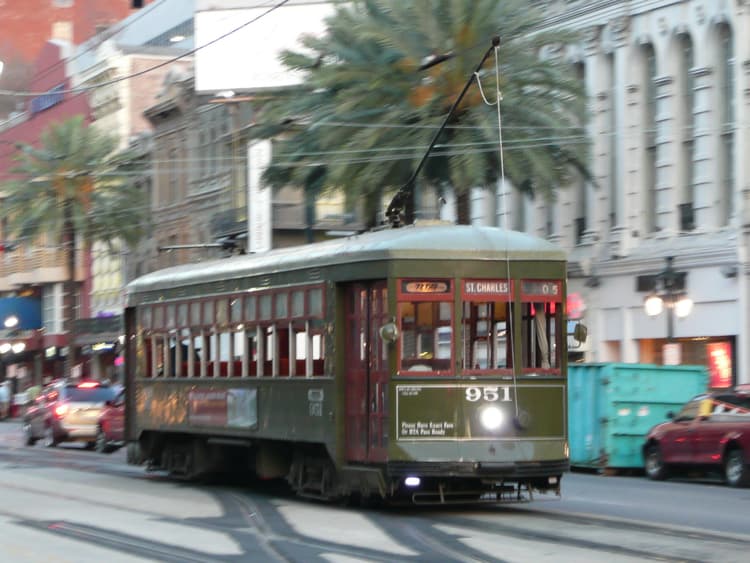
The St. Charles Streetcar Line, officially Route 12 of the New Orleans Regional Transit Authority (RTA), is the oldest continuously operating streetcar line in the world. Passenger and freight service began on September 26, 1835 under the New Orleans and Carrollton Railroad, originally powered by steam locomotives — two engines, New Orleans and Carrollton, supplied by B. Hick and Sons of England — before transitioning to horse and mule power, experimental ammonia and Lamm fireless engines, and finally electrification on February 1, 1893. The line runs 6 miles (9.7 km) on a 5 ft 2.5 in (1,588 mm) gauge, mostly in the grassy "neutral ground" median of St. Charles Avenue and South Carrollton Avenue, with curbside running in the Central Business District. The route links Canal Street, at the edge of the French Quarter and the Central Business District, with the Carrollton neighborhood at South Carrollton and South Claiborne avenues, passing through the Lower Garden District, the Garden District, Uptown and the Riverbend. It is the busiest route in the RTA system, used daily by both commuters and visitors. In 1973 it was listed on the National Register of Historic Places (reference 73000873), and on August 25, 2014 the National Park Service designated it a National Historic Landmark — one of only two moving streetcar landmarks in the United States, the other being the San Francisco cable car system. Service was suspended after Hurricane Katrina in 2005 and restored in stages between 2007 and 2008. The line is operated from the Carrollton Station car barn at 8201 Willow Street, a steel-framed depot dating to 1893.

Be the first to rate

New Orleans RTA allows pets system-wide, streetcars included, on one condition: "If the animal is a pet, it must travel in a carrier and the cage or carrier must fit on the person's lap." Service animals accompanying…
Western Railway Museum
Flickr
Heritage RailwayRailfan PhotographyTrain RidesDogs on a leash

Western Railway Museum

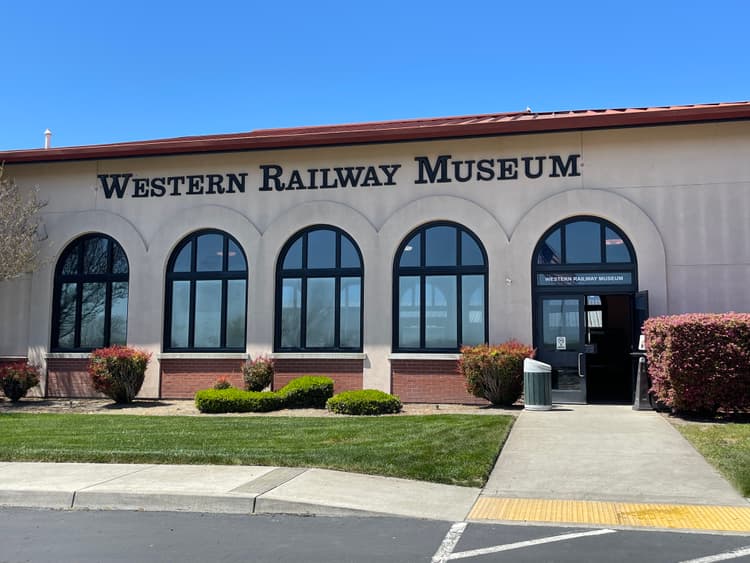
The Western Railway Museum sits on 22 acres at Rio Vista Junction, a former station stop on the Sacramento Northern Railway along State Highway 12 between Suisun City and Rio Vista in Solano County, California. Operated by the Bay Area Electric Railroad Association (BAERA), a 501(c)(3) non-profit founded in 1946, the museum preserves the heritage of Northern California's electric interurban and street railways. It holds the largest collection of Sacramento Northern Railway equipment in existence, with roughly 100 pieces of rolling stock and more than 50 historic cars on public display. BAERA began when a group of San Francisco Bay Area railfans, drawn specifically to electric traction, bought Key System 271 — a wooden streetcar that had started life in Lehigh Valley, Pennsylvania. Early acquisitions included Sacramento Northern 62, a Birney safety car built in 1920 that ran local service in Chico until 1947 and carried the last five-cent fare in California. After years of shuffling equipment between temporary sites, the group secured land at Rio Vista Junction in 1960 and established what was first called the California Railway Museum, renamed the Western Railway Museum in 1985 to avoid confusion with the California State Railroad Museum in Sacramento. The museum owns and operates a surviving segment of the Sacramento Northern main line. BAERA purchased 22 miles of the route in 1994, dedicated its Visitors Center in 2001, and opened the Loring Jensen Memorial Car House in May 2008. The F. M. Smith Library and Archives, housed in a climate-controlled space, preserves records of street railways, interurban lines, and steam railroads across California and neighboring states.

Be the first to rate

The museum answers "Are you dog-friendly?" with "Yes! (as long as your dog is people-friendly.) We welcome on-lead dogs whose owners bring a water bowl and poop bags." Dogs may ride the trains as well as walk the…

Skip map
Map content ends