
Updated
Distance
66 km
Duration
2h 15min (one-way)
Gauge
1435mm
The world's greatest railway journey: Fort William to Mallaig on a 41-mile steam-hauled run over the iconic Glenfinnan Viaduct — the Hogwarts Express route from the Harry Potter films.
About This Journey
The Jacobite is a steam-locomotive-hauled tourist service that has operated over the Mallaig Extension of the West Highland Line every summer since 1984. Originally branded the West Highlander by ScotRail, it was renamed The Lochaber and then The Jacobite after West Coast Railways took over the operating licence in 1995 following the privatisation of British Rail. The route runs 41 miles (66 km) from Fort William to Mallaig, taking about 2 hours 15 minutes each way; the train spends roughly 90 minutes at Mallaig before returning.
The line itself is the Mallaig Extension of the West Highland Line, opened on 1 April 1901. It was the last major railway built during Britain's pre-1901 rail expansion and the first to be built with a UK Government subsidy. Construction was led by Robert McAlpine & Sons — McAlpine senior was nicknamed 'Concrete Bob' for his innovative use of mass concrete, which was used here because the local schist bedrock was too hard to dress economically.
The route's centrepiece is the Glenfinnan Viaduct, a 21-span, 380 m (1,250 ft) curving concrete bridge crossing the River Finnan at a height of 30 m (100 ft). Completed in 1901, it became internationally famous in the early 2000s when Warner Bros. used it as the Hogwarts Express route in the Harry Potter films. Beyond Glenfinnan, the train continues through Lochailort, Beasdale and Arisaig — Britain's most westerly mainland railway station — before reaching the silver sand beaches of Morar (filming location for Highlander and Local Hero) and the fishing port of Mallaig.
The Jacobite is normally hauled by an LMS Stanier 'Black 5' 4-6-0 (built 1935–1945) or an LNER Peppercorn Class K1 2-6-0 — both classes that worked the line in steam days before the 1967 dieselisation. Carriages are British Railways Mark 1 stock in BR Maroon livery, owned and restored by West Coast Railways. As of 13 April 2026, the operator has announced a delayed start to the 2026 season while the Mark 1 fleet is fitted with Central Door Locking to satisfy the Office of Rail and Road's safety requirements.
Why This Journey Is Iconic
Two things put The Jacobite on every rail-traveller's bucket list. The first is the Glenfinnan Viaduct, a 21-arch concrete curve made world-famous by the Harry Potter films and now drawing several hundred thousand viewpoint visitors a year — a number that has, in recent years, gridlocked the village of Glenfinnan in summer. The second is that the journey itself was voted the top railway journey in the world by readers of Wanderlust magazine in 2009, ahead of the Trans-Siberian and the Cusco–Machu Picchu line. Few short rail trips combine that level of pop-culture recognition with that level of editorial endorsement.
The route is also the only place in Britain where authentic main-line steam still hauls scheduled passenger trains over a heritage timetable, on jointed track, between manually-staffed signal boxes controlled from Banavie. The locomotives — Black 5s, K1s, occasionally a K4 — are exactly the classes the line saw in its 1930s–60s heyday, so what passengers experience is essentially the route as it ran before dieselisation.
What to Expect
Trains depart from Fort William's modest mainline station at Tom-na-Faire, where you'll see the engine being prepared from the platform. The first kilometres are slow as the train reverses out of Fort William, crosses the Banavie swing bridge over the Caledonian Canal, then settles into the climb past Loch Eil. Carriages are Mark 1 BR Maroon stock with side-corridor compartments in first class (sole-use 'Compartment' tickets seat up to six) and open saloons at table seating in standard class.
Catering is operated onboard by West Coast Railways and includes the optional High Tea or Cream Tea served at your seat. There is no air conditioning — opening windows give you steam, smoke and Highland air. Photography is excellent throughout, but the headline shots are the Glenfinnan Viaduct (left side outbound), the Silver Sands of Morar (right side outbound) and the arrival at Mallaig harbour.
On Mondays to Fridays in peak summer, two Jacobite services run each way, crossing at Glenfinnan station — this is the only regular meeting of two steam services on the British main-line network, and the platform fills with photographers when it happens.
History
The Mallaig Extension Railway received Royal Assent on 31 July 1894 and opened on 1 April 1901 after four years of construction. Robert McAlpine & Sons took over from Lucas and Aird, who had withdrawn after delays in the original parliamentary bill, and used mass concrete extensively because the local schist was too hard to quarry into dressed stone. The 21-span Glenfinnan Viaduct cost £18,904 to build.
Steam services ended on the West Highland Line in 1967 under the British Rail Modernisation Plan, replaced by diesel. ScotRail re-introduced summer steam-hauled tourist services in 1984 under the name 'West Highlander', then 'The Lochaber', and finally — after the operating licence passed to West Coast Railways in 1995 — 'The Jacobite', a nod to the 1745 Jacobite Rising whose key sites lie along the route. The service has run almost every summer since, with brief suspensions in 2015, 2016, 2023 and 2024 linked to West Coast Railways' safety compliance issues. The 2026 season is again delayed pending Central Door Locking upgrades to the Mark 1 carriages.
Engineering Highlights
Robert McAlpine & Sons used mass concrete (no metal reinforcement) for every major structure on the Mallaig Extension because the area's hard schist defeated stone-cutting. The Glenfinnan Viaduct is the most striking example: 21 semicircular 50-foot (15 m) spans, total length 380 m (1,250 ft), height above the River Finnan 30 m (100 ft), built on a 241 m (792 ft) radius curve, 5.5 m (18 ft) wide between parapets, designed by Simpson & Wilson. It is the longest concrete railway bridge in Scotland and a Category A listed structure (LB310, designated 4 October 1971).
The Loch nan Uamh Viaduct, further west between Lochailort and Arisaig, was built on the same principles. In 2001, scanning technology found the remains of a horse and cart inside one of its piers — a long-rumoured Victorian construction accident finally confirmed.
The line itself is single-track standard-gauge (1,435 mm) signalled by Radio Electronic Token Block from Banavie. The Jacobite locomotives — LMS Stanier Class 5 4-6-0s built in 1935 and 1945, and the LNER Peppercorn Class K1 2-6-0 No. 62005 'Lord of the Isles' built in 1949 — operate at the line speed limit of 60 mph (96 km/h).
Best Time to Travel
The Jacobite normally runs from early May to late October. June, July and August offer the longest daylight (sunset after 22:00 in June) and a twice-daily service Monday–Friday, but they are also when Glenfinnan village is at its most congested with viewpoint visitors. May and September are the sweet spot for serious photographers — fewer crowds, often dramatic light, and only one Jacobite a day in each direction.
October brings stunning autumn colour in the birch-and-oak woods around Loch Eil but also more changeable weather; the Highlands can deliver four seasons in a single Jacobite run.
Whatever month, book the morning service if you have a choice — it gives you the best of Mallaig's lunchtime fish-and-chip culture and a longer afternoon window if the train runs late.
Practical Tips
Tickets are same-day returns only; no one-way ticketing. Book online through the West Coast Railways website — the booking system will not always combine a 1st class table for four and a private table for two on the same booking, so use the phone line if you need a particular seating arrangement. Single travellers can only book in standard; first class has a two-passenger minimum.
Allow at least 20 minutes for parking at Fort William and ticket collection before departure. Do NOT use the supermarket car park — it is enforced. Trains are non-smoking throughout. There is no air conditioning and Mark 1 carriages do not have central locking on the doors — passengers stay seated until the conductor releases the door.
If you only want to photograph the train at the viaduct, skip the ticket and use the National Trust for Scotland car park at the Glenfinnan Monument; the upper viewpoint trail is roughly 20 minutes' walk and gives the iconic curving-train shot. Trains cross the viaduct at approximately 10:45 and 15:15. Arrive an hour early in July and August — the car park closes when full.
Traveling with Pets
Dogs welcome, on a leash
One of the few named steam excursions that takes dogs: "Medium sized family dogs are permitted to travel in the Standard Class section of our Jacobite service only (1 per booking). This may also include travelling with other members of the public at a shared table. Dogs travel for free, but they must remain on a lead at all times and are not permitted on the seats." Dogs are excluded from First Class and from the compartment carriages, and from West Coast Railways' other day excursions — the Dalesman and Scarborough Spa Express — because of journey length. Registered guide and assistance dogs are arranged separately through the booking office.
Verified — operator's pet policy
Route Stages
- km 0
Departure station at the foot of Ben Nevis, Britain's highest mountain (1,345 m / 4,413 ft). Mainline connection to Glasgow via the West Highland Line, plus Caledonian Sleeper service to London Euston. Address: Tom-na-Faire, Station Square, Fort William, PH33 6EN.
Largest town in the Highlands; gateway to the Great Glen and Ben Nevis
- km 30
21-arch curved concrete viaduct over the River Finnan, 380 m (1,250 ft) long and 30 m (100 ft) high on a 241 m (792 ft) radius curve. Built 1897–1901 by Robert McAlpine & Sons in mass concrete — the longest concrete railway bridge in Scotland. Featured as the route of the Hogwarts Express in four Harry Potter films. The train may pause on the viaduct, time permitting, to let passengers take in the view over Loch Shiel and the Glenfinnan Monument.
21-arch concrete viaduct; Harry Potter Hogwarts Express filming location
- km 31
The most famous stop on the line. The station houses the West Highland Railway Museum in the restored station building. The Jacobite pauses here when time permits to let passengers visit the museum, the Glenfinnan Monument and the iconic viewpoint over Loch Shiel.
West Highland Railway Museum; Glenfinnan Monument; Loch Shiel viewpoint
- km 56
Britain's most westerly mainland railway station. The Jacobite may stop here on request to the guard. From the village, the Small Isles of Rùm, Eigg, Muck and Canna are visible on clear days, along with the southern tip of Skye.
Most westerly mainland station in Britain; Small Isles views
- km 62
The station sits between the deepest freshwater loch in Britain (Loch Morar, 310 m / 1,017 ft deep) and the silver sand beaches that featured in the films Highlander and Local Hero. The River Morar, at 400 m / 1,310 ft, is the shortest river in Britain.
Loch Morar (deepest freshwater loch in Britain); silver sand beaches
- km 66
End of the line. Mallaig is a working fishing port founded in the 1840s. CalMac ferries connect to the Isle of Skye (Armadale), the Small Isles, South Uist and the Knoydart peninsula. Passengers have around 90 minutes ashore before the return departure at 14:10.
Working fishing harbour; CalMac ferry hub for Skye and Knoydart; deepest seawater loch in Europe (Loch Nevis)
Getting to Fort William
By Air
Nearest airports are Inverness (INV, 105 mi / 169 km, ~2h45 drive) and Glasgow (GLA, 105 mi / 169 km, ~2h30 drive). Edinburgh (EDI) is roughly 145 mi / 233 km (~3h drive). There is no scheduled air service to Fort William itself.
By Train
ScotRail operates the West Highland Line from Glasgow Queen Street to Fort William (~4 hours, 3 trains per day each way). The Caledonian Sleeper from London Euston runs nightly and arrives in Fort William around 09:55. From Fort William, the Jacobite morning service departs at 10:10 — if your sleeper is on schedule it is just possible to connect, but most travellers arrive the day before.
By Car
From Glasgow take the M8/A82 (~2h30, 105 mi / 169 km) along Loch Lomond and over Rannoch Moor. From Edinburgh use the M9/A84/A85/A82 (~3h, 145 mi / 233 km). From Inverness, the A82 down the Great Glen (~1h45, 65 mi / 105 km).
Parking
Public car parks adjacent to Fort William railway station; allow 20 minutes for parking and ticket collection. The supermarket car park is enforced and should not be used. At Mallaig, harbourside parking is limited and fills early on Jacobite operating days.
Where to Stay
Find places to stay near Mallaig.
This lodging map is provided by Stay22, a third-party service that may set cookies. It loads only with your consent.
Accommodation results are provided by Stay22; we may earn a commission on bookings made through this map.
Videos
Photos
The viaduct
Jacobite steam train from Mallaig to Fort William
Jacobite steam train crossing Glenfinnan viaduct
The Jacobite at Morar Station - geograph.org.uk - 7767741
Glenfinnan viaduct from The Jacobite 03
Glenfinnan viaduct from The Jacobite 07
Glenfinnan Viaduct - 2022 (cropped)
Glenfinnan viaduct from The Jacobite 09
The Jacobite steam train at Fort William railway station 2018-08-25 by Marcok f01
External Resources
Tourism info
Heritage & history
Learn more
Frequently Asked Questions
Is The Jacobite the same train as the Hogwarts Express?▾
When does the 2026 season start?▾
How long is the journey and how much does it cost?▾
Which side of the train has the best view?▾
Can I get off at Glenfinnan to photograph the viaduct from below?▾
Do I need to book in advance?▾
How do I get to Fort William without a car?▾
What's in Mallaig during the 90-minute layover?▾
Help improve this page
Spotted something out of date or incorrect? Let our community know.
Related on Spotatrain
More Viaduct Journeys

More Journeys Worldwide
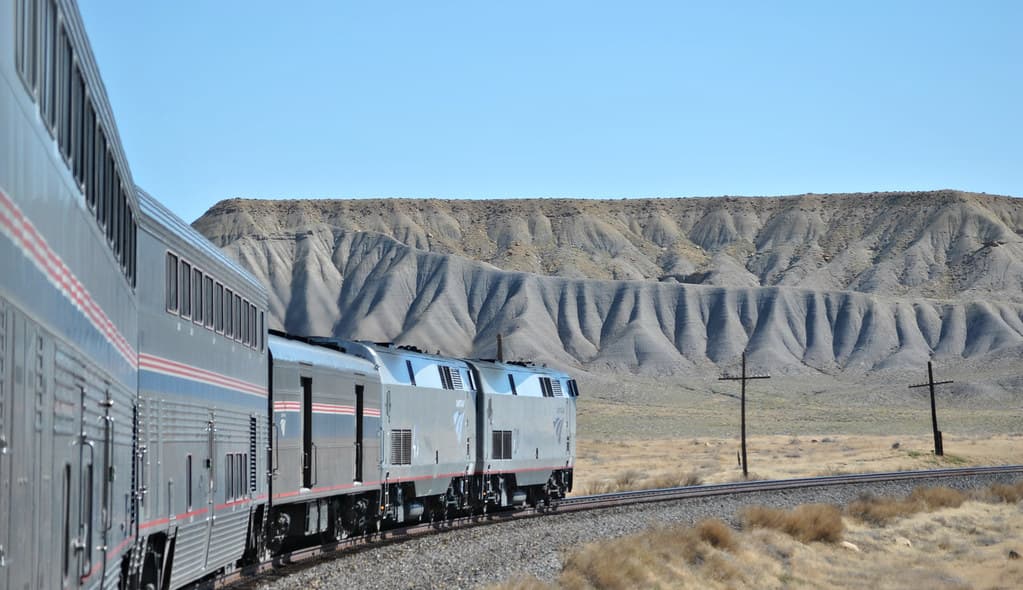

California Zephyr
Chicago to San Francisco across the Rockies and Sierra Nevada
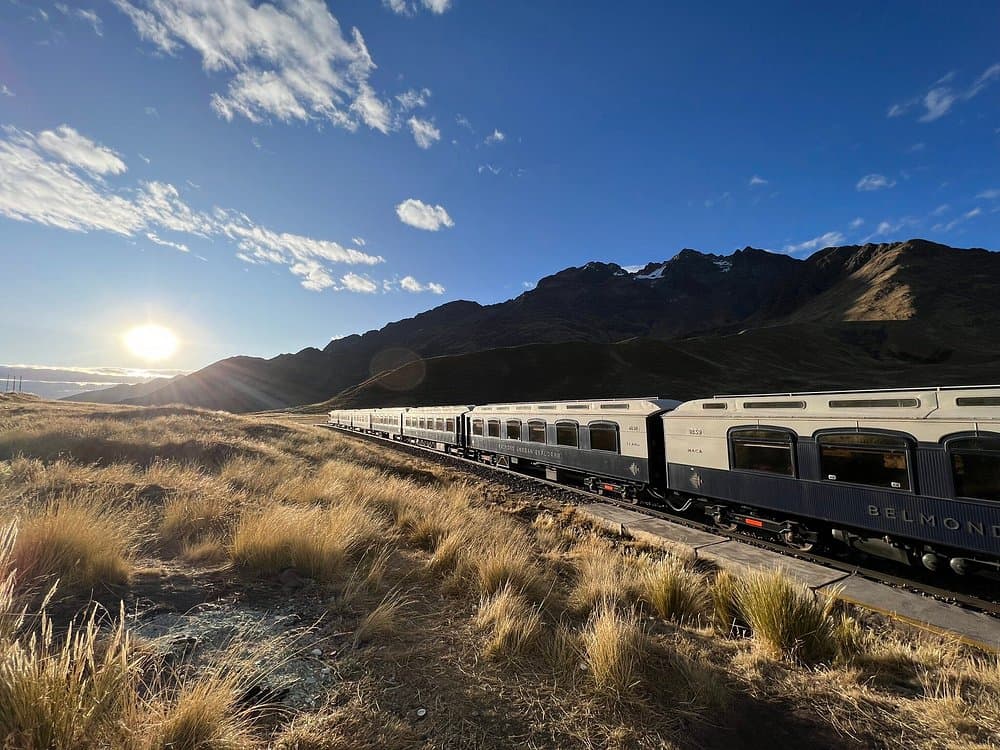
Belmond Andean Explorer
South America's first luxury sleeper train, across the roof of Peru
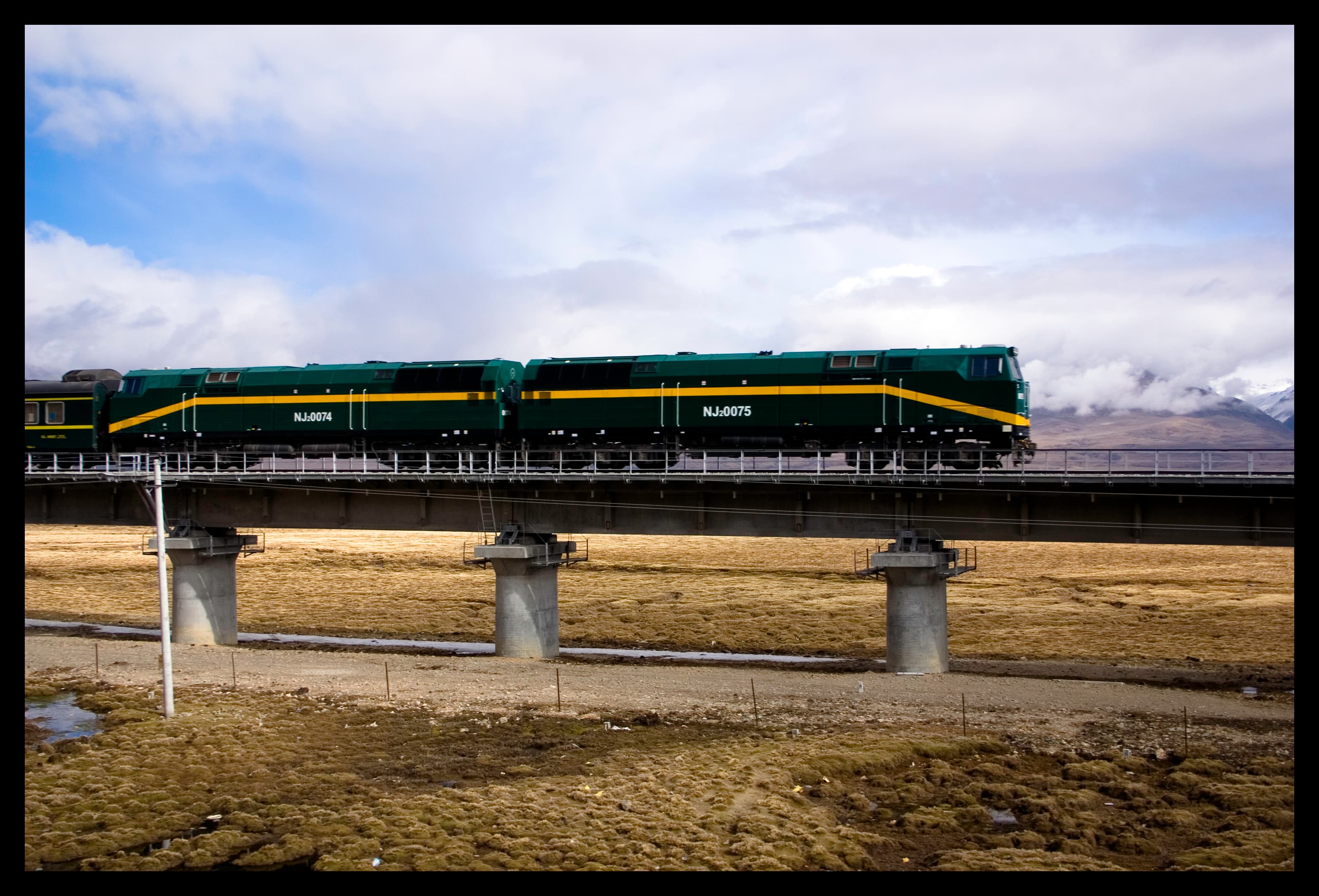
Qinghai-Tibet Railway
The world's highest railway, across the roof of the world to Lhasa

Tren a las Nubes
Argentina's rack-free climb to 4,220 m above the Puna
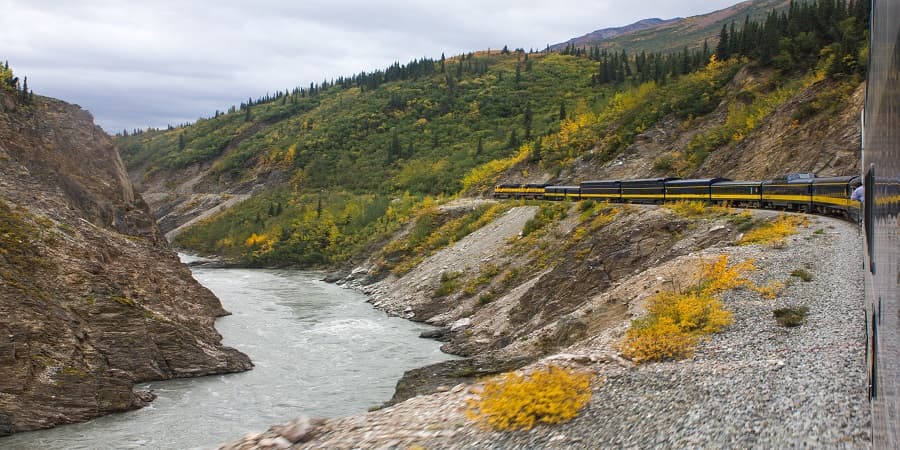
Denali Star
Alaska Railroad's flagship run to Denali and Fairbanks
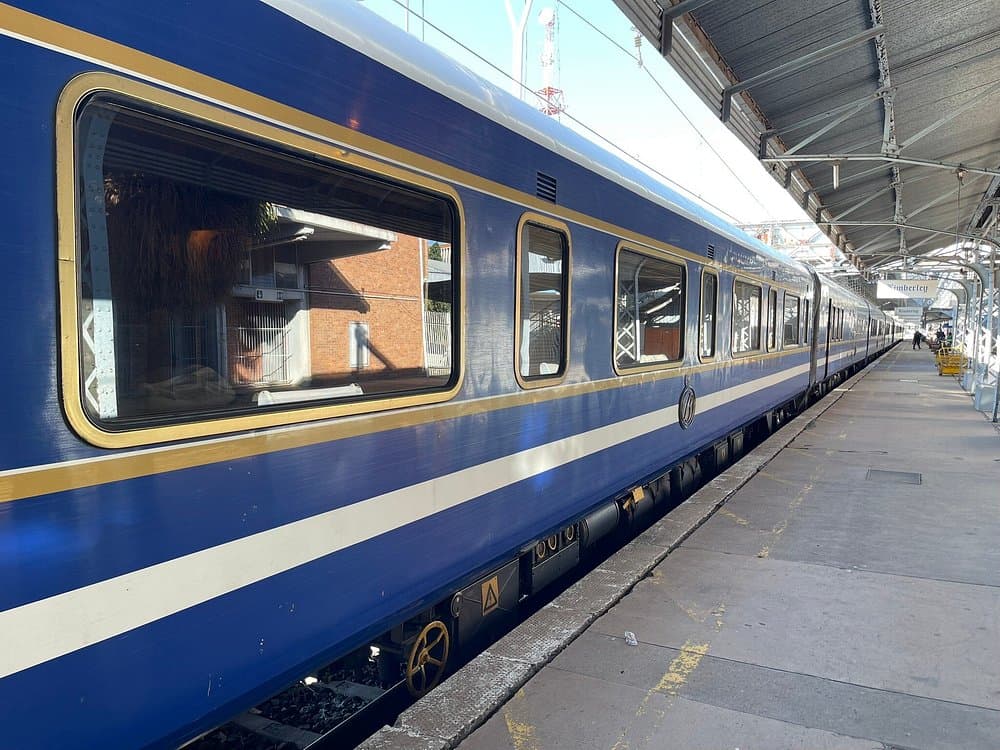
Blue Train
Pretoria to Cape Town in two nights, with a butler in every corridor

Explore around this route
1 place on Spotatrain within 25 km of this route — 1 spot.