

Updated
Distance
20.2 km
Duration
~1 hour
Max altitude
866 m
Tunnels
20
Bridges
1
Gauge
1435mm
20 km of switchbacks, hand-cut tunnels and waterfall stops between the Bergen Line at Myrdal and the Aurlandsfjord at Flåm — 866 m drop in under an hour.
About This Journey
The Flåm Line drops 866 metres (2,841 ft) over its 20.2-kilometre (12.6 mi) route, making it the steepest standard-gauge adhesion railway in Europe. From Myrdal Station, perched at 866 m AMSL on the Bergen Line, the El 18 locomotives haul their renovated B3 carriages through a horseshoe loop into the Vatnahalsen Tunnel, then across an artificial cliff shelf where the valley falls hundreds of metres beneath the rails.
The gradient holds at 5.5 percent (1:18) for 16.1 km of the 20.2 km — speed is restricted to 40 km/h (25 mph) uphill and 30 km/h (19 mph) downhill, partly because the line lacks centralized traffic control and crossings at the Berekvam passing loop must still be coordinated by hand using flags by day and torches by night. The river Flåmselvi crosses under the railway tunnel at Høga, and at km 16.7 the train passes the 140-metre (460 ft) plunge of Rjoandefossen.
Flåm Station sits at 2 m above sea level on Aurlandsfjord, a branch of the UNESCO-listed Sognefjord and Nærøyfjord World Heritage system. The line carries roughly 547,000+ passengers a year and ranks third nationally for paid attractions, behind Holmenkollen and Bryggen.
Why This Journey Is Iconic
The Flåmsbana is unique on three counts that no other scenic train delivers in combination: an 866 m vertical drop in 20.2 km of standard-gauge adhesion track (no rack rails, no cable assist) — a feat called 'one of the most daring engineering exploits in Norwegian history' by the operator; eighteen of its twenty tunnels were excavated by hand at a rate of 116 to 180 man-hours per metre between 1924 and 1940; and the five-minute photo stop at Kjosfossen waterfall (225 m total fall) where, in summer, costumed actresses perform the legend of the Huldra forest spirit on the rocks beside the train. Lonely Planet has named it among the world's most beautiful train rides.
What to Expect
Trains run daily year-round — four departures each direction off-season, nine to ten between May and September. Renovated B3 carriages have wide panorama windows and face two directions; the train reverses at end terminals. The Kjosfossen photo stop lasts about five minutes and platforms can be wet from waterfall spray. There is no on-board catering: pick up snacks at Café Rallaren in Myrdal (open summer) or at Flåm Station's restaurants. Loudspeakers narrate key landmarks in multiple languages; the journey takes 50–59 minutes downhill or 60–80 minutes uphill depending on traffic. Travel-sickness-prone passengers should sit on the right going down (left going up) for steadier views and less curve banking.
History
Engineering surveys started in 1893 with a proposed narrow-gauge rack railway. Parliament approved a standard-gauge electric line in 1923 after a decade of cost wrangling, and construction began in 1924 under engineer Peter Bernhard Kristian Lahlum. Eighteen of the twenty tunnels were drilled by hand — workers drilled up to 4.2 m holes through phyllite rock for dynamite blasting; two fatal accidents were recorded (1925 and 1938) and chronic silicosis from tunnel smoke shortened many careers. Track-laying ran 1936–1940, and freight service opened on 1 August 1940 followed by passenger trains on 10 February 1941. Electric El 9 locomotives, custom-built by Thune for the gradient, took over from steam on 25 November 1944. The line was nearly closed in the early 1990s for low revenue but was rescued by the privatization of operations to Flåm Utvikling in 1998, after which fares were raised, El 17 (later El 18) locomotives were introduced, and tourist demand quadrupled.
Engineering Highlights
The longest of the twenty tunnels is the 1,341.5 m (4,401 ft) Nåli Tunnel; the Vatnahalsen Tunnel (880 m / 2,890 ft) emerges onto an artificial shelf cantilevered above a several-hundred-metre cliff. The minimum curve radius is 130 m (430 ft) — exceptional for standard gauge — and the maximum gradient of 5.5 percent (1:18) holds for 16.1 km of the 20.2 km line. The Berekvam passing loop is the only place trains can cross; it is unstaffed and lacks centralized traffic control, so manual flag/torch signalling persists. Electrification at 15 kV 16.7 Hz AC was introduced in 1944. The Kjosfossen power station, originally 1,700 kW (built 1944) and upgraded to 14,000 kW in 1969, supplies traction current.
Best Time to Travel
May through September is peak season — nine to ten daily departures each direction, snowmelt waterfalls at full flow (Kjosfossen and Rjoandefossen most spectacular in late May to early July), green Flåmsdalen valley, and the costumed Huldra performance at Kjosfossen between June and August. October through April keeps four daily departures running, with snow-frosted scenery and dramatically fewer crowds; February to early April brings reliable cross-country ski conditions at Vatnahalsen and Myrdal. Avoid mid-July to mid-August if you dislike crowds — cruise-ship traffic at Flåm peaks then and trains may sell out days ahead.
Practical Tips
Reserve in advance for the May–September season — sell-outs are routine. Buy round-trip via norwaysbest.com (Flåm-Myrdal-Flåm) or one-way to combine with the Bergen Line via the Norway in a Nutshell package. Eurail/Interrail passes get 30% off but only at staffed stations or Vy customer service, not online. The right-hand side facing downhill (left facing uphill) gives the better-value views including Kjosfossen and the cliff sections; switch sides if you ride round-trip. Bring a windproof layer for the Kjosfossen platform (waterfall spray reaches the train year-round). Bicycles need a separate ticket purchased on entur.no or vy.no — useful if you plan to descend the Rallarvegen historic construction road from Myrdal back to Flåm.
Traveling with Pets
Dogs welcome
The Flåm Railway's own FAQ could hardly be simpler: "Yes, all dogs can travel for free with The Flåm Railway." No size limit, ticket or booking condition is published. The page says nothing about leashes, other pet species or service dogs; since the line is operated by Vy, Vy's general on-board rules — leash, animal on the floor, animals-allowed areas — plausibly apply but are not stated here.
Verified — operator's pet policy
Route Stages
- km 0866 m alt.15 min change to Bergen Line
Junction station on the Bergen Line at 866 m AMSL, in a high mountain pass. The Flåmsbana branches south here. Café Rallaren operates in summer. No road access — only train or the Rallarvegen footpath/cycle track.
Bergen Line interchange; start of the descent
- km 4.4670 m alt.5 min photo stop
Five-minute photo halt directly beside the 225-metre (738 ft) Kjosfossen waterfall, built in 1951 specifically so passengers could step off and enjoy the view. In summer, costumed actresses perform the Huldra forest-spirit legend on the rocks. Be ready for spray.
Kjosfossen waterfall; Huldra summer performance
- km 10.51344 m alt.few min if crossing
Halfway point and the only passing loop on the line. Unstaffed and lacking centralized traffic control, train crossings are managed manually with flags by day and torches by night by personnel travelling from Myrdal or Flåm.
Only passing loop; manual flag/torch signalling
- km 20.22 m alt.terminal
Terminal at 2 m on the Aurlandsfjord. Cruise-ship port, scheduled-boat quay, bus terminal, hotels and the Flåm Railway Museum (in the old 1940 station building) all within a short walk. The current station building dates to 1992.
Aurlandsfjord port; Flåm Railway Museum
Getting to Myrdal
By Air
Bergen Airport Flesland (BGO, ~165 km / 102 mi from Myrdal) is the closest international gateway: take the Bybanen light rail to Bergen Station then the Bergen Line to Myrdal (about 2 h). Oslo Gardermoen (OSL) is the alternative for travellers from continental Europe and North America: Oslo Airport Express to Oslo S, then the Bergen Line to Myrdal (4–5 h). Sogndal Airport Haukåsen (SOG) is closer geographically (~70 km / 43 mi) but only handles regional flights and requires a 1.5 h bus or taxi to Flåm.
By Train
The Flåmsbana is reached at Myrdal via the Bergen Line: from Bergen the trip takes about 2 h, from Oslo about 4.5 h, with most express trains stopping at Myrdal between May and October. Connecting timetables are published on vy.no. From Flåm, return options include continuing by ferry through the Nærøyfjord to Gudvangen and bus to Voss to rejoin the Bergen Line — the classic 'Norway in a Nutshell' loop sold by Fjord Tours.
By Car
Myrdal Station is not accessible by road — the only routes in are the Bergen Line and the Rallarvegen footpath/cycle track. Most drivers leave their car in Flåm (E16 from Bergen via the Lærdal Tunnel; about 2.5 h) and ride the train as a return trip from Flåm to Myrdal and back. From Oslo, the E16/Rv7 takes around 6 h via Hallingdal.
Parking
Flåm Station has a paid public car park immediately beside the train terminal with about 200 spaces (free for cyclists). Cruise traffic and high summer can fill it by 10 a.m.; overflow parking exists 500 m up Flåmsdalen at the Aurland Municipality lot. Myrdal has no parking — the station is car-free.
Where to Stay
Find places to stay near Flåm.
This lodging map is provided by Stay22, a third-party service that may set cookies. It loads only with your consent.
Accommodation results are provided by Stay22; we may earn a commission on bookings made through this map.
Videos
Photos
Myrdal, Flåmsbana
Flamsbana
Flåmsbana
01-Myrdal+Flam line Norway
Flam Railway
Flåmsbana railway
Flåmsbana - The Flam Railway, one of the steepest trainlines in the world through fantastic nature, steep mountains, waterfalls, and through 20 tunnels._
20160825 Berekvam st
External Resources
Official resources
Booking
Heritage & history
Frequently Asked Questions
Does the Flåm Railway run year-round?▾
How long does the journey take?▾
Do I need to reserve a seat in advance?▾
Does the train actually stop at Kjosfossen waterfall?▾
Can I bring my bicycle on the Flåm Railway?▾
Is the train accessible for wheelchair users?▾
Do Eurail or Interrail passes work on the Flåmsbana?▾
What's the best side of the train for the views?▾
Help improve this page
Spotted something out of date or incorrect? Let our community know.
Related on Spotatrain
Journeys Near This Route

More Journeys Worldwide
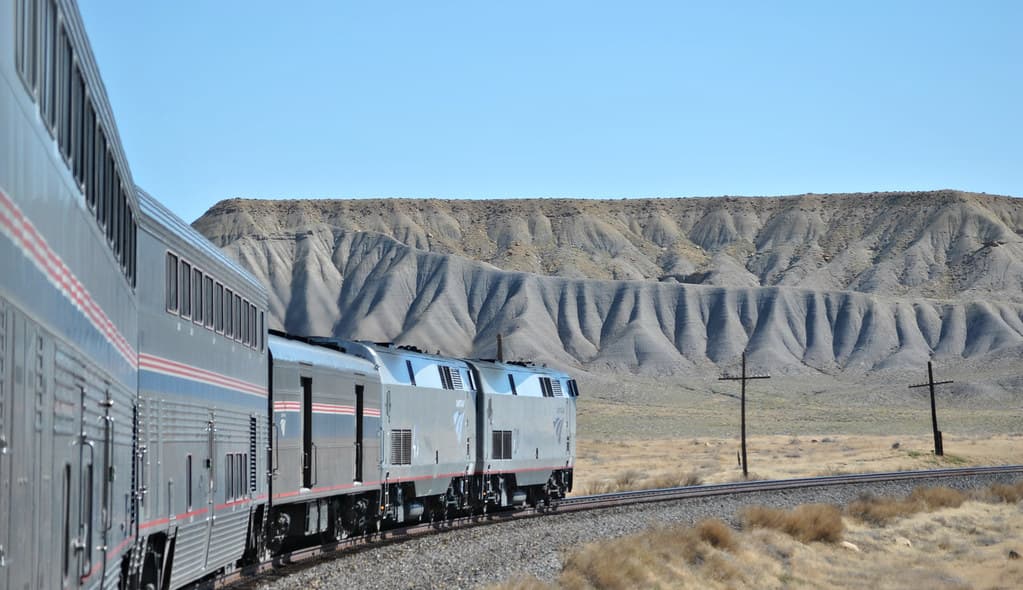

California Zephyr
Chicago to San Francisco across the Rockies and Sierra Nevada
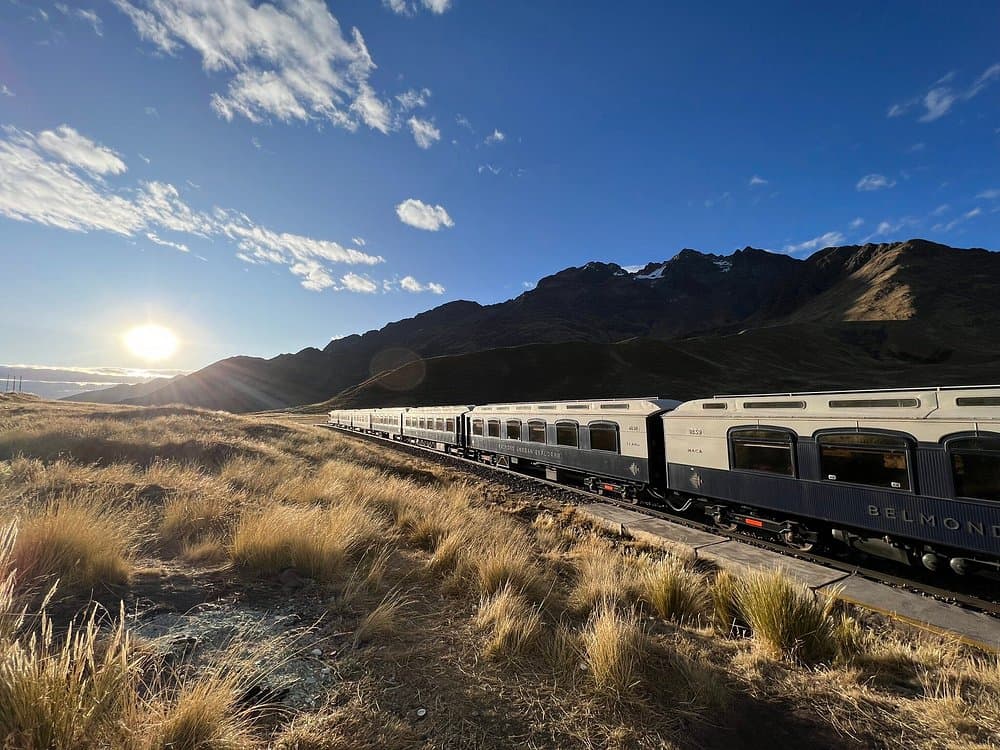
Belmond Andean Explorer
South America's first luxury sleeper train, across the roof of Peru
Qinghai-Tibet Railway
The world's highest railway, across the roof of the world to Lhasa

TranzAlpine
Coast to coast across the Southern Alps in a single morning

Tren a las Nubes
Argentina's rack-free climb to 4,220 m above the Puna
Denali Star
Alaska Railroad's flagship run to Denali and Fairbanks
Explore around this route
1 place on Spotatrain within 25 km of this route — 1 journey.
- Bergensbanen 7 m