Railway Experience
DB Museum Nuremberg (German Railway Museum)
One of the world's oldest railway museums, featuring 200 years of German train history with vintage locomotives and interactive exhibits.
Updated
See everything in Bavaria1 spot · 1 live cam · 1 experienceAbout This Experience
Exterior of the DB Museum's historic building, part of the Nuremberg Transport Museum complex.
The DB Museum Nuremberg – also known as the German Railway Museum – is the official railway museum of Deutsche Bahn and one of Europe's most important rail heritage institutions. Founded in the late 19th century, its origins date back to 1899 as the Royal Bavarian Railway Museum (with earlier roots in 1882), making it the oldest railway museum in Germany and often cited as the oldest of its kind in the world. The museum is housed in a grand historic building (built in 1925) near Nuremberg's old city walls. It spans 6,800 square meters of indoor exhibits, where visitors journey through over two centuries of railway history in Germany – from the very first steam locomotives of the 1830s to high-speed ICE trains of today.
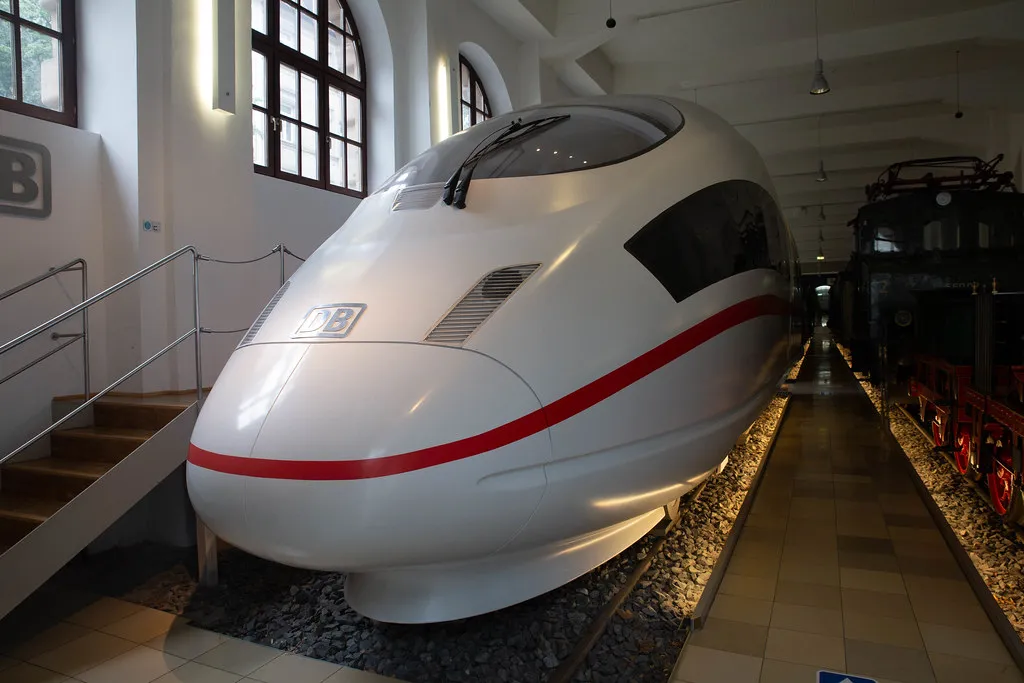
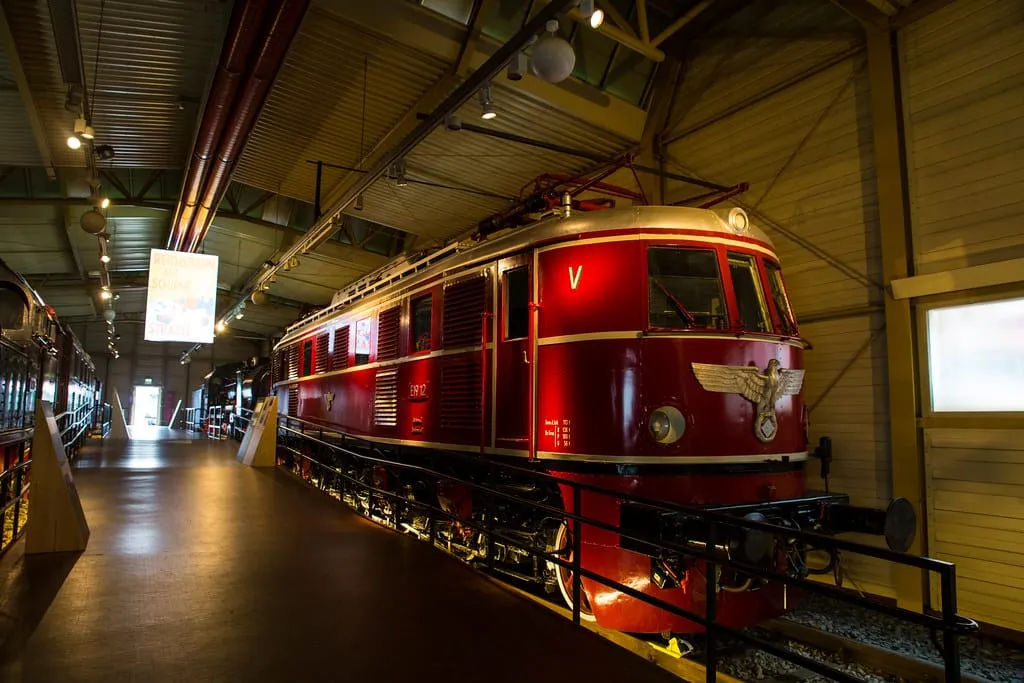
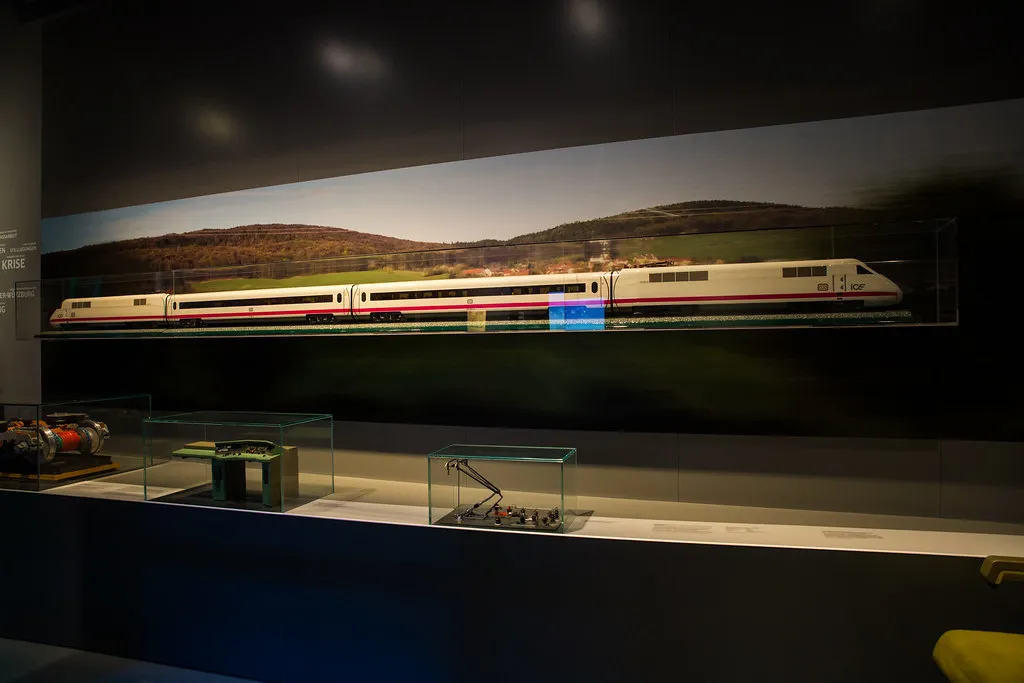
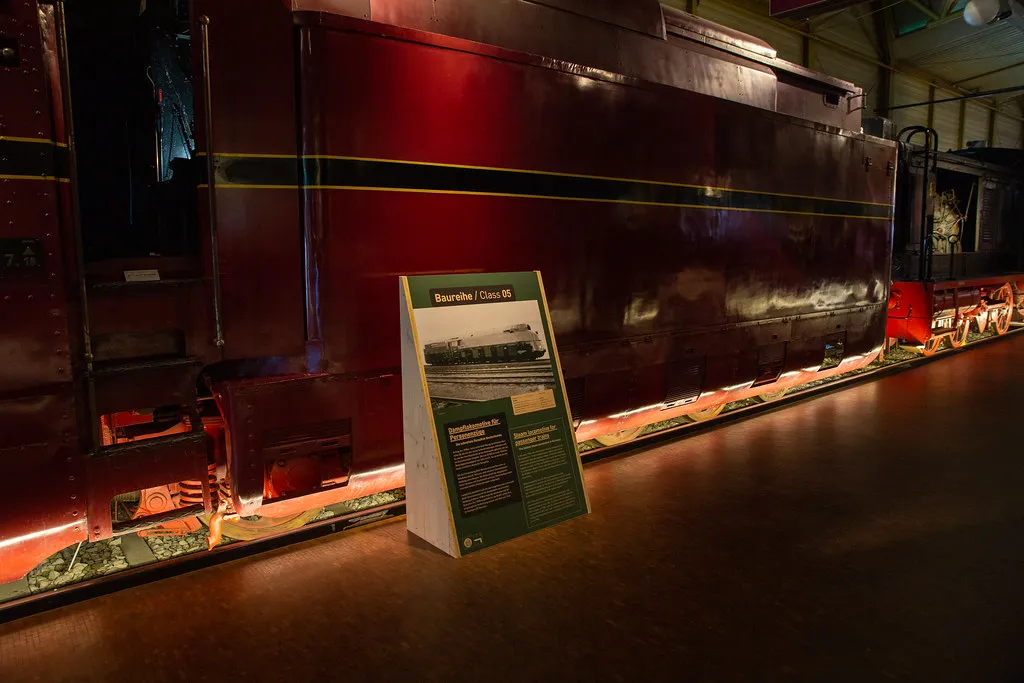
Inside, the museum's exhibits chronicle the development of rail transport in Germany in rich detail. The permanent exhibition "The History of the Railway in Germany" walks visitors through each era, highlighting not just technological advances but also social and cultural aspects of rail travel. A collection of around 40 historic locomotives and rail vehicles is on display in two large halls, representing legendary "iron horses" from different periods. Notable treasures include "Adler", a replica of Germany's first steam locomotive from 1835, the Nordgau (Germany's oldest surviving steam locomotive, built in 1853), King Ludwig II's lavish royal train coaches (dubbed a "castle on wheels"), and an array of vintage locomotives such as a streamlined Class 05 001 steam engine and a 1950s Trans Europ Express diesel railcar. The museum also features pieces of modern rail innovation, like a sectioned mock-up of an ICE 3 high-speed train, linking past to present.
Beyond the rolling stock, the DB Museum boasts extensive archives and library collections for researchers, with over 40,000 railway-related publications. Interactive displays are woven throughout: visitors can operate historic signal levers, explore a reconstructed railway tunnel, and engage with multimedia terminals. The museum complex also integrates the Museum of Communication (in the same building), and admission to the DB Museum includes the communication museum's exhibits on postal and telegraph history. Taken together, the DB Museum Nuremberg serves as a comprehensive center celebrating Germany's railroad heritage and its significance in industrial, economic, and social history.
Photo Opportunities
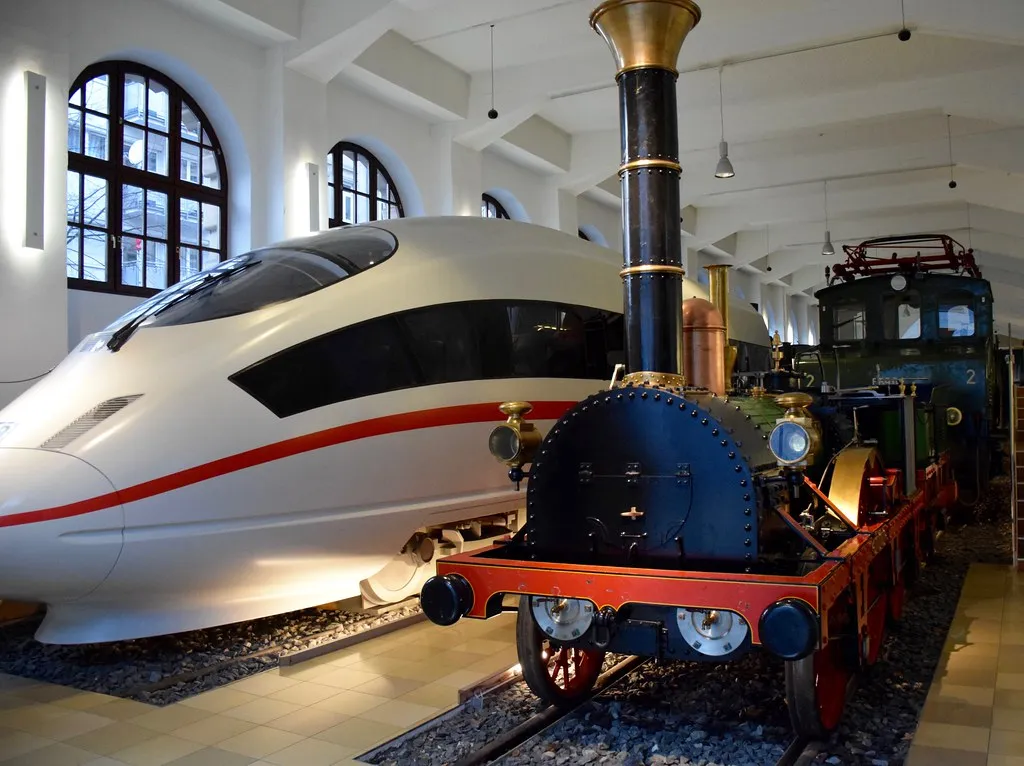
"Past meets present" in the museum's locomotive hall: a replica of the 1835 Adler steam engine (green) displayed beside a modern ICE train nose.
For railfans and photographers, the DB Museum offers many evocative scenes. In Vehicle Hall I, the striking side-by-side display of the tiny 19th-century Adler locomotive and the sleek white ICE is a must-capture shot – an image vividly illustrating 180 years of progress. The hall's high arched windows admit soft natural light onto the locomotives, especially in the morning, highlighting details like the Adler's bright brass boiler and the ICE's streamlined profile. Elsewhere, the ornate royal carriages of King Ludwig II (with their gilded interiors dubbed "Versailles on wheels") provide elegant close-up photo opportunities – look for decorative details and luxurious fabrics that reflect in the soft exhibit lighting.
The museum's outdoor exhibition yard is another prime spot. Here you can frame full-length shots of historic engines in daylight, using the vintage station platform and semaphore signals as authentic props. Late afternoon light often bathes the outdoor locomotives and rolling stock in a warm glow, ideal for dramatic compositions. Don't miss the Way of Human Rights installation along the adjacent street (part of the National Museum courtyard) as a unique backdrop merging culture and trains. Inside, a wide-angle lens is useful for capturing the length of engines in the halls, while a fast lens (or higher ISO) helps with dimmer areas since flash photography is not allowed. Tripods are permitted for private use as long as you don't disturb other visitors, so visiting on a quieter weekday can help if you need longer exposures. Whether it's the polished wood of a 19th-century coach or the powerful form of a steam locomotive, the DB Museum offers countless photogenic subjects that tell the story of railroading through the lens.
Featured Video
DB MUSEUM NURENBERG GERMANY
Why Visit
For any railway enthusiast, the DB Museum Nuremberg is a pilgrimage site that uniquely showcases Germany's rich train legacy. It is the place to stand face-to-face with the legends of German railroading – from the tiny green Adler that pulled the country's first train in 1835 to the massive black steam engines that once thundered across Europe. The museum's collection spans all eras and traction types: you'll find early steam locomotives, elegant royal carriages, workhorse diesel engines, and pioneering electric locomotives that helped shape modern rail travel. Many of these exhibits are one-of-a-kind. For example, the Nordgau (an 1853 locomotive) is the oldest surviving steam engine in original condition in Germany, and an 1830s British coal wagon on display is the oldest railway vehicle on the European continent. The museum's emphasis on authentic artifacts means railfans can inspect the real hardware – massive drive wheels, connecting rods, boilers, and control cabs – up close. Standing next to the streamlined Class 05 001 steam loco (a former world speed record-holder) or peering into the Art Deco interior of a 1950s TEE diesel railcar is an experience you can't get from books or photos.
Beyond the machines, the DB Museum offers context that true railfans will appreciate. Detailed exhibits explain technical developments like the evolution of signaling systems, track design, and rolling stock engineering. You can see a cross-section of an ICE high-speed train and learn about the advances in aerodynamics and materials that make 300 km/h travel possible. The museum also preserves the romance and nostalgia of railroading: the beautifully restored wooden coaches, vintage station furnishings, and even the lavish Ludwig II royal train carriages (complete with plush velvet and wood paneling) evoke the golden age of rail travel. Whether your passion is for steam power, electric locomotives, or historical railway operations, the museum's comprehensive approach – combining impressive artifacts with knowledgeable interpretation – makes it a uniquely rewarding visit. It's no surprise the DB Museum is the largest collection of German railway history, with over 150 historic rail vehicles in its care, and recognized as a milestone museum on the European Route of Industrial Heritage. In short, if you love trains, this museum offers an unparalleled journey through the milestones of railway technology and history.
What to Expect
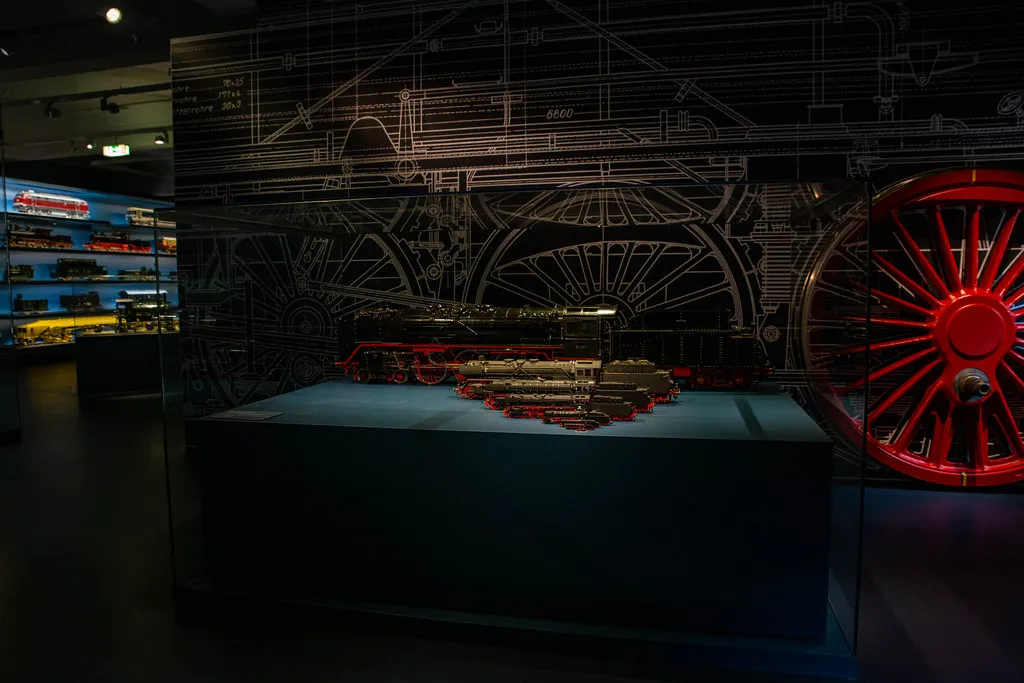
Visiting the DB Museum is an immersive journey through time. Upon entry, you'll pass through a modern foyer into grand exhibit halls that were once part of Nuremberg's old Verkehrsmuseum (Transport Museum) complex. Expect a self-guided experience – you can wander freely between the chronological displays. The main indoor exhibition leads you era-by-era: for instance, you'll start at a section depicting the first German railway (1835), complete with a replica of the Adler locomotive set on real tracks. Period-appropriate sounds (the huff of a steam engine, the clang of a station bell) are often softly playing in the background, enriching the atmosphere. As you move forward in time, each area is themed – one gallery might recreate a 19th-century station scene, while the next highlights the rise of electric trains with a full-size 1920s E 19 electric locomotive towering above you. Throughout the museum, signage is provided in German and English, describing each artifact and its significance. Interactive kiosks and touchscreens offer deeper dives (like schematics of how a steam piston works, or archival photos of railway workers). Every hour on the half-hour, head to the Model Railway room – here, an impressive 80 m² HO-scale layout springs to life in a 10-minute show demonstrating railroad operations, with dozens of model trains whirring around a miniature landscape. Kids and adults alike find this delightful, as lights blink and tiny signals switch on the sprawling model.
Outdoors, there's an open-air rail yard exhibit just across the street (accessible via a pedestrian crossing). In this fenced yard, you can walk along real rails and get up close to additional locomotives and carriages not inside the main building. These might include freight wagons, maintenance vehicles, or engines under restoration. The setting resembles a small station – there's even a historical semaphore signal and a section of track with a level crossing that visitors can operate. Families will notice the mini KIBALA Express train here: it's a pint-sized rideable train that loops through the outdoor area (generally running in warmer months or during special events). The atmosphere in the yard is fun and hands-on – you might hear the giggles of children riding the mini train or see enthusiasts photographing the undercarriage of a steam loco. The museum staff occasionally bring out volunteers or hold demonstrations here; for example, on certain days a historic diesel locomotive might be started up for demonstration, letting visitors hear its engine roar (if scheduled).
Generally, the museum is well-organized and not overly crowded except on peak days. There are benches and rest areas throughout, so you can sit and admire a particular exhibit (such as the royal coach or the model of the 1930s "Flying Hamburger" high-speed diesel train) at your leisure. The vibe is both educational and nostalgic. You'll likely encounter a mix of visitors: curious tourists, school groups excitedly following guides, and hardcore railfans studying every placard. Don't hesitate to talk to the museum attendants – many are enthusiasts themselves and can share extra tidbits or direct you to hidden gems (for example, the small exhibit on railway uniforms or the section about the famous Nuremberg–Fürth line, the first German railway). By the end of your visit, expect to have not only seen some magnificent trains, but to have gained a deeper appreciation of how railroads shaped Germany's history – all in the very city where it began.
Frequently Asked Questions
QHow long should I plan for my visit?
Plan on spending at least 2 to 3 hours at the DB Museum to fully explore the exhibits. The museum covers 6,800 m² of displays, including indoor halls and an outdoor yard, so budget a half-day if you want to see everything without rushing. Enthusiasts might even spend longer, especially if reading detailed descriptions or enjoying the interactive areas.
QIs photography allowed?
Yes. Visitors are welcome to take photos for personal use inside the museum. Flash photography is not permitted (to protect delicate artifacts), but you may shoot without flash and even use a tripod as long as it doesn't disturb other guests. Commercial photography or filming does require prior permission. With many exhibits behind barriers, please refrain from touching or climbing on the vehicles while getting your shots.
QIs it suitable for children?
Absolutely. The DB Museum is very family-friendly. There is a dedicated children's area called KIBALA ("Kinder Bahn Land") where kids can play with hands-on exhibits, drive a train simulator, and even ride a mini railway that circles the outdoor grounds every half hour. The museum frequently hosts family tours and events for little train fans. Strollers are allowed (parking available), and plenty of displays like model trains and interactive signaling equipment will keep children engaged.
QDo I need to book in advance?
For general admission, no advance booking is required – you can buy tickets upon arrival. The museum generally does not sell out or require timed entry on normal days. However, if you plan to join a guided tour or a special event (such as a themed tour or workshop), it's wise to reserve a spot ahead of time due to limited capacity. Tickets can also be purchased online on the museum's website for convenience, but walk-ins are welcome. During peak times (weekends or holidays), arriving early when the museum opens can help avoid any short queues.
QIs it accessible for wheelchairs?
Yes. The museum is fully accessible. There are ramps or elevators reaching all exhibition levels, and level access via the courtyard entrance for wheelchair users. Wheelchairs are available to borrow, and accessible restrooms are on the ground floor. The museum provides disabled parking right outside (four spots). Staff are happy to assist visitors with mobility challenges. Most exhibits have space to maneuver, though a few historic train cars can only be viewed from outside. Overall, the DB Museum is equipped to ensure visitors with disabilities have a comfortable experience.
QCan I ride any trains at the museum?
The museum does not operate full-size train rides as part of the standard visit – most locomotives are static exhibits. However, children (and fun-loving adults!) can ride the miniature railway in the outdoor area, which does loops every half-hour. Occasionally, the museum organizes special heritage train excursions or steam runs on select dates, but these are rare and usually advertised in advance. If you're eager to experience a train ride, consider the sightseeing trains or heritage railways in the region (or simply arrive by train to Nuremberg's main station, a short walk away).
QAre pets allowed inside the museum?
Only service animals are allowed. Pets or non-service animals cannot be brought into the museum galleries. Certified assistance dogs (e.g. guide dogs) are permitted to accompany visitors with disabilities. If you are traveling with a pet, you'll need to make other arrangements while you visit. The outdoor grounds also restrict pets to maintain the exhibits and cleanliness.
How to Plan Your Visit
Season and Schedule
The DB Museum in Nuremberg is open year-round with specific hours and occasional holiday closures. It is a popular indoor destination, especially during summer and December.
- Hours (Weekdays)
- Tuesday to Friday from 9:00 am to 5:00 pm
- Hours (Weekends & Holidays)
- Saturday, Sunday and public holidays from 10:00 am to 6:00 pm
- Closed
- Mondays (except if a holiday falls on Monday)
- Holiday Closures
- Closed on Christmas Eve, Christmas Day, New Year's Day, and possibly other major holidays
- Peak Visitation
- Summer (July–August) and December
Ticket Information
The DB Museum in Nuremberg offers affordable admission options and additional benefits for families and special ticket holders. Tickets can be purchased on-site or online, and guided tours are available for an extra fee.
- Adult Ticket Price
- €10
- Youth Ticket Price
- €6
- Children Under 6
- Free
- Family Ticket Price
- €20
- Reduced Rate
- €8
- Annual Pass Price
- €33 for adults, €60 for families
Accessibility Details
The DB Museum in Nuremberg is dedicated to accessibility for all visitors, offering various accommodations for those with mobility or sensory sensitivities. Families with young children will also find the museum stroller-friendly.
- Wheelchair Access
- Step-free route via the courtyard to the foyer
- Wheelchairs Available
- Two wheelchairs for visitors to borrow
- Accessible Restrooms
- Located on the ground floor and clearly marked
- Service Animals
- Allowed inside
- Family Facilities
- Stroller parking and baby changing facilities available
What to Bring
Visitors to the DB Museum Nuremberg should prepare for a lot of walking and consider bringing comfortable shoes, seasonal clothing, and camera gear. It's also advisable to carry a water bottle and any small essentials for children.
- Comfortable Shoes
- Recommended for walking through large exhibit halls and outdoor yard.
- Seasonal Clothing
- Indoors and climate-controlled; coat for winter, hat/sunscreen for summer outdoor exhibits.
- Camera Gear
- Bring a camera or smartphone; wide-angle lens recommended for serious photographers.
- Water Bottle
- Recommended to stay hydrated, especially on hot days.
- Family Essentials
- Bring small essentials for kids; large bags may need to be stored.
- Notebook/Sketchbook
- Useful for rail historians or modelers to jot notes or sketch details.
Photography Tips
The DB Museum in Nuremberg offers excellent photography opportunities with tips on vantage points, lighting, and equipment. Visitors are encouraged to respect museum regulations while capturing the beauty of the exhibits.
- Best Vantage Points
- Main hall with Adler and ICE, King Ludwig II's royal coaches, Bismarck salon carriage
- Optimal Lighting
- Morning light in Hall I, mid-afternoon for diffused lighting, golden hour for outdoor yard
- Recommended Lenses
- Wide-angle (10-20mm APS-C or 16-35mm full-frame), standard zoom (24-70mm), macro or close-focusing lens
- Tripod Use
- Allowed if not impeding others; use in dim areas on less busy weekdays
- Respect and Restrictions
- Mind ropes and barriers; avoid tripod use during model train shows
Traveling with Pets
Service animals only
The museum's visitor information is narrow: "Das Mitführen von Hunden ist ausschließlich für blinde und sehbehinderte Museumsgäste erlaubt" — dogs may be brought only by blind and visually impaired visitors. The rule is backed by the downloadable Besuchsordnung. No policy is published for pets other than dogs.
Verified — operator's pet policy
Travel Information
By Air
Nuremberg Airport is the nearest airport to the DB Museum, with convenient transport options available. For more international flights, Munich and Frankfurt airports are also accessible.
- Nearest Airport
- Nuremberg Airport (NUE)
- Distance to City Center
- 5 miles (8 km)
- Travel Time from Airport to Museum by Subway
- 15 minutes
- Walking Distance from Opernhaus Station to Museum
- 5 minutes (0.1 mi)
- Travel Time from Airport to Museum by Car
- 15–20 minutes
- Taxi Fare to Central Nuremberg
- €20–€25
- Major Hub Airport
- Munich International Airport (MUC)
- Distance from Munich to Nuremberg
- 105 miles (170 km)
- Travel Time from Munich to Nuremberg by Train
- 1 hour
- Distance from Frankfurt to Nuremberg
- 140 miles (225 km)
- Travel Time from Frankfurt to Nuremberg by Train
- ~2.5 hours
By Train
The DB Museum Nuremberg is easily accessible by train, located a short walk from Nuremberg Main Station. Visitors can also take the U-Bahn for a quick ride to reach the museum.
- Distance from Nuremberg Hbf
- 0.3 miles (500 m)
- Walking Time
- 5–7 minutes
- U-Bahn Stop
- Opernhaus
- S-Bahn Travel Time from Fürth
- 10 minutes
- Discount on Entry
- with Deutsche Bahn ticket
By Car
Nuremberg is easily accessible by car via several major highways, and the DB Museum is located just outside the old town walls. Driving in central Nuremberg may involve traffic, but the museum's location simplifies access.
- Driving Routes
- A3 from Frankfurt, A9 from Munich, A6 from Stuttgart, A73 from northern Bavaria
- Travel Time from Munich
- ~1h45m on A9
- Travel Time from Frankfurt
- ~2h on A3
- Travel Time from Stuttgart
- ~2h on A6 then A81
- Museum Address
- Lessingstr. 6
Parking
Parking near the DB Museum Nuremberg requires planning, as there is limited on-site parking and several public garages nearby. It is advisable to use these garages, especially during busy events.
- Disabled Parking
- 4 bays right outside the museum entrance on Lessingstrasse
- Nearby Parking Garages
- Karthäuserstraße Parkhaus, Opernhaus Parkhaus, Bahnhof Parkhaus
- Parking Fee
- around €2-€3 per hour
- Parking Duration Cost
- around €6-€8 for a 3-4 hour stay
- Parking Guidance System
- shows available spaces in real-time
Local Transportation
Nuremberg's local transport network makes it easy to reach the DB Museum, which is centrally located and walkable from many attractions. Public transit options include U-Bahn, bus, and taxis, with bike-sharing available nearby.
- Walking Distance from Main Market Square
- 10 minutes
- Closest U-Bahn Station
- Opernhaus
- Distance from Opernhaus Station
- 100 m
- Taxi Ride Cost in City Center
- under €10
- Bike Rental Availability
- VAG Rad stations
Nearby Lodging
Find places to stay near DB Museum Nuremberg (German Railway Museum).
This lodging map is provided by Stay22, a third-party service that may set cookies. It loads only with your consent.
Accommodation results are provided by Stay22; we may earn a commission on bookings made through this map.
Nearby Attractions
- Imperial Castle of Nuremberg (Kaiserburg Nürnberg)
A medieval castle complex overlooking the city. This iconic castle, with its fortifications, towers, and courtyards, is the symbol of Nuremberg. Dating back to the 11th century, it was home to Holy Roman Emperors during their stays in the city. Visitors can tour the Imperial Palace rooms, climb the Sinwell Tower for panoramic views, and peer into the Deep Well. The castle's museum showcases medieval artifacts and armaments. After absorbing rail history, a trip to the Kaiserburg puts you in touch with feudal history – offering a great contrast in time periods.
- Germanisches Nationalmuseum
Museum of German cultural history. Germany's largest museum of cultural history, boasting approximately 25,000 artifacts on display out of a collection of 1.3 million items. It spans prehistory to the present, exhibiting everything from medieval works of art, crafts, and armor to scientific instruments and folk artifacts. Notable highlights include the Behaim Globe (the oldest surviving globe, 1492) and extensive collections of musical instruments and textiles. The museum's entrance is through the historic "Kartäuser" monastery complex, and out front you'll walk through the striking "Way of Human Rights" installation. It's directly adjacent to the DB Museum (in fact, the two share a courtyard and some historic buildings), making it a convenient add-on. For railfans, this museum provides broader context of German history and culture that complements the industrial story at the DB Museum.
- Documentation Center Nazi Party Rally Grounds
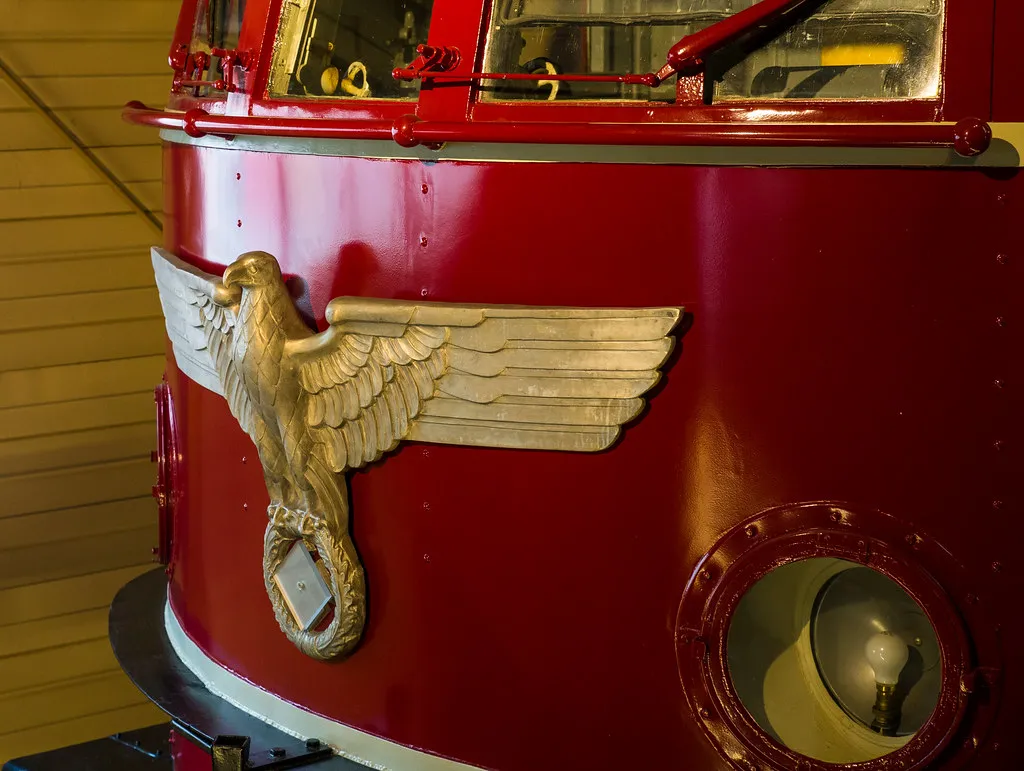
Historic site & museum at the former Nazi rally grounds. Located in the remaining wing of the unfinished Congress Hall at the vast rally grounds, this museum examines the propaganda spectacles of the Nazi Party Rallies and their context. The interim exhibition "Nuremberg – Site of the Nazi Party Rallies" uses photographs, films, and artifacts to show how the rallies were orchestrated and their impact. You can also explore the rally grounds themselves (covering about 4 sq km / 1.5 sq miles) via outdoor information panels – highlights include the Zeppelin Field grandstand and the Great Road. It's a sobering but very important site, reflecting on how infrastructure and transportation (trains brought thousands to these rallies) were harnessed for dark purposes. The museum is undergoing refurbishment until 2026 but still offers a comprehensive interim display. Railfans with an interest in World War II history or the role of Deutsche Reichsbahn during the era will find this site thought-provoking.
- Nuremberg Toy Museum (Spielzeugmuseum)
Museum of toys and playthings. A delightful museum dedicated to Nuremberg's centuries-long tradition of toy making. It showcases toys from antiquity to modern times across 1,400 m² of exhibits. Highlights include antique dolls and dollhouses, tin soldiers and figurines, classic wooden toys, early model trains, and iconic 20th-century toys like LEGO and Playmobil. Kids will love the play areas and large model train setup, while adults often feel nostalgic seeing toys from their childhood. Nuremberg has been a toy-manufacturing hub for 600 years, and even hosts the world's largest toy trade fair. This museum is a hit not just with children but also with collectors and history buffs. After immersing yourself in real trains at the DB Museum, it's fun to see the miniaturized world of toy trains and learn how play reflects technological changes.
- Nuremberg Transport Museum – Museum of Communication
Postal & communications museum (in same building as DB Museum). Often overlooked, the Museum für Kommunikation Nürnberg occupies part of the same complex and is included in your DB Museum ticket. It explores the history of communication – from postal services to telegraphs, telephones, radio, and the digital age. Exhibits include vintage telephones, mail carriages, early computers, and interactive stations to learn Morse code or see how mail was sorted on railway mail cars. It's a fitting complement to the DB Museum: one side of the building is about moving people and goods, the other about moving messages. Kids enjoy the hands-on displays, and philatelists will appreciate historical stamps and letters. If you have an extra hour, it's worth walking through to broaden your "transport" knowledge beyond rails.
Photos
 Dan
Dan
Attribution License
Clemens Vasters
Attribution License
Clemens Vasters
Attribution License
Clemens Vasters
Attribution License
Clemens Vasters
Attribution License
Clemens Vasters
Attribution License
Clemens Vasters
Attribution License
Dan
Attribution License
More Videos
Eisenbahnen im DB Museum Nürnberg
Help improve this page
Spotted something out of date or incorrect? Let our community know.
Explore more experiences: Browse all rail travel experiences.
Booking & Pricing
Quick Information
Country
Region
City
Nuremberg
Best Season
Year-round. The museum's indoor halls make it great in any weather, while summer offers pleasant conditions to enjoy the outdoor exhibit yard and the kids' miniature railway. Weekday mornings or off-peak seasons see fewer crowds, whereas weekends and school holidays are busier with families.
Visit Duration
2–3 hours (plan a half-day visit to fully explore all exhibits)
Cost
€10 per adult (children 6–17 €6; under 6 free)
Tags
Contact
+49 (0)800 32687386 (toll-free in Germany)
dbmuseum@deutschebahnstiftung.de