Updated
Distance
88 km
Duration
7h 05min
Max altitude
2,258 m
Bridges
5
Gauge
610 mm (2 ft)
A UNESCO-listed 88 km narrow-gauge railway climbing from the plains at New Jalpaiguri (146 m) to Darjeeling (2076 m) via Ghum, India's highest station (2258 m), using six zig-zags and three loops.
About This Journey
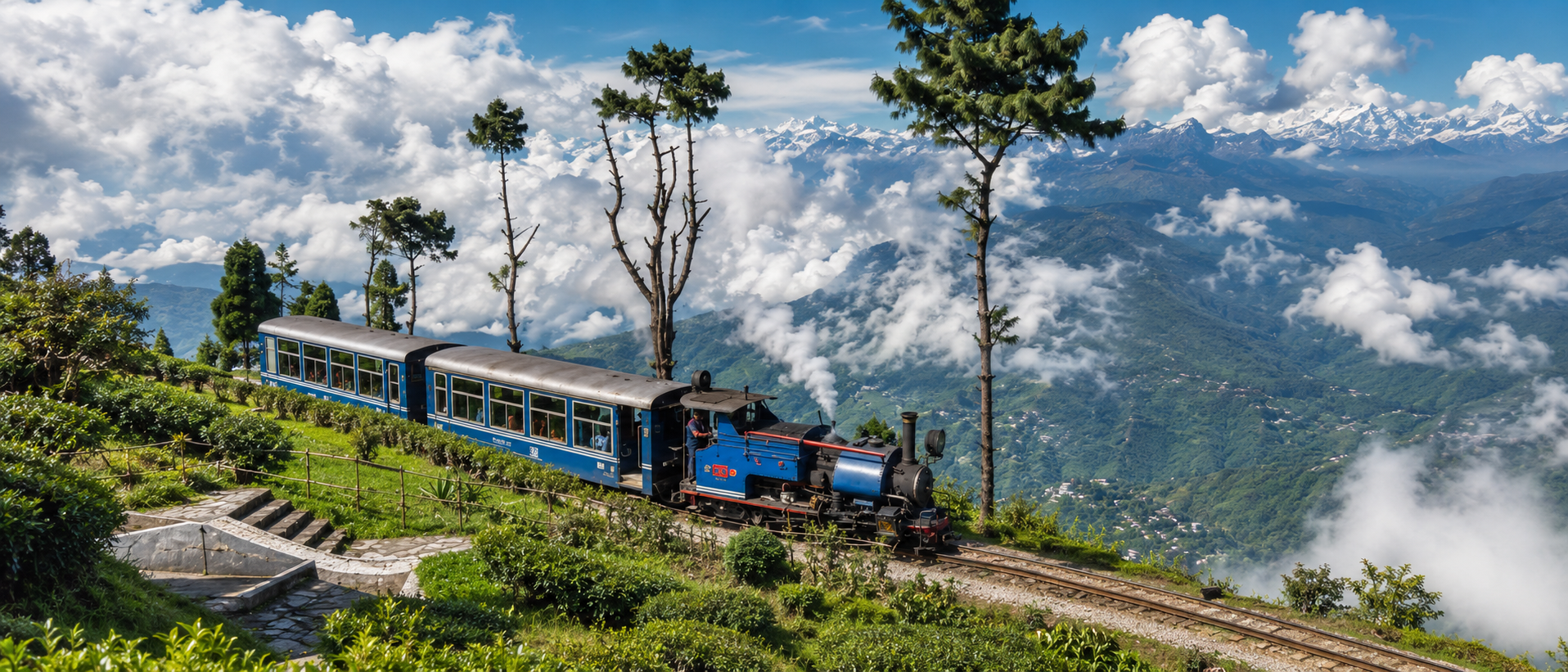
The Darjeeling Himalayan Railway is the first and most outstanding example of a hill passenger railway, an engineering feat threaded along the Hill Cart Road (National Highway 110) for much of its 88 km from the plains of West Bengal to Darjeeling at the foot of the Eastern Himalayas. Built between 1879 and 1881 under Franklin Prestage, an agent of the Eastern Bengal Railway, the line opened in stages: Siliguri to Kurseong on 23 August 1880, then the full stretch to Darjeeling on 4 July 1881. The actual climb begins at Sukna (162 m), and from there the line gains roughly 2,100 m of elevation over 70 km — an average grade close to 1 in 28.
Because locomotives could not handle the original gradient of the Hill Cart Road, four loops and four zig-zags were added between Sukna and Gayabari in 1882. Today three loops survive — Loop 3 at Chunbhatti, Loop 4 (Agony Point, the tightest curve on the line) above Tindharia, and the Batasia Loop, built in 1919 just below Ghum to ease the descent into Darjeeling. Six zig-zag reverses help the line negotiate the steeper sections. Five major bridges, 498 minor bridges and 177 unmanned level crossings dot the route, which is otherwise tunnel-free.
Daily diesel services use six 1997-built NDM-6 locomotives (Nos. 600–605), with three more units commissioned at the Northeast Frontier Railway workshops at New Bongaigaon for entry into service during 2025. Vintage 0-4-0 saddle-tank B-Class steam locomotives, built by Sharp, Stewart & Co. and the North British Locomotive Company between 1889 and 1925, haul tourist specials: the daily Darjeeling–Ghum joyride and the steam-hauled Red Panda service between Darjeeling and Kurseong. Of 34 B-Class locomotives originally built, around twelve remained in operating or restorable condition by 2005.
UNESCO inscribed the railway on the World Heritage List on 5 December 1999 under cultural criteria (ii) and (iv); two further mountain lines (the Nilgiri Mountain Railway in 2005 and the Kalka–Shimla Railway in 2008) joined it under the umbrella designation 'Mountain Railways of India'. Vistadome panoramic coaches were introduced on the NJP–Darjeeling run in August 2021. After a July 2024 landslide closed the line for four months, regular through-service resumed on 17 November 2024.
Why This Journey Is Iconic
The Darjeeling Himalayan Railway is the prototype of every hill passenger railway built since: ICOMOS, in its 1999 evaluation for UNESCO, described it as 'the first, and is still the most outstanding, example of a hill passenger railway,' applying 'bold and ingenious engineering solutions to the problem of establishing an effective rail link across a mountainous terrain of great beauty.' Its 610 mm gauge — half the width of standard gauge — and its use of loops and zig-zag reverses to gain elevation directly inspired the Kalka–Shimla and Nilgiri lines, also UNESCO-listed.
Ghum station, at 2,258 m (7,407 ft), is the highest in India and the second-highest in the world to be reached by a steam locomotive. The line is one of very few places where 19th-century B-Class saddle-tank steam locomotives still operate over their original route, with Sharp Stewart and North British Locomotive Company examples dating from 1889–1925 hauling tourist services along the same alignment they were designed for. Few passenger railways anywhere preserve such direct continuity between Victorian engineering, surviving rolling stock, and live commercial operation.
What to Expect
The Toy Train runs alongside Hill Cart Road for some 64 km of its 87.48 km length, often so close to traffic and buildings that the route feels more like an urban tramway than a mainline railway. Train drivers sound horns and whistles almost continuously to warn pedestrians; coaches sway through tight curves and creak at the zig-zag reverses as the locomotive runs around the train and pushes for the next stretch. The two-foot gauge keeps everything in miniature — carriages have only 30–50 seats, and the small NDM-6 diesels barely top the height of a tall passenger.
NJP–Darjeeling train 52541 leaves at 08:30 and reaches Darjeeling around 15:35 on Tuesdays, Thursdays and Saturdays. The First Class coaches and an AC Chair Car coach are joined in season by 44-seat Vistadome cars with rotating armchairs, overhead glass panels, charging sockets, mini-pantry and an observation lounge at the rear with floor-to-ceiling windows. The shorter Darjeeling–Ghum joyride runs many times daily, with a 25-minute halt at Ghum (DHR Museum included in the fare) and a 10-minute photo stop at Batasia Loop, where a memorial to Gorkha soldiers of the Indian Army stands at the centre of a circular garden — Kanchenjunga and the eastern Himalayan crest dominate the skyline on clear days.
History
The Darjeeling project began as a proposal by Franklin Prestage of the Eastern Bengal Railway, who approached Bengal lieutenant-governor Ashley Eden in the late 1870s with plans for a steam tramway from Siliguri to Darjeeling. A committee reported favourably in 1879, and Gillanders, Arbuthnot & Company received the construction contract. Track had reached Tindharia by March 1880, and Lord Lytton became the first viceroy to ride the unfinished line. Colonel F.S. Taylor (Consulting Engineer to the Government of India for Guaranteed Railways) and Prestage himself authorised the Siliguri–Kurseong section for traffic on 23 August 1880; the full Siliguri–Darjeeling stretch opened on 4 July 1881.
When the original alignment alongside Hill Cart Road proved too steep for the small locomotives, four loops and four zig-zags were added in 1882 between Sukna and Gayabari to bring the gradient to a uniform 1 in 28. The line was extended a quarter-mile to Darjeeling Bazar in 1886. Setbacks followed — the 1897 Assam earthquake, the 1899 cyclone, and especially the 1902 monsoon that washed away the Teesta bridge — but services were maintained with transhipment. By 1910 the railway carried 174,000 passengers and 47,000 tons of freight. Bogie carriages replaced four-wheel stock that year, and Batasia Loop was built in 1919 to ease the gradient into Darjeeling.
Indian Railways nationalised the line in 1951, attaching it briefly to the North Eastern Railway and, in 1958, to the Northeast Frontier Railway zone, where it has remained. In 1962 the southern terminus was extended ~6 km from Siliguri to New Jalpaiguri to meet the new broad-gauge main line to Assam. Eighteen months of Gorkhaland unrest in 1988–89 shut the line, but it reopened, and on 5 December 1999 UNESCO recognised it as a World Heritage Site. After a four-month suspension caused by a July 2024 landslide, NJP–Darjeeling through-service resumed on 17 November 2024.
Engineering Highlights
The DHR's three surviving loops and six zig-zag reverses are textbook solutions for narrow-gauge mountain railways and remain the line's signature engineering feature. Loop 4 — 'Agony Point' above Tindharia — has the tightest curve on the railway and a small loop diameter that allows the locomotive to almost see its own tail. Loop 3 at Chunbhatti is the lowest remaining loop; Loops 1 (above Sukna) and 2 (at Rangtong) were destroyed by floods in 1991 and 1942 respectively and never rebuilt. The Batasia Loop, just below Ghum at 7,000 ft, encircles a memorial garden and is the route's most photographed feature, with Kanchenjunga rising on the horizon in clear conditions.
The 1882 regrade brought the line to a uniform 1 in 28 gradient (3.57%), one of the steepest sustained climbs for an adhesion-only railway anywhere in the world. There are no tunnels — the line wraps around every contour and crosses 5 major bridges and 498 minor bridges. The Tindharia railway workshops, established with the line, still rebuild B-Class steam locomotives over a century after they were first delivered from Sharp, Stewart & Co. in Manchester. A retrofit of B787 to oil-firing in 2002 (mirroring the Nilgiri Mountain Railway's No. 37395 conversion) was unsuccessful and the locomotive was eventually returned to cosmetic display at Siliguri Junction.
Daily diesel services use six NDM-6 hood-unit locomotives built at the Indian Railways Diesel Locomotive Works in 1997, all rated for 610 mm gauge and dressed in NFR maroon. Three additional NDM-6 units, built at the NFR workshop at New Bongaigaon at a cost of about ₹15 crore, were scheduled to enter service in 2025 to increase departure frequencies on the line.
Best Time to Travel
October through early June is the strongest window. Post-monsoon (October–November) is ideal: skies clear, Kanchenjunga is reliably visible from Batasia Loop, and the tea gardens around Kurseong remain green from the late rains. December–February brings cold air, occasional frost at Ghum, and the lowest visitor numbers; pack for sub-zero overnight temperatures on the upper section even when Darjeeling town is in single digits Celsius. March to May is the second peak: warm days, blooming rhododendrons through the Sonada–Ghum forest belt, and the steam-hauled Red Panda service running at full timetable.
The monsoon (mid-June to mid-September) is the period to avoid. Heavy rainfall regularly triggers landslides on the Pagla Jhora–Tindharia stretch and along Hill Cart Road. Through-services were suspended in 2010–13, 2017, 2022 and again from July to November 2024 by landslide damage. Tourist joyrides Darjeeling–Ghum often continue during monsoon since the upper section is more stable, but check IRCTC for cancellations the day before travel.
Practical Tips
Reserve well ahead — particularly for the Vistadome and AC Chair Car coaches in season. The official channels are the IRCTC website (www.irctc.co.in/nget) and any Passenger Reservation System counter across Indian Railways; tickets are issued under journey-specific train numbers 52541/52540 (NJP–Darjeeling) and separate joyride numbers for the Darjeeling–Ghum special. The DHR runs at 'walking pace' for hours at a time, so dress in layers and bring water — there is no onboard catering on the regular trains, only the Vistadome's mini-pantry. Toilets are spartan.
For photographers: the eastern side of the train (right going up, left going down) faces the deepest valley views between Tindharia and Kurseong. At Batasia Loop, alight quickly during the 10-minute halt and shoot from the upper terrace beside the war memorial. At Ghum, the 25-minute halt is enough for the DHR Museum but not for both museum and outside footage of the locomotive run-around — pick one. Children under five travel free on most fare classes but still need a reservation issued at the counter.
The operator does not publish a pet policy — contact them directly before traveling with an animal.
Route Stages
- km 0146 m alt.departure
Southern terminus of the DHR since the 1962 extension that linked the narrow-gauge line to the new broad-gauge main line to Assam. Through-trains 52541/52540 to/from Darjeeling start and end here.
Broad-gauge interchange; narrow-gauge bay platforms; main southern access from Kolkata / Delhi mainline trains
- km 17.48162 m alt.3 min
Where the line truly begins to climb. Plains end here; the train enters the Mahananda Wildlife Sanctuary forest belt. Gradient changes dramatically just north of the station.
Start of the actual mountain climb; small DHR Museum on site; gateway to Mahananda Wildlife Sanctuary
- km 25.12428 m alt.2 min
Small intermediate station in dense forest. A short distance above Rangtong is a water tank, historically used to refill steam locomotives. Loop No. 2 was located nearby until 1942 flood damage removed it permanently.
Site of vanished Loop 2 (1882–1942); Jungle Safari turnaround during peak season
- km 37.19860 m alt.5 min
Home of the DHR's main locomotive workshop and carriage depot, where B-Class steam locomotives have been overhauled since the railway opened. Above the station, three sidings are used to inspect carriages while the locomotive runs around.
Tindharia railway workshops (since 1882); locomotive depot; B787 oil-burner experimental locomotive once stored here
- km 38920 m alt.passes through
The tightest curve on the entire DHR, immediately above Tindharia. The line spirals over itself in a quarter-mile circle so locomotives can claw the gradient toward Gayabari.
Tightest radius curve on the line; named for the white-knuckle ride sensation; surviving original spiral from the 1882 regrade
- km 56.91,482 m alt.10–15 min
Headquarters of the Darjeeling Himalayan Railway at Elysia Place. The station is a dead-end: Darjeeling-bound trains must back out across a busy road junction before continuing the climb. A one-room DHR Museum on the platform houses photos, newspaper cuttings and small artifacts.
DHR headquarters; reversing station; small museum; northern terminus of the daily steam-hauled Red Panda service from Darjeeling
- km 81.452,258 m alt.25 min (joyride) / 5 min (through-train)
Summit of the line at 2,258 m — India's highest railway station and the second-highest in the world reachable by steam locomotive. The station building houses a first-floor DHR Museum with the original Baby Sivok construction locomotive as its star exhibit.
India's highest railway station; Ghum Monastery (Yiga Choeling) 1.5 km away; DHR Museum with Baby Sivok first construction locomotive
- km 84.52,150 m alt.10 min
Built in 1919 to ease the descent from Ghum into Darjeeling, the loop circles a manicured circular garden and a memorial to Gorkha soldiers of the Indian Army. On clear days, Kanchenjunga's snow-capped peaks dominate the horizon north of the loop.
Most photographed feature of the line; Gorkha War Memorial at centre; Kanchenjunga panorama (clear days)
- km 87.482,076 m alt.arrival
Northern terminus of the line, in the heart of the hill station town. The 1891-renovated station building still stands and Toy Train souvenirs are sold from the platform.
End of the line; 5-min walk to Chowrasta and Mall Road; departure point for daily joyrides to Ghum and the Red Panda steam service to Kurseong
Getting to New Jalpaiguri
By Air
Bagdogra International Airport (IXB) is the only practical air gateway and sits roughly 12 km from New Jalpaiguri railway station and 15 km from Siliguri. Domestic flights connect Bagdogra to Delhi, Mumbai, Kolkata, Bengaluru and Chennai; international service is limited to a handful of regional routes (Bangkok, Paro). Prepaid taxis and shared minibuses link the airport to NJP station and to Darjeeling town (around 80 km / 3 h via Hill Cart Road).
By Train
New Jalpaiguri Junction (NJP) is the broad-gauge gateway for Darjeeling and the southern terminus of the DHR. Trains from Kolkata Howrah (Darjeeling Mail, Kanchanjunga Express, Padatik Express; 10–12 h), New Delhi (Sealdah–NJP Express; 21–22 h) and Guwahati (4–6 h) all stop here. Step off the broad-gauge platform, walk to the dedicated DHR side, and board train 52541. From Bagdogra there is also a daily local broad-gauge connection to NJP.
By Car
Hill Cart Road (National Highway 110) parallels the rail line all the way from Siliguri to Darjeeling — driving the route is genuinely an alternative to the train, with the same panoramas but only 3–4 h transit instead of 7. Shared jeeps run frequently from Siliguri's Pradhan Nagar stand. Private taxis from Bagdogra to Darjeeling cost around ₹3,500–5,000 depending on vehicle and season.
Parking
Parking at New Jalpaiguri Junction is via the IRCTC-managed paid lot at the station forecourt, free for stays under 15 minutes and metered thereafter. Darjeeling has no dedicated rail-side parking — leave vehicles at the Mall/Chowrasta paid lots and walk down to the station, or arrange hotel transfers if luggage is heavy.
Where to Stay
Find places to stay near Darjeeling.
This lodging map is provided by Stay22, a third-party service that may set cookies. It loads only with your consent.
Accommodation results are provided by Stay22; we may earn a commission on bookings made through this map.
Videos
Photos
Train, train, comin' round, round the bend
Darjeeling Toy Train
Himalayan Bird Locomotive at Station Stop - Darjeeling Himalayan Railway - Outside Darjeeling - West Bengal - India
Darjeeling Train Station
Panorama of Toy Train - Darjeeling Himalayan Railway - Darjeeling - West Bengal - India
Steam Engine of Darjeeling Toy Train
Darjeeling Toy Train
External Resources
Tourism info
Heritage & history
Frequently Asked Questions
Is the Darjeeling Himalayan Railway running in 2026?▾
How long does the New Jalpaiguri to Darjeeling Toy Train take?▾
Where can I book tickets?▾
What is the highest station on the line?▾
Are the trains steam or diesel?▾
What is the Batasia Loop?▾
When was the DHR added to UNESCO World Heritage?▾
Is the joyride from Darjeeling to Ghum worth doing if I cannot take the full journey?▾
Help improve this page
Spotted something out of date or incorrect? Let our community know.
Related on Spotatrain
More Narrow Gauge Journeys
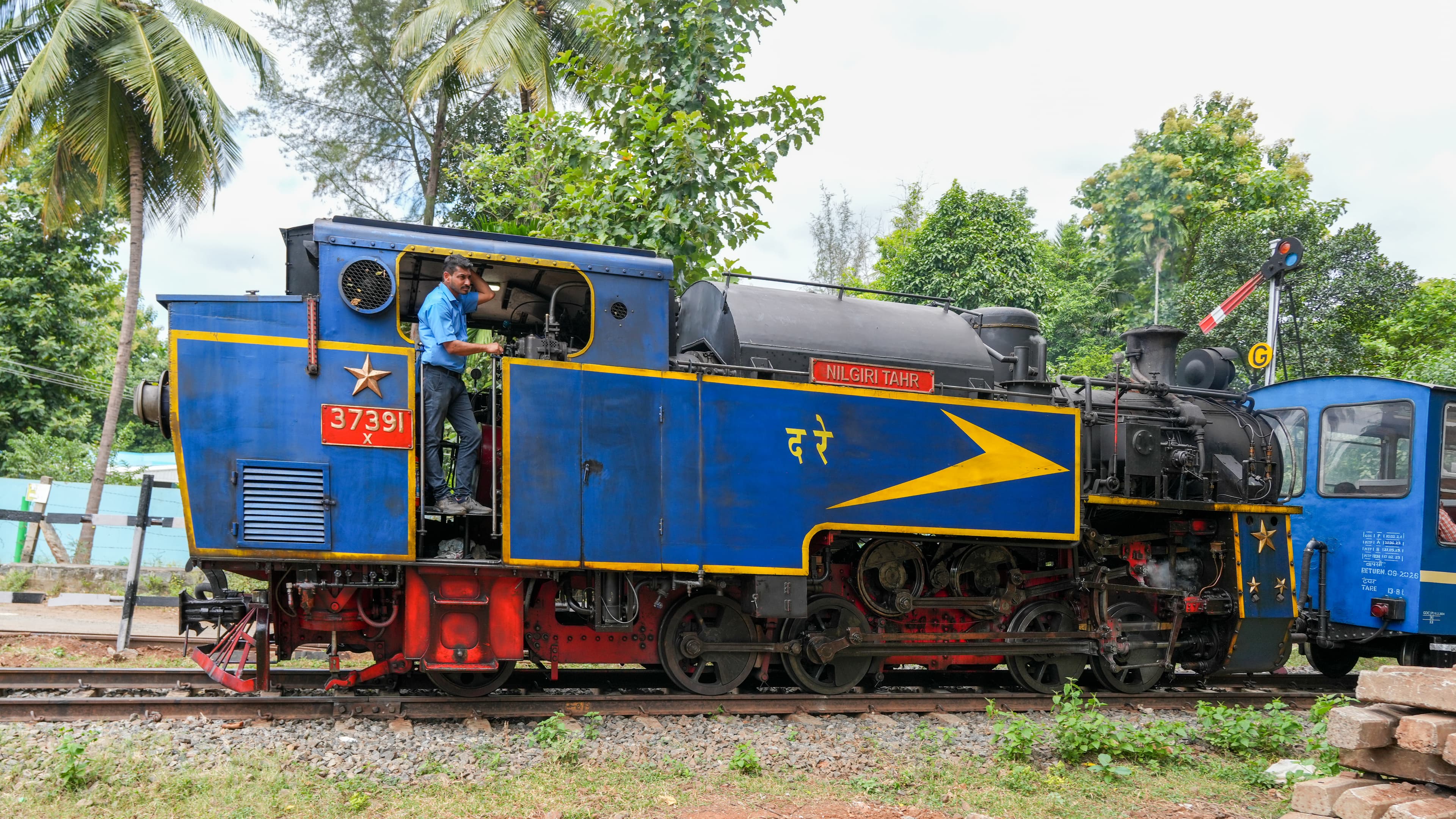

Nilgiri Mountain Railway
India's only rack railway — a UNESCO steam climb from the plains to Ooty
Glacier Express
The slowest express train in the world: 8 hours across the Swiss Alps
Bernina Express
From Swiss glaciers to Italian palm trees across a UNESCO alpine crossing 2
Ffestiniog Railway
The world's oldest narrow gauge railway, from harbour to slate mountain
Durango and Silverton Narrow Gauge Railroad
An 1882 steam train up Colorado's Animas River Gorge to a silver-mining town
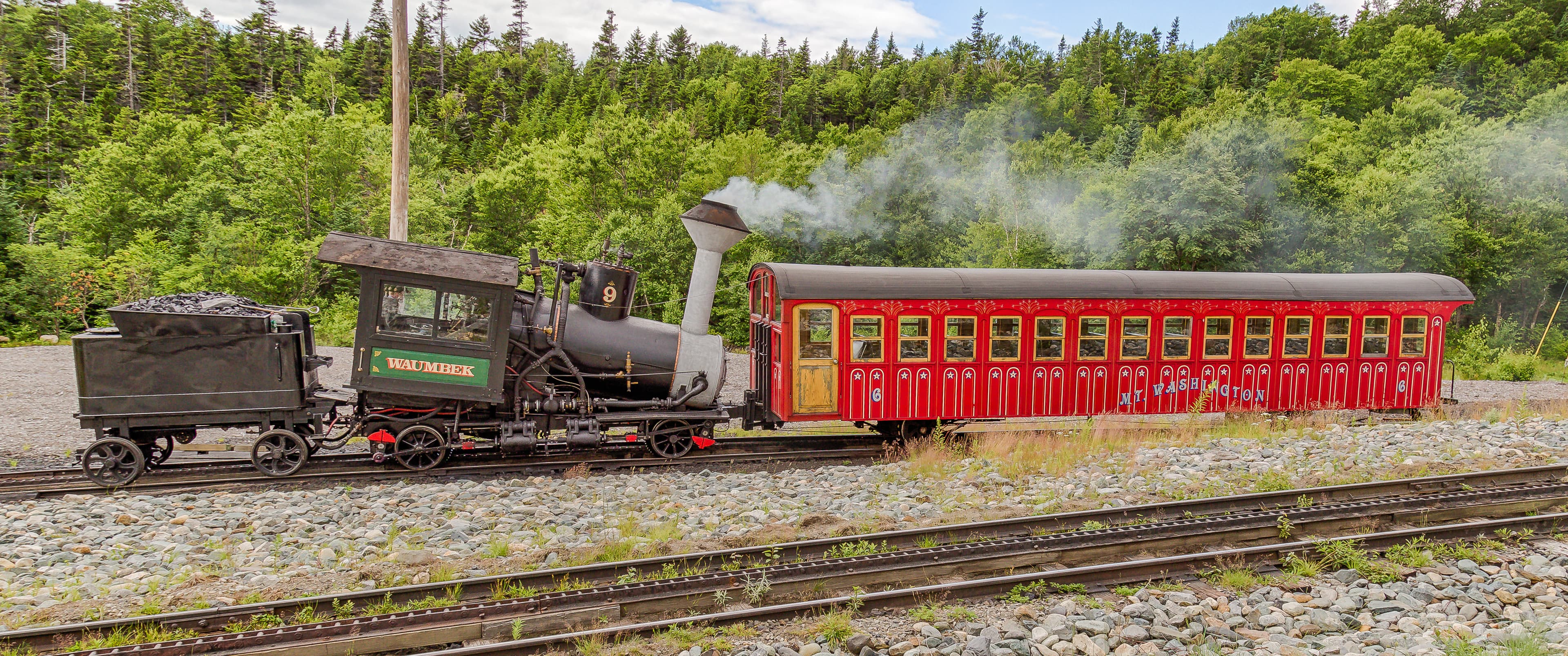
Mount Washington Cog Railway
World's first mountain-climbing cog railway — 1869, 37.41% grade, climbs to 6,288 ft
More Journeys Worldwide
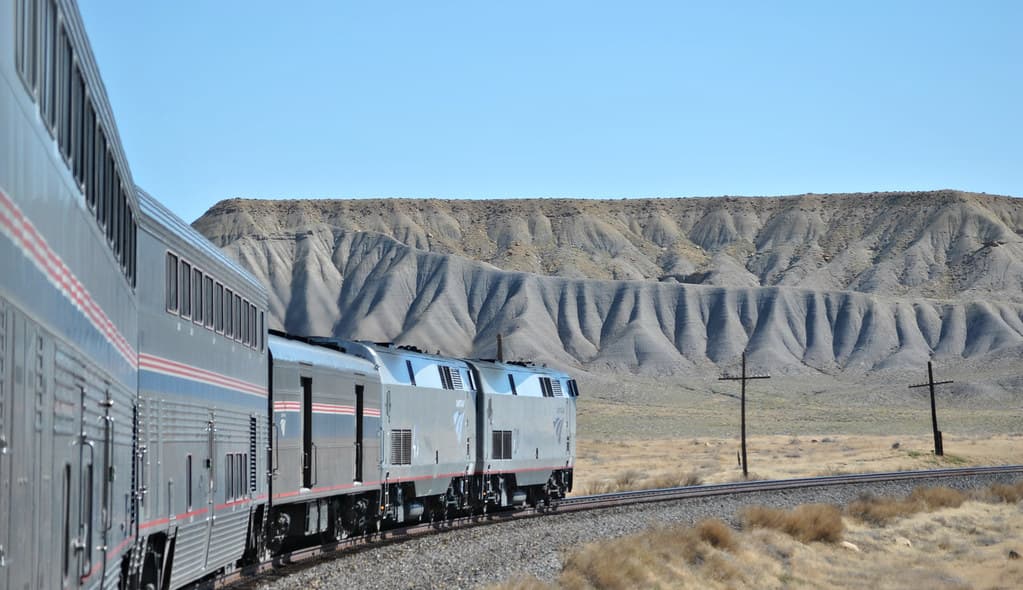
California Zephyr
Chicago to San Francisco across the Rockies and Sierra Nevada
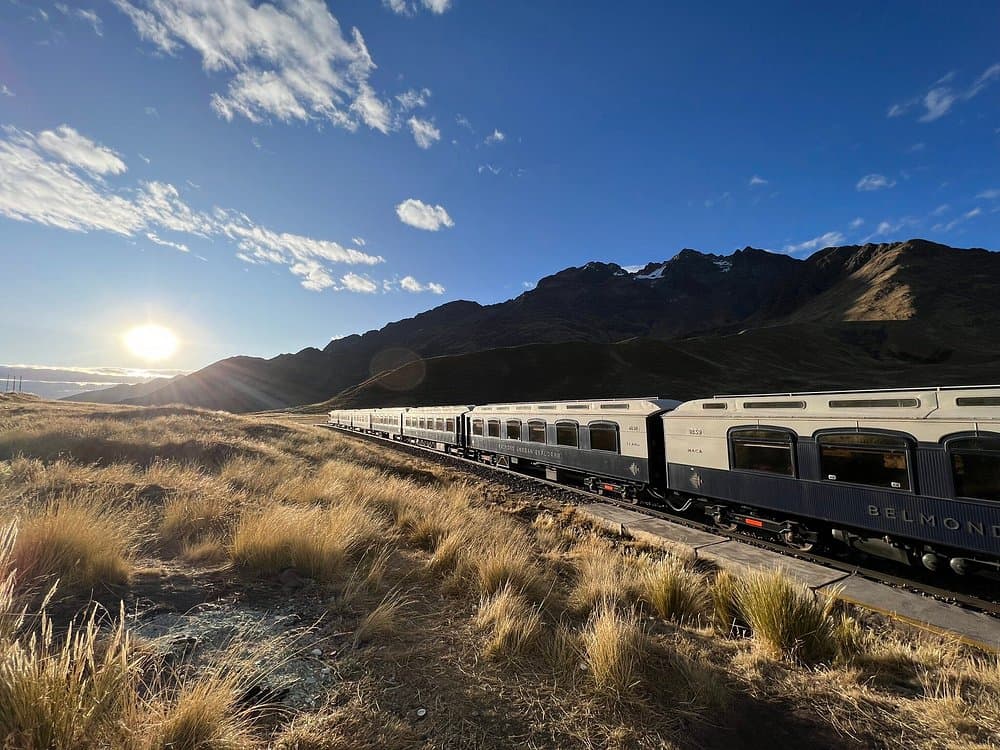
Belmond Andean Explorer
South America's first luxury sleeper train, across the roof of Peru
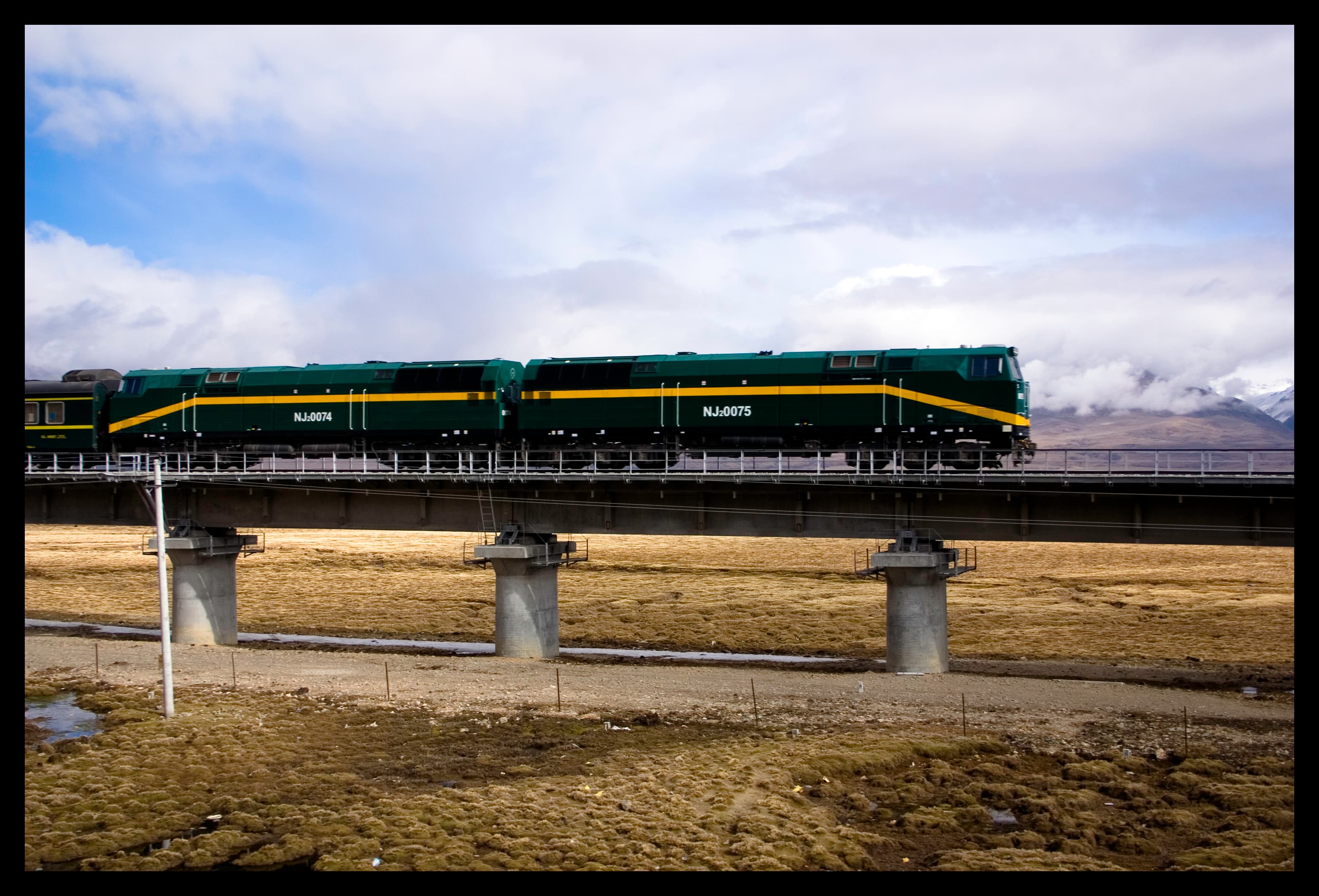
Qinghai-Tibet Railway
The world's highest railway, across the roof of the world to Lhasa

TranzAlpine
Coast to coast across the Southern Alps in a single morning

Tren a las Nubes
Argentina's rack-free climb to 4,220 m above the Puna
Denali Star
Alaska Railroad's flagship run to Denali and Fairbanks
Explore around this route
1 place on Spotatrain within 500 km of this route — 1 journey.
- Qinghai-Tibet Railway 398 km