

Updated
Distance
9,289 km
Duration
About 6–7 days (≈146 hours)
Max altitude
1,070 m
Gauge
1520mm
The Trans-Siberian Railway runs 9,289 km (5,772 mi) from Moscow to Vladivostok across eight time zones — the longest railway line in the world and a six-to-seven-day passage through European Russia and Siberia.
About This Journey
The Trans-Siberian Railway — known in Russia as the Transsib and historically as the Great Siberian Route — is a 9,289-kilometre (5,772-mile) main line linking Moscow's Yaroslavsky station with the Pacific port of Vladivostok. Officially the longest railway line in the world, it spans eight time zones and runs entirely within Russia, threading European Russia, the Ural Mountains, the West Siberian Plain, the taiga of Eastern Siberia and the Russian Far East.
Moving eastward from Moscow, the route passes through Yaroslavl, crosses the Urals near Yekaterinburg, then reaches Omsk, Novosibirsk on the Ob River and Krasnoyarsk on the Yenisey, before arriving at Irkutsk. Between Irkutsk and Ulan-Ude the line hugs the southern shore of Lake Baikal, the world's deepest lake, then climbs over the Yablonoi Mountains to its highest point at the 1,070-metre (3,510 ft) Yablonovy Pass near Chita. East of Chita it runs roughly parallel to the Mongolian and Chinese borders, crosses the Amur River at Khabarovsk, and ends at Vladivostok, where a monument marks kilometre 9,288.
The flagship service is the Rossiya №001/002, a year-round long-distance train that takes roughly six days end to end with dozens of intermediate stops. The whole line is double-tracked and fully electrified (3 kV DC and 25 kV 50 Hz AC), built to the 1,520 mm Russian broad gauge. Two famous branches diverge from the main line: the Trans-Mongolian (which leaves at Ulan-Ude for Ulaanbaatar and Beijing) and the Trans-Manchurian (which turns south after Chita toward Harbin and Beijing).
Why This Journey Is Iconic
No other railway compresses a continent the way the Trans-Siberian does. Over six days a single train carries you 9,289 km (5,772 mi) and through eight time zones — yet the entire journey runs on Moscow time, so the clock on the carriage wall slowly drifts away from the sun outside. Few trips on Earth let you watch European birch forest give way to the Ural watershed, the endless West Siberian steppe, the taiga, Lake Baikal and finally the Pacific, all from the same window.
It is also a living monument. Conceived under Tsar Alexander III and championed by finance minister Sergei Witte, the line was built between 1891 and 1916 by more than 85,000 workers, and remains the backbone of the Russian rail network more than a century later. Riding it is as much a passage through Russian history — Romanov ambition, the Russo-Japanese War, two revolutions, the Soviet century — as it is a crossing of geography.
What to Expect
The classic ride is aboard the Rossiya №001/002 in one of three sleeping classes: 3rd-class platzkart (an open dormitory carriage of 54 bunks, the most sociable and cheapest), 2nd-class kupe (lockable four-berth compartments) and 1st-class SV (two-berth compartments). Each carriage has a samovar of free boiling water for tea and instant noodles, a provodnitsa (carriage attendant) who keeps order, and a restaurant car serving Russian staples.
Days settle into a rhythm of reading, card games, shared food and conversation with Russian fellow passengers, punctuated by station stops where babushkas and kiosks sell smoked fish, dumplings and snacks. Stops range from two minutes to half an hour, the longer ones long enough to stretch your legs on the platform. There is no on-board shower in standard classes, one practical reason many travellers break the trip in Yekaterinburg, Irkutsk or Ulan-Ude rather than riding straight through.
History
The need for a railway to bind Siberia to European Russia grew through the 19th century, when the region depended on rivers in summer and horse-drawn sledges over frozen winter roads. On 9 March 1891 the imperial government announced its intention to build the line, and Tsarevich Nicholas (the future Nicholas II) inaugurated construction at Vladivostok in May 1891. Work proceeded in parallel sections: the West Siberian Railway (Chelyabinsk to the Ob) was completed in 1896 and the Central Siberian (Ob to Irkutsk) in 1899.
Lake Baikal long remained a barrier, crossed by the ice-breaking train ferry SS Baikal until the Circum-Baikal line around the lake's southern tip opened in 1905. After the Russo-Japanese War (1904–05) exposed the risk of the Manchurian shortcut, Russia built the Amur Railway through its own territory, and in 1916 a Trans-Siberian route lying wholly within Russia was finally complete. Electrification, begun in 1929, was finished only in 2002 with the Khabarovsk–Vladivostok segment.
Engineering Highlights
The line's signature structure is the Khabarovsk Bridge over the Amur River. Designed by Lavr Proskuryakov and opened in 1916 as the Alekseyevsky Bridge, it stretched 2,590 metres (8,500 ft) and was long the longest bridge in Imperial Russia and the Soviet Union; its completion was delayed over a year when a German cruiser sank the ship carrying its final spans in 1914.
The Circum-Baikal Railway, the original lakeside alignment, packs extraordinary engineering into a short stretch: 38 tunnels totalling about 9,063 metres, plus stone galleries, viaducts and hundreds of retaining walls. Across its length the main line is built to the 1,520 mm Russian broad gauge, is double-tracked and fully electrified at 3 kV DC and 25 kV 50 Hz AC, with operating speeds of 60–140 km/h (37–87 mph). Its highest point is the Yablonovy Pass at 1,070 metres (3,510 ft).
Best Time to Travel
The Trans-Siberian runs year-round and each season offers a different journey. Summer (June–August) brings the longest daylight, the greenest taiga and the warmest weather for swimming or hiking at Lake Baikal; it is also the busiest and priciest period, so book early. Late spring and early autumn are quieter and milder, with autumn colour across the birch forests in September.
Winter (December–March) is the most atmospheric for those who do not mind the cold: Siberia under snow is spectacular, carriages are kept warm, and fares fall to their lowest. February is when Lake Baikal freezes into metres-thick clear ice. Whatever the season, remember the train keeps Moscow time throughout, so plan meals and sleep against the local time outside, which can run up to seven hours ahead.
Practical Tips
Book as early as you can — tickets open 90 days before departure on RZD and prices climb with demand. Foreign-issued Visa, Mastercard and Amex no longer work on RZD's own website (it accepts only the Russian MIR card), so most international travellers book through an English-language agency such as RussianTrain, via Belarusian Railways, or in cash at a station ticket office. A Russian visa is required and should be arranged well in advance.
For comfort on a multi-day ride, 2nd-class kupe is the usual choice; platzkart is cheaper and more sociable; SV is the most private. Bring slip-on shoes, a power bank, snacks and tea supplies (free boiling water is always available), and toilet paper for longer station stops. Because standard carriages have no shower, many travellers split the trip with stopovers in Yekaterinburg, Irkutsk (for Lake Baikal) and Ulan-Ude.
The operator does not publish a pet policy — contact them directly before traveling with an animal.
Route Stages
Getting to Moscow
By Air
Moscow is served by three major airports — Sheremetyevo (SVO), Domodedovo (DME) and Vnukovo (VKO) — each linked to the city by Aeroexpress trains of roughly 35–45 minutes. Vladivostok International Airport (VVO, at Knevichi) lies about 44 km (27 mi) north of the city; an Aeroexpress service connects the airport to Vladivostok railway station in roughly 50–55 minutes.
By Train
The journey starts (or ends) at Moscow's Yaroslavsky station on Komsomolskaya Square, directly above Komsomolskaya metro station (Koltsevaya and Sokolnicheskaya lines) and beside the Leningradsky and Kazansky terminals. Arrive about 90 minutes before departure, especially if you do not read Russian. At the eastern end, Vladivostok railway station sits in the city centre next to the marine terminal.
By Car
Driving the full route is not practical: there is no continuous high-quality highway paralleling the line across Siberia, and the journey is conceived as a rail trip. Travellers typically arrive at the departure city by air or rail and leave the car behind.
Parking
Both Moscow Yaroslavsky and Vladivostok stations are central, transit-served terminals with limited and paid short-term parking nearby rather than dedicated long-stay railway car parks; long-distance passengers are far better arriving by metro, Aeroexpress or taxi.
Where to Stay
Find places to stay near Vladivostok.
This lodging map is provided by Stay22, a third-party service that may set cookies. It loads only with your consent.
Accommodation results are provided by Stay22; we may earn a commission on bookings made through this map.
Videos
Photos
The Trans-Siberian Express
GE Locomotive,
Trans-Siberian tunnel
Transsib in der Steppe
RZD EP1-142, Meget, Transsib line (31712546653)
Transsib start
External Resources
Official resources
Frequently Asked Questions
How long is the Trans-Siberian Railway?▾
How long does the journey take?▾
How many time zones does it cross?▾
Can foreigners book and travel it in 2026?▾
What are the carriage classes?▾
When is the best time to travel?▾
Does the train go to Mongolia or China?▾
Help improve this page
Spotted something out of date or incorrect? Let our community know.
Related on Spotatrain
Similar Journeys
Blue Train
Pretoria to Cape Town in two nights, with a butler in every corridor


The Ghan
Transcontinental across Australia's Red Centre, Adelaide to Darwin
Flåmsbana
One of the world's most beautiful train journeys — 20 km, 866 m descent
Qinghai-Tibet Railway
The world's highest railway, across the roof of the world to Lhasa
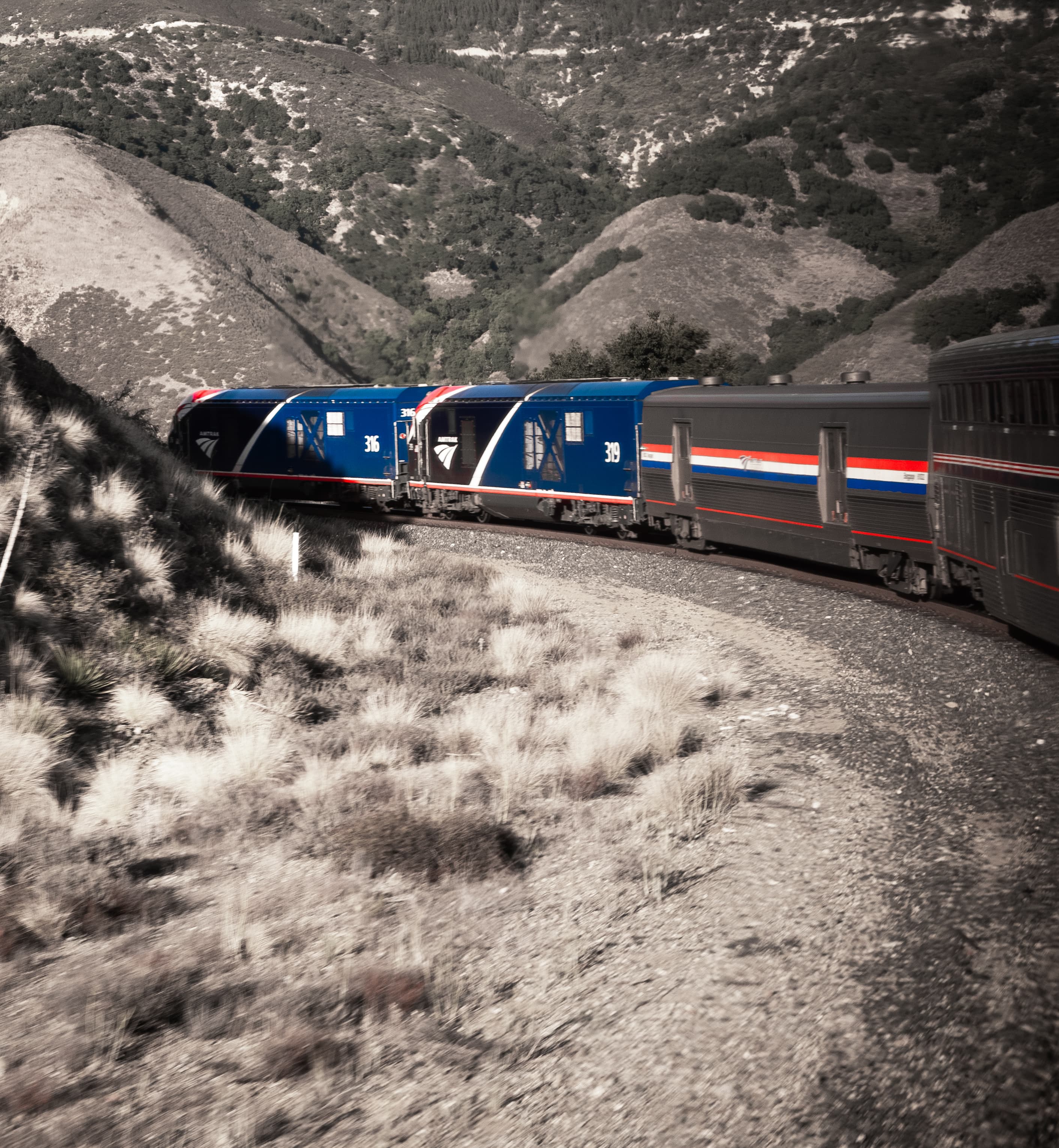
Coast Starlight
Seattle to Los Angeles in 35 hours: Cascade summits, Mount Shasta and 104 miles of Pacific shoreline
More Journeys Worldwide
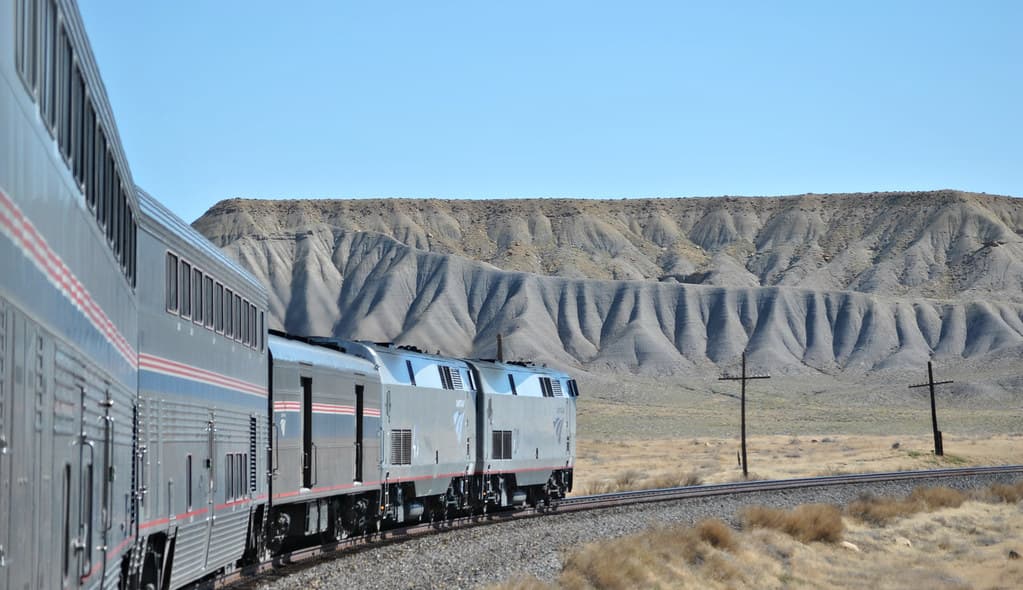
California Zephyr
Chicago to San Francisco across the Rockies and Sierra Nevada
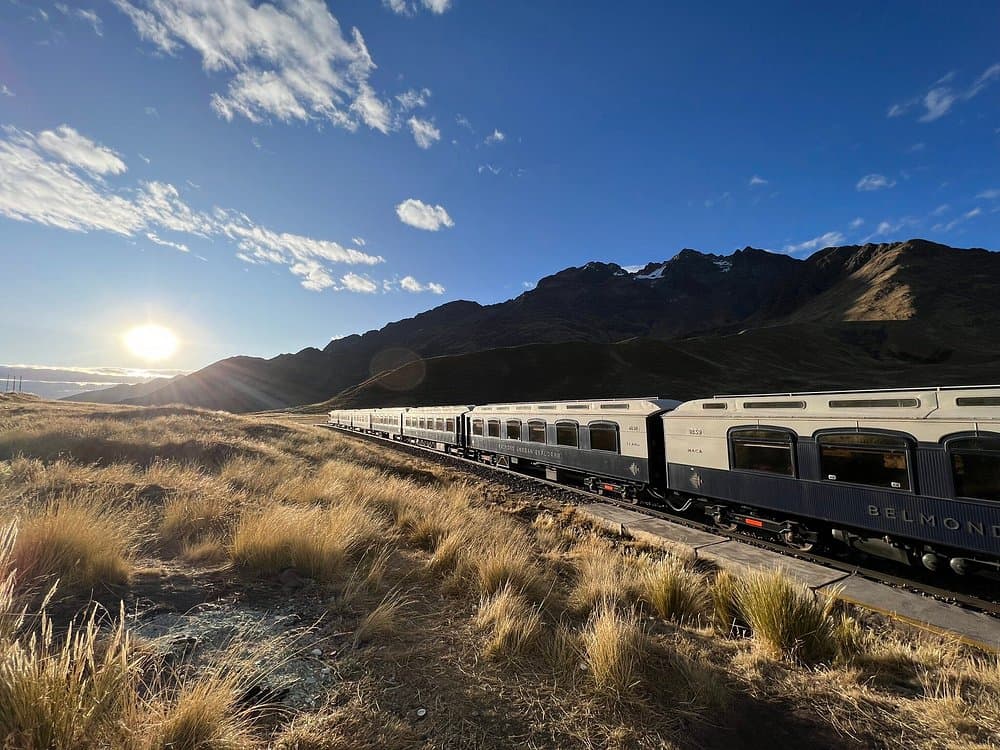
Belmond Andean Explorer
South America's first luxury sleeper train, across the roof of Peru

TranzAlpine
Coast to coast across the Southern Alps in a single morning

Tren a las Nubes
Argentina's rack-free climb to 4,220 m above the Puna
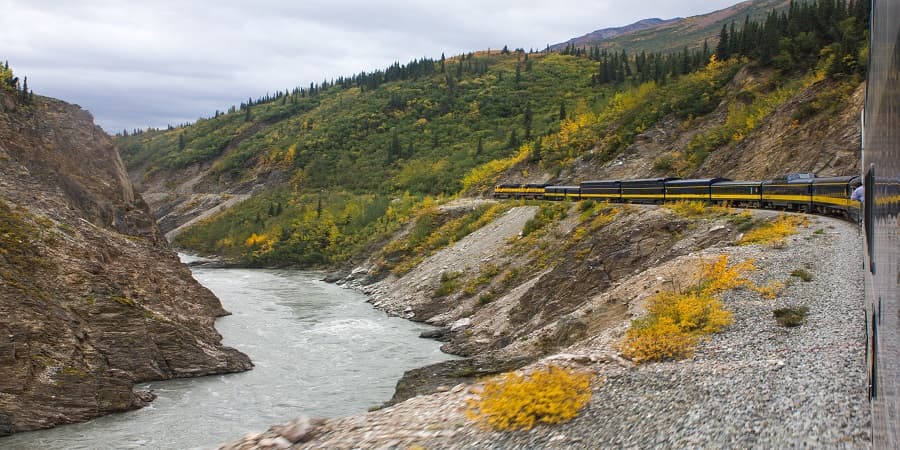
Denali Star
Alaska Railroad's flagship run to Denali and Fairbanks

Bergensbanen
Oslo to Bergen across the roof of Norway
Explore around this route
Nothing else on Spotatrain within 50 km of this route. The closest is Sapporo — Streetcar on Minami 1-jo Street, 768 km away.