
Updated
Distance
1,956 km
Duration
~21h 30min
Max altitude
5,072 m
Bridges
675
Gauge
1435mm
The Qinghai-Tibet Railway climbs 1,956 km from Xining to Lhasa across the Tibetan Plateau, crossing the 5,072 m Tanggula Pass, the highest point on any railway on Earth.
About This Journey
The Qinghai-Tibet Railway (Qingzang Railway) is the highest railway line in the world, running 1,956 km (1,215 mi) from Xining, capital of Qinghai Province, to Lhasa in the Tibet Autonomous Region. More than 960 km (600 mi) of its track sits above 4,000 m (13,123 ft), and over 80% of the Golmud-Lhasa section runs higher than that altitude across the Tibetan Plateau, the "roof of the world."
Leaving Xining at 2,200 m (7,220 ft), the line skirts the turquoise shore of Qinghai Lake, China's largest salt lake, before reaching the frontier town of Golmud at km 830. Beyond Golmud the railway begins its true climb: through the Kunlun Mountains past 6,178 m Mount Yuzhu, across the uninhabited Hoh Xil reserve where Tibetan antelope migrate, over the Fenghuoshan tunnel (at 4,905 m / 16,093 ft the highest rail tunnel on Earth) and on to Tanggula Pass at 5,072 m (16,640 ft), the highest point reached by any railway in the world.
About 550 km (340 mi) of the line is laid on permafrost. Engineers raised long stretches onto elevated viaducts with pile foundations and cooled the embankments with ammonia-based heat exchangers to keep the frozen ground stable. The route crosses 675 bridges totalling some 160 km (99 mi), and 33 dedicated wildlife underpasses let antelope and wild yak cross beneath the tracks.
Purpose-built 25T carriages carry an oxygen supply to every seat, UV-filtering windows and a doctor on board. The standard end-to-end run takes about 21 hours 30 minutes, climbing from the high desert of Qinghai to the grasslands of Nagqu and Damxung before descending into the Lhasa Valley at roughly 3,650 m (11,975 ft).
Why This Journey Is Iconic
No other railway reaches as high. The Qinghai-Tibet line holds a cluster of world records: the highest railway line, the highest railway station (Tanggula at 5,068 m / 16,627 ft), the highest rail tunnel (Fenghuoshan, 4,905 m) and the longest stretch of track laid on plateau permafrost. For many travellers, simply watching the altimeter climb past 5,000 m from a train seat is the trip of a lifetime.
The journey is also a crossing of one of Earth's last great wildernesses. Between Golmud and Lhasa the train threads the Kunlun and Tanggula ranges and the Hoh Xil plateau, a roadless expanse of snow peaks, salt flats and high grassland where Tibetan antelope, wild yak and kiang roam. The line ends beneath the Potala Palace in Lhasa, which it linked to the rest of China's rail network for the first time when it opened in 2006.
What to Expect
Trains to Lhasa are specially built for altitude. Every passenger carriage is fed with supplementary oxygen, with an individual oxygen outlet at each berth for use as the train crosses the highest sections. A doctor travels on every service, and foreign passengers must sign a high-altitude health registration card, issued with the ticket, before boarding the Golmud-Lhasa segment.
Accommodation comes in three classes: hard seat (cheapest, upright), hard sleeper (open six-berth bays) and soft sleeper (lockable four-berth compartments). On the flagship Z-series trains the soft sleeper is the most comfortable choice for the overnight run. A dining car serves hot Chinese meals, and large picture windows, fitted with UV film against the fierce plateau sun, frame the scenery on both sides of the train.
The Xining-Lhasa run takes roughly 21h30. The most spectacular daylight hours are the Golmud-to-Tanggula stretch, so check your train's timing: services are scheduled so that the highest, most scenic section is crossed in daylight where possible.
History
The railway was built in two stages. The 815 km (506 mi) section from Xining to Golmud began in 1958 and opened to traffic in 1984. The far harder 1,142 km (710 mi) extension from Golmud to Lhasa could not proceed until engineers had solved the problem of laying track over thawing permafrost.
Construction of the Golmud-Lhasa section formally began on 29 June 2001. Track-laying advanced from both ends, meeting on the plateau; on 24 August 2005 rails reached the line's highest point at Tanggula Pass, 5,072 m above sea level. The section was completed in October 2005 at a cost of about US$3.68 billion, employing more than 20,000 workers, and opened to regular service on 1 July 2006, the first railway ever to reach Tibet.
Canada's Bombardier built 361 high-altitude passenger carriages with enriched-oxygen and UV-protection systems, delivered in 2005-2006, while early passenger trains were hauled by GE-built NJ2 diesel locomotives designed for the thin plateau air. A project to electrify the Xining-Golmud section began in 2022.
Engineering Highlights
Permafrost was the central challenge. Roughly 550 km (340 mi) of the Golmud-Lhasa line crosses ground that is frozen year-round but thaws at the surface in summer, turning to mud. Where the permafrost is fragile, the track is carried on elevated viaducts with piles driven deep into stable ground; elsewhere, embankments of crushed rock and ammonia-charged heat pipes, similar to those used on the Trans-Alaska Pipeline, passively draw heat out of the ground to keep it frozen.
The line's tunnels and bridges set their own records. The Fenghuoshan tunnel, 1,338 m (4,390 ft) long, sits at 4,905 m (16,093 ft), the highest rail tunnel in the world. The Yangbajing tunnel (3,345 m / 10,974 ft) is the longest between Golmud and Lhasa, and the New Guanjiao tunnel (4,010 m / 13,160 ft) the longest between Xining and Golmud. In all the route crosses 675 bridges totalling about 160 km.
The plateau also forced solutions for wildlife and seismicity. Thirty-three wildlife crossings, including the 2,565 m antelope viaduct near the Chumar River, let animals migrate beneath the line, while the route's passage through the Kunlun earthquake zone (site of the 2001 magnitude-7.8 quake) is monitored by dozens of seismic sensors.
Best Time to Travel
The most comfortable seasons are late spring (April-May) and early autumn (September-October): mild plateau weather, clear skies, lighter passenger loads and standard fares. Summer (June-August) brings the greenest grasslands and the Tibetan-antelope calving migration across Hoh Xil, but it is peak season, with tickets selling out far ahead and an extra service fee common.
Winter (November to mid-February) is cold and stark but offers the year's lowest prices and biggest discounts on Tibet hotels and tours, with crisp visibility over the snow-covered plateau.
Whatever the season, altitude is the real consideration. The train climbs above 5,000 m, and travellers prone to altitude sickness benefit from spending a night acclimatising in Xining (2,200 m) before departure and taking the first days in Lhasa gently.
Practical Tips
Foreign travellers cannot ride into Tibet independently: a Tibet Travel Permit, arranged in advance through a licensed tour agency together with your passport, is required to buy the ticket and board the train. Demand for Lhasa berths far outstrips supply, so book well ahead, especially in summer.
For the overnight run, a soft sleeper offers the best rest; hard sleepers are cheaper and still comfortable. Bring sunglasses and high-factor sunscreen for the intense plateau UV, plus warm layers, as temperatures swing sharply with altitude. Each berth has an oxygen outlet for the highest sections; use it if you feel breathless rather than waiting.
Scenery is rewarding on both sides of the train, so a clean window seat matters more than a fixed "best side." Carry your permit and passport for the on-board checks between Golmud and Lhasa.
Traveling with Pets
Service animals only
China Railway's national passenger rules, published on the 12306 portal, forbid live animals aboard any train: "活动物(导盲犬和作为食品且经封闭箱体包装的鱼、虾、蟹、贝、软体类水产动物除外)不得随身携带乘车" — live animals may not be carried aboard, except guide dogs and sealed-packaged edible aquatic animals. Pet cats and dogs cannot travel in the cabin. China Railway does run a checked pet-shipping service (爱宠行, rebranded April 2026) for cats and dogs up to 15 kg, but it is limited to high-speed EMU trains and stations, and Xining–Lhasa is worked by conventional Z-series trains, so it does not apply here.
Verified — operator's pet policy
Route Stages
Getting to Xining
By Air
Xining Caojiapu International Airport (XNN), about 30 km (19 mi) from Xining city and railway station, connects to Beijing, Shanghai, Xi'an, Chengdu and other Chinese hubs. At the far end, Lhasa Gonggar Airport (LXA) lies roughly 60 km (37 mi) from central Lhasa; many travellers fly one leg and take the train the other to aid acclimatisation.
By Train
Xining is a major junction on the Lanzhou-Xinjiang corridor and the Lanzhou-Xining high-speed line, with frequent fast trains from Lanzhou (about 1 hour) and connections from Beijing, Xi'an and Chengdu. Through trains to Lhasa also originate in Beijing, Shanghai, Guangzhou, Chengdu, Chongqing and Lanzhou, all running over the Qinghai-Tibet line for the final climb.
By Car
China National Highway 109 (the Qinghai-Tibet Highway) parallels much of the railway between Golmud and Lhasa, but the high-altitude drive is long and demanding; most visitors take the train and use road transport only for local excursions such as Namtso Lake from Damxung.
Parking
Both Xining and Lhasa railway stations have car parking and taxi ranks. Most rail travellers arrive by taxi or shuttle rather than self-driving, given the permit rules and altitude.
Where to Stay
Find places to stay near Lhasa.
This lodging map is provided by Stay22, a third-party service that may set cookies. It loads only with your consent.
Accommodation results are provided by Stay22; we may earn a commission on bookings made through this map.
Videos
Photos
Qinghai-Tibet Railway Carriage
Qinghai–Tibet Railway (Qingzang Railway)
IMG_1992.jpg
IMG_1953.jpg
Qinghai–Tibet Railway (Qingzang Railway)
Qinghai–Tibet Railway (Qingzang Railway)
Qinghai-Tibet Railway View
Qinghai–Tibet Railway
IMG_2007.jpg
Qinghai–Tibet Railway
Qinghai–Tibet Railway (Qingzang Railway)
External Resources
Frequently Asked Questions
How long does the Xining to Lhasa train take?▾
Why do the carriages have oxygen?▾
Do foreign travellers need a permit?▾
What is the highest point of the railway?▾
When is the best time to make the journey?▾
What ticket classes are available?▾
Help improve this page
Spotted something out of date or incorrect? Let our community know.
Related on Spotatrain
Similar Journeys
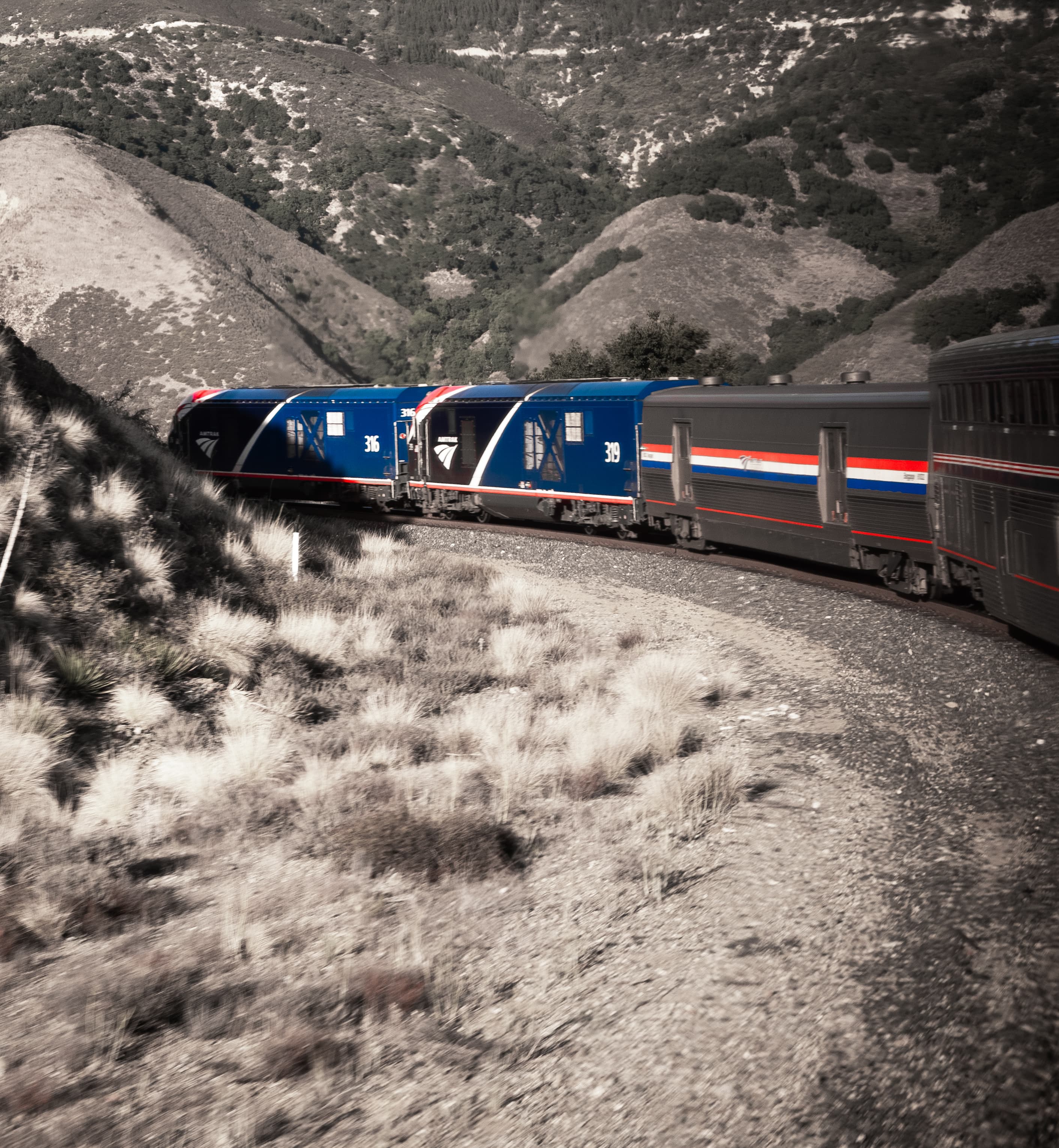

Coast Starlight
Seattle to Los Angeles in 35 hours: Cascade summits, Mount Shasta and 104 miles of Pacific shoreline
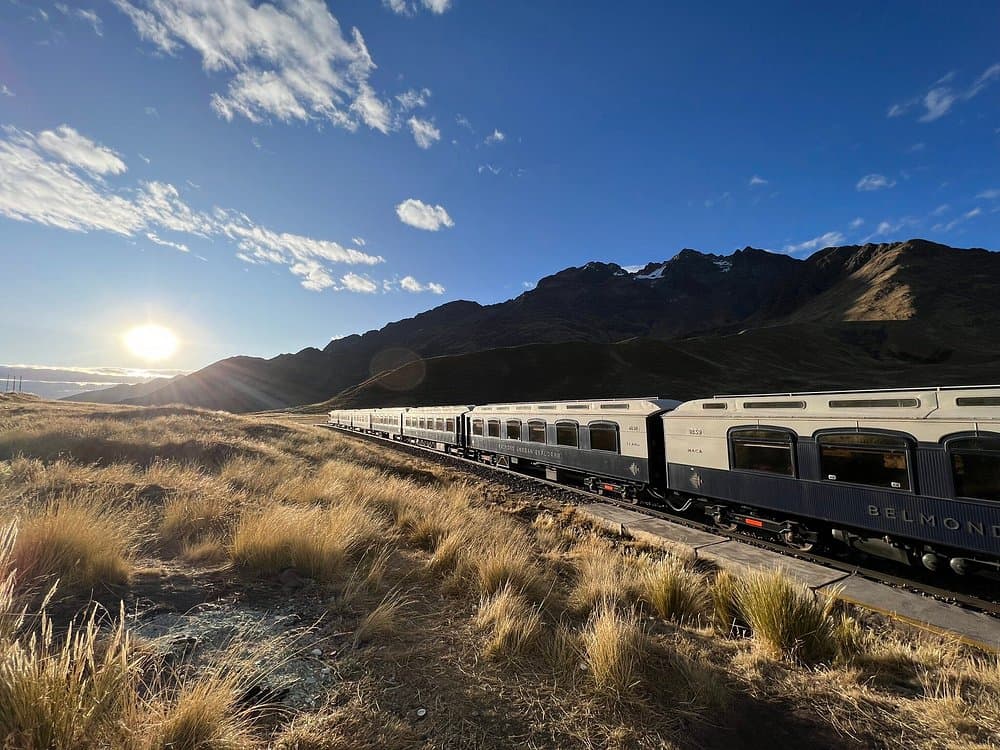
Belmond Andean Explorer
South America's first luxury sleeper train, across the roof of Peru
Blue Train
Pretoria to Cape Town in two nights, with a butler in every corridor

Tren a las Nubes
Argentina's rack-free climb to 4,220 m above the Puna

TranzAlpine
Coast to coast across the Southern Alps in a single morning

The Ghan
Transcontinental across Australia's Red Centre, Adelaide to Darwin
More Journeys Worldwide
California Zephyr
Chicago to San Francisco across the Rockies and Sierra Nevada
Denali Star
Alaska Railroad's flagship run to Denali and Fairbanks

Bergensbanen
Oslo to Bergen across the roof of Norway
Ffestiniog Railway
The world's oldest narrow gauge railway, from harbour to slate mountain
Granite State Scenic Railway
Vintage scenic train along the Pemigewasset River in the southern White Mountains
Glacier Express
The slowest express train in the world: 8 hours across the Swiss Alps
Explore around this route
1 place on Spotatrain within 500 km of this route — 1 journey.
- Darjeeling Himalayan Railway 398 km