Railway Experience
Paris Metro Line 6
Profile of Paris Metro Line 6.
Updated
About This Experience
Paris’s Metro Line 6 is a semi-circular transit line cutting through the southern arrondissements of the capital en.wikipedia.org. Opened in stages from 1900 to 1909, it was built largely above existing boulevards (following the route of the old 18th-century city wall) to minimize tunneling ratp.fr. As a result, about half of its 13.6 km length runs on elevated viaducts en.wikipedia.org and includes two scenic crossings over the Seine River on historic iron bridges ratp.fr. The line connects the Charles de Gaulle–Étoile hub in the west to Nation in the east, serving 28 stations along densely urban neighborhoods en.wikipedia.org.
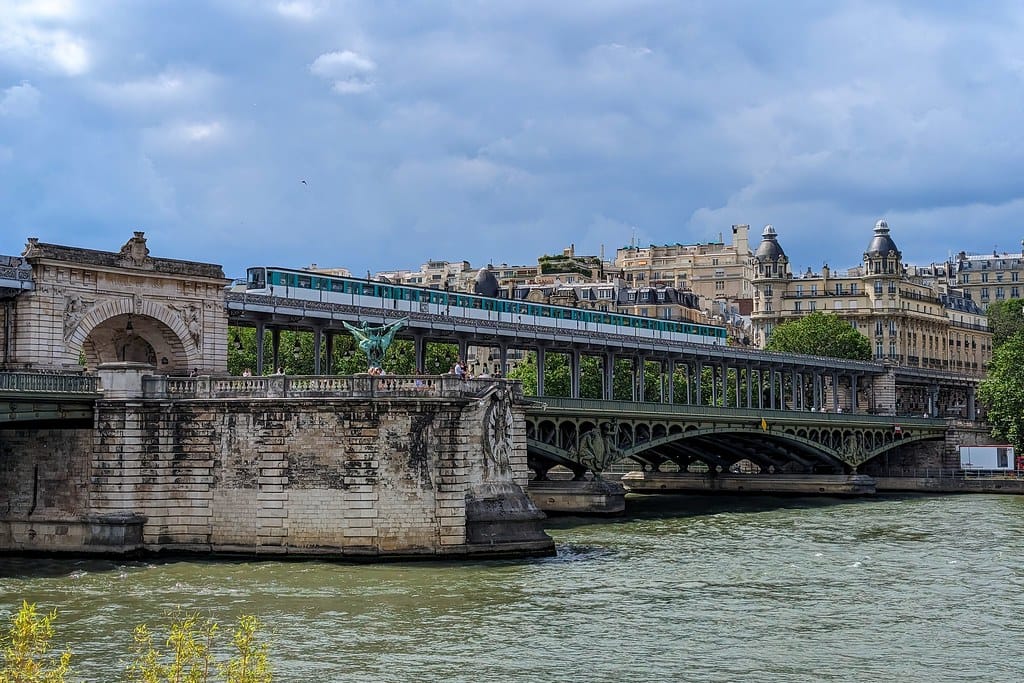
Line 6 is celebrated among railfans for its blend of engineering heritage and panoramic cityscapes. Many of its original early-1900s structures remain intact – notably the elegant Passy viaduct (Pont de Bir-Hakeim), completed in 1906 and now a protected monument ratp.fr. The route’s elevated segments provide exceptional views of Paris’s landmarks, from the Arc de Triomphe to the Eiffel Tower, earning it a reputation as one of the most pleasant and scenic rides in the Métro system en.wikipedia.org. Station architecture is also noteworthy: several stations feature art-nouveau entrances or unique glass canopies, reflecting the line’s historic character.
Featured Video
Ligne 6 - Paris - Tour Eiffel
Vue magnifique sur la tour Eiffel de la de métro #6 - Paris - Approche station Bir-Hakeim.
Why Visit
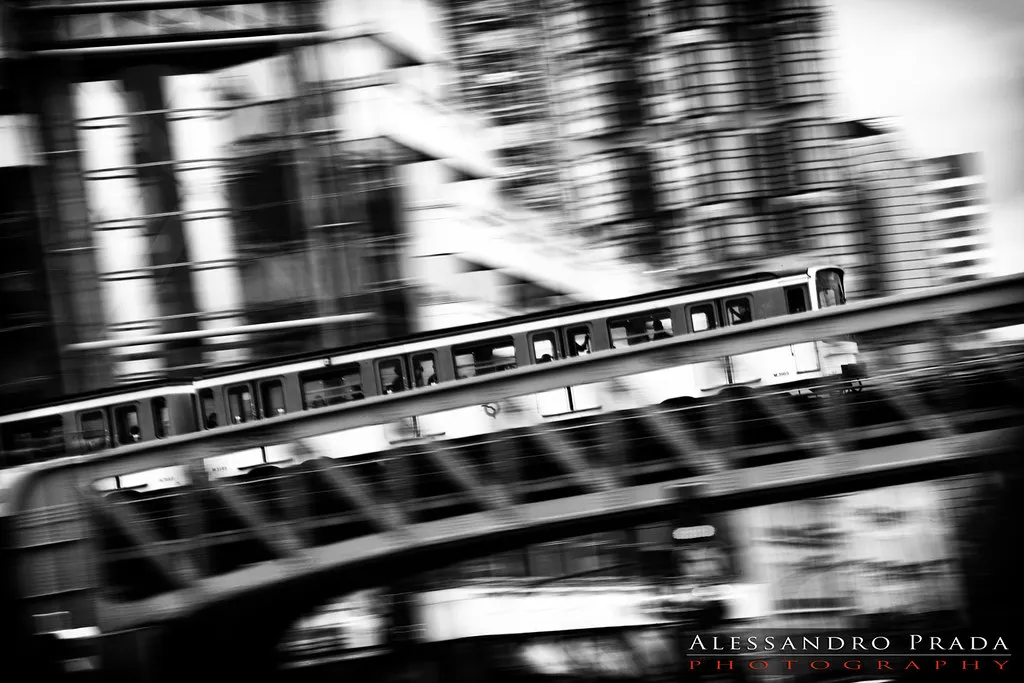
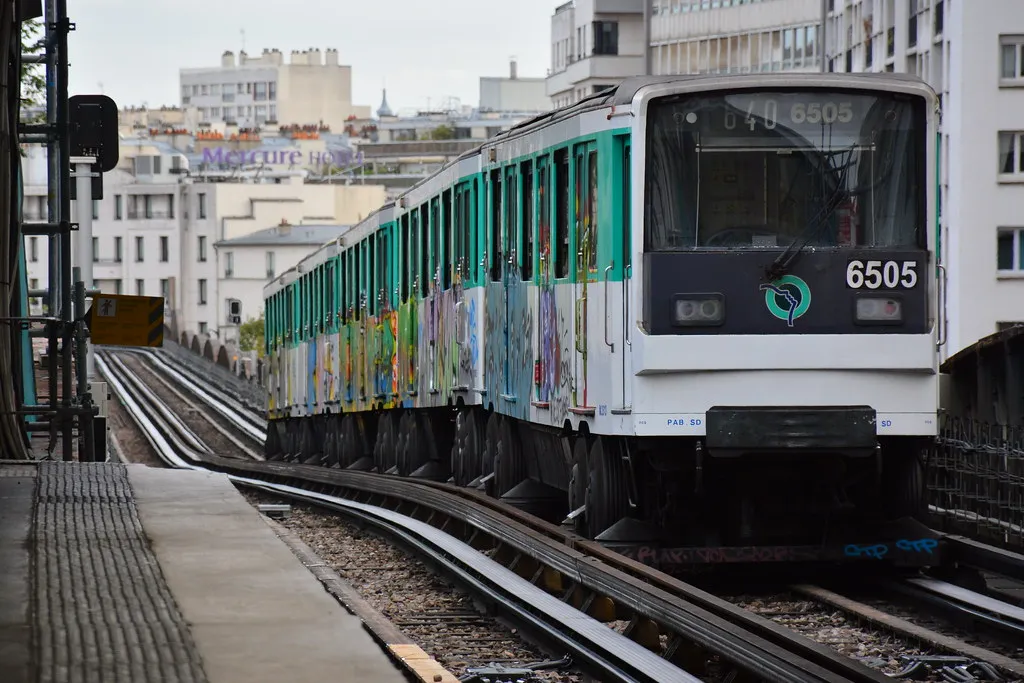
For train enthusiasts and photographers, Metro Line 6 offers a unique urban rail experience that marries everyday transit with sightseeing. Unlike most underground lines, nearly 6.1 km of Line 6 runs above ground en.wikipedia.org, which means riders get open-air views and natural light for much of the journey. The line has been running rubber-tyred trains since 1974, a technical quirk that provides smoother traction on the aerial tracks and a distinctive humming sound as the train glides over elevated sections. Fans of metro engineering appreciate these rubber-tire MP73/MP89 trains and the frequent transitions between tunnel and viaduct – showcasing both classic subway tunneling and the excitement of an elevated railway in one ride en.wikipedia.org ratp.fr.
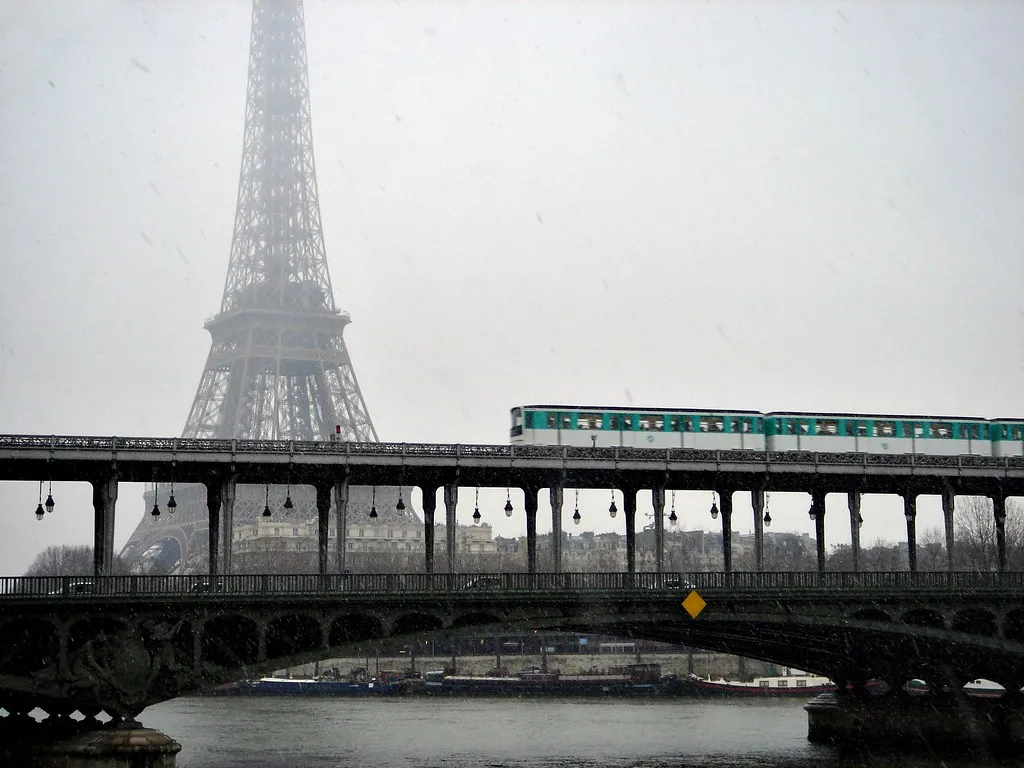
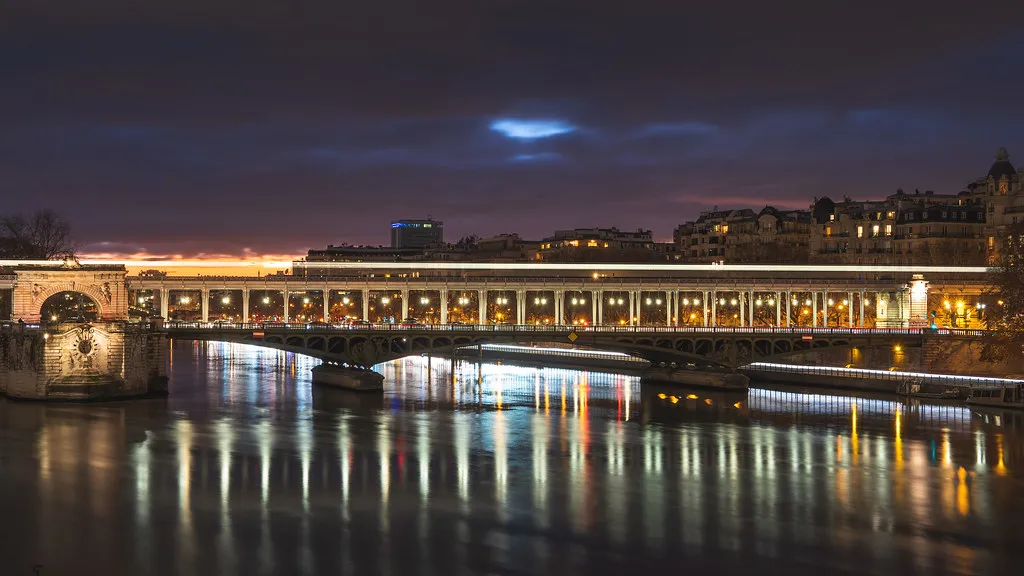
A Paris Métro Line 6 train crossing the Pont de Bir-Hakeim with the Eiffel Tower in view. The line’s viaducts offer railfans one-of-a-kind perspectives on Paris, blending city landmarks with historic infrastructure. Between Passy and Bir-Hakeim stations, the train famously delivers a “postcard” panorama of the Eiffel Tower as it crosses the Seine pariscityvision.com. Farther east, the elevated tracks traverse lively neighborhoods in the 13th arrondissement where about 40 large-scale street art murals are visible from the train ratp.fr – effectively turning your metro ride into a moving gallery. In short, Line 6 isn’t just transportation; it’s a rolling tour of Parisian sights and an opportunity to experience the city’s charm from a railfan’s vantage point.
What to Expect
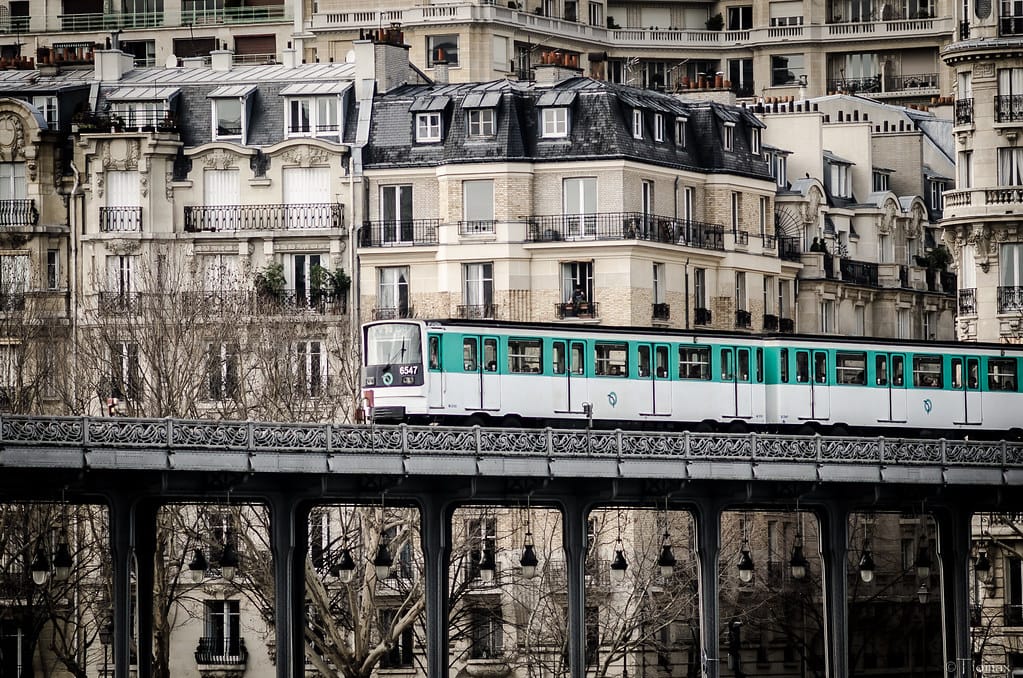
Riding Line 6 is similar to using any Paris Metro line, with trains running frequently (every few minutes) throughout the day. However, unlike the deep subways, you’ll likely begin your journey in a tunnel only to suddenly emerge above street level. The transition can be dramatic – one moment the windows show dark station walls, the next you’re gliding over rooftops with the city skyline in full view. Nearly half of Line 6’s stations are outdoors (13 of 28) ratp.fr, so at many stops you step out into open air under ornate platform canopies rather than in an underground cavern. Expect a mix of locals and tourists on board; it can get crowded during rush hours with commuters, while midday offers a more relaxed ride. The rubber-tired trains accelerate and brake smoothly, and as they round gentle curves on the viaducts you might feel a slight sway – a reminder of the historic structure beneath you. There’s no commentary or tour guide (this is regular public transit), but the sights out the window provide their own narration.
As you travel west to east (from Étoile toward Nation) on Line 6, keep your eyes peeled for notable moments. Shortly after Trocadéro, the train bursts into daylight to cross the Pont de Bir-Hakeim – this is the highlight: you’ll get a stunning close-up of the Eiffel Tower on the north side pariscityvision.com. It’s a brief view (the bridge crossing lasts under a minute), but unforgettable. Continuing on, the line runs elevated above boulevards like Grenelle and Saint-Jacques; you’ll see everyday Parisian life below – cafés, Haussmannian apartment facades, tree-lined streets. In the Montparnasse area the metro dips underground briefly, but soon resurfaces. Between Quai de la Gare and Glacière, watch for colorful murals on building walls adjacent to the tracks. Approaching the eastern terminus at Nation, the ride goes subterranean again for the final stretch. Throughout the journey, you’ll hear the distinct sounds of the Paris Metro: the melodic two-tone chime of closing doors and the rubber tires rumbling over track joints. Stations are announced in French (e.g., “Prochaine station: Montparnasse–Bienvenüe”) – even if you don’t understand the words, the cadence becomes part of the experience. Overall, a full end-to-end ride on Line 6 takes only about 30 minutes, but it’s packed with visual treats and authentic Paris atmosphere.
How to Plan Your Visit
Season and Schedule
Paris Metro Line 6 operates year-round with daily service. It offers scenic views during the day and a different ambiance at night.
- Operation
- Year-round
- Daily Hours
- 5:30 am to 12:40 am
- Extended Hours
- Until 1:40 am on Friday and Saturday nights
- Last Train Weekdays
- Around midnight
- Ideal Viewing Hours
- Mid-morning to afternoon
- Summer Sunset
- After 9 pm
Ticket Information
Paris Metro Line 6 operates under the standard fare system, allowing for transfers between lines. Tickets can be purchased at stations, and various options are available for different travel needs.
- Single Ride Cost
- €2.50
- Ticket Type
- Ticket t+
- Children Under 4
- Travel free
- Kids 4-9
- Discounted fares
- Payment Methods
- Credit cards and cash
Accessibility Details
Accessibility on Paris Metro Line 6 is limited, with many stations only reachable by stairs and few having elevators. There are ongoing efforts to improve accessibility, but wheelchair users may find it challenging.
- Elevators Present
- Bir-Hakeim station has elevators
- Wheelchair Access
- Most Line 6 stations lack full wheelchair access
- Alternative Transport
- Consider using bus routes or Metro 14 for accessibility
- Stroller Policy
- Strollers/prams are allowed but may need to be carried up stairs
- Infrastructure Age
- Line 6 retains much of its early 1900s infrastructure
What to Bring
For a comfortable trip on Paris Metro Line 6, it's important to pack light and smart, wearing comfortable shoes and staying hydrated. Be mindful of your belongings and surroundings while enjoying the sights.
- Comfortable Shoes
- Wear comfortable walking shoes
- Hydration
- Carry a refillable water bottle
- Camera
- Bring a camera or smartphone
- Security
- Use a zippered bag or money belt
- Layering
- Consider a light jacket or sweater
- Navigation
- Use a Paris Metro map or app
Photography Tips
Paris Metro Line 6 offers excellent photography opportunities, especially for capturing the Eiffel Tower. Key tips include the best positions for shooting from the train and ground locations for iconic images.
Traveling with Pets
Dogs welcome
RATP is markedly more permissive on the métro and RER than on its buses and trams: "Sur le métro et le RER, les animaux de petite taille peuvent être transportés selon les mêmes conditions, mais le sont également les animaux de plus grande taille, sous réserve d'être tenus en laisse." Small animals travel free in a purpose-made carrier, and larger dogs are accepted on a leash. Guide and assistance dogs fall under a separate legal regime. No official RATP page states a muzzle requirement, a size cap, carrier dimensions or a fare for the animal on the métro.
Verified — operator's pet policy
Travel Information
By Air
Paris is accessible via two major international airports, Charles de Gaulle and Orly, both of which connect to Metro Line 6. The city can be navigated easily using the Metro network without the need for a car.
- Major Airports
- Charles de Gaulle Airport (CDG), Paris Orly (ORY)
- Distance CDG to Central Paris
- 23 km (14 mi)
- Distance ORY to Central Paris
- 13 km (8 mi)
- Travel Time from CDG to Line 6
- 45 minutes drive, traffic dependent
- Travel Time from ORY to Line 6
- about 30 minutes
- Train Station for Eurostar
- Gare du Nord
By Train
Paris is well-connected by train, with major stations providing easy access to Metro Line 6. Arriving by train and using Metro Line 6 is convenient and enhances the Paris experience.
- Main Train Stations
- Gare du Nord, Gare de l’Est, Gare de Lyon, Gare Montparnasse
- Transfer Points to Line 6
- Denfert-Rochereau, Bercy
- Direct Access to Line 6
- Montparnasse–Bienvenüe
- Ticket Type
- Ticket t+
- Transfer Recommendations
- Use major hubs like Nation or Denfert
By Car
Driving into Paris is possible but challenging due to heavy traffic and limited parking. It's often easier to park and use the Metro for sightseeing.
- Driving Distance from Calais
- 290 km (180 mi)
- Driving Time from Calais
- about 3 hours
- Driving Distance from Brussels
- 320 km (200 mi)
- Driving Time from Brussels
- 3.5 hours
- Environmental Requirement
- Crit’Air sticker for low-emissions zone
Parking
Parking in Paris can be challenging, especially around Metro Line 6 stations, which do not have dedicated parking. It is advisable to use public parking facilities or Park-and-Ride lots on the outskirts.
- Parking Availability
- No dedicated parking at Metro Line 6 stations
- Street Parking Rates
- €4 to €6 per hour
- Street Parking Restrictions
- 2-hour max in one spot
- Underground Parking Example
- Quai Branly–Tour Eiffel public car park near Bir-Hakeim station
- Park-and-Ride Locations
- Vincennes, Fontenay, La Défense
Local Transportation
Paris Metro Line 6 is a key part of the city's public transport network, providing easy connections to other Metro lines and RER trains. It is complemented by buses, taxis, and bike-sharing options for local travel.
- Key Interchange Stations
- Charles de Gaulle–Étoile, Montparnasse–Bienvenüe, Place d’Italie/Nation
- Metro Line Connections
- Metro 1, 2, 4, 9, 12, 13 and RER A, C
- Last Metro Departures
- Around 12:30 am on weekdays, later on weekends
- Bike-Sharing System
- Vélib’
- Walking Distance Between Stations
- About 500–800 m
Nearby Lodging
Find places to stay near Paris Metro Line 6.
This lodging map is provided by Stay22, a third-party service that may set cookies. It loads only with your consent.
Accommodation results are provided by Stay22; we may earn a commission on bookings made through this map.
Nearby Attractions
- Eiffel Tower
Paris’s iconic wrought-iron tower, offering observation decks with sweeping views of the city. This world-famous landmark is essentially part of the Line 6 experience – the metro gives one of the best views of it. Bir-Hakeim station on Line 6 is the closest stop.
- Arc de Triomphe
The monumental triumphal arch at Place Charles-de-Gaulle, honoring those who fought for France. It sits at the western end of the Champs-Élysées and offers a rooftop viewing platform. The Arc is directly above Line 6’s western terminus (Charles de Gaulle–Étoile station).
- Catacombs of Paris
An underground ossuary housing the bones of over six million people, arranged in macabre walls and patterns in former quarry tunnels. This unique museum offers a journey through Paris’s underworld history.
Photos
 Alexandre Duret-Lutz
Attribution-ShareAlike License
Alessandro Prada
Attribution-ShareAlike License
Cheng-en Cheng
Attribution-ShareAlike License
Pierre Blaché
Public Domain Dedication (CC0)
besopha
Attribution License
Tiomax80
Attribution License
More Videos
4K Video - Paris subway, line 6 (elevated section, Eiffel Tower)
Filmed in July 2025
Help improve this page
Spotted something out of date or incorrect? Let our community know.
Explore more experiences: Browse all rail travel experiences.
Quick Information
Country
Region
City
Paris
Best Season
We recommend spring or early fall for the most enjoyable experience. In April–May and September–early October, Paris offers mild weather and thinner crowds, which means you can comfortably enjoy the views from Line 6’s open sections. The city’s greenery (trees lining the boulevards under the elevated tracks) is vibrant in spring and beautifully golden in autumn. Visibility tends to be good and the soft light around these seasons is great for photography – you might catch cherry blossoms framing the tracks in spring, or autumn leaves adding color to your photos.
Summer (June–August) is high tourist season: Line 6 will be more crowded, especially around the Eiffel Tower stop, and the trains can get warm in the heat. Still, summer gives the advantage of very long daylight hours – an evening ride at 9 pm can still offer blue skies, and you can watch the city buzz with activity below.
Winter brings the shortest days and occasionally grey weather, but on the plus side, you’ll find the Metro less packed. A winter ride at dusk or after dark can be magical in its own way: Paris’s monuments are illuminated (the Eiffel Tower sparkles every hour after nightfall), and without foliage on the trees you actually get clearer sightlines of the architecture. Just bundle up if you plan to stand on Bir-Hakeim bridge for photos in the chilly air.
In summary, every season has its charm on Line 6 – spring and fall strike the best balance of comfort and scenery, summer is lively and bright, and winter offers unique views of a twinkling Paris. Whenever you go, try to time at least one ride during daylight for the full panoramic effect.