
Updated
Distance
21.7 km
Duration
1h 15min one-way (approximately 3h return)
Max altitude
213 m
Tunnels
2
Gauge
597mm
A 13½-mile narrow gauge climb from Porthmadog harbour to the slate town of Blaenau Ffestiniog, on the world's oldest surviving railway company.
Watch this route live
A railway webcam covers this route — see what is running right now.
- Watch live
Porthmadog & the Cob — Ffestiniog Railway live cameras
Four cameras on the world's oldest narrow gauge railway
About This Journey
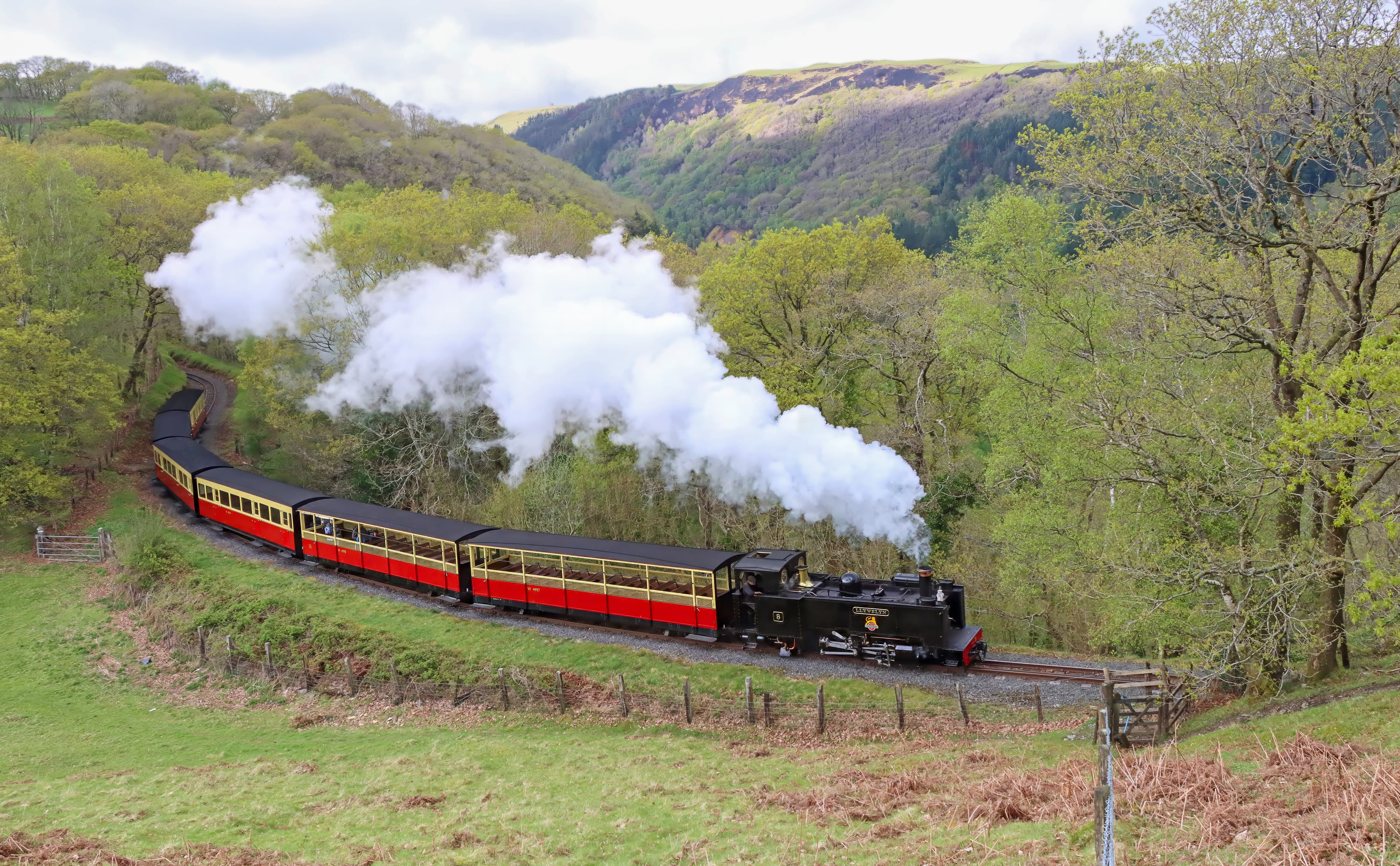
The Ffestiniog Railway runs 13½ miles (21.7 km) on a gauge of just 1 ft 11½ in (597 mm), from the tidal harbour at Porthmadog to the slate-quarrying town of Blaenau Ffestiniog. The line was laid out by the engineer James Spooner on a continuous falling gradient so that loaded slate wagons could run the whole way down to the quay under gravity alone, with horses riding in a special dandy wagon and then walking the empties back up. That single design decision explains almost everything a passenger sees today: the line hugs a contour rather than fighting it, it never climbs steeply, and it curves constantly.
The journey begins by crossing the Cob, the mile-long embankment William Alexander Madocks threw across the Traeth Mawr estuary between 1808 and 1811 — the reclamation scheme that created Porthmadog in the first place. Beyond Boston Lodge, where the railway still builds its own locomotives and carriages, the line turns inland at Minffordd and begins its long climb through Penrhyn and into the hanging oak woods above the Vale of Ffestiniog.
Between Plas Halt and Tan-y-Bwlch the railway threads the Garnedd Tunnel, a 180-foot (55 m) bore cut between January and June 1851, and runs along a shelf high above the valley floor with the Moelwyn and Manod mountains ahead. Past Coed-y-Bleiddiau and Campbell's Platform the train reaches Dduallt and the strangest piece of railway engineering in Britain.
At Dduallt the line climbs through a complete spiral — the only one ever built in the British Isles — before entering the New Moelwyn Tunnel, 287 yards long, driven by three Cornish mining engineers and a volunteer workforce between September 1975 and 25 June 1977. Both were built because the Central Electricity Generating Board's pumped-storage scheme flooded a mile of the original trackbed under Llyn Ystradau in 1957, forcing the railway to gain height on a new alignment.
The last miles run past the Ffestiniog pumped-storage power station and the reservoir that displaced the old line, through Tanygrisiau, and into Blaenau Ffestiniog beneath the grey slate tips of Llechwedd and Oakeley — a landscape inscribed on the UNESCO World Heritage List in 2021 as part of the Slate Landscape of Northwest Wales.
Why This Journey Is Iconic
The Ffestiniog Railway is not a preserved branch line pretending to be older than it is. The Festiniog Railway Company, incorporated by Act of Parliament on 23 May 1832, is the oldest surviving railway company in the world, and it has never been nationalised or dissolved. The trains you ride are operated by the same legal entity that carried slate down this valley in the 1830s.
It is also where narrow gauge stopped being a quarry expedient and became a technology exported worldwide. In 1863 the railway put steam locomotives on a 1 ft 11½ in gauge — something engineers had said was impractical — and in 1865 it became the first narrow gauge railway in Britain licensed to carry passengers. Five years later Robert Fairlie demonstrated his double-ended articulated locomotive Little Wonder here, proving that a tiny gauge could move serious tonnage around tight curves. Delegations came from Russia, India and South America to watch. The Ffestiniog is the reason narrow gauge railways were built across half the world.
And it was saved by hand. Between 1965 and 1978 volunteers known as the Deviationists rebuilt two and a half miles of railway around a reservoir, blasting a new tunnel and building the only railway spiral in the British Isles, with a single paid site foreman. Very few railways anywhere can point at a piece of main line and say that unpaid enthusiasts built it.
What to Expect
The full-line service is branded Mountain Spirit / Ysbryd y Mynydd and is normally hauled by one of the railway's Double Fairlie locomotives — a two-boilered, double-ended machine unlike anything else in regular service in Britain. Trains generally leave Porthmadog Harbour at 10:40 and 14:20, take roughly an hour and a quarter each way, and wait about 50 minutes at Blaenau Ffestiniog before returning, which is enough time to walk into the town or photograph the locomotive running round.
Rolling stock is a mixture built at the railway's own Boston Lodge works, including Pullman observation carriages with large windows angled for the view down the Vale of Ffestiniog. Standard class includes both open saloons and compartment stock; the carpeted compartments in the heritage carriages are the ones dogs may not use. Gold Class travel is offered in first class Pullman carriages with at-seat waiter service, Welsh tea, and pre-bookable picnic hampers, lunchboxes and afternoon tea made with local produce.
The Mountain Spirit has small on-board toilets, but the railway recommends using the station facilities at Porthmadog Harbour, Tan-y-Bwlch or Blaenau Ffestiniog. Sit on the left leaving Porthmadog for the estuary and the Vale; the right-hand side gets the better of the Moelwyn slopes on the upper section.
History
The Festiniog Railway Company was incorporated by Act of Parliament on 23 May 1832 to link the slate quarries above Blaenau Ffestiniog with the new harbour at Porthmadog, and the line opened in 1836. For its first quarter-century it had no locomotives at all: loaded slate trains ran down to the quay by gravity, and horses hauled the empty wagons back up, riding down themselves in dandy wagons.
Steam arrived in July 1863 with the delivery of Princess and Mountaineer, and the Board of Trade then authorised passenger services — the first on a narrow gauge in Britain. In 1870 Robert Fairlie's double engine Little Wonder was demonstrated on the line and proved to have more than double the power of a conventional locomotive on the same gauge; the Double Fairlie type has been associated with the Ffestiniog ever since, and the railway still builds them at Boston Lodge.
Slate traffic collapsed between the wars, passenger services ended in 1939, and the last slate train ran on 1 August 1946. The line lay derelict until volunteers took control in 1954 and reopened the first section from Porthmadog to Boston Lodge on 23 July 1955. The Central Electricity Generating Board then flooded a mile of the trackbed for its Ffestiniog pumped-storage scheme, and the railway spent from 1965 to 1978 building the Deviation around it, reopening to Tanygrisiau on 24 June 1978. Trains finally returned to Blaenau Ffestiniog on 25 May 1982 — almost exactly 150 years after the Act that created the company.
Engineering Highlights
James Spooner surveyed the original line as a continuous 1-in-80-ish falling gradient from Blaenau to the sea, so that gravity alone could move loaded slate. Holding a near-constant grade across steep, broken country meant long rock cuttings, a shelf blasted along the valley side above the Dwyryd, and heavy embankments — of which Cei Mawr, on the section above Tan-y-Bwlch, is the largest. The 180-foot (55 m) Garnedd Tunnel, cut between January and June 1851 about half a mile east of Tan-y-Bwlch, is the only original tunnel still in use.
The line's most remarkable engineering is modern. In 1957 the CEGB's pumped-storage scheme created Llyn Ystradau and drowned a mile of the original formation below Tanygrisiau, along with the approach to the 1842 Moelwyn Tunnel. Rejoining the two halves meant gaining height that the old alignment had gained gradually — and there was nowhere to gain it. The answer, built by volunteers between 1965 and 1978, was a complete spiral around a hill east of Dduallt station, the only railway spiral ever constructed in the British Isles, adding roughly 1,043 m (51 chains 19 yards) of line and keeping the ruling gradient no steeper than 1 in 80.
Above the spiral the New Moelwyn Tunnel, 287 yards long, was driven between September 1975 and 25 June 1977 by three Cornish mining engineers working with volunteer labour, with one paid site foreman on the project throughout. The Cob at the Porthmadog end is older than the railway itself: William Alexander Madocks built the mile-long embankment across the Traeth Mawr between 1808 and 1811 to reclaim the estuary, and the railway simply borrowed it.
Best Time to Travel
The 2026 season runs from 21 March through to December, with Santa Trains and festive services in the final weeks — so the railway is not a year-round operation and there is no service in January or February.
Late spring is the strongest all-round choice. May and early June give long daylight, rhododendrons and bluebells in the woods around Plas Halt and Tan-y-Bwlch, and the clearest views up to the Moelwyn range before the summer haze. School holidays in late July and August are the busiest weeks and the most likely to sell out, particularly on the 10:40 Mountain Spirit.
October brings the oak and beech woods of the Vale of Ffestiniog into colour, which is the best backdrop the line offers, and the railway is noticeably quieter. Blaenau Ffestiniog sits under the Moelwyn and is one of the wettest towns in Britain, so accept that the top of the line may be in cloud whatever month you pick — that grey, streaming slate landscape is arguably the more honest version of the place. December Santa services are a separate product, not the full-line scenic run.
Practical Tips
Book ahead. Tickets can be bought on the day subject to demand, but the railway recommends pre-booking to secure seats, and the Mountain Spirit is the service most likely to fill. Online prices exclude a 6% booking fee, so buying at the Porthmadog booking office avoids that surcharge.
Wheelchair users and passengers with restricted mobility should telephone the booking office rather than book online, so that accessible space and seating can be reserved in advance; disabled passengers and their carers receive a 10% discount. Dogs need a £5.00 ticket, must stay on a lead throughout, and cannot travel in the carpeted heritage compartments or in Gold Class.
Toilets are available at Porthmadog Harbour, Tan-y-Bwlch and Blaenau Ffestiniog stations when the buildings are open; the Mountain Spirit has small on-board facilities but the railway suggests using the stations. For photography, the 50-minute layover at Blaenau is the reliable chance to shoot the Double Fairlie, and the Dduallt spiral is best appreciated by watching the track you have just travelled appear below you rather than by trying to photograph it. Note that Coed-y-Bleiddiau and Campbell's Platform are private halts and Penrhyn and Tanygrisiau are request stops.
Traveling with Pets
Dogs welcome, on a leash
Dogs are welcome and travel on a £5.00 ticket; assistance and support dogs travel free. The operator's conditions of carriage state that dogs "must be kept on a lead at all times throughout the journey and on all FRC property" and "must remain on the floor of carriages and are not permitted on seats or tables". On board, dogs are accepted in most standard class accommodation but NOT in the carpeted compartments of the heritage carriages and NOT in 1st / Gold Class carriages (assistance and support dogs excepted). In corridor-style carriages a dog counts as a passenger. The Woodland Wanderer service is sold by separate compartment and is suggested by the railway for travellers wanting more space for a dog. Animals other than dogs require prior consent from the Porthmadog Booking Office.
Verified — operator's pet policy
Route Stages
- km 00 m alt.departure
The Ffestiniog Railway's headquarters station, built on the quay where slate was once tipped straight from the wagons into sailing ships. Booking office, shop, cafe and toilets; the Welsh Highland Railway leaves from the far side of the same site.
Sea-level terminus on the original slate quay; interchange with the Welsh Highland Railway
- km 1
A mile-long embankment across the Traeth Mawr estuary, built by William Alexander Madocks between 1808 and 1811 to reclaim the tidal flats. The railway runs along its top with the whole sweep of the estuary on one side and the Moelwyn and Snowdon ranges ahead.
Estuary panorama toward Snowdonia; the reclamation embankment that created Porthmadog
- km 1.66
The halt serving Boston Lodge Works, the railway's own workshops at the far end of the Cob. The buildings began as accommodation for Madocks's embankment labourers and now build locomotives and carriages from scratch.
Boston Lodge Works, where the railway still builds Double Fairlie locomotives and Pullman carriages
- km 9.91request stop
A request halt in the woods serving Plas Tan y Bwlch, the mansion below the line that is now the Eryri (Snowdonia) National Park study centre. The rhododendron gardens are at their peak in late May and early June.
Access to Plas Tan y Bwlch and the Llyn Mair woodland walks
- km 11.57a few minutes (longer on some services)
The line's principal intermediate station and its passing loop, set high on the wooded side of the Vale of Ffestiniog. Toilets, a cafe and the best lineside views of trains crossing. Trains on some services lay over here.
Passing loop, cafe and toilets; the classic photographic location on the line
- km 15.16request stop
A remote request halt with no road access, on a shelf overlooking the Vale of Ffestiniog. It is the last point on the original 1836 alignment before the line swings into the Deviation.
No road access; the junction between the original line and the volunteer-built Deviation
- km 15.22
The only railway spiral ever built in the British Isles. Immediately after Dduallt the line curves through a complete loop around a hillock, crossing over itself, to gain the height lost when the reservoir drowned the original trackbed. Look down and you can see the track you were on a minute earlier.
The British Isles' only railway spiral, built by volunteers between 1965 and 1978
- km 17.11
A 287-yard bore driven between September 1975 and 25 June 1977 by three Cornish mining engineers working with volunteer labour, replacing the 1842 tunnel whose approaches were flooded by the Llyn Ystradau reservoir.
Volunteer-driven tunnel, the centrepiece of the Deviation
- km 19.32195 m alt.request stop
A request stop beside Llyn Ystradau, the lower reservoir of the Ffestiniog pumped-storage scheme, with the power station and the Moelwyn cliffs above. This is where the CEGB scheme severed the railway in 1957.
Llyn Ystradau reservoir and the Ffestiniog pumped-storage power station
- km 21.63213 m alt.approximately 50 min layover
The upper terminus, shared with Transport for Wales trains on the Conwy Valley Line, ringed by the slate tips of the Oakeley and Llechwedd quarries. Trains wait about 50 minutes before returning.
Shared platform with the national network; UNESCO slate landscape
Getting to Porthmadog
By Air
There is no airport close to Porthmadog. Manchester Airport is the main long-haul gateway, roughly 100 miles (160 km) east, with Liverpool John Lennon a similar distance and Birmingham further south; from Manchester the practical options are a hire car via the A55 and A470, or rail via Chester and the North Wales Coast to Llandudno Junction and then the Conwy Valley Line. Cardiff Airport is far less useful despite being in Wales — north–south travel within the country is slow.
By Train
Both ends of the line connect to the national network, which makes a one-way trip easy. Porthmadog main-line station, a short walk from Harbour Station, is on the Cambrian Coast Line from Machynlleth and Shrewsbury (Transport for Wales). Blaenau Ffestiniog is the terminus of the Conwy Valley Line from Llandudno Junction on the North Wales Coast main line, and Transport for Wales trains share the station building with the Ffestiniog Railway — you can step off the narrow gauge train and onto the standard gauge one on the same platform area. The classic day out combines the two: arrive by Conwy Valley Line, ride the Ffestiniog down to Porthmadog, and return on the Cambrian Coast.
By Car
Porthmadog is reached from the east on the A487 and from the north on the A498 through Beddgelert; from the Midlands and northern England the usual route is the A55 North Wales Expressway then the A470 south. Harbour Station is signposted in the centre of Porthmadog off the High Street. Blaenau Ffestiniog sits on the A470 between Betws-y-Coed and Dolgellau. Driving between the two ends takes far longer than the map suggests because the A470 climbs over the Crimea Pass, so if you are driving, park at one end and travel out and back rather than trying to reposition the car.
Parking
Parking at Porthmadog Harbour Station itself is reserved for Blue Badge holders. Other passengers use the free fenced area at the Llyn Bach car park nearby, open 07:30–20:00 on a first-come, first-served basis, with a pay-and-display alternative if it fills. There are no parking facilities at Blaenau Ffestiniog station; the nearest is Maes Parcio Diffwys, a 126-space pay-and-display town car park operated by Gwynedd Council within a short walk, taking cash or the PayByPhone app, with free disabled parking.
Where to Stay
Find places to stay near Blaenau Ffestiniog.
This lodging map is provided by Stay22, a third-party service that may set cookies. It loads only with your consent.
Accommodation results are provided by Stay22; we may earn a commission on bookings made through this map.
Videos
Ffestiniog Railway - Mountain Spirit Route - Driver's Eye View
Ffestiniog Railway (Wales) - Driver's Eye View - Porthmadog to Blaenau Ffestiniog
Ffestiniog Railway (Wales) - Driver's Eye View - Blaenau Ffestiniog to Porthmadog
Ffestiniog Railway: Porthmadog - Blaenau Ffestiniog, September 2024
Ffestiniog Railway Driver Eye View
Photos
Porthmadog Station ffestiniog railway 26-03-2025
Merddin Emrys at Porthmadog Harbour on The Ffestiniog Railway 30/09/23
Merddin Emrys at Porthmadog Harbour on The Ffestiniog Railway 30/09/23
WHR_03
IMGP3388
IMG_20211011_163517_548
IMGP3181
IMGP3023
Ffestiniog & Welsh Highland Railway
Porthmadog Harbour railway station
IMGP8979
IMGP8821
IMGP8783
IMGP8629
External Resources
Official resources
Heritage & history
Frequently Asked Questions
How long does the Ffestiniog Railway journey take?▾
How much does it cost?▾
Can I take a dog on the Ffestiniog Railway?▾
When does the railway run?▾
Do I need to book in advance?▾
What is the Dduallt spiral?▾
Is the Ffestiniog Railway really the world's oldest?▾
Can I do a one-way trip and come back by main-line train?▾
What locomotive will pull my train?▾
Where do I park?▾
Help improve this page
Spotted something out of date or incorrect? Let our community know.
Related on Spotatrain
Journeys Near This Route

More Journeys Worldwide
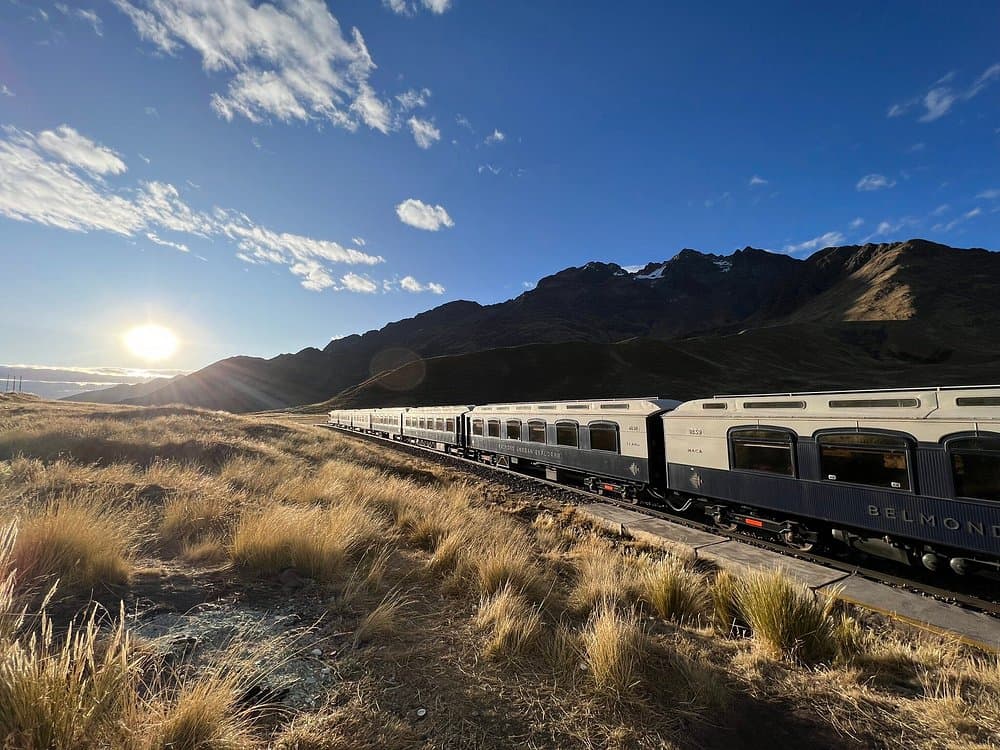
Belmond Andean Explorer
South America's first luxury sleeper train, across the roof of Peru

California Zephyr
Chicago to San Francisco across the Rockies and Sierra Nevada
Qinghai-Tibet Railway
The world's highest railway, across the roof of the world to Lhasa

TranzAlpine
Coast to coast across the Southern Alps in a single morning

Tren a las Nubes
Argentina's rack-free climb to 4,220 m above the Puna
Blue Train
Pretoria to Cape Town in two nights, with a butler in every corridor
Related Experiences & Mega-Projects
Great Orme Tramway
Britain's only cable-hauled street tramway, climbing a mile from Llandudno to the Great Orme summit in original 1902 cars.
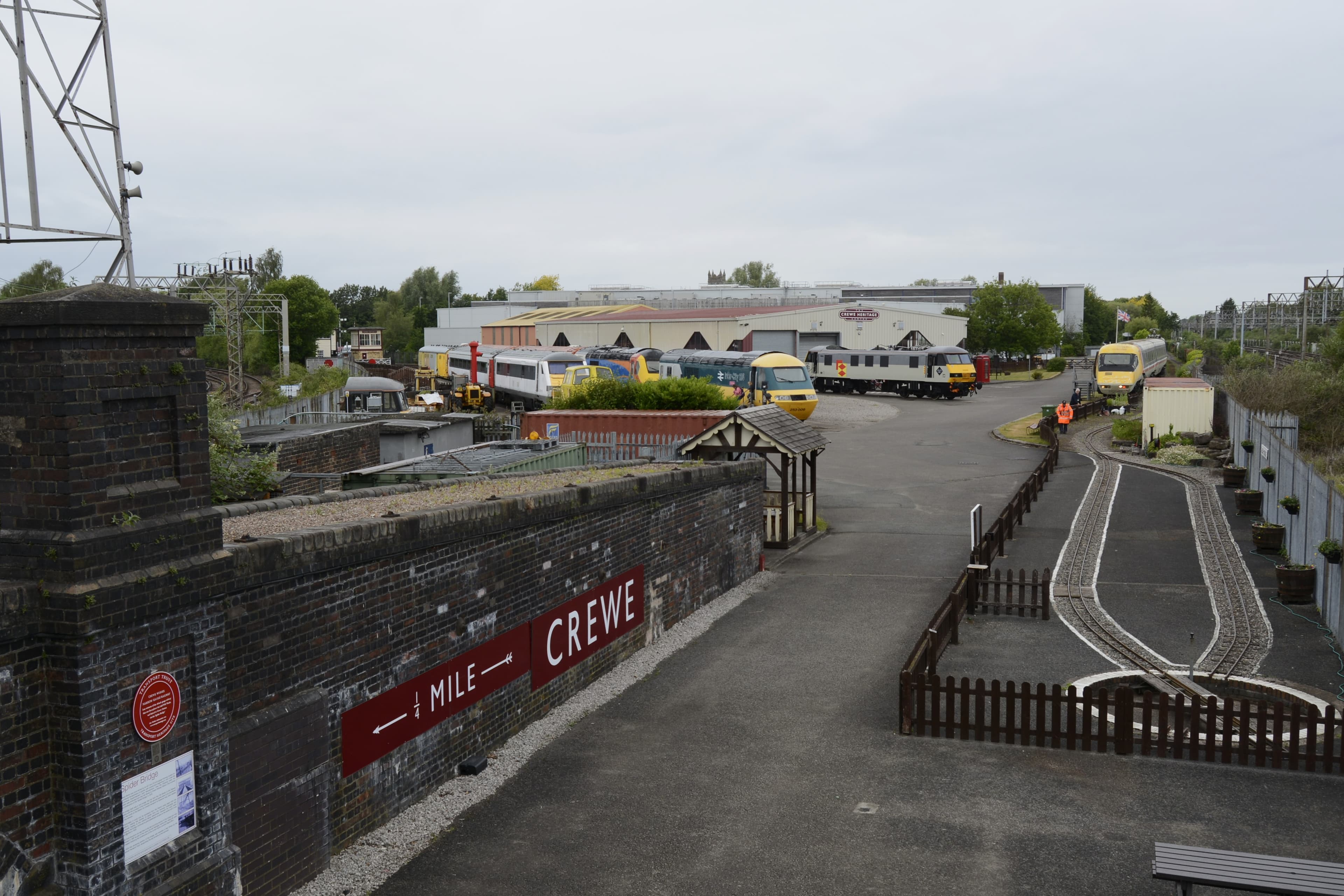
Crewe Heritage Centre
Britain's only surviving APT-P, three preserved signal boxes and a 7¼ in miniature railway on the old Crewe Works site.
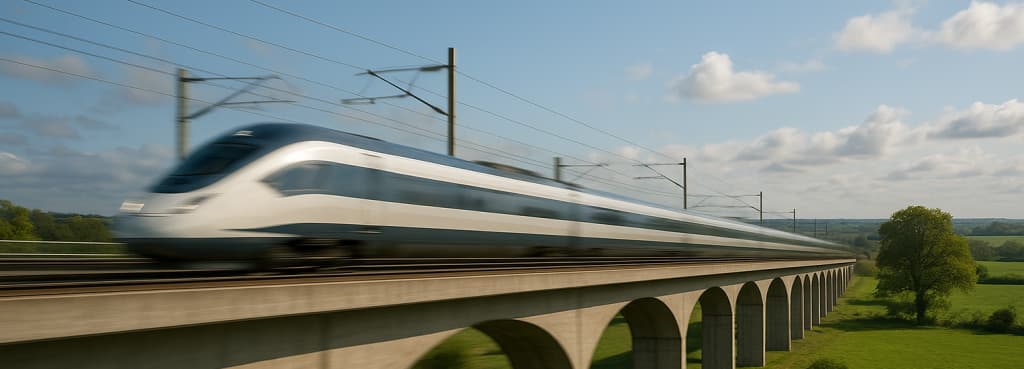
HS2
Britain's most ambitious post-war railway, halved in scope and being rebuilt under a 2026 programme reset.
Explore around this route
2 places on Spotatrain within 25 km of this route — 1 live cam and 1 event.