

Updated
Distance
32.2 km
Duration
1h 20min each way
Max altitude
122 m
Gauge
1435mm
England''s longest heritage railway runs 20 miles (32 km) from Bishops Lydeard over the Quantock Hills to the seaside terminus at Minehead, calling at ten restored Great Western branch-line stations.
Watch this route live
11 railway webcams cover this route — see what is running right now.
- Watch live
Bishops Lydeard, Somerset — West Somerset Railway
The southern end of the West Somerset Railway
- Watch live
Blue Anchor, Somerset — West Somerset, View 1
The Bristol Channel behind the platform at Blue Anchor
- Watch live
Blue Anchor, Somerset — West Somerset, View 2
The second view over Blue Anchor, on the Bristol Channel shore
- Watch live
Crowcombe Heathfield, Somerset — Station, View 1
The passing loop in the Quantock foothills, looking to Minehead
- Watch live
Crowcombe Heathfield, Somerset — Station, View 2
The second Quantock view at Crowcombe Heathfield
- Watch live
Minehead, Somerset — Seaward Crossing
The level crossing on the approach to Minehead
- Watch live
Minehead, Somerset — West Somerset Railway Terminus
The terminus of England's longest heritage railway
- Watch live
Watchet, Somerset — West Somerset Railway, Camera 1
The harbour station at Watchet, from the visitor centre
- Watch live
Watchet, Somerset — West Somerset Railway, Camera 2
The second Watchet view from the visitor centre
- Watch live
Williton, Somerset — West Somerset Railway, Camera 1
The passing loop and signal box at Williton
- Watch live
Williton, Somerset — West Somerset Railway, Camera 2
The second angle on Williton's passing loop
About This Journey
The line begins at Bishops Lydeard, four miles (6.4 km) beyond Taunton, and immediately starts climbing. For the first four miles the railway works its way up the eastern flank of the Quantock Hills at a gradient of 1 in 86, reaching its summit — just under 400 feet (122 m) above sea level — at Crowcombe Heathfield, a station so little changed that it is regularly hired as a film location. This is the quiet, inland half of the journey: deep cuttings, beech hedgerows and the occasional glimpse west across the Vale of Taunton Deane.
From the summit the line falls away towards the coast through Stogumber and Williton, where the level crossing is still worked from the original Bristol & Exeter Railway signal box — believed to be the only one of its kind left in operational use anywhere. Williton''s goods shed is the headquarters of the Diesel and Electric Preservation Group, so a green Class 33 or a maroon Class 35 is as likely to be sitting in the yard as a Great Western pannier tank.
At Doniford Halt, a request stop reached only on foot, the railway meets the sea. From here to Minehead the journey is coastal: the harbour town of Watchet on one side, the Bristol Channel and the Welsh coast on the other. Between Watchet and Washford the line climbs again at 1 in 65, the steepest grade on the railway, before dropping to Blue Anchor, where the platform is separated from the beach by little more than the width of the road.
The last three miles run along the flat behind Blue Anchor Bay and Dunster Beach to Dunster, the station for the castle and the medieval village, and finally into Minehead. The terminus platform, extended in the 1930s to swallow whole trainloads of holidaymakers, is just under a quarter of a mile long — a reminder that this branch once handled through carriages from Paddington and the Midlands.
Today the railway carries more than 200,000 passengers a year, run by around 50 paid staff and some 900 volunteers, with a Day Rover ticket that lets you get off, look around, and pick up a later train at any of the ten stations.
Why This Journey Is Iconic
Very few preserved railways in Britain are long enough to feel like a real journey rather than a demonstration run. At 20 miles (32 km) the West Somerset is the exception: an end-to-end trip takes 1 hour 20 minutes, crosses a genuine watershed, and changes landscape twice — from the wooded climb over the Quantocks to the open Bristol Channel coast at Blue Anchor and Dunster Beach.
What makes it unusual is that the whole branch was preserved, not just a photogenic fragment. Ten stations survive, each in the livery of a different period, and the infrastructure that made them work survives with them: the Bristol & Exeter signal box at Williton, passing loops installed at Williton in 1874, Crowcombe Heathfield in 1879, Blue Anchor in 1904 and Bishops Lydeard in 1906, and the quarter-mile platform at Minehead. Two museums run by the West Somerset Railway Heritage Trust — the Gauge Museum at Bishops Lydeard, created for the Great Western Railway''s 150th anniversary in 1985, and the Blue Anchor Railway Museum, opened in the former down-platform waiting room in 1986 — sit on the platforms themselves.
It is also a working monument to Isambard Kingdom Brunel''s broad gauge. The line was laid to 7 feet and a quarter inch (2,140 mm) and only converted to standard gauge in 1882, so the earthworks, bridge arches and station spacing were all set out for a track width that no longer exists anywhere in Britain.
What to Expect
Trains are formed of British Rail Mark 1 coaches in Great Western chocolate and cream, hauled by steam or by heritage diesel depending on the day — the timetable colour tells you which, and a busy summer day may run one steam and one diesel set. Motive power typically comes from the railway''s Great Western tank engines of the 4575 and 5100 classes, with visiting locomotives and the Somerset & Dorset 7F 2-8-0 appearing at galas.
Seating is compartment or open saloon, windows drop on leather straps, and there is a buffet car on most services. Toilets are available on the train and at every station except Doniford Halt. The railway asks that you arrive no earlier than 45 minutes before departure, and Doniford Halt is a request stop — tell the guard if you want to alight there.
Most passengers buy a Day Rover and treat the line as a hop-on service: an hour at Watchet harbour, a walk up to Dunster Castle, a look round the Gauge Museum at Bishops Lydeard, then a later train onward. Three coaches in the fleet are wheelchair-accessible, each taking four wheelchair users plus companions; eight of the ten stations have level or ramped platform access, and loan wheelchairs are kept at Bishops Lydeard, Watchet and Minehead.
History
In 1856 the businessmen of Watchet — still twelve miles from the nearest railhead at Taunton while rival harbour towns had been connected in the 1840s and 50s — engaged Isambard Kingdom Brunel as engineer. Brunel, fully committed elsewhere, delegated the work to his assistant James Burke, who took the classic Victorian line across the Quantocks by following one watercourse up to the summit and another down the far side. Construction began on 7 April 1859 under the contractor George Furness of London, and the line from Norton Fitzwarren to Watchet opened on 31 March 1862, worked from the outset by the Bristol & Exeter Railway.
The nominally independent Minehead Railway carried the branch on to the coast, opening on 16 July 1874. The whole route was built to Brunel''s broad gauge of 7 feet and a quarter inch and converted to standard gauge in 1882; the Bristol & Exeter had by then been absorbed into the Great Western Railway, which ran the branch until nationalisation in 1948. Holiday traffic peaked between the wars and again in the 1950s and 60s, with through trains from London and the Midlands and a Minehead platform lengthened in the 1930s to just under a quarter of a mile.
The Beeching report marked the branch for closure, and when Somerset County Council moved school transport from rail to road in 1970 the economics collapsed. British Rail closed the line at the start of January 1971. After five years of negotiation the preserved West Somerset Railway reopened Minehead to Blue Anchor at Easter 1976 and reached Bishops Lydeard in 1979. The early years were precarious — unreliable services earned the nickname "will something run?", and the company came close to bankruptcy in the early 1980s — before a volunteer-driven recovery, helped by the hire of the locomotive Evening Star in 1989, put it on its present footing.
Engineering Highlights
The branch has no tunnels and no great viaducts; its engineering is in the alignment. Burke took the line over the Quantock ridge by climbing continuously at 1 in 86 from Bishops Lydeard, holding that grade for roughly four miles (6.4 km) to the summit at Crowcombe Heathfield, then falling at the same rate towards Williton. For a steam locomotive with a loaded train this is the hardest sustained work on the railway, and the reason Crowcombe Heathfield is the favourite lineside spot for photographers.
The second climb is shorter and steeper. Between Watchet and Washford the line rises at 1 in 65 (1.5 percent) to get up off the harbour and around the coastal headland — the steepest gradient on the route — before dropping back to sea level at Blue Anchor.
The rest of the infrastructure is branch-line practice preserved intact: mechanical signalling worked from boxes at Bishops Lydeard, Crowcombe Heathfield, Williton, Blue Anchor and Minehead, with the Williton box a Bristol & Exeter Railway design that predates the Great Western takeover. Passing loops were added as traffic grew — Williton in 1874, Crowcombe Heathfield in 1879, Blue Anchor in 1904, Bishops Lydeard in 1906 — and all four are still used to cross trains, which is what allows a two-train service on a single-track line today.
Best Time to Travel
The railway runs daily from early April to early October, and that is when the full ten-station service, both museums and the station cafés are all open together. July and August are the busiest, with the highest train frequency and the most steam, but also the fullest coaches and the most competition for a window seat.
May, June and September are the sweet spot. The Quantock climb is at its best in late spring when the beech hedges are in leaf, and September gives you warm light over Blue Anchor Bay with far fewer people. Autumn colour on the inland half peaks in October, when the timetable is thinning out — check the colour-coded calendar before travelling, because Mondays are often blank outside high season.
Outside the main season the line runs half-term, evening and festive services, including the pre-booked Christmas programme. These sell out early and are priced separately; an annual pass is not valid on them. Gala weekends, when visiting locomotives appear and the timetable is intensified, are the exception to the quiet-season rule and are worth planning a trip around.
Practical Tips
Buy a Day Rover rather than a point-to-point ticket unless you are certain you only want one leg: at GBP 36.00 in advance against GBP 25.50 for a single, it pays for itself the moment you get off anywhere. Rovers are the only tickets sold online — intermediate singles and returns must be bought on the day at a booking office or from the inspector on the train.
Sit on the right-hand side travelling from Bishops Lydeard to Minehead for the sea: the coastal views from Doniford Halt through Watchet, Blue Anchor and Dunster Beach are all on that side. Coming back, sit on the left for the same view, then swap attention inland for the climb to Crowcombe Heathfield. For photography, Crowcombe Heathfield summit and the seawall stretch at Blue Anchor are the two classic locations, and both are reachable on foot from their stations.
Arrive no earlier than 45 minutes before your train — the railway asks this explicitly. Toilets are on the train and at every station except Doniford Halt, which also has no car park and is reached only by footpath, and is a request stop. Dogs travel for GBP 3.50 but must stay on the floor and out of the buffet car, and are not allowed at all on dining or festive trains. Group bookings of 16 or more must be made by telephone. There are no refunds on unused tickets, though the railway will exchange them for a later date.
Traveling with Pets
Depends on the service
Dogs are welcome on standard timetabled trains for a GBP 3.50 dog ticket, but the railway states they "are not permitted to travel in the buffet car, or in any carriage where catering is being served", and that dogs "are not permitted to travel on any of the seats and must always remain on the floor". Dogs are barred from every dining service — the Quantock Belle, Cheese and Cider, Murder Mystery and Fish and Chip trains — and from festive services unless the individual event page says otherwise. Assistance dogs accompanying registered passengers are exempt from all of these restrictions and may travel on any service. On the annual pass, a dog may travel in place of a child at the same GBP 3.50 charge. Because the answer depends on which service you book, this fiche records the policy as service-dependent rather than a blanket yes.
Verified — operator's pet policy
Route Stages
- km 0
Southern terminus of the heritage line and the point where every scheduled service starts. A Bristol & Exeter Railway station of 1862 with a signal box, a booking office, the Whistle Stop Cafe and a large free car park. The Gauge Museum, created by the West Somerset Railway Heritage Trust for the Great Western Railway's 150th anniversary in 1985, sits on the platform.
Gauge Museum, signal box, free car park, passing loop added 1906
- km 3.5
For roughly four miles (6.4 km) out of Bishops Lydeard the line climbs continuously at 1 in 86 up the eastern flank of the Quantock Hills, through deep cuttings and beech hedgerows. This is the hardest sustained work on the railway for a loaded steam train and the stretch where the exhaust beat is at its most deliberate.
Sustained 1 in 86 gradient, Quantock Hills National Landscape
- km 6.3122 m alt.
The summit of the railway, just under 400 feet (122 m) above sea level, approached at 1 in 86 from both directions. Restored to its Great Western condition and so little altered that it is regularly hired as a period film location. The passing loop dates from 1879.
Highest point on the line; film-location station; 1879 passing loop
- km 16
The operational heart of the line. The level crossing is worked from the original Bristol & Exeter Railway signal box, believed to be the only example of that company's design still in operational use anywhere. The goods shed and workshops are the headquarters of the Diesel and Electric Preservation Group, so heritage main-line diesels are usually on view in the yard. The passing loop was installed in 1874.
Only Bristol & Exeter signal box still in operational use; DEPG diesel depot
- km 17.2
A request stop where the railway first meets the sea, reached only on foot along a coastal path. There is no car park and no toilet, and it is the one station on the line without step-free access. Tell the guard if you want to get off here.
Request stop; footpath access only; first sea views
- km 18.5
The harbour town the railway was originally built to serve, still twelve miles from Taunton when the line was promoted in 1856. The station sits above the harbour and marina, with the old town, the East Quay arts centre and the Bristol Channel a few minutes' walk away.
Original destination of the 1862 line; harbour and marina; level platform access
- km 22.1
Reached from Watchet by the steepest climb on the railway, 1 in 65. The yard opposite the platform, long occupied by the Somerset & Dorset Railway Trust, is now a West Somerset Railway Heritage Trust carriage works. Cleeve Abbey is about ten minutes' walk away.
Top of the 1 in 65 climb from Watchet; carriage works; walk to Cleeve Abbey
- km 25.9
A seaside station separated from the beach by little more than the width of the road, with a signal box, a 1904 passing loop and the Blue Anchor Railway Museum, opened in 1986 in the former down-platform waiting room and run by the West Somerset Railway Heritage Trust.
Blue Anchor Railway Museum (1986); beach across the road; 1904 passing loop
- km 27.6
The classic view of the line: the train runs on the flat behind the beach across Blue Anchor Bay and Dunster Beach, with the Bristol Channel and the Welsh coast to the north and the Exmoor hills rising ahead. Sit on the seaward side travelling towards Minehead.
Coastal running beside Blue Anchor Bay; views to the Welsh coast
- km 31.4
Northern terminus, opened by the Minehead Railway on 16 July 1874 and a short walk from the seafront and the start of the South West Coast Path. The platform was lengthened in the 1930s to just under a quarter of a mile to handle whole trainloads of holidaymakers, and remains one of the longest on any preserved railway in Britain. The locomotive shed and the railway's commercial office are here.
Quarter-mile 1930s platform; locomotive shed; seafront and Exmoor gateway
Getting to Bishops Lydeard
By Air
Bristol Airport (BRS) is the nearest with scheduled international traffic, about 42 miles (68 km) by road from Bishops Lydeard, roughly an hour by car. Exeter Airport (EXT) is closer in driving time — around 56 km (35 miles) of road and about 40 minutes — but has a smaller route network. Neither has a direct public-transport link to the railway; the practical options are a hire car, or a coach or train to Taunton and then the bus. From London, arriving by rail to Taunton is usually faster and cheaper than flying into either airport.
By Train
Taunton is the nearest National Rail station, on the Great Western Railway main line from London Paddington, Bristol and Exeter, and is 5 miles (8 km) from Bishops Lydeard. First Buses of Somerset service 28 links Taunton railway station with Bishops Lydeard, and carries on along the coast through Williton and Watchet to Minehead, so it doubles as a way back if you miss the last train. The heritage line''s own metals continue beyond Bishops Lydeard to a junction with the main line at Norton Fitzwarren, but scheduled passenger trains do not use that section — regular services start and finish at Bishops Lydeard.
By Car
From the M5 leave at Junction 25 (Taunton) and follow signs for Minehead, then Halse, to reach Bishops Lydeard — about 6 miles (10 km) from the motorway. Junction 24 (Bridgwater) and the A39 through Williton is the better route if you are heading for the coastal stations, and Junction 26 (Wellington) via the A38 also works. Minehead is at the end of the A39 and is well signposted from Taunton and Bridgwater. Driving to one end and taking the train to the other and back is the usual pattern, since the line is not a through route.
Parking
Bishops Lydeard has a large free car park, with a 2.1 m height limit and separate spaces for disabled visitors and coaches — it is the easiest place to leave a car for the day. Minehead has a council-run pay-and-display car park next to the station, plus a coach drop-off point and a coach park reached via Seaward Way. Watchet has a large pay-and-display car park adjacent to the station. Parking at the intermediate stations is limited: Crowcombe Heathfield and Williton have small areas, Stogumber very little, Washford has the station forecourt with more parking near Cleeve Abbey about ten minutes'' walk away, Blue Anchor has spaces across the road and on the seafront, and Dunster has parking at the station. Doniford Halt has no car park at all and is reached only on foot.
Where to Stay
Find places to stay near Minehead.
This lodging map is provided by Stay22, a third-party service that may set cookies. It loads only with your consent.
Accommodation results are provided by Stay22; we may earn a commission on bookings made through this map.
Videos
West Somerset Railway 'ride-a-long' - Bishops Lydeard to Minehead
West Somerset Railway DRIVERS EYE VIEW: Bishops Lydeard to Minehead Part 1/2
DRIVER'S EYE VIEW - West Somerset Railway - Bishops Lydeard to Dunster.
Photos
class 9400 9466 Minehead West Somerset Railway 11-08-2024
Manor Class 7812 Erlestoke Manor Minehead West Somerset Railway 11-08-2024
Class 6400 6435 Minehead West Somerset Railway 11-08-2024
Black Five 44871 Blue Anchor west somerset railway 10-08-2024
Manor Class 7828 Odney Manor Blue Anchor west Somerset railway 10-08-2024
Manor Class 7828 Odney Manor Washford West Somerset Railway 10-08-2024
West Somerset Railway, Minehead
West Somerset Railway, Minehead
West Somerset Railway - goods train at Bishops Lydeard - geograph.org.uk - 8320692
West Somerset Railway - Newstead delivers the goods - geograph.org.uk - 8308706
West Somerset Railway - No. 9351 approaching Blue Anchor - geograph.org.uk - 8311170
West Somerset Railway 9351 at Bishops Lydeard station preparing for the next run 2025-07-27
Black Five 44871 Blue Anchor west somerset railway 10-08-2024
Minehead Signal Box, West Somerset Railway - geograph.org.uk - 7610345
Minehead Station, West Somerset Railway - geograph.org.uk - 7610358
External Resources
Official resources
Tourism info
Heritage & history
Frequently Asked Questions
How long does the West Somerset Railway take end to end?▾
Which ticket should I buy?▾
When does the railway run?▾
Are the trains steam or diesel?▾
Can I bring my dog?▾
How do I get to the railway without a car?▾
Where should I park?▾
Is the railway accessible for wheelchair users?▾
What is there to see along the line?▾
Help improve this page
Spotted something out of date or incorrect? Let our community know.
Related on Spotatrain
Journeys Near This Route
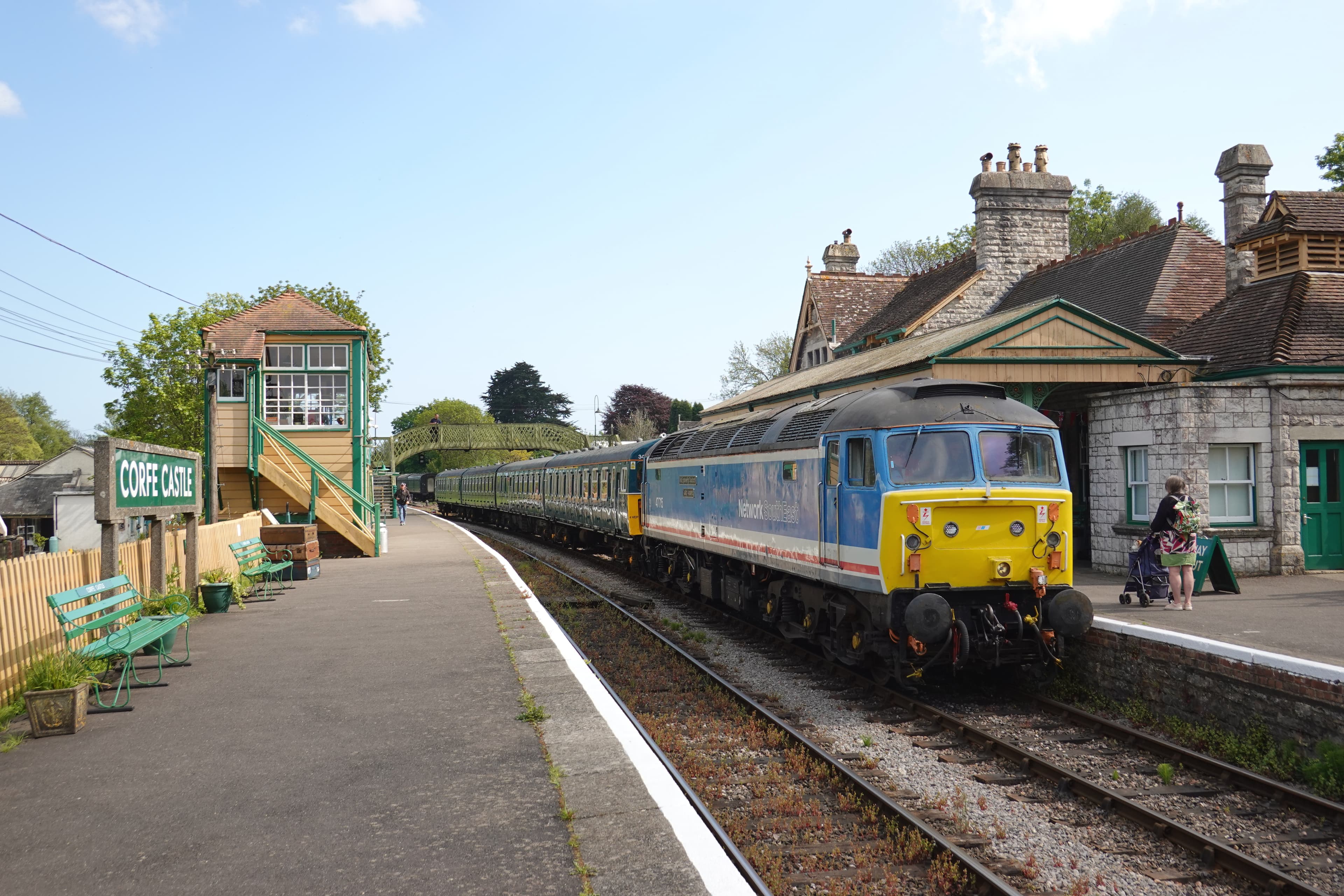

Swanage Railway
Steam and heritage diesel through the Purbeck Hills, under the ruins of Corfe Castle
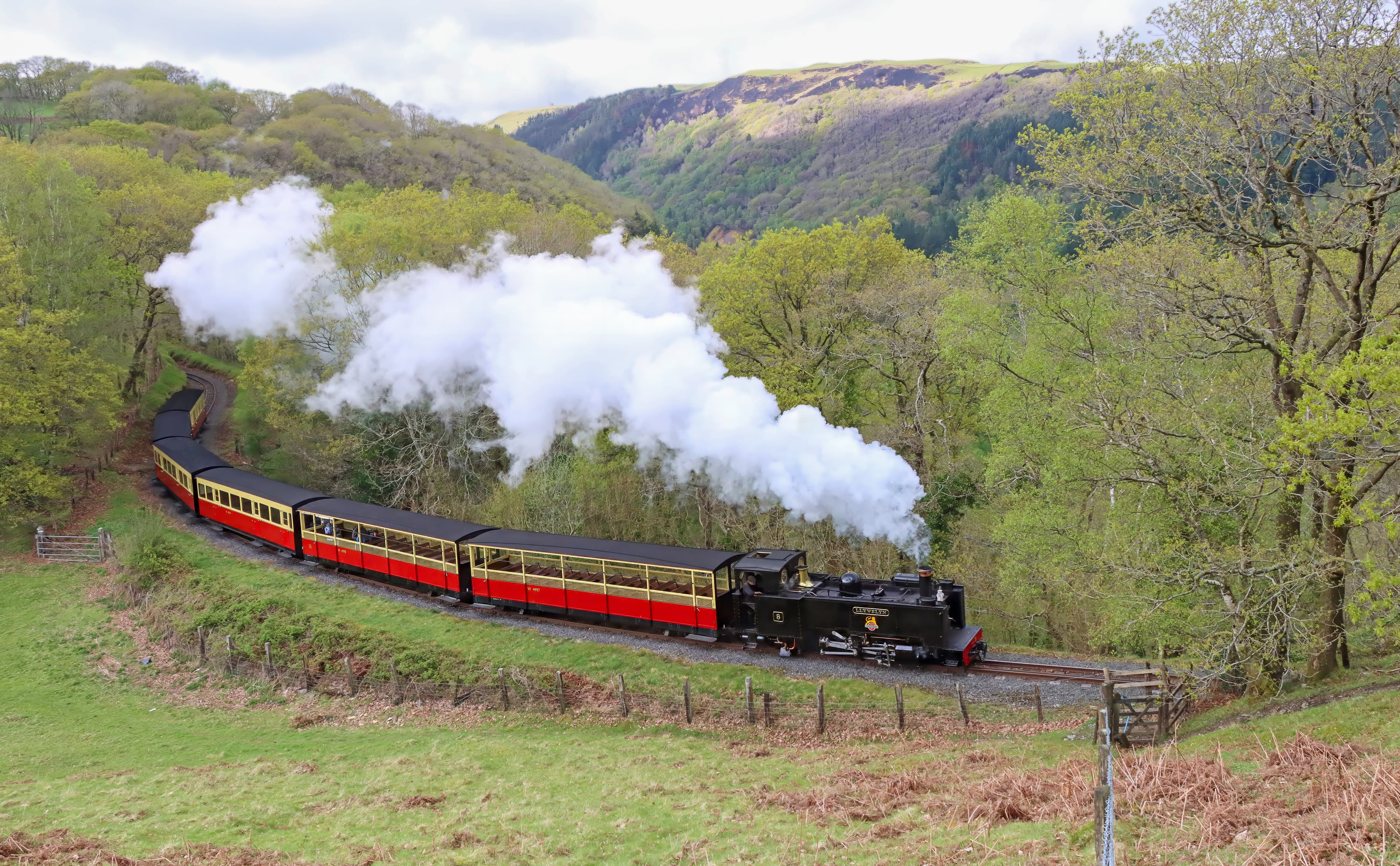
Vale of Rheidol Railway
Twelve miles of 603 mm gauge steam, sea level to the Cambrian Mountains
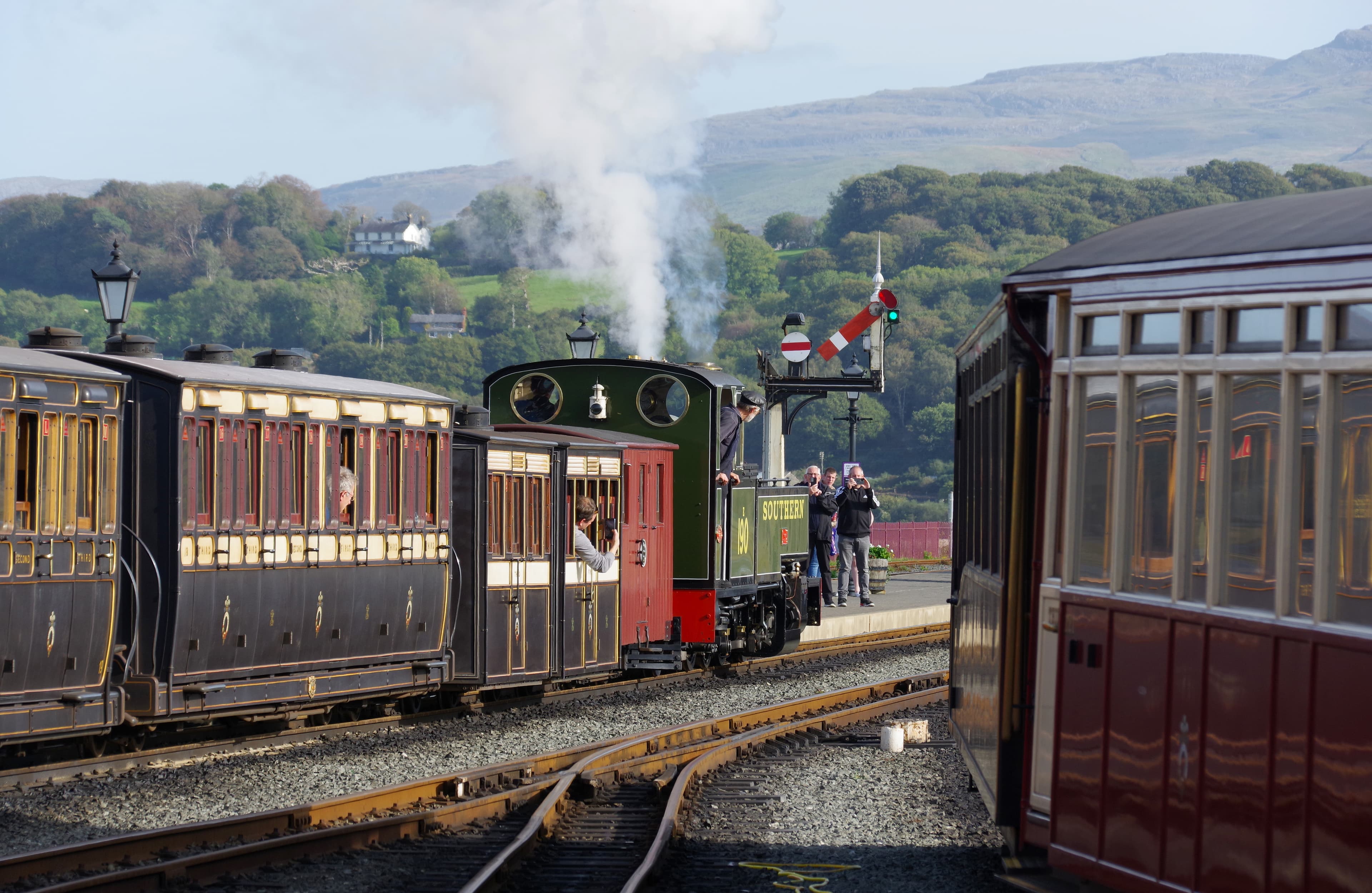
Ffestiniog Railway
The world's oldest narrow gauge railway, from harbour to slate mountain
More Journeys Worldwide
Belmond Andean Explorer
South America's first luxury sleeper train, across the roof of Peru
California Zephyr
Chicago to San Francisco across the Rockies and Sierra Nevada
Qinghai-Tibet Railway
The world's highest railway, across the roof of the world to Lhasa

TranzAlpine
Coast to coast across the Southern Alps in a single morning

Tren a las Nubes
Argentina's rack-free climb to 4,220 m above the Puna
Blue Train
Pretoria to Cape Town in two nights, with a butler in every corridor
Related Experiences & Mega-Projects
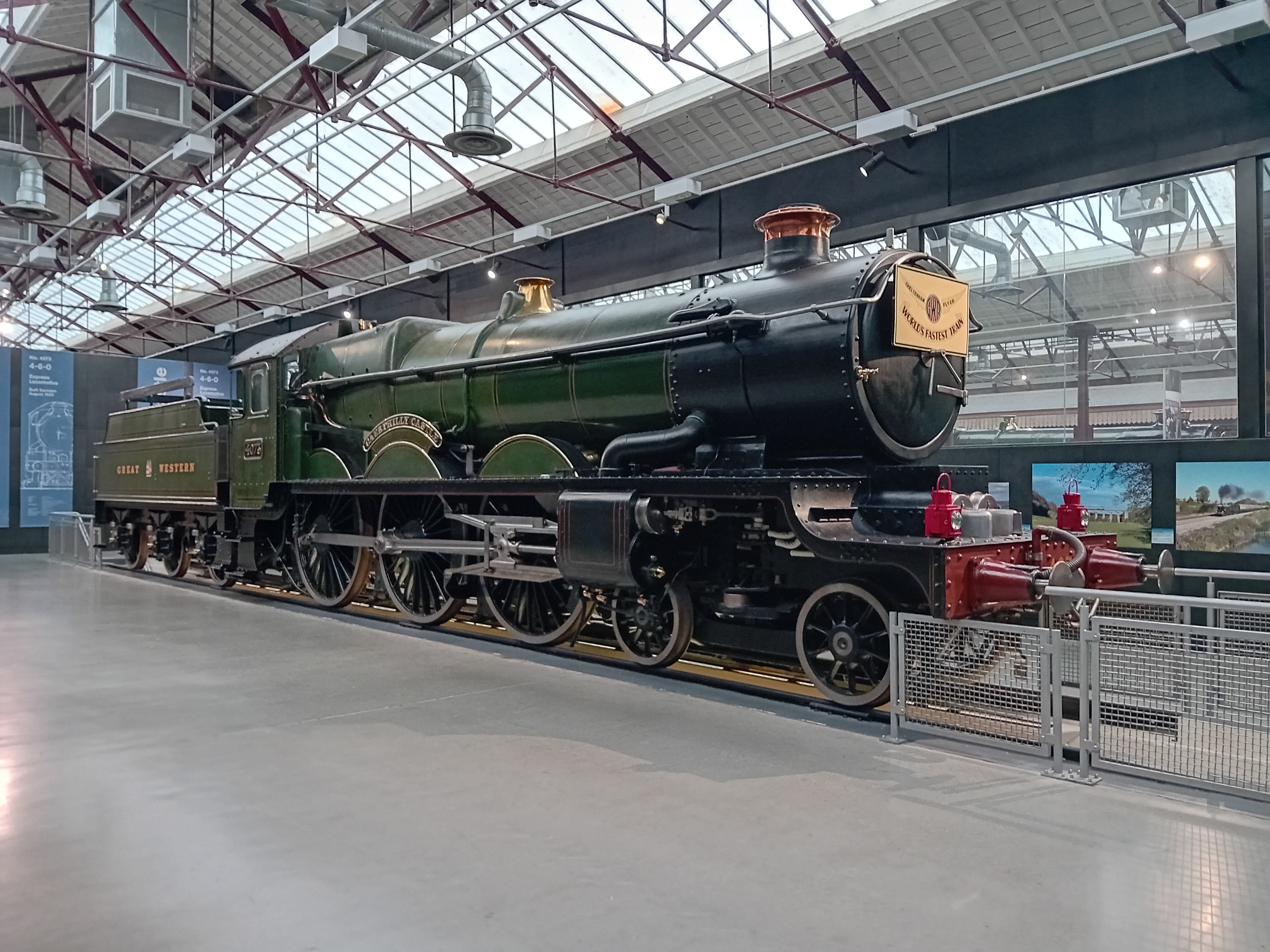
STEAM - Museum of the Great Western Railway
GWR locomotive museum in Brunel's historic Swindon Railway Works, home to Caerphilly Castle, City of Truro and King George V.
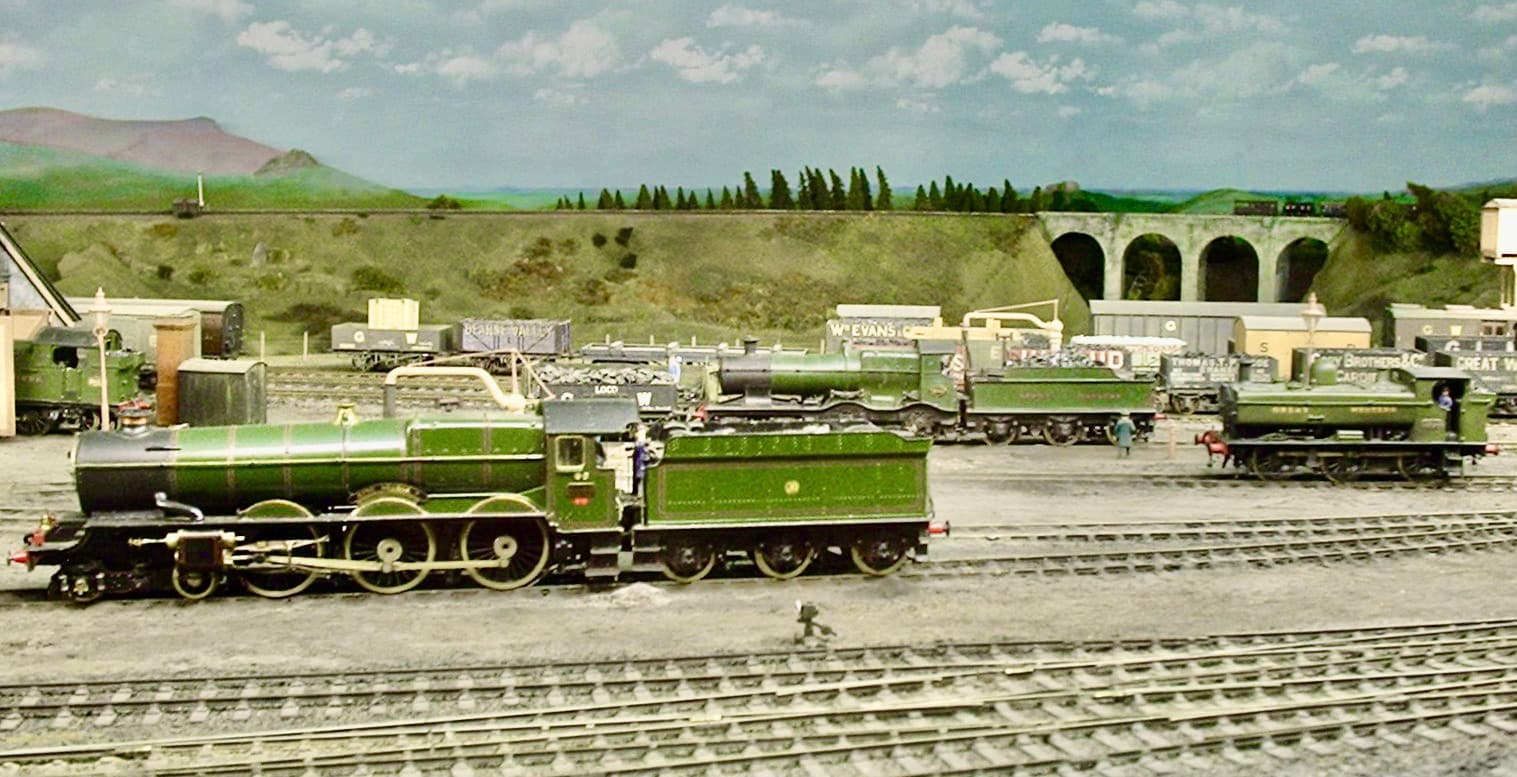
Pendon Museum
Exquisite 4mm-scale models recreating 1930s rural England and the Great Western Railway in miniature, near Abingdon, Oxfordshire.
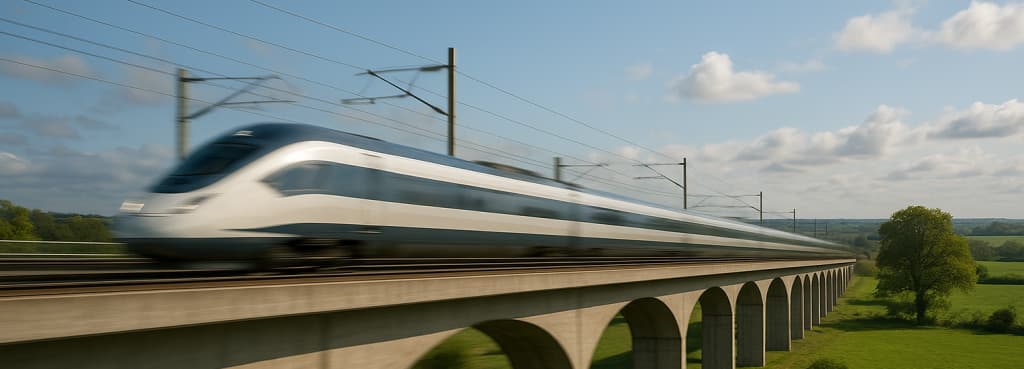
HS2
Britain's most ambitious post-war railway, halved in scope and being rebuilt under a 2026 programme reset.
Explore around this route
12 places on Spotatrain within 25 km of this route — 11 live cams and 1 event.
- Crowcombe Heathfield, Somerset — Station, View 1 3 m
- Crowcombe Heathfield, Somerset — Station, View 2 3 m
- Blue Anchor, Somerset — West Somerset, View 1 5 m
- Watchet, Somerset — West Somerset Railway, Camera 1 9 m
- Watchet, Somerset — West Somerset Railway, Camera 2 11 m
- Blue Anchor, Somerset — West Somerset, View 2 15 m
- Williton, Somerset — West Somerset Railway, Camera 1 24 m
- Bishops Lydeard, Somerset — West Somerset Railway 49 m
- Williton, Somerset — West Somerset Railway, Camera 2 57 m
- Santa Express — West Somerset Railway 82 m
- Minehead, Somerset — West Somerset Railway Terminus 88 m
- Minehead, Somerset — Seaward Crossing 250 m