Railway Experience
Museo del Ferrocarril de Madrid
Madrid railway museum in the historic 1880 Delicias station, with one of Europe finest collections of locomotives and carriages.
Updated
About This Experience
The Museo del Ferrocarril de Madrid (Madrid Railway Museum) occupies the former Delicias station, the first railway station in Madrid built with an iron-and-glass structure. Designed by the French engineer Émile Cachelièvre and erected in just eleven months, the station was inaugurated on 30 March 1880 at a ceremony presided over by King Alfonso XII and Queen María Cristina. It served as the terminus of the Madrid–Ciudad Real line, which continued to the Portuguese border at Badajoz, and stayed in railway use until it closed to traffic in 1971. The great central train shed — roughly 170 metres (558 ft) long, 35 metres (115 ft) wide and 22.5 metres (74 ft) high — is carried on seventeen cast-iron porticoes and is a protected monument of nineteenth-century engineering in its own right.
Originally called the Museo Nacional Ferroviario, the museum opened to the public on 19 December 1984 after the collection was moved from the Palacio de Fernán Núñez, where the first Spanish railway museum had operated since 1967. It is run by the Fundación de los Ferrocarriles Españoles (Spanish Railways Foundation) and has belonged to the national museum network of Spain since 2009. The complex also holds the Railway Historical Archive and the Railway Library and Newspaper Library, the only research collection of its kind in Spain.
The rolling-stock collection is regarded as one of the finest in Europe: more than 400 pieces, over 40 percent of them locomotives (steam, electric and diesel), together with railcars and nearly 150 passenger carriages, drawn from a wider railway heritage holding of more than 6,300 items that trace the history of the railway in Spain.
Photo Opportunities
The glazed central nave gives even, diffuse daylight, which makes the train shed itself the strongest subject — especially the receding line of cast-iron porticoes framing the locomotives. Light through the roof glazing is at its best in the hours after opening. The «Confederación» and the Pacific express locomotive are the most photogenic large exhibits, while the sectioned Mikado offers unusual detail shots of a boiler and motion cut open. Personal photography and tripods are generally welcomed in the public halls; confirm current rules and any limits on temporary exhibitions at the ticket desk.
Featured Video
4K UHD Museo del Ferrocarril Madrid Delicias
Why Visit
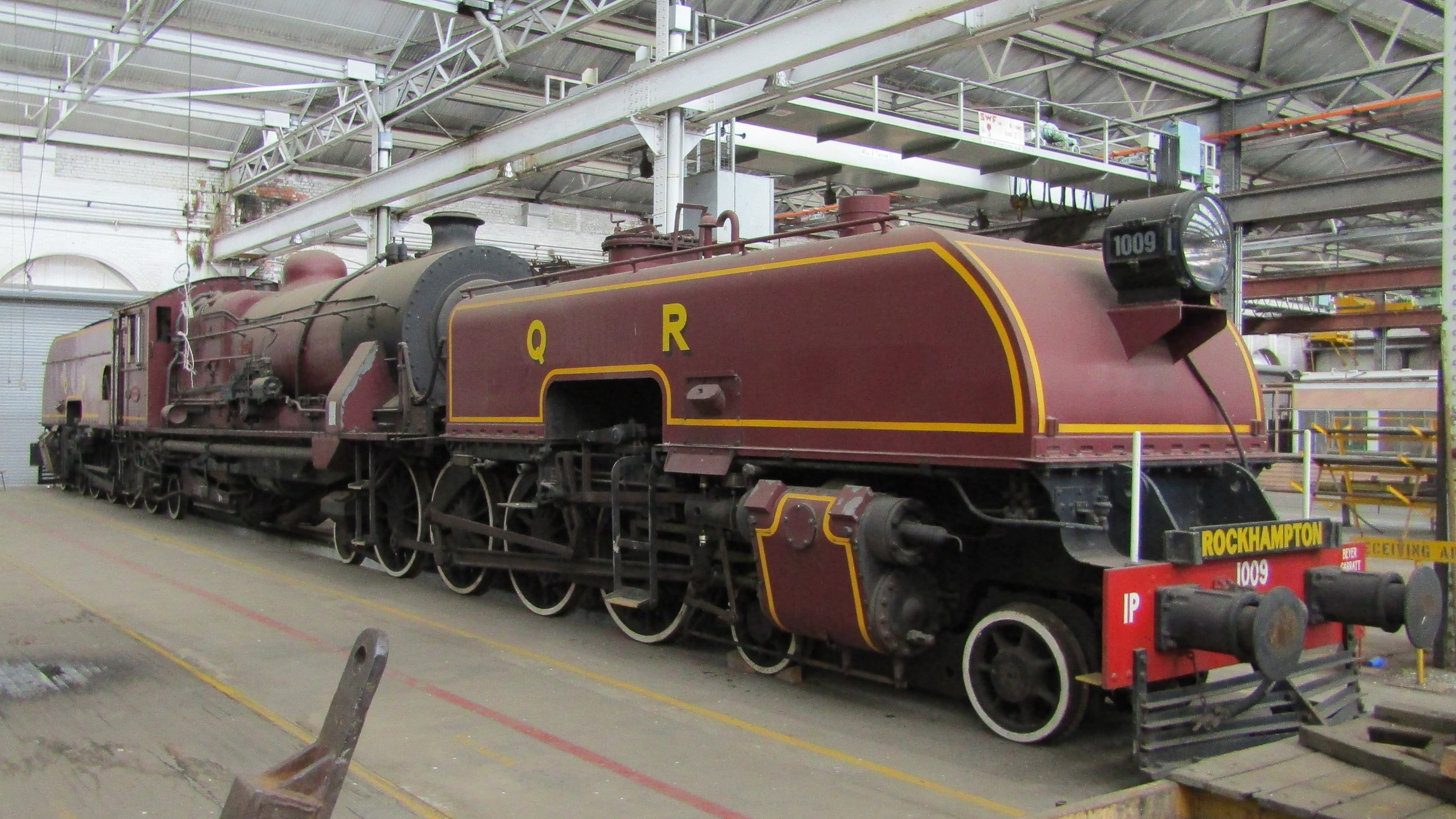
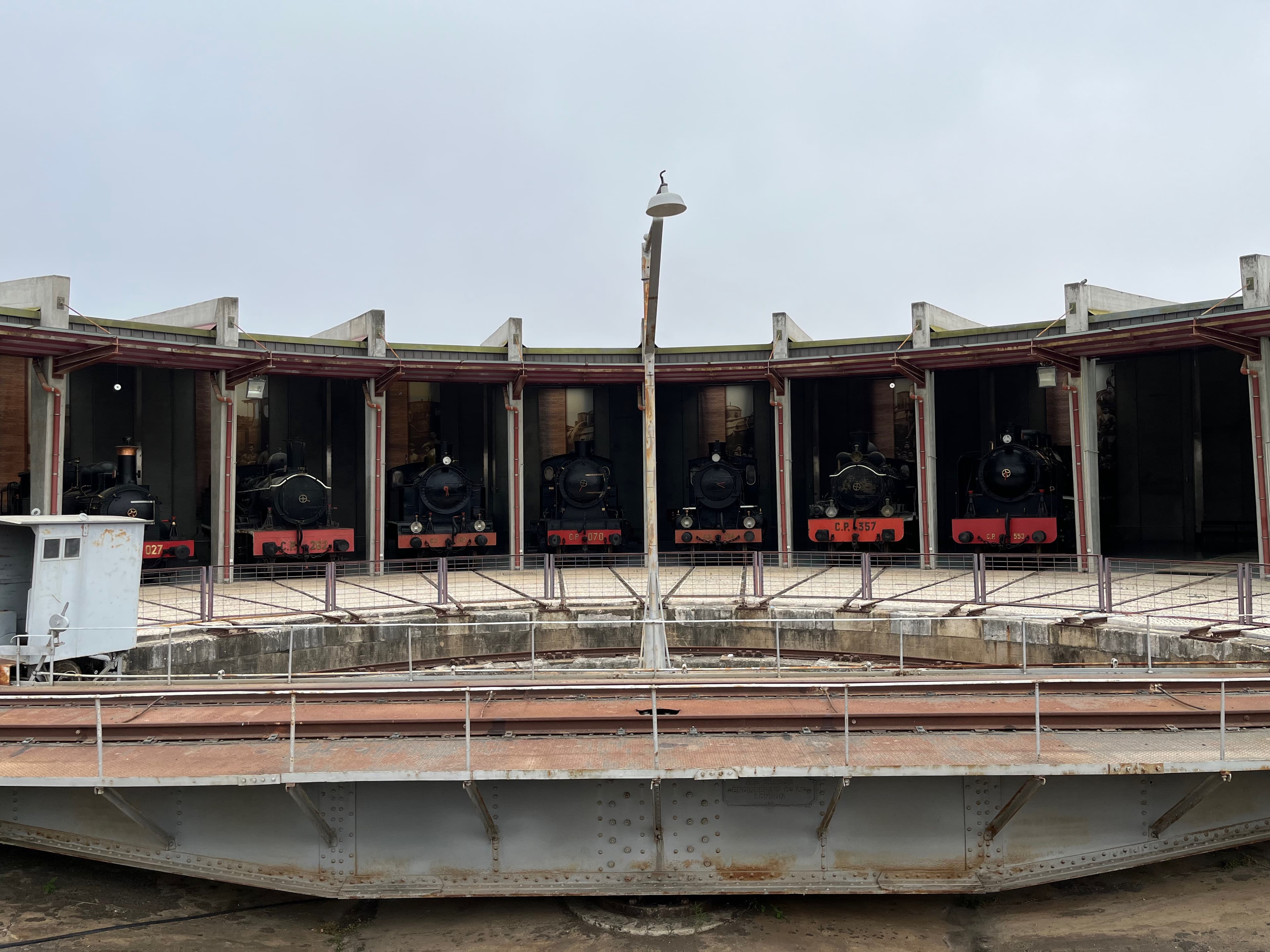
For railway enthusiasts the highlight is the steam fleet displayed beneath the historic train shed, spanning locomotives built from the 1860s to the 1960s by British, French, Belgian and Spanish makers. The star exhibit is the 242F-2009 «Confederación», regarded as the summit of Spanish steam: rated at 2,700 CV, it exceeded 140 km/h (87 mph) in trials — a Spanish steam speed record — and only ten were ever built. They hauled expresses of up to 18 coaches and 810 tonnes on the Ávila–Alsasua section of the Madrid–Irún line before withdrawal in 1975.
Other standouts include a Pacific-type express locomotive (231-2006) supplied by Babcock & Wilcox of Bilbao for the 1929 Ibero-American Exhibition, with driving wheels 1.90 metres (6 ft 3 in) across; a sectioned Mikado (141F) — one of 217 built entirely in Spain — cut away to reveal its inner mechanism for teaching; and «Marilyn», the first mainline diesel-electric locomotive to run on RENFE. The collection also preserves a Talgo II set with the diesel locomotive «Virgen de Aránzazu», both built in 1949 by American Car and Foundry, the first Talgo to enter commercial service.
Beyond the locomotives, the museum keeps the «Mataró» clock used to dispatch the first train on the Spanish mainland in 1848, and the hydraulic interlocking frame from Algodor — a 1927 installation with 110 water-driven levers, the only one of its type preserved in Spain.
What to Expect
Visitors enter directly under the vast glazed train shed, where locomotives and carriages stand along preserved platform tracks in a bright, column-free hall. Most exhibits can be viewed at close range, and several carriages and cab interiors are accessible. Allow about two to three hours for the vehicle collection, the model-railway room and the temporary exhibitions, which are included with admission.
The museum is a well-known family destination and is busiest at weekends and on market days. On the second weekend of most months (except July and August) the halls host the Mercado de Motores, a vintage and second-hand market, during which the normal museum activity is suspended — worth checking the calendar before a visit. On Saturdays the Círculo Madrileño Ferroviario (CIMAF) runs rideable garden trains on a 5-inch (127 mm) gauge circuit from 11:30 to 14:00, a popular activity that pauses over the summer and resumes in September.
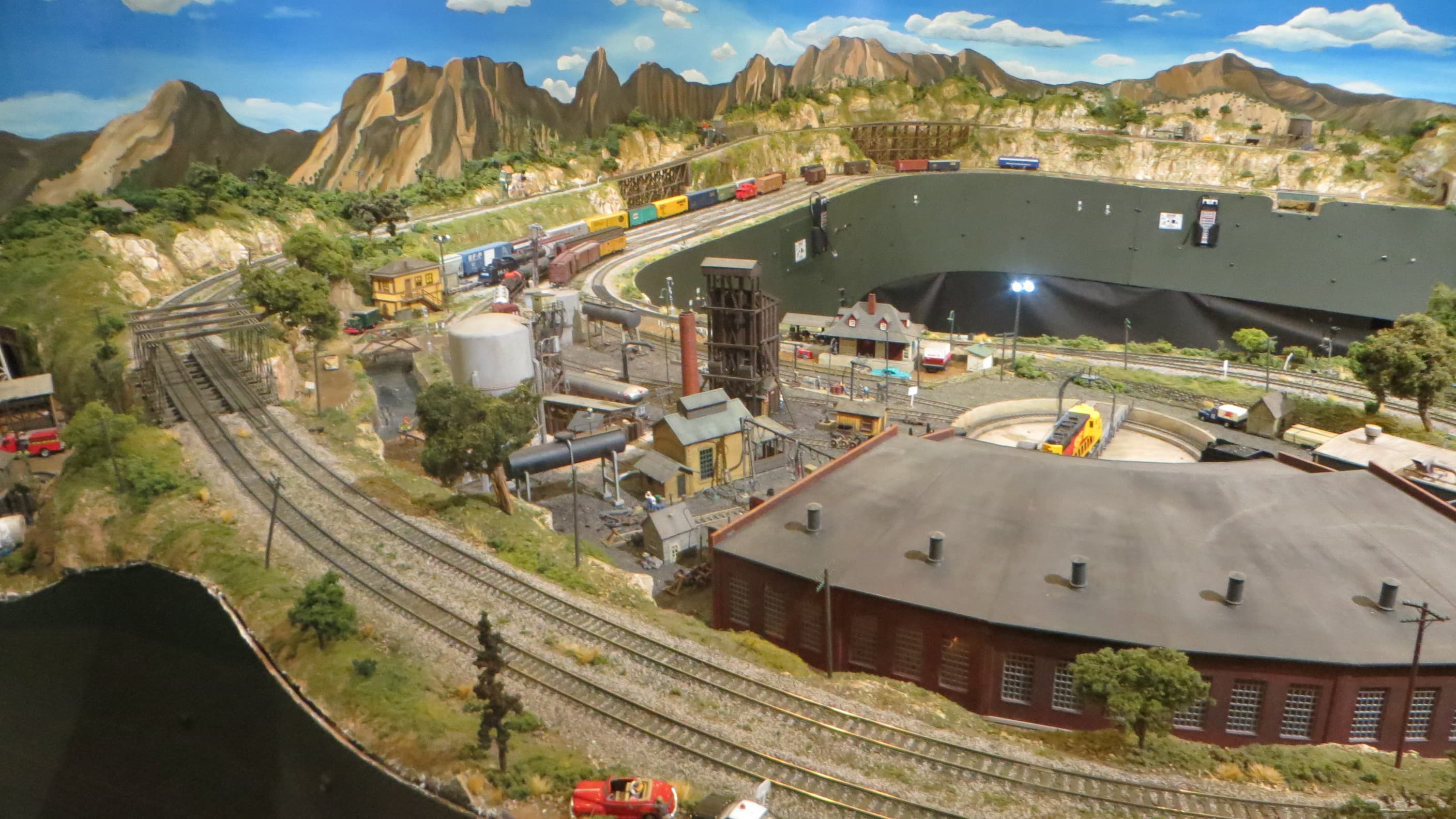
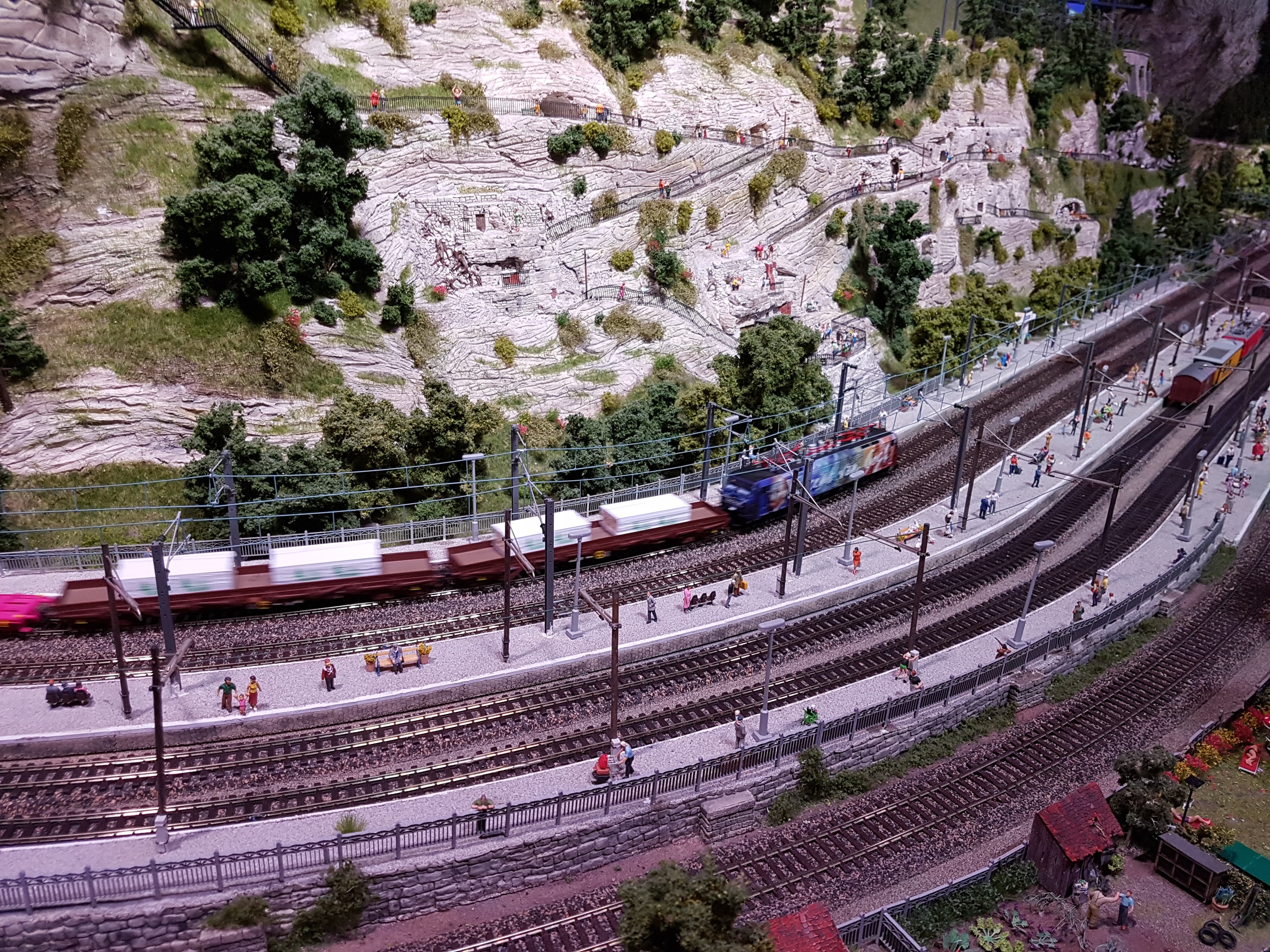
Note that the large «Territorio Ferroviario» model layout — an HO-scale (1:87) diorama with 850 metres of track over 300 square metres — is currently closed to the public for technical reasons until further notice.
Best Time to Visit
Weekday mornings are the quietest. Choose a Saturday to ride the CIMAF garden trains (11:30–14:00, from September to early summer). Avoid the second weekend of the month (except July and August), when the Mercado de Motores market replaces the normal museum activity. The Train Day open-doors event at the end of October is a lively time for railway activities.
Frequently Asked Questions
QHow do I get to the Madrid Railway Museum?
The museum is at Paseo de las Delicias 61. The nearest Metro stations are Delicias and Palos de la Frontera, both on Line 3, and the Cercanías Madrid-Delicias stop is alongside. Many bus routes and a BiciMAD dock serve the area.
QHow much does admission cost?
General admission is €7 and reduced admission is €4 (over-65s, children 4-12, students, Friends of the Railway members and InterRail/EuRail holders). Children under 4 and visitors with a disability enter free. There is also a 3-for-€15 day offer and a €4 per-person group rate for groups of ten or more.
QWhat are the opening hours?
From October to May the museum opens Monday to Friday 9:30-15:00, Saturdays and public holidays 10:00-19:00, and Sundays 10:00-15:00. From June to September it opens daily 10:00-15:00. It is closed on 25 December and 1 and 6 January.
QHow long should I plan for a visit?
Most visitors spend about two to three hours seeing the locomotives, carriages, the model-railway room and the temporary exhibitions.
QIs the Territorio Ferroviario model railway open?
No. The large HO-scale Territorio Ferroviario layout is currently closed to the public for technical reasons until further notice; the smaller model-railway room remains open.
QCan I ride a train at the museum?
On Saturdays the Círculo Madrileño Ferroviario (CIMAF) runs rideable garden trains on a 5-inch gauge circuit from 11:30 to 14:00. The rides pause over the summer and resume in September.
QIs photography allowed?
Yes. Personal photography, including tripods, is generally welcomed in the public halls. Check for any restrictions on temporary exhibitions at the ticket desk.
How to Plan Your Visit
Season and Schedule
The museum opens year-round with seasonal hours and closes only on 25 December and 1 and 6 January.
- Operating Hours
- Oct-May: Mon-Fri 9:30-15:00; Sat & public holidays 10:00-19:00; Sun 10:00-15:00. Jun-Sep: daily 10:00-15:00.
- Closed
- 25 December, 1 and 6 January
- Market days
- Mercado de Motores on the second weekend of most months (except Jul-Aug); regular museum activity is suspended those days.
Ticket Information
Admission covers the permanent collection and the temporary exhibitions; tickets are sold at the door or in advance online.
- General
- €7
- Reduced
- €4 (over-65s, children 4-12, students, Friends of the Railway members, InterRail/EuRail holders)
- Free
- Children under 4, visitors with a disability, and other categories listed by the museum
- Offers
- 3 tickets for €15 (one day); groups of 10+ €4 per person by prior booking
Accessibility Details
The collection is displayed at ground level along the platform tracks of the former station train shed.
What to Bring
A camera for the train shed; the collection sits under a large glazed roof, so dress for the season.
Photography Tips
Personal photography is welcomed in the public halls; the receding cast-iron porticoes and the large steam locomotives are the strongest subjects in the diffuse roof light.
The operator does not publish a pet policy — contact them directly before traveling with an animal.
Travel Information
By Air
Adolfo Suárez Madrid-Barajas Airport (MAD) is the nearest airport, linked to the city by Metro Line 8 and Cercanías commuter rail.
- Nearest Airport
- Adolfo Suárez Madrid-Barajas (MAD)
By Train
The museum sits beside the Cercanías Madrid-Delicias stop; the main long-distance and AVE hub, Madrid Puerta de Atocha, is a short distance to the north-east.
- Commuter rail
- Cercanías Madrid-Delicias
- Main station
- Madrid Puerta de Atocha-Almudena Grandes (AVE / long-distance)
By Car
The entrance is on Paseo de las Delicias, inside the regulated central parking zone of Madrid.
Parking
On-street parking nearby is regulated (SER); there is no dedicated visitor car park at the museum.
Local Transportation
Metro Delicias and Palos de la Frontera (both Line 3) are the closest stations, with many bus routes and a BiciMAD bike-share dock nearby.
- Metro
- Delicias (L3), Palos de la Frontera (L3)
- Bus
- 6, 8, 19, 45, 47, 55, 59, 85, 86, 247, E1, N14
- Bike-share
- BiciMAD dock at Delicias (calle Bustamante, 3)
Nearby Lodging
Find places to stay near Museo del Ferrocarril de Madrid.
This lodging map is provided by Stay22, a third-party service that may set cookies. It loads only with your consent.
Accommodation results are provided by Stay22; we may earn a commission on bookings made through this map.
Nearby Attractions
- Matadero Madrid1.3 km
A major contemporary arts and culture centre in the former Legazpi slaughterhouse, in the Arganzuela district near the museum.
- Madrid Río0.8 km
Riverside park along the Manzanares with walking and cycling paths, a short walk west of the museum.
- Atocha Station1.5 km
Madrid main railway station, a 19th-century iron-and-glass terminus with a tropical garden under its old train shed - of clear interest to railfans.
- CaixaForum Madrid1.7 km
Art and cultural centre on the Paseo del Prado, known for its vertical garden and temporary exhibitions.
- Planetario de Madrid1.5 km
Planetarium with a dome projection theatre and astronomy exhibits in Parque Enrique Tierno Galván.
Photos

 jacilluch
5

M.Peinado
4

Juan Enrique Gilardi
5

Juan Enrique Gilardi
5

M.Peinado
4

edans
4
More Videos
Museo del Ferrocarril de Madrid | España
Recorrido por el FC de las Delicias en 4K
Visitamos el MUSEO del FERROCARRIL en MADRID
Help improve this page
Spotted something out of date or incorrect? Let our community know.
Explore more experiences: Browse all rail travel experiences.
Booking & Pricing
Price range
From $7 EUR
General admission €7; reduced €4 for over-65s, children 4-12, students, Friends of the Railway members and InterRail/EuRail holders; free for children under 4 and visitors with a disability, among others. Special offer of 3 tickets for €15 (one day); groups of 10 or more €4 per person by prior booking. Admission covers the permanent collection and temporary exhibitions.
Quick Information
Country
Region
City
Madrid
Best Season
The museum is open year-round and entirely indoors under the station roof, so it is a dependable option in any weather and a good choice on hot Madrid summer afternoons or on rainy days. The Saturday CIMAF garden trains run outdoors and pause over the summer, returning in September.
Visit Duration
2-3 hours
Cost
General €7, reduced €4; children under 4 free
Tags
Contact
+34 607 062 279
taquillamuseo@ffe.es