Railway Experience
Galveston Railroad Museum
Five acres of railyard behind Galveston's 1932 Santa Fe depot, with Budd streamliners, Warbonnet F7s and caboose rides.
Updated
About This Experience
The Galveston Railroad Museum fills the 1932 Santa Fe Station at 25th Street and The Strand, on the northern edge of Galveston's downtown historic district. Its legal name is the Center for Transportation and Commerce, established in 1972 by a Moody Foundation grant initiated by Mary Moody Northen; the grant paid for the restoration and reuse of the Santa Fe building, now known as Shearn Moody Plaza, and the museum opened to the public in 1982. Behind the depot sit five acres of railyard holding the collection: steam and diesel locomotives, Budd-built stainless-steel passenger cars, freight equipment and a working caboose train.
Galveston's rail history runs deeper than the current building. The island's first depot went up in 1876 at Avenue A and 23rd Street for the Galveston, Henderson and Houston Railroad, chartered in 1853 to link Galveston to Henderson by way of Houston and for years the island's only rail connection to the mainland. The Gulf, Colorado and Santa Fe Railroad, chartered out of Galveston in 1873, shared that depot until it outgrew it. Construction on a four-story red brick Union Depot at 25th and The Strand began in 1896 to a design by Dallas architect A.J. Armstrong; in February 1897 the Galveston Daily News called it one of the most complete and imposing of its kind in the Southwest. The Santa Fe Railway added an eight-story office building alongside in 1914 and connected the two with a two-story annex in 1919.
The 1896 depot was razed in 1931 to make room for the Santa Fe Station that still stands. Santa Fe closed its Galveston office in 1964 and passenger service ended three years later, but the building survived, and so did the museum, which was flooded in its entirety, railcars included, when Hurricane Ike came ashore in 2008. It now operates daily year-round, with the old Harvey House counter turned over to exhibit space and a group of sculpted travelers still waiting in the marble waiting room.
Photo Opportunities
Casual photography is welcome throughout. The strongest single frame is the Warbonnet pair, 315 and 316, shot low and head-on in the yard; the red-and-silver nose reads best in soft light, so the first hour after the 10 a.m. opening or the last hour before the 5 p.m. close beats midday, when the Gulf sun goes hard and contrasty. Inside, the depot waiting room is a low-light problem worth solving: the marble, the columns and the Ghosts of Travelers Past figures reward a fast lens far more than a flash, which flattens the sculptures.
The yard is the museum's photographic asset, from the fluted stainless flanks of the Budd cars to the Case steam tractor in the Garden of Steam and the caboose train on Harborside Express days. Interiors of the sleeping and dining cars are tight, so a wide lens earns its place in the bag.
Professional shoots are a separate category with published fees. During regular hours a portrait, engagement or senior session costs $50 for the first hour and $25 per additional 30 minutes, with a one-hour minimum, and includes admission for the photographer plus up to four guests. Before or after hours the rate is $125 per hour from 6 to 10 a.m. and 5 to 7 p.m., and $175 per hour from 7 p.m. to midnight. The museum retains the rights to its own images and prohibits commercial use of photographs of the museum; filming inquiries go through the office at (409) 765-5700.
Featured Video
Train Rides at the Galveston Railroad Museum
Why Visit
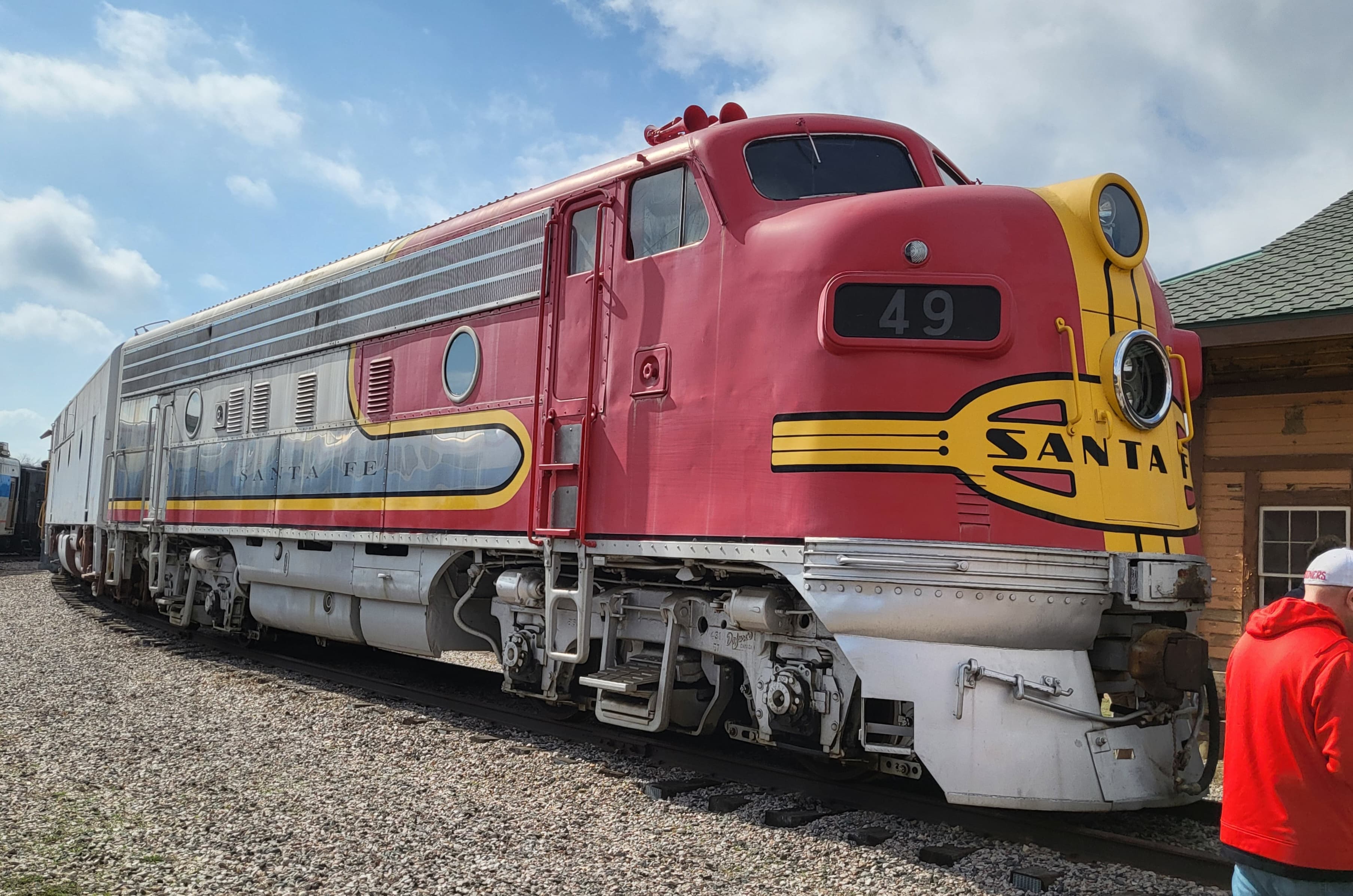
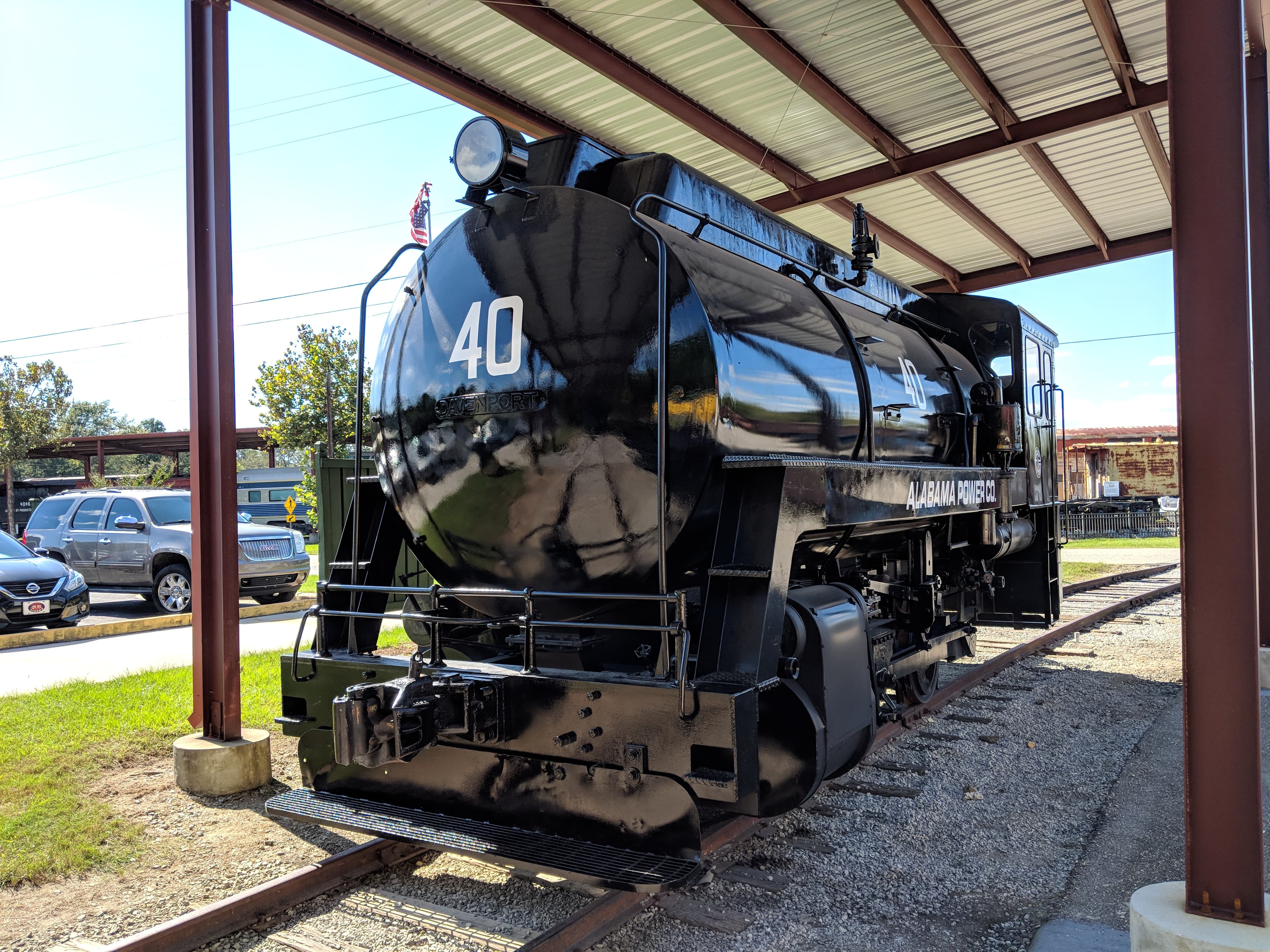
The locomotive roster is small but unusually varied for a Gulf Coast museum, and the museum publishes a builder and a date for each machine. Southern Pacific 4-6-0 No. 314 came out of Cooke Locomotive Works in 1892; Waco, Beaumont, Trinity and Sabine Railway No. 1 is a Baldwin 2-6-2 of 1920; Center for Transportation and Commerce No. 555 is an Alco 2-8-0 of 1922; Oregon, Pacific and Eastern No. 112 was built by Lima Locomotive Works in 1923. On the diesel side, Union Pacific No. 410 is a Fairbanks-Morse of 1954 and No. 1983 a General Electric of 1958. The signature pair is Santa Fe 315 and 316, EMD F7 cab units in the red-and-silver Warbonnet scheme that the museum bills simply as the Santa Fe Warbonnets.
The passenger fleet is what earns the detour. Seven of its cars are Budd stainless-steel streamliners carrying names and dates: New York Central's Bonnie Brook (1949), Canadian National's Donald E. Harper Jr. (1954), Pennsylvania Railroad coaches George H. Gould and Alonzo H. Harter (both 1952), Santa Fe's dining car City of Galveston (1948), Southern dining car No. 3305 (1949) and the Chicago, Burlington and Quincy observation-diner Silver Hours, No. 302, of 1940. Older equipment fills in around them: Pullman's 1924 observation car Robert E. Lee, Illinois Central Railway Post Office car No. 100, built by Pullman in 1914 and in postal service until 1968, a Milwaukee Road stock car of 1928 numbered 105031, and Glen Fee, which the museum describes as the last surviving car of the American Freedom Train.
Then there is the exhibit nobody expects. The Ghosts of Travelers Past are life-size white figures installed in the depot waiting room, commissioned in 1981 by Mary Moody Northen and modeled by sculptors Elliot and Ivan Schwartz of StudioEIS in Brooklyn, who used themselves, their families and their acquaintances as sitters. The scene they freeze is the station as it looked in 1932. Artist Cathy Cloud has been restoring the figures, and the museum's Adopt a Traveler program lets supporters fund the conservation of individual sculptures. Two of the museum's cars, Bonnie Brook and Silver Foot, go further still: they are rented as the Rail Hotel, sleeping up to ten guests each, booked through VRBO.
What to Expect
The 1932 depot is the first thing you walk into, and it has kept its original marble and terrazzo walls and floors, heavy columns, ornate wall furnishings, oversized light fixtures and wooden benches; the newsstand and ticket counter are still in place. Rail Finds, a revolving exhibit in the depot drawn from the museum's rarely displayed permanent collection, changes what is on show between visits. An auditorium runs railroad films, and a courtyard cafe handles small bites and refreshments.
Out in the yard, visitors climb aboard rather than peer through glass: sleeping cars, dining cars, the railway post office car and the stock car are open. The museum invites guests to pull the whistle on a steam engine and to operate its model trains, and the Garden of Steam holds a 1911 Case steam tractor built in Racine, Wisconsin, rated at 60 horsepower, which worked a farm near Kerrville, Texas and could drive belt machinery from the large flywheel beside its cab.
Crowd levels swing with the calendar. A weekday morning is quiet enough to have railcars to yourself. The museum's own guidance is to allow at least an hour; railfans who read every label should budget two to three. The Polar Express train ride, running 13 November to 23 December 2026, sells out, and the museum says so on its own home page, so those tickets are a months-ahead purchase rather than a walk-up.
Best Time to Visit
March to May and October to November give the best combination of weather, open railcars and running caboose trains. Aim for the 10 a.m. opening on a weekday if you want the yard to yourself; weekends draw families and the caboose departures fill up. Mid-November to late December belongs to the Polar Express (13 November to 23 December 2026), which sells out and changes the character of the site entirely. The museum closes on New Year's Day, Mardi Gras, Thanksgiving Day, Christmas Eve and Christmas Day.
Frequently Asked Questions
QHow long should I plan for my visit?
The museum recommends allowing at least an hour. That is enough for the depot exhibits and a quick pass through the yard, but if you read labels and climb into the sleeping, dining and postal cars, two to three hours is realistic. Add 20 minutes if you are taking a Harborside Express caboose ride.
QIs the caboose ride included with admission?
No. The museum states that Harborside Express tickets are required in addition to museum admission passes. The ride runs on a seasonal schedule, typically late spring through summer on most weekends, weather permitting, with departures every 20 minutes from 11 a.m. Group field-trip passes are $8 each with an advance reservation.
QWhat does admission cost?
Adults aged 13 to 64 pay $14, seniors 65 and over pay $10, children aged 3 to 12 pay $8, and children 2 and under are free. Active military and veterans receive one free admission per service member, collected at the museum ticket counter. Tickets are non-refundable and cannot be exchanged.
QCan you go inside the railcars?
Yes. The museum is built around climbing aboard: sleeping cars, dining cars, the Illinois Central railway post office car and a Milwaukee Road stock car are all open, and visitors are invited to pull the whistle on a steam engine. Boarding involves original steps, which are steep and narrow.
QIs photography allowed?
Casual photography is welcome anywhere on site at no charge. Professional portrait, engagement and senior sessions require a paid permit: $50 for the first hour plus $25 per additional 30 minutes during regular hours, $125 per hour before or after hours, and $175 per hour from 7 p.m. to midnight. The museum prohibits commercial use of images of the museum.
QWhat are the Ghosts of Travelers Past?
They are life-size white sculptures installed in the depot waiting room, showing the station as it looked in 1932. Mary Moody Northen commissioned them in 1981 and sculptors Elliot and Ivan Schwartz of StudioEIS in Brooklyn modeled them on themselves, their families and their acquaintances. Artist Cathy Cloud has been restoring them, funded partly by the museum's Adopt a Traveler program.
QCan you really sleep in a railcar here?
Yes. The museum operates a Rail Hotel in two of its cars, Bonnie Brook and Silver Foot. Each sleeps up to ten guests and includes a hospitality suite, a dining and reception car, a full kitchen, one full bath and four half-baths, with complimentary parking and 24-hour porter service. Reservations go through VRBO links on the museum's site.
QWhen is the Polar Express and does it sell out?
The Polar Express train ride runs 13 November to 23 December 2026. The museum's own home page warns that the event sells out, so tickets should be bought well ahead. Harborside Express caboose rides are blacked out from 1 November to 1 January to free up the train.
How to Plan Your Visit
Season and Schedule
The museum is open daily year-round, and the ticketing page notes that hours can change for weather and holidays. The Harborside Express caboose train is seasonal and does not run every day the museum is open.
- Operating Hours
- Daily 10:00 a.m. - 5:00 p.m.
- Holiday Closures
- New Year's Day, Mardi Gras, Thanksgiving Day, Christmas Eve, Christmas Day
- Caboose Ride Season
- Late spring through summer, most weekends, weather permitting; blacked out 1 November - 1 January
- Caboose Departures
- Every 20 minutes from 11:00 a.m., last ride mid-afternoon
- Polar Express 2026
- 13 November - 23 December 2026; sells out
Ticket Information
Admission is sold online through the museum's SquadUp page or at the door and covers the depot exhibits and the railyard. Caboose rides are ticketed separately and are not included with admission.
- Admission - Adult (13-64)
- $14.00
- Admission - Senior (65+)
- $10.00
- Admission - Child (3-12)
- $8.00
- Children 2 and Under
- Free
- Active Military and Veterans
- One free admission per service member, issued at the museum ticket counter
- Harborside Express
- Separate ticket required; group field-trip passes $8 each with advance reservation
- Refunds
- Tickets are non-refundable and cannot be exchanged
Accessibility Details
The 1932 depot is a level indoor space with wide floors, and the railyard is paved and walkable. Boarding the historic railcars means climbing steep original steps, and the museum states in its own caboose-ride notices that wheelchair accessibility on the train is limited.
- Depot Interior
- Level indoor exhibit space
- Railcar Boarding
- Original steps; limited wheelchair access
- Accessibility Questions
- Call the museum at (409) 765-5700 before visiting
What to Bring
Most of the collection is outdoors on five acres of railyard with little shade, so sun protection and water matter more here than at an indoor museum. Closed shoes are the right call for climbing in and out of railcars.
- Sun and Heat
- Hat, sunscreen and water, especially June to September
- Footwear
- Closed, flat shoes for railcar steps and yard ballast
- On Site
- Courtyard cafe for small bites and refreshments; gift shop in the depot
Photography Tips
Casual photography is welcome anywhere on site. Professional portrait, engagement and senior sessions require a paid photography permit, and the museum prohibits commercial use of images of the museum.
- Casual Photography
- Permitted, no fee
- Professional Session (regular hours)
- $50 first hour, then $25 per 30 minutes, one-hour minimum; includes admission for photographer plus 4 guests
- Before/After Hours
- $125 per hour (6-10 a.m., 5-7 p.m.); $175 per hour (7 p.m. - midnight)
- Best Light
- First hour after opening or last hour before the 5 p.m. close
The operator does not publish a pet policy — contact them directly before traveling with an animal.
Travel Information
By Air
Galveston's own airport handles general aviation only, so scheduled flights arrive in Houston and visitors drive down Interstate 45. William P. Hobby is the closer of the two Houston airports.
- Nearest Major Airport
- William P. Hobby Airport (HOU), Houston - 38 mi / 61 km north
- Local Airport
- Scholes International Airport at Galveston (GLS) - 4 mi / 7 km southwest, general aviation only
- Route from Houston
- Interstate 45 south
By Train
There has been no scheduled passenger train to Galveston since the late 1960s, which is part of why the museum exists. The nearest Amtrak station is in downtown Houston, served by the Sunset Limited.
- Nearest Amtrak Station
- Houston, TX (HOS), 902 Washington Avenue - 47 mi / 75 km northwest
- Route Served
- Sunset Limited
- Onward Travel
- No rail link to Galveston; rental car, shuttle or rideshare from Houston
By Car
Driving is the practical way in. From Houston, Interstate 45 runs south onto the island and becomes Broadway; the museum sits at the harbour end of 25th Street where it meets The Strand.
- Address
- 2602 Santa Fe Place, Galveston, TX 77550
- From Houston
- Interstate 45 south, then 25th Street north to The Strand
- Position in Town
- North end of the Strand Historic District, two blocks from the Galveston Channel
Parking
The museum has its own free lot, which can fill on event days and busy weekends. The Strand's street parking and paid lots are a short walk away when it does.
- On-Site Parking
- Free museum lot
- Overflow
- Street parking and paid lots in the Strand Historic District, a few blocks away
Local Transportation
Island Transit runs rubber-tyred trolley buses on two loops; the Downtown Loop stops on 25th Street, a block from the museum door. The island's historic rail streetcars were damaged by Hurricane Ike in 2008 and the trolley service now uses road vehicles.
- Trolley Route
- Island Transit Downtown Loop - stops on 25th Street, Postoffice Street, 20th Street and The Strand
- Fare
- $1 per adult; children ride free with an accompanying adult
- Frequency
- Roughly every 30 minutes
Nearby Lodging
Find places to stay near Galveston Railroad Museum.
This lodging map is provided by Stay22, a third-party service that may set cookies. It loads only with your consent.
Accommodation results are provided by Stay22; we may earn a commission on bookings made through this map.
Nearby Attractions
- 1877 Tall Ship ELISSA and Galveston Historic Seaport0.5 km
The 1877 iron barque ELISSA, launched by Alexander Hall & Co. of Aberdeen and designated the official Tall Ship of Texas in 2005, is one of only three ships of her kind still actively sailing. Berthed at Pier 22, she anchors the Texas Seaport Museum along with the Ship to Shore immigration exhibit. Open Tuesday to Sunday, 10 a.m. to 5:30 p.m.
- Ocean Star Offshore Drilling Rig Museum0.7 km
A retired jack-up drilling rig moored at Pier 19, at 20th Street and Harborside Drive, converted into a museum about the offshore petroleum industry. Visitors walk the actual rig decks. Open Thursday to Monday, 10 a.m. to 5 p.m., closed Tuesday and Wednesday, with last tickets sold at 4 p.m.
- The Grand 1894 Opera House0.8 km
A working performing-arts theatre at 2020 Postoffice Street, built in 1894-95 and operated today as a not-for-profit venue with a full season of concerts, comedy and theatre. Guided tours are offered. Four blocks from the museum, in the same historic district.
- Moody Mansion0.8 km
The 28,000-square-foot Romanesque residence at 2618 Broadway, completed in 1895 and restored to its turn-of-the-century condition. It is a National Register property and a Recorded Texas Historic Landmark, and it was the home of the Moody family whose foundation funded the railroad museum. Open daily 10 a.m. to 5 p.m., last tickets 4 p.m.
- The Bryan Museum1.4 km
A Texas and American Southwest history collection at 1315 21st Street, housed in a former orphanage building. Open daily 10 a.m. to 5 p.m., closed Tuesdays. Phone (409) 632-7685.
- Galveston Island Historic Pleasure Pier2.2 km
An amusement pier over the Gulf at 2501 Seawall Boulevard, with rides, midway games, food venues and shops. Hours vary by date, so check the pier calendar. It is the obvious pairing if you are visiting with children after a morning in the railyard.
Official Resources
Photos

 davidwilson1949
4

davidwilson1949
4

davidwilson1949
4

Michael Barera
CC BY-SA 4.0
More Videos
The Harborside Express For The Galveston Railroad Museum
Galveston Railroad Museum in Galveston, Texas #GalvestonTexas #modeltrains
THE POLAR EXPRESS™ Train Ride Returns to Galveston Railroad Museum!
POLAR EXPRESS™ Train Ride at The Galveston Railroad Museum Montage | Visit Galveston
Help improve this page
Spotted something out of date or incorrect? Let our community know.
Explore more experiences: Browse all rail travel experiences.
Booking & Pricing
Price range
$8 – $14 USD
Adult (13-64) $14, senior 65+ $10, child 3-12 $8, children 2 and under free. Active military and veterans receive one free admission per service member at the ticket counter. Harborside Express caboose rides require a separate ticket; group field-trip passes are $8 each. Prices from the museum's official SquadUp ticketing page, checked 29 July 2026.
Quick Information
Country
Region
City
Galveston
Best Season
Spring and fall are the sweet spot: mild air and the Harborside Express caboose train typically running on most weekends from late spring through summer. Summer on Galveston Island is hot and humid, and much of this museum is an open railyard with limited shade, so a July afternoon among the railcars is genuinely draining. Winter is mild, but the caboose rides are blacked out from 1 November to 1 January while the Polar Express occupies the train.
Visit Duration
1.5-3 hours
Cost
$8-$14 admission; Harborside Express caboose rides ticketed separately
Tags
Contact
(409) 765-5700
info@galvestonrrmuseum.org