
Railway Experience
Tram 28 (Eléctrico 28)
Historic 1930s trams clattering through Lisbon’s narrow Alfama and Graça streets, offering an iconic hilltop city ride.
Updated
About This Experience
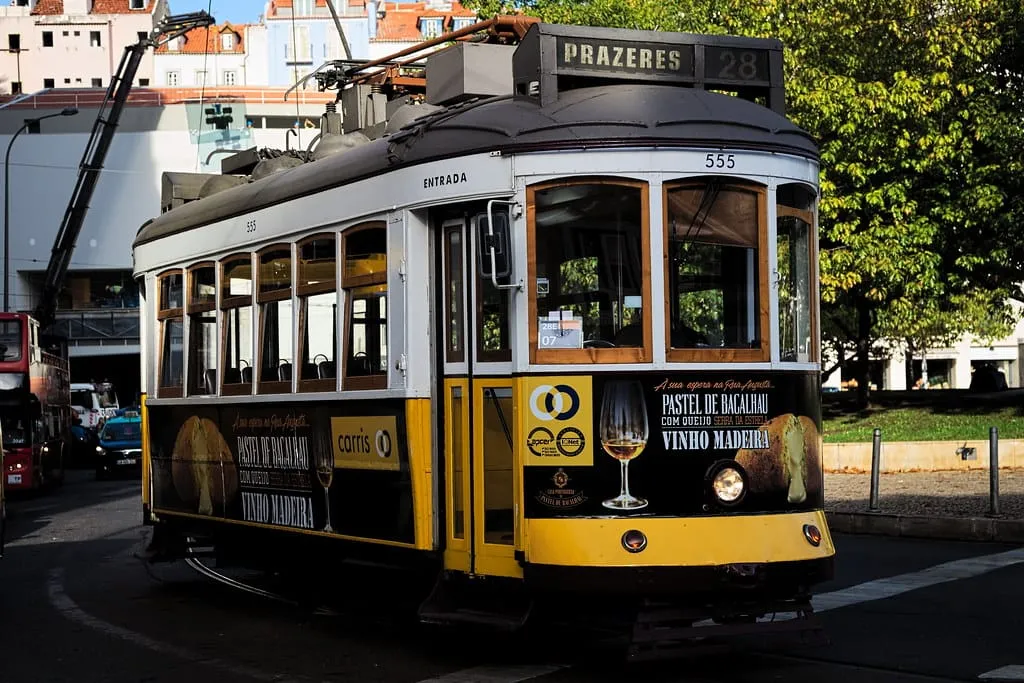
Tram 28 is Lisbon’s most iconic tram line, officially known as route 28E in the Carris network. It has operated since 1914 and runs about 7 km (4.5 mi) from Martim Moniz Square in downtown Lisbon to Campo de Ourique (Prazeres) on the western hillslisbonportugaltourism.com. The line survived the closure of other tram routes thanks to its ability to navigate the steep, winding medieval streets where buses cannot pass. Riding Tram 28 feels like a trip back in time aboard vintage 1930s streetcars that remain part of the city’s everyday transit system.
Winding through Lisbon’s oldest quarters, Tram 28 snakes from the historic hills of Graça and Alfama, through the downtown Baixa, then up again to Chiado and Estrela, finally ending near the Campo de Ourique neighborhoodvisitlisboa.com. Along the route, the petite yellow tram squeals around hairpin turns and creaks up sharp inclines, at times so close to buildings that riders could almost touch the tiled walls (not recommended!) as they pass. Major landmarks line the journey – from São Vicente de Fora monastery and the Sé Cathedral in Alfama to the Basilica da Estrela in late-route – offering postcard-worthy scenes at every bend. The constant rattling and the ding of the tram’s bell have become part of the soundscape of the city, and locals consider Tram 28 not just a transit line but a moving symbol of Lisbon’s heritage.
Featured Video
Taking A Ride On The Famous Tram Eléctrico E28 In Lisbon | One Of The World's Steepest Inclines
Lisbon’s famous 28E tram braves some of the world’s steepest inclines in style as it trundles between the old town and the downtown. Usually, the Eléctrico 28 would be packed with tourists from all over the world, but because of covid-19 there aren’t very many people here to enjoy the beautiful ride at the moment. Line 28E is one of Lisbon’s oldest tram lines - taking you on an enchanting journey through the Portuguese capital, rumbling past landmarks even older than the line itself.
Why Visit
For railfans and history enthusiasts, Tram 28 offers the rare chance to ride genuine “Remodelado” tramcars – these are refurbished wooden streetcars dating from the 1920s–1930s, still faithfully serving passengers in daily traffic . Each tram carries only about 20 seated passengers (with room for 30 standing), and features beautiful polished wood interiors and vintage controls, evoking a bygone era of urban transit . The line runs on narrow 900 mm gauge tracks, a legacy of Lisbon’s old tram network that will intrigue railway enthusiasts en.wikipedia.org. Riding Tram 28 isn’t a scripted tourist attraction; it’s an authentic public transport experience where you mingle with locals on their daily commute, all aboard a piece of living history.
Beyond the heritage rolling stock, Tram 28 is beloved for the views and atmosphere it provides. Railfans will appreciate how the tram deftly climbs Lisbon’s gradients and negotiates curves with just centimeters to spare – at times two trams pass each other so closely you can literally study the mechanics of the approaching car through the open window . The route offers spectacular vantage points: as the tram ascends to hilltop neighborhoods, sudden panoramas of red-roofed Lisbon and the Tagus River appear between the buildings. You’ll rumble across small squares and old junctions where the rails diverge with the clang of switches beneath the floor. Every steep ascent, tight turn, and clattering descent on Tram 28 showcases a triumph of early 20th-century tram engineering that continues to delight rail aficionados today . In short, it’s a must-do for anyone who appreciates historic urban transport and scenic journeys.
What to Expect
Tram 28 operates as a normal city tram line, which means it can get extremely crowded during the day. The first trams start before 6:00 am, and the last run is around 11:00 pm (slightly earlier on weekends) freetoursbyfoot.com. Cars run roughly every 10–15 minutes, but by mid-morning they are usually packed to standing-room only, especially in peak tourist season. To have a chance at a seat on the wooden bench, it’s best to board at the Martim Moniz terminus at dawn, when the tram is empty at the start . If you do stand, be sure to grab a handrail and brace yourself – the ride is very jerky at times, with sudden braking on downhill segments and sharp curves that toss unsuspecting riders off balance . Expect a noisy, bumpy ride: you’ll hear the screech of metal wheels on track and feel the tram lurch as it climbs steep hills at a max speed of about 50 km/h, then slows to a crawl through tight alleyways. This is all part of the experience!
During the journey, you’ll get an intimate look at daily life in Lisbon’s old town. The tram inches within arm’s length of doorways and lamp posts, offering views straight into local cafés and balconies as you pass. It’s not a hop-on, hop-off tour – in fact, given the crowds, if you step off at a popular stop (say, to visit a viewpoint or church), you might struggle to squeeze onto a later tram because each one comes by already full . Many visitors now choose to ride the line end-to-end without disembarking, which takes about 45–50 minutes. Do be mindful of your belongings: Tram 28’s tightly packed cars are a known target for pickpockets who prey on distracted tourists portugal-magik.com. Keep bags zipped and in front of you, and avoid displaying valuables. Despite the crowds and occasional frustrations (like waiting in a long queue or a service delay due to traffic), most railfans find the Tram 28 ride to be a charming and unforgettable journey through Lisbon’s history and hills.
How to Plan Your Visit
Season and Schedule
Tram 28 operates year-round in Lisbon, following the standard public transport schedule. It is advisable to ride early or late in the day during busy summer months to avoid crowds.
- Year-Round Service
- Yes
- Weekday First Departure
- 5:40 am
- Weekday Last Departure
- 11:30 pm
- Weekend First Departure
- 6:45 am on Sundays
- Weekend Last Departure
- 10:30–11:00 pm
- Frequency During Rush Hours
- Every 10 minutes
- Frequency During Off-Peak Times
- Every 15 minutes
Ticket Information
Tram 28 is part of Lisbon’s public transit system, offering various ticketing options for riders. It is advisable to purchase tickets or top-up cards before boarding to avoid issues with cash on crowded trams.
- Single Ride Fare (On Board)
- €3.00
- Single Ride Fare (Viva Viagem Card)
- €1.50
- 24-Hour Public Transport Pass
- €6.50
- Viva Viagem Card Initial Cost
- €0.50
- Reservations
- First-come, first-serve
Accessibility Details
Tram 28 is not accessible for those with limited mobility due to steep steps, narrow doorways, and lack of ramps or lifts. Alternatives include the modern 15E tram and accessible tour buses.
- Accessibility
- Not accessible for those with limited mobility
- Steps
- Steep steps up from street level
- Doorways
- Narrow doorways
- Seating
- Limited seating available
- Alternative Transport
- Modern 15E tram and accessible tour buses
What to Bring
When preparing for your Tram 28 adventure, it's important to pack light and smart. Comfortable shoes, sun protection, and secure storage for valuables are essential.
- Comfortable Shoes
- Required
- Sun Protection
- Hat, sunscreen, and water bottle recommended in summer
- Camera
- Recommended for photographers
- Secure Gear
- Use a crossbody bag or backpack worn in front
- Valuables
- Leave unnecessary items locked in hotel safe
- Light Jacket
- Recommended for cooler months
Photography Tips
Tram 28 is a popular and photogenic feature in Lisbon, ideal for photography with the right timing and techniques. Key locations and tips for capturing great shots include early morning visits and specific viewpoints.
- Best Time for Photos
- Early morning, around 6–7 am
- Classic Photo Spot
- Rua das Escolas Gerais in Alfama
- Famous Viewpoint
- Largo das Portas do Sol
- Popular Location
- In front of the Lisbon Cathedral (Sé)
- Recommended Lens
- Wide-angle lens or phone in wide mode
Traveling with Pets
Dogs welcome
Carris carries pets free on all its services — trams included — on one absolute condition: the animal must be fully enclosed in a suitable carrier handled as hand luggage. One carrier per passenger; it must be clean, resistant, washable and leak-proof, must not occupy a seat and must not block circulation. Dangerous and potentially dangerous animals are banned. Carris publishes no maximum carrier dimensions and offers no leash-or-muzzle alternative, which in practice excludes medium and large dogs. Guide and assistance dogs travel free without a carrier under a separate legal regime.
Verified — operator's pet policy
Travel Information
By Air
Lisbon Humberto Delgado International Airport is the nearest airport to Tram 28, located about 7 km north of central Lisbon. Travelers can easily reach Tram 28 from the airport via metro or taxi.
- Nearest Airport
- Lisbon Humberto Delgado International Airport (LIS)
- Distance to Central Lisbon
- 7 km (4 mi)
- Metro Journey Time
- 30–35 minutes
- Taxi Journey Time (Light Traffic)
- 20–25 minutes
- Taxi Journey Time (Heavy Traffic)
- up to 40 minutes
By Train
Lisbon is easily accessible by train, with several stations providing convenient access to Tram 28's route. The compact layout of the city ensures that travelers are only a short distance from tram stops upon arrival.
- Main Train Station
- Lisbon Santa Apolónia
- Distance to Tram 28
- 500 m (0.3 mi) walk uphill
- Alternative Station
- Lisbon Oriente
- Metro Line to City Center
- Metro Red Line
- Nearby Station for Regional Trains
- Rossio Station
- Walking Distance from Rossio to Tram 28
- 5-7 minute walk
By Car
Driving to Tram 28 in central Lisbon is possible but challenging due to narrow streets and heavy traffic. It's advisable to park outside the center and use public transit to reach the old town.
- Major Highways
- A1 from the north, A2 from the south, Vasco da Gama Bridge (A12), 25 de Abril Bridge (A2)
- Starting Point
- Martim Moniz Square
- Traffic Conditions
- Heavy traffic around Martim Moniz/Mouraria during the day
- Driving Restrictions
- Narrow streets in Alfama often restricted to trams or residents' cars
Parking
Parking near Tram 28 is challenging due to limited street parking and permit restrictions. It is recommended to use public parking garages, such as Parque de Estacionamento Martim Moniz, which is open 24/7.
- Parking Challenge
- Limited street parking, much reserved for locals
- Recommended Garage
- Parque de Estacionamento Martim Moniz
- Garage Location
- Beneath Martim Moniz Square
- Garage Hours
- Open 24/7
- Parking Rates
- €2–3 per hour, daily maximum around €20
- Height Clearance
- Limited to often 2 m in underground garages
Local Transportation
Tram 28 is easily accessible via Lisbon's public transportation network, particularly from the Metro. The area around Tram 28 is compact and can be explored on foot, with various alternative transport options available.
- Metro Station
- Martim Moniz
- Walking Distance from Metro to Tram
- less than 2 minutes
- Bus Service
- Carris bus 734
- Alternative Transport Options
- local buses, tuk-tuk tours, taxis, ride-sharing (Uber/Bolt)
- Funiculars and Elevators
- Elevador de Santa Justa, Elevador da Glória
Nearby Lodging
Find places to stay near Tram 28 (Eléctrico 28).
This lodging map is provided by Stay22, a third-party service that may set cookies. It loads only with your consent.
Accommodation results are provided by Stay22; we may earn a commission on bookings made through this map.
Nearby Attractions
- São Jorge Castle
A medieval Moorish castle perched atop Lisbon’s highest hill, offering panoramic views of the city and the Tagus River. Visitors can walk along the ramparts, explore archaeological ruins, and enjoy gardens with peacocks. About 0.5 miles (0.8 km) east of Tram 28’s route (short uphill walk from Alfama).
- Carris Museum
Lisbon’s public transport museum, showcasing vintage trams, buses, and other historical transit equipment. Located at the still-operational Santo Amaro tram depot, it’s a must-see for railfans interested in the evolution of Lisbon’s trams and funiculars. The collection includes restored early 20th-century trams and exhibits on the city’s transport history. Approximately 3 miles (5 km) west of central Lisbon, easily reached by taking tram 15 or a bus to Alcântara.
- Belém Tower
An iconic 16th-century fortified tower on the north bank of the Tagus River. A UNESCO World Heritage site, this limestone tower was built in 1514 as part of the city’s defenses and is a symbol of Portugal’s Age of Discovery. Tour the interior to see cannons and climb to the roof terrace for river views. About 5 miles (8 km) west of downtown Lisbon (accessible via tram 15E or train from Cais do Sodré).
Photos
 Enrico Strocchi
Attribution-ShareAlike License

Manny M
Attribution License

Alexander.Hüls
Attribution-ShareAlike License
![[My postcard from] Lisboa](https://qydpvdcqbancvvidmgnw.supabase.co/storage/v1/object/public/destination-photos/7e2fdef7-2b51-4343-a847-19bd67a4204c/1754828990914-_My_postcard_from__L.jpg)
Fabrizio Sciami
Attribution-ShareAlike License

Terry Kearney
Public Domain Dedication (CC0)

Strocchi
5
More Videos
Lisbon | Portugal - Tram 28 - The City's Most Famous Tram Line - 4K
This video was shot on August 5th, 2023 at 6:55pm using iPhone 14 Pro Max. The famous tram is absolutely tiny with no air-conditioning. However, you will notice how many people stop to take pictures of it.
Help improve this page
Spotted something out of date or incorrect? Let our community know.
Explore more experiences: Browse all rail travel experiences.
Booking & Pricing
Affiliate link — we may earn a commission on bookings at no extra cost to you. Details.
Quick Information
Country
Region
City
Lisbon
Best Season
The spring and fall months are generally the most pleasant times to experience Tram 28. In April–May and September–October, Lisbon’s weather is warm (highs approx. 20–25 °C, 68–77 °F) and sunny, but without the intense heat and crowds of mid-summer. These shoulder seasons also tend to have shorter lines for the tram – you might avoid the worst of the tourist crush that peaks in July and Augustcelina-tours.com. By visiting in spring or autumn, you can comfortably ride with the tram’s windows open, enjoying the breeze as you climb the hills.
Summer (June through August) is of course a popular time, but expect the trams to be jam-packed by late morning and the city to be at high tourism volume. If summer is your only option, plan to go very early or late in the day to beat the crowd, and be prepared for temperatures often above 30 °C (the trams are not air-conditioned, so it can get stuffy inside).
Winter (December–February) is the off-season and can be a fine time to ride as well – the trams will be much less crowded on average, especially on weekdays. Winter days are mild (10–15 °C, 50–60 °F typically), though rain is more frequent and daylight hours are shorter. Around Christmas and New Year’s there’s a small uptick in visitors, but nothing like summer.
Whenever you go, try to avoid peak midday hours for a more comfortable ride. Many locals suggest that the best experience is on a clear day, regardless of month, when you can fully appreciate the views from the tram as it trundles through the bright, tiled streets of Lisbon.