Binghamton (Rail Yards)
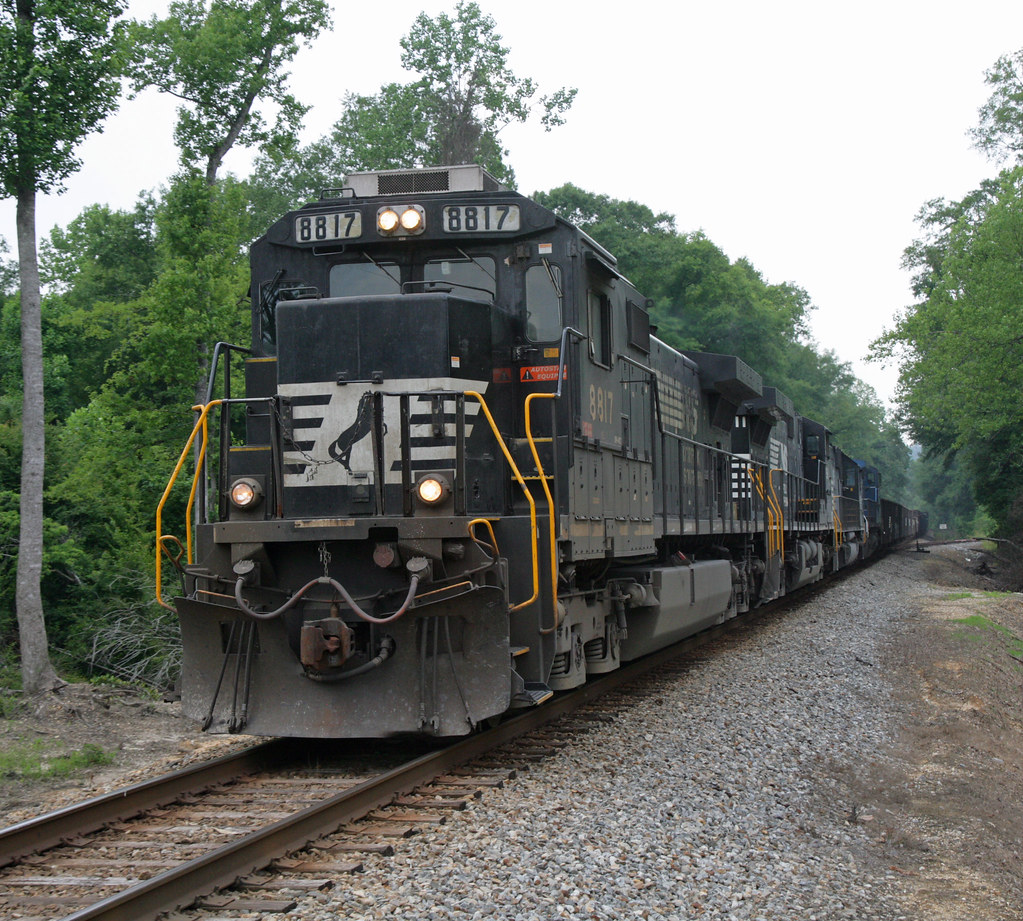
Major Norfolk Southern rail hub in New York's Southern Tier where the former Erie Lackawanna and Delaware & Hudson main lines converge. NS and NYS&W operate multiple yards with 15+ daily road trains.
Photos
 railfan711
Attribution License
Trainspotting Experience
Binghamton — known to railfans as "Bingo" or historically "Malfunction Junction" — is the hub of Norfolk Southern's Southern Tier operations in upstate New York. The former Erie Lackawanna main line runs east-west through town, while the former Delaware & Hudson line (acquired by NS from Canadian Pacific in September 2015) dives south toward Scranton and north toward Schenectady. The New York, Susquehanna & Western Railway (NYS&W) also maintains a presence with its own yard and diesel shop off Brandywine Avenue.
There is no single vantage point where you can see all the action — trains move through several disconnected areas of town. Public viewing spots include Terrace Drive in Conklin near the south end of East Binghamton Yard, Court Street in downtown Binghamton near the interchange tracks, and along US Route 11 on the south side of town where NYS&W freights often pause before entering town. The Chenango Street overpass offers an elevated perspective over the NS/NYS&W Middle Yard, though a tall chain-link fence makes photography difficult.
A critical warning: NS police actively patrol the area and will not hesitate to cite trespassers. Stay on public property at all times. Listening to the Broadcastify feed for the NS D&H and Southern Tier channels is strongly recommended, as it will tell you where trains are moving since the action is spread across several miles.
Landscape, Setting & Local Atmosphere
Binghamton sits at the confluence of the Susquehanna and Chenango Rivers in a shallow valley surrounded by rolling Appalachian foothills typical of New York's Southern Tier. The city lies about 10 miles north of the Pennsylvania border and roughly 50 miles north of Scranton. The railroad corridor threads through a mix of downtown commercial buildings, residential neighborhoods, and industrial areas. The former DL&W depot — a striking Italian Renaissance building with a campanile tower, built in 1901 — anchors the Railroad Terminal Historic District downtown and provides architectural context for photographs near the NS/NYS&W yards.
Fall foliage season (late September through mid-October) adds dramatic color to hillside backdrops, particularly when shooting from elevated positions along the river embankments. Winters bring significant snowfall that highlights locomotive exhaust plumes and dynamic brake smoke. The area around East Binghamton Yard in Conklin is more open and industrial, while the downtown yards near the depot have more urban character.
Type & Frequency of Train Activity
Norfolk Southern is the dominant operator, running approximately 15-20 road trains daily through Binghamton. Verified NS train symbols include: 11Z/14R (Binghamton–Enola manifest), 22K/23K (Chicago–Ayer, MA intermodal, single-stacked), 28N/287 (Fostoria, OH–Ayer, MA autoracks and double-stacks), 309/310 (Binghamton–Elkhart/Bellevue manifest), 30T/31T (Montreal–Binghamton CN interchange manifest), and 36T/37T (Buffalo–Allentown manifest). The H97 turn runs to Taylor, PA and back.
NS locals H01, K83, and K84 handle switching duties, with H01 typically working Bevier Street Yard in early morning and K84 in the evening. Yard jobs (HX-11, HX-21, HX-41, HX-61) work East Binghamton Yard in Conklin around the clock. Bevier Street Yard serves three NS customers: frac sand unloading, Broome County Cold Storage (refrigerated cars), and Sanford Seed (covered hoppers).
NYS&W operates road trains between New Jersey and Syracuse, passing through Binghamton. The railroad also unloads frac sand cars and loads contaminated dirt into containers at the Middle Yard. The Central New York Railroad (CNYK), a subsidiary of the same Delaware Otsego Corporation that owns NYS&W, provides local freight service on the 123-mile former Erie route between Binghamton and Port Jervis.
No passenger rail service exists — the last scheduled train, the Lake Cities from Hoboken to Chicago, ended on January 6, 1970. The closest Amtrak stations are in Syracuse (north), Scranton (south, limited service), and Utica (northeast).
Best Angles for Photos & What Railfans Enjoy Most
Binghamton's spread-out rail infrastructure means photographers need to move between several locations:
Terrace Drive, Conklin — The south end of NS East Binghamton Yard offers views of yard jobs assembling and breaking down trains. The yard stretches roughly 1.7 miles and is best observed from public roads along its perimeter. Morning light favors the east side.
Court Street, Binghamton — Near the NS/NYS&W interchange tracks downtown, this area allows shots of road trains moving through town. Grade crossings here give ground-level access.
US Route 11, South Side — NYS&W freights frequently stop near the south approach to town, making this a good spot for stationary train photography. Parking along US 11 is permitted.
Chenango Street Overpass — Provides an elevated view over the Middle Yard where NS and NYS&W tracks run parallel, but the tall, tightly-spaced chain-link fence makes clean shots very difficult. Better for observation than photography.
Former DL&W Depot Area (GPS: 42.10355, -75.90776) — Near Lewis and Chenango Streets, you can sometimes catch NS movements across from the restored 1901 depot building, adding historic architecture to your frame.
A 70-200mm zoom covers most situations given typical distances of 40-80 feet from public vantage points to the nearest tracks. For yard overview shots from elevated positions, a wider lens (24-70mm) works well.
Historical or Cultural Relevance
Binghamton's railroad history dates to 1849, when the Erie Railroad completed its line through the city connecting Jersey City, NJ to the Southern Tier. The Delaware, Lackawanna & Western Railroad arrived soon after, making Binghamton an important regional transportation hub. The Delaware & Hudson Railway (originally the Albany & Susquehanna Railroad, leased by the D&H in 1870) connected Binghamton north to Albany and south to the coal regions of Pennsylvania.
At its peak, Binghamton hosted four railroads — the Erie, DL&W, D&H, and Lehigh Valley — with passenger stations for three of them clustered within two blocks of each other near Chenango Street. The DL&W built its Italian Renaissance-style passenger station in 1901; it is now the centerpiece of the Railroad Terminal Historic District, listed on the National Register of Historic Places since 1986. Nearby stands the Marconi Tower, associated with early wireless telegraphy experiments.
The Erie and DL&W merged to form Erie Lackawanna in 1960. Conrail absorbed EL operations in 1976. When Conrail was split in 1999, Norfolk Southern took over the former Erie Lackawanna Southern Tier main line. Canadian Pacific had operated the former D&H lines through Binghamton, but NS acquired the D&H South Line (282 miles from Schenectady to Sunbury, PA) from CP in September 2015, consolidating most Binghamton rail operations under NS.
What Makes This Spot Different
Binghamton's significance lies in its role as a junction where two major former railroad main lines — the Erie's Southern Tier route (now NS) and the D&H's north-south corridor (also now NS) — converge alongside the NYS&W's route to Syracuse and New Jersey. This creates a genuine variety of train movements: Chicago-bound manifests, New England-destined intermodal, Montreal interchange traffic, and regional switching operations all pass through the same area.
The presence of the NYS&W with its own yard and diesel shop adds regional railroad flavor to what is predominantly a Class I operation. The CNYK, operating on the spectacular former Erie route over the Starrucca Viaduct to Port Jervis, provides yet another operating railroad within the Binghamton hub.
The city's rich four-railroad heritage is still visible in the preserved DL&W depot, the Marconi Tower, the NYS&W freight shed, and various bridge structures from different eras. The Susquehanna Valley Railway Historical Society, based in Binghamton, maintains this history and refers to the city as "Home of Malfunction Junction" — a tongue-in-cheek nod to the complexity of operations where so many railroads once converged.
Frequently Asked Questions
QWhich railroads currently operate in Binghamton?
Norfolk Southern (NS) is the primary operator, running the former Erie Lackawanna Southern Tier main line and the former D&H line (acquired from Canadian Pacific in 2015). The New York, Susquehanna & Western Railway (NYS&W) maintains a yard and diesel shop in town, and the Central New York Railroad (CNYK) operates local freight between Binghamton and Port Jervis on a line leased from NS.
QHow many trains run through Binghamton daily?
NS typically runs 15-20 road trains daily, including manifests, intermodal, and autoracks. Additionally, several NS local trains and yard jobs operate, and NYS&W runs road trains between New Jersey and Syracuse. Yard jobs at East Binghamton work nearly around the clock.
QIs there passenger rail service to Binghamton?
No. The last scheduled passenger service was the Lake Cities train from Hoboken to Chicago, which ended on January 6, 1970. The nearest Amtrak stations are in Syracuse, Scranton, and Utica. New York Senator Chuck Schumer has advocated for restoring passenger rail service via Scranton and the Lackawanna Cut-Off, but no service currently exists.
QWhere are the best public viewing spots?
Terrace Drive in Conklin near the south end of East Binghamton Yard, Court Street in downtown Binghamton near the interchange tracks, and along US Route 11 on the south side of town where NYS&W freights often pause. Stay off all railroad property — NS police actively patrol the area.
QCan I listen to railroad radio communications?
A Broadcastify feed covers NS road and yard channels plus NYS&W channels in the Binghamton area, which is extremely helpful since the action is spread across several miles. Note that scanner laws in New York State are strict — possessing a scanner capable of receiving police frequencies can be problematic, so use the online feed instead.
Safety Tips
Stay off all railroad property. Norfolk Southern police actively patrol the Binghamton area and will cite or arrest trespassers without warning. The former CP (now NS) East Binghamton Yard in Conklin is particularly well-patrolled. Stick to public sidewalks, roads, and bridges. Note that scanners may raise legal issues in New York State. Use the Broadcastify online feed instead for tracking train movements.
Seasonal Information
Binghamton has a humid continental climate with cold, snowy winters (average January temperature around 24°F / -4°C) and warm summers (average July temperature around 70°F / 21°C). Snow can arrive as early as November and linger into April. September tends to be the wettest month. The fall foliage season (late September through mid-October) is particularly photogenic along the hillsides flanking the rail corridors.
Nearby Lodging
- Holiday Inn Binghamton Downtown
Full-service downtown hotel at the confluence of the Susquehanna and Chenango Rivers. Indoor pool, restaurant, pet-friendly. Closest major hotel to the rail yards.
- DoubleTree by Hilton Binghamton
Downtown hotel within walking distance of the Railroad Terminal Historic District. Full-service with restaurant and pool.
- Microtel Inn & Suites by Wyndham Binghamton
Budget-friendly option near I-81. Clean, modern rooms. Good base for railfanning multiple locations around the Binghamton area.
- Fairfield Inn by Marriott Binghamton
Mid-range hotel with complimentary breakfast and convenient highway access. Located along the main corridor between downtown and East Binghamton Yard.
Nearby Attractions
0.1 miles / 0.1 km
The 1901 Italian Renaissance-style Delaware, Lackawanna & Western passenger station with its iconic campanile tower. Listed on the National Register of Historic Places since 1986. Now houses Station 45 American Chophouse.
0.9 miles / 1.5 km
Features a large public model train display depicting the landscapes and railways of 1950s Binghamton, Johnson City, Owego, Endicott and parts of Northern Pennsylvania. Recently tripled in size in its Heritage Gallery.
20 miles / 32 km
The 1848 stone arch railroad viaduct near Lanesboro, PA — one of the oldest stone railroad bridges in the world, still in active use by the CNYK/NYS&W on the former Erie main line to Port Jervis.
35 miles / 56 km
Massive concrete railroad viaduct near Nicholson, PA on the former DL&W main line (now inactive). At 2,375 feet long and 240 feet high, it was the world's largest concrete bridge when completed in 1915.
50 miles / 80 km
National Park Service site in Scranton, PA preserving the history of steam railroading. Features operating steam locomotives, a roundhouse, and excursion rides on former DL&W trackage.
External Links
informative
official
Looking for more spots? Browse the complete list of train spotting locations.
Quick Information
Country
USA
Region
New York
City
Binghamton
Spot Type
Yard/Depot
Best Times
Daylight hours for photography. Yard jobs work nearly around the clock with a lull between 2am and 5am. The Broadcastify feed (NS D&H/Southern Tier channels) helps track train movements in real time.
Visit Duration
2-4 hours (spread across multiple viewing locations)
Cost
Free — all viewing is from public roads and sidewalks
Train Activity
Train Types
Frequency
Approximately 15-20 NS road trains daily, plus NYS&W road trains and multiple yard/local jobs around the clock
Access & Amenities
Parking
Available (Free street parking along public roads near viewing spots. A parking garage next to the former Clarion Hotel on State Street offers additional downtown parking.)
Shelter
Not available
Restrooms
Not available