Cass Scenic Railroad
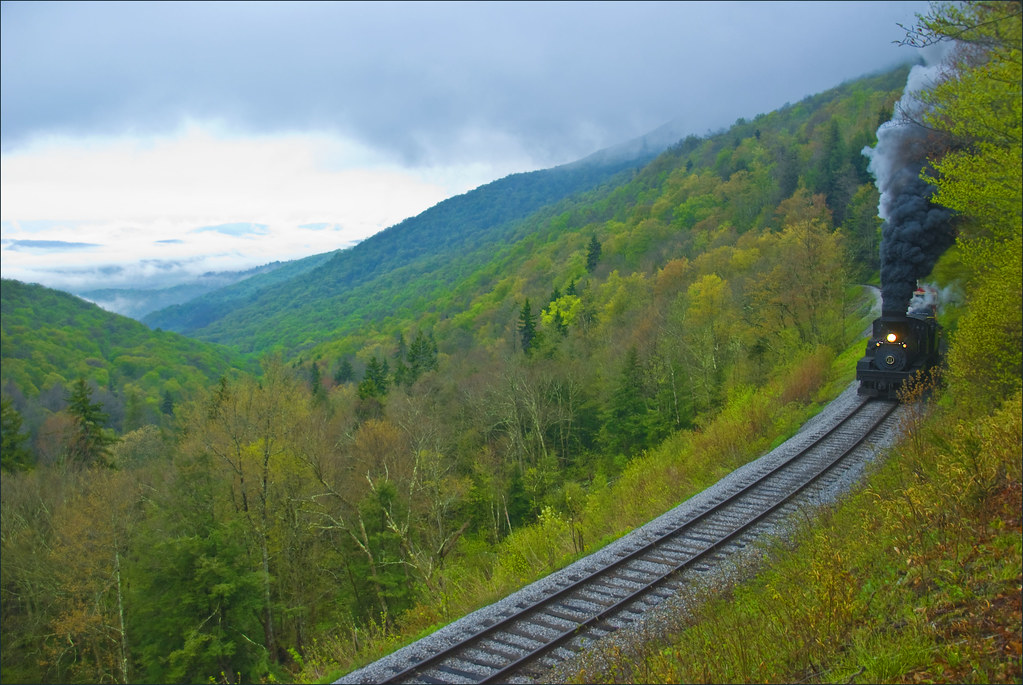
Heritage steam railroad in the Allegheny Mountains of West Virginia, operating restored Shay geared locomotives on the original 1901 logging line up Back Allegheny Mountain to Bald Knob at 4,842 feet elevation.
Photos
 Ron Cogswell
4

James St. John
Attribution License
James St. John
4
James St. John
4

string_bass_dave
Attribution-ShareAlike License
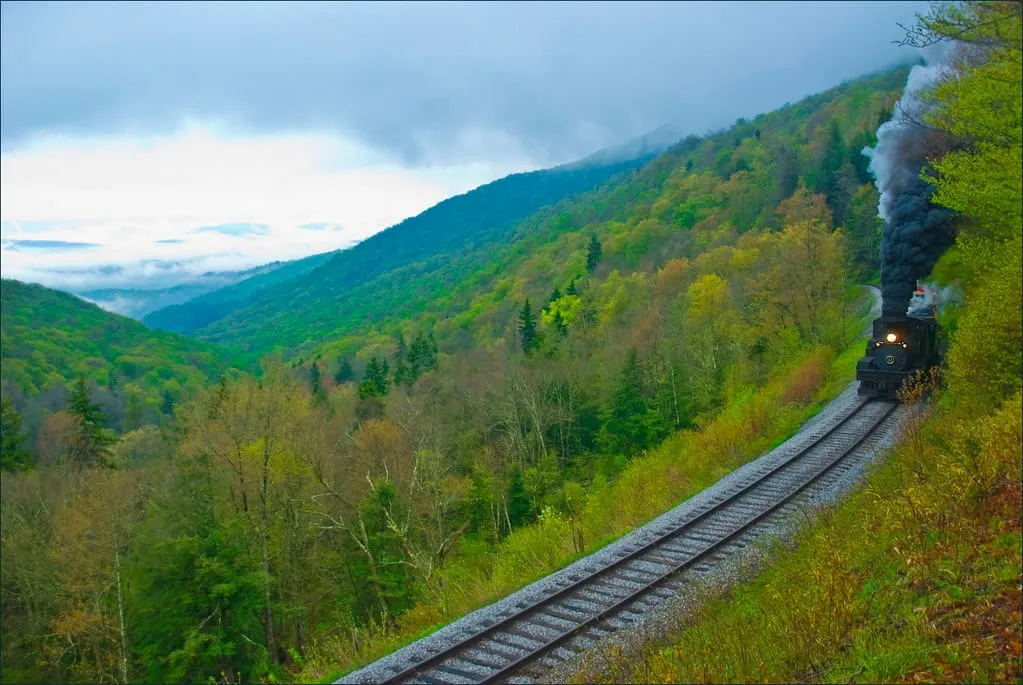
Ron Cogswell
4
Trainspotting Experience
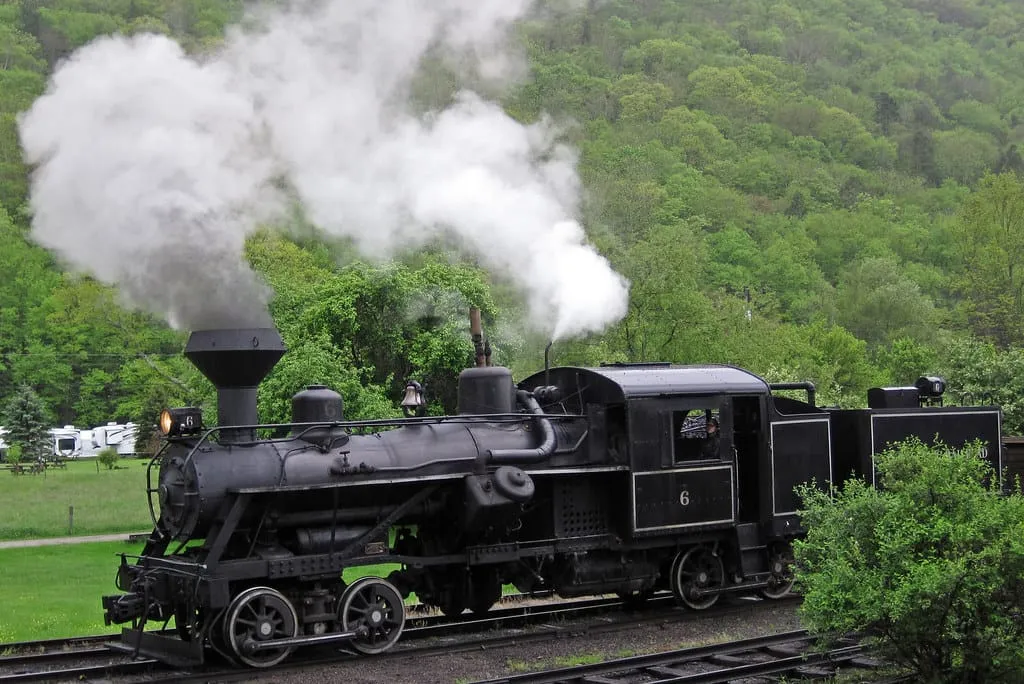
The trainspotting experience at Cass centers on the restored depot and shop area in the former company town, where geared steam locomotives are prepared for service in full view of visitors. Before departure, crews oil side-rods, load coal, and fill water tanks from a redwood replica of the original water tower — a process that offers close-up mechanical views impossible on mainline operations. Locomotives push the trains uphill (a mountain railroad tradition), so the engine is always at the rear going up and leading on the descent.
Departing from the depot around noon, trains crawl past the ruins of the old sawmill and the locomotive shop, where additional engines may be under steam on standby. The route follows Leatherbark Creek on grades averaging 4-5%, passing through two switchbacks where the train reverses direction to gain elevation. The maximum grade reaches approximately 11% — compared to a conventional railroad's typical 2% maximum. Speeds rarely exceed 10-15 mph, allowing railfans to absorb the full sensory experience: the syncopated chug of vertical pistons, the whine of reduction gears, coal smoke mixing with mountain air, and the echo of the whistle off forested slopes.
The Whittaker Station stop (4 miles from Cass) features a recreated 1940s logging camp with a Lidgerwood tower skidder, one of only two surviving examples worldwide. The full Bald Knob trip continues 7 more miles to the summit at 4,842 feet, climbing 2,390 feet total from the depot. Black Mountain Road parallels the first mile of track and offers a few grade-crossing photo opportunities, though traditional "chasing" is impractical given the mountain terrain.
Landscape, Setting & Local Atmosphere
Cass sits at 2,452 feet elevation in the Greenbrier River valley, tucked into the western slope of the Allegheny Mountains within Pocahontas County. The town itself is a remarkably intact early 1900s company town — rows of white clapboard company houses, the original company store (now housing a gift shop and the Last Run Restaurant), and the brick ruins of the former sawmill along the river. The absence of through-highway traffic gives the setting a quiet isolation broken only by the sound of Leatherbark Creek and the occasional locomotive whistle.
As trains climb from the depot toward Bald Knob, the forest transitions dramatically. Lower elevations feature dense hardwood — maple, cherry, birch, and oak — that produces spectacular fall foliage in early to mid-October. Above Whittaker Station, the canopy shifts to red spruce and exposed rock, creating a subarctic environment equivalent in climate to a location 800 miles farther north. The summit of Bald Knob sits above the tree line on clear days, offering unobstructed views east across the Greenbrier Valley into Virginia. On a clear day, the Robert C. Byrd Green Bank Telescope — the world's largest fully steerable radio telescope — is visible in the valley below, dwarfed by distance.
Type & Frequency of Train Activity
Cass is strictly a heritage steam operation — no freight, Class I, or commuter traffic. The railroad is owned by the West Virginia State Rail Authority and operated by the Durbin & Greenbrier Valley Railroad (D&GV) under a lease agreement since 2015.
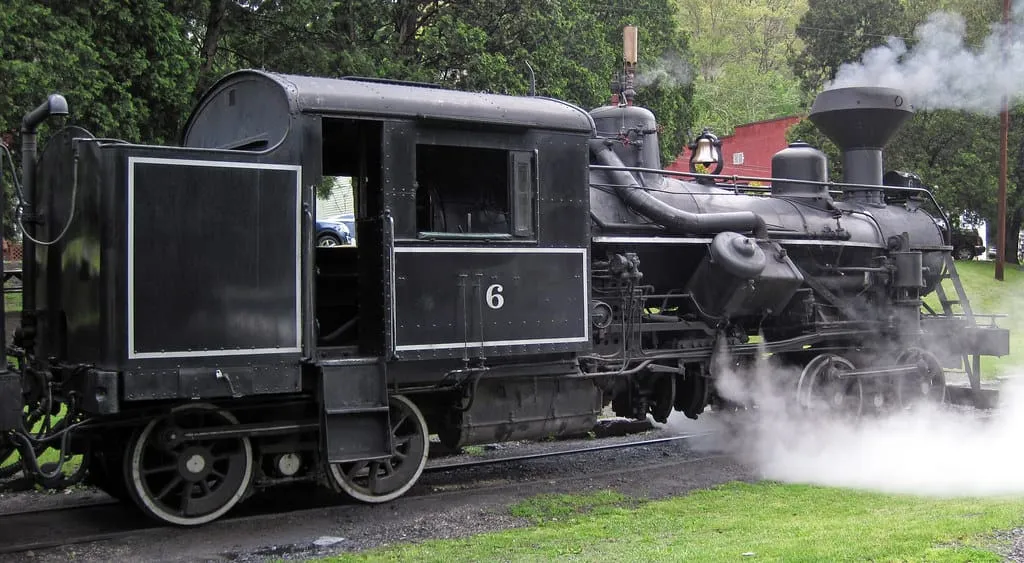
During the regular season (May through October), the railroad typically offers three excursion types. The Bald Knob trip (11 miles, 4.5-hour round trip) usually departs around noon. The shorter Whittaker Station trip (4 miles, 2-hour round trip) runs on select days. The Greenbrier Express, introduced in 2023, follows the restored former C&O Greenbrier Subdivision 15 miles downriver to Durbin (5.5-hour round trip). Limited excursions to the ghost town of Spruce are offered a few times per season, typically behind Western Maryland Shay No. 6 — the last and second-largest Shay locomotive ever built.
Active steam power consists primarily of Shay locomotives: Nos. 2, 4, 5, 6, and 11. The Heisler No. 6 has been sidelined for boiler work after years of powering the Durbin Rocket. The Climax No. 9, a rare Class C three-truck model, is under long-term restoration by Mountain State Railroad & Logging Historical Association (MSR&LHA) volunteers. Winter Greenbrier Express trains have been offered since 2023 on the gentler river-grade route to Durbin, running weekends from January through February.
Best Angles for Photos & What Railfans Enjoy Most
Cass presents unique photography challenges because locomotives push trains uphill, meaning the engine is always trailing on the ascent. Serious railfan photography is best done during the annual Railfan Weekend (held each spring) and the Parade of Steam (early June), when multiple locomotives are staged for run-by photo opportunities at locations like Leatherbark Creek, Gum Field, and the S-curve.
Depot area: Morning light illuminates the engineer's side during locomotive preparation. The curve at the water tower frames the engine against the forested hillside. A 70-200mm lens captures valve gear details during oiling.
Leatherbark Creek: The first mile of track along the creek offers three-quarter front views of the engine working hard on initial grades. Accessible from Black Mountain Road, which parallels the track briefly.
Switchbacks: Position above the tail track on the embankment for overhead shots of the locomotive pushing uphill, then reversing direction — a two-in-one sequence. The grade here reaches approximately 8.7% and locomotives are working at full power with heavy exhaust.
Whittaker Station: Open meadows and the reconstructed logging camp provide full-train panoramas with mountain backdrop. Midday light works well here.
Bald Knob overlook: The summit provides sweeping panoramas of the Greenbrier Valley 2,300 feet below. Late afternoon yields warm side lighting on the train against the mountain backdrop. On clear days, frame the Green Bank Telescope in the distant valley.
Night photography sessions are occasionally offered during special events, with locomotives staged under floodlights. The slow speeds (5-15 mph) throughout the route make panning shots and steam-plume compositions straightforward.
Historical or Cultural Relevance
The railroad traces its origins to 1900, when the West Virginia Pulp & Paper Company (WVP&P) began constructing track up Back Allegheny Mountain to harvest vast stands of red spruce for its pulp mill in Covington, Virginia. The WVP&P subsidiary, West Virginia Spruce Lumber Company, built the mill at Cass in 1902 — at its peak, the largest double-band sawmill in the world, processing an estimated 1.25 billion board feet of lumber over its lifetime. Track eventually reached Bald Knob by 1910, and the operation maintained some 175 miles of logging railroad through the Greenbrier, Cheat, and Elk River watersheds.
In 1942, WVP&P sold the Cass operation to Mower Lumber Company, which cut second-growth timber until the mill closed on July 1, 1960. The property was sold to the Midwest Raleigh Corporation for scrapping. Russell Baum, a Pennsylvania photographer and railfan who had documented the working railroad in the 1950s, led a campaign with local businessmen to convince the West Virginia legislature to preserve the line. The state purchased the railroad in 1962, and the first tourist excursion departed from Cass depot to Whittaker Station on June 15, 1963 — drawing over 23,000 riders in its inaugural year. The railroad was placed on the National Register of Historic Places on July 12, 1974. In 1977, the entire company town of Cass was incorporated into the state park. In 2023, the route from Cass to Durbin was reopened for the first time since a catastrophic 1985 flood destroyed the former C&O Greenbrier Subdivision track.
What Makes This Spot Different
Cass holds the distinction of operating the world's largest fleet of working geared steam locomotives. The roster of eight Shays, one Heisler, and one Climax (under restoration) represents all three major types of American geared steam power under one roof — a combination found nowhere else. The 162-ton Shay No. 6, built by Lima in 1945 for the Western Maryland Railway, is the last Shay locomotive ever constructed and the second largest to survive.
The railroad operates on its original 1901 logging grades, including two switchbacks and sustained grades up to 11% — five times steeper than what conventional mainline railroads consider extreme. Unlike many heritage operations that run short demonstration loops on level track, Cass delivers an 11-mile mountain climb with 2,390 feet of elevation gain, all behind period-correct geared power burning coal.
The preserved company town adds a dimension most tourist railroads lack: visitors can stay overnight in restored 1900s company houses, browse the original company store, tour the locomotive shop where restorations happen in plain view, and explore the reconstructed logging camp at Whittaker Station with its rare Lidgerwood tower skidder. The remote Allegheny Mountain setting — within the 950,000-acre Monongahela National Forest and the National Radio Quiet Zone — means no cell service, minimal light pollution, and an experience closer to 1920 than 2025.
Frequently Asked Questions
QHow long are the train rides at Cass Scenic Railroad?
Three main excursions are available: the Whittaker Station trip (4 miles, about 2 hours round trip), the Bald Knob trip (11 miles, about 4.5 hours round trip), and the Greenbrier Express to Durbin (15 miles, about 5.5 hours round trip). A cold-cut lunch is included with all tickets.
QWhat type of locomotives operate at Cass?
Cass operates geared steam locomotives, primarily Shay-type engines built by Lima Locomotive Works. The fleet includes Shay Nos. 2, 4, 5, 6, and 11, plus one Heisler (currently out of service) and one Climax (under restoration). Shay No. 6, built in 1945, is the last Shay ever constructed.
QCan I watch trains without buying a ticket?
Yes. The depot area, locomotive shop, water tower, and the first stretch of track along Leatherbark Creek are all accessible to non-riders. Town and shop tours are offered daily (typically at noon and 4 PM). You can also walk along Black Mountain Road to see trains on the initial grades.
QIs there lodging at Cass Scenic Railroad State Park?
The park offers 20 restored company houses accommodating 4-14 guests each, available year-round. Cabooses can be reserved for overnight stays. A small cabin on Bald Knob is also available seasonally. The nearby Snowshoe Mountain Resort (about 10 miles away) offers additional hotel and condo options.
QWhen is the best time to visit for photography?
The annual Railfan Weekend in spring and Parade of Steam in early June offer dedicated run-by photo sessions with multiple locomotives. Fall foliage season (late September to mid-October) provides dramatic backdrops but trains sell out quickly. Arrive before the noon departure to photograph locomotive preparation at the depot.
Safety Tips
Stay well clear of active tracks and moving equipment in the depot and shop area. Locomotives push trains uphill, meaning the rear of the train — closest to passengers boarding — contains live steam machinery. The open-air excursion cars have no sides; keep children seated and belongings secure, especially on the steep switchbacks. Bald Knob summit weather can shift rapidly — bring warm layers, rain gear, and sun protection regardless of valley conditions. Cell service (including Verizon) is unavailable throughout the Cass area due to the National Radio Quiet Zone; plan accordingly for emergencies. The Greenbrier River Trail surface is packed gravel and suitable for walking or cycling but not wheelchair-accessible beyond the depot platform.
Seasonal Information
The regular train season runs May through October. **Fall foliage** (late September through mid-October) is peak season — ticket prices increase after mid-September and trains sell out quickly. The hardwood forests below Whittaker Station produce vivid crimson and gold displays. **Summer** offers the longest days and warmest temperatures in the valley, but the summit of Bald Knob can be 20-30°F cooler than Cass — dress in layers even in July. **Spring** (May-June) brings wildflowers and the annual Railfan Weekend and Parade of Steam events, ideal for photography. **Winter** Greenbrier Express trains run weekends from January through February on the river-grade route to Durbin. Snow and ice make the mountain route too hazardous for winter operations.
Nearby Lodging
- Cass Scenic Railroad Company Houses
Restored 1900s company houses within the state park. 20 houses accommodating 4-14 guests each, available year-round. Fully equipped kitchens, linens provided. Guests staying 5+ nights receive two free train tickets. Three houses are wheelchair accessible.
- Cass Trading Company
Small lodge and restaurant in Cass, located on the Greenbrier River. Convenient base for early morning train departures. Onsite restaurant.
- Snowshoe Mountain Resort Lodges
Year-round mountain resort approximately 10 miles from Cass. Multiple lodging options including Allegheny Springs, Highland House, and Rimfire Lodge. Restaurants, bars, and shops in the Village area.
- Elk River Inn and Cabins
Riverside inn near Slatyfork, WV, approximately 15 miles from Cass. Fly fishing, hiking access, and farm-to-table dining. A popular base for exploring Pocahontas County.
- Morning Glory Inn
Bed and breakfast near Snowshoe. Pet-friendly rooms. Easy access to both Snowshoe Resort and Cass Scenic Railroad. Home-cooked breakfast included.
Nearby Attractions
10 miles / 16 km
Home to the Robert C. Byrd Green Bank Telescope, the world's largest fully steerable radio telescope. Offers guided bus tours, a science center with hands-on exhibits, and a planetarium. Located in the National Radio Quiet Zone.
0.3 miles / 0.5 km
A 78-mile rail-trail following the former C&O Greenbrier Subdivision through the Allegheny Mountains. Accessible directly from Cass for hiking and cycling on packed gravel surface. E-bikes and mountain bikes available for rent at the Company Store.
10 miles / 16 km
Year-round mountain resort offering skiing, snowboarding, mountain biking, and golf. Gary Player-designed 18-hole course. Restaurants, shops, and lodging at the Village at Snowshoe.
35 miles / 56 km
A 110-acre natural area with unusual rock formations, massive boulders, and deep crevices. Half-mile boardwalk through the formations. Open April through October.
40 miles / 64 km
The largest concentration of bogs in West Virginia, featuring carnivorous plants and flora typically found in northern Canada. Accessible boardwalk through the glades.
35 miles / 56 km
Series of three waterfalls cascading 25, 45, and 63 feet within Monongahela National Forest. The 63-foot lower falls is the second highest in West Virginia. ADA-accessible boardwalk to the first falls.
External Links
informative
informative
informative
Looking for more spots? Browse the complete list of train spotting locations.
Quick Information
Country
USA
Region
West Virginia
City
Cass
Spot Type
Railway Station
Best Times
Arrive by 10:30 AM to watch locomotive preparation at the depot before the noon Bald Knob departure. Shop and town tours run at noon and 4 PM. Morning light favors the engineer's side at the depot; afternoon light works best at Whittaker Station and the switchbacks.
Visit Duration
2 to 5.5 hours (depending on excursion chosen)
Cost
Regular season (2025): Bald Knob trip $83 adult, Greenbrier Express $83 adult, Whittaker Station $63 adult. Discounts for seniors ($2 off), military/veterans ($4 off), and children ages 4-11. Ages 3 and under free (ticket still required). Fall rates (mid-September through October) add $10. Town and shop tours, depot area, and Company Store are free to visit.
Train Activity
Train Types
Frequency
Typically 1-3 departures per day during regular season (May-October). Noon departure is standard for Bald Knob trips. Additional departures for Whittaker Station and Greenbrier Express on select days.
Access & Amenities
Parking
Available (Free parking at the Cass depot lot (former lumber storage yard).)
Shelter
Not available
Restrooms
Available