Cassandra Railroad Overlook
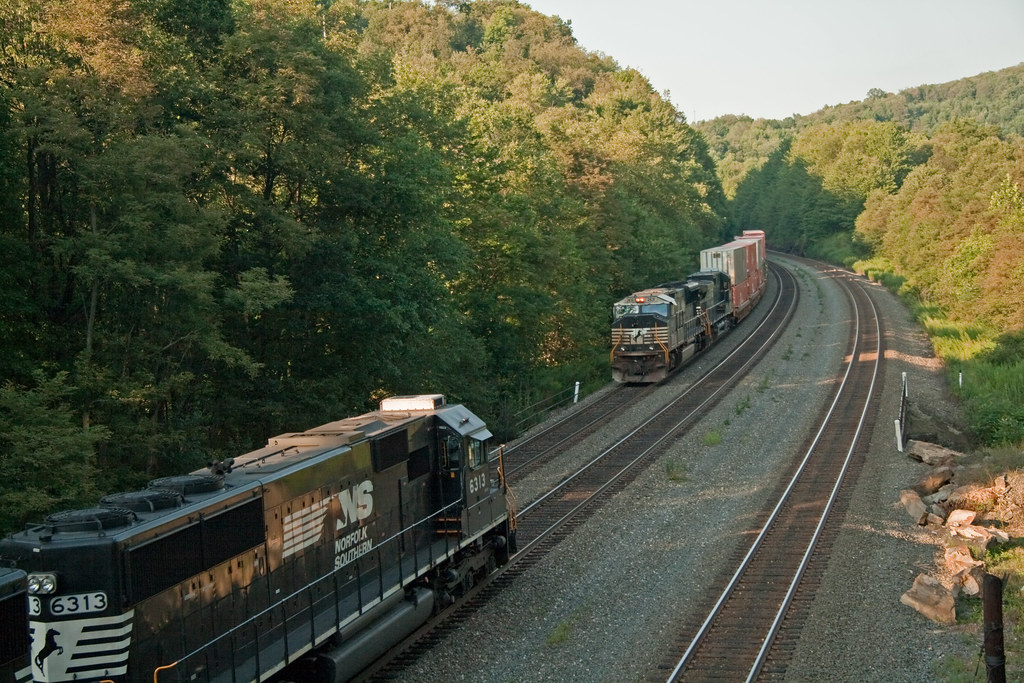
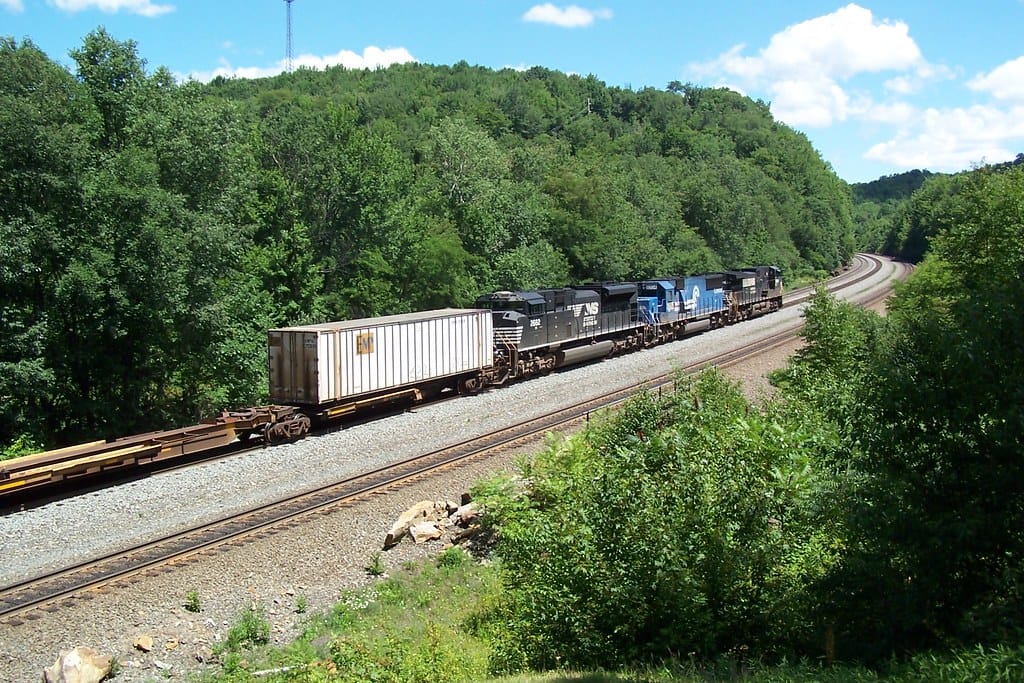
A 1936 iron bridge spanning three Norfolk Southern main line tracks on the busy Pittsburgh Line in the Allegheny Mountains, offering direct overhead and trackside views of 50-60 daily freight movements plus Amtrak's Pennsylvanian.
Photos
Sign in to upload photos jpmueller99
Attribution License
jpmueller99
Attribution License
jpmueller99
Attribution License

jpmueller99
Attribution License
jpmueller99
Attribution License
Trainspotting Experience
The Cassandra Railroad Overlook centers on a 1936 iron bridge that spans all three Norfolk Southern main line tracks. From the bridge deck, you look straight down onto passing locomotives and rolling stock — an overhead vantage point that is both legal and remarkably close to the action. The bridge sides are fairly high, so a small step ladder (3 steps) helps shorter photographers see over the railing, particularly for eastbound trains. The east side of the bridge provides a view down over a mile of straight track; eastbound trains are visible from roughly 3 miles away, and you can hear them nearly as far. Westbound trains descending the mountain on dynamic braking can appear more suddenly from the curve to the west. The acoustics amplify wheel noise and horn echoes in this narrow valley.
On the south side of the bridge, a small park with picnic tables and benches provides ground-level trackside viewing. The bridge leads from the parking area on the north side to the park on the south side. There are two picnic tables (one on each side) and several park benches, including one on a hillside that provides a slightly elevated perspective. Bring a folding chair for extended sessions — a full day here is common during events like the annual All-Nighter, where the park is illuminated with portable light towers and remains active overnight.
Landscape, Setting & Local Atmosphere
Cassandra is a tiny borough of about 150 residents in Cambria County, tucked into a narrow valley carved by the Little Conemaugh River at roughly 1,800 feet elevation. PA Route 53 passes just south of the borough limits, with the town of Cresson 5 miles to the northeast and Portage 3 miles to the southwest. The Allegheny Mountain ridgeline rises on both sides of the valley, cloaked in mixed hardwood forest. Autumn is particularly dramatic here — the maples and oaks turn vivid red and gold from late September through mid-October, framing the steel rails in seasonal color. Winter strips the canopy and opens up longer sight lines along the valley, though the unpaved path to the bridge can accumulate snow and ice (boots recommended). Morning fog frequently fills the valley and can linger until mid-day, occasionally providing moody atmospheric shots of trains emerging from the mist. The site is quiet between trains — just birdsong, the muted flow of the river, and the rustle of leaves in this remote, peaceful setting.
Type & Frequency of Train Activity
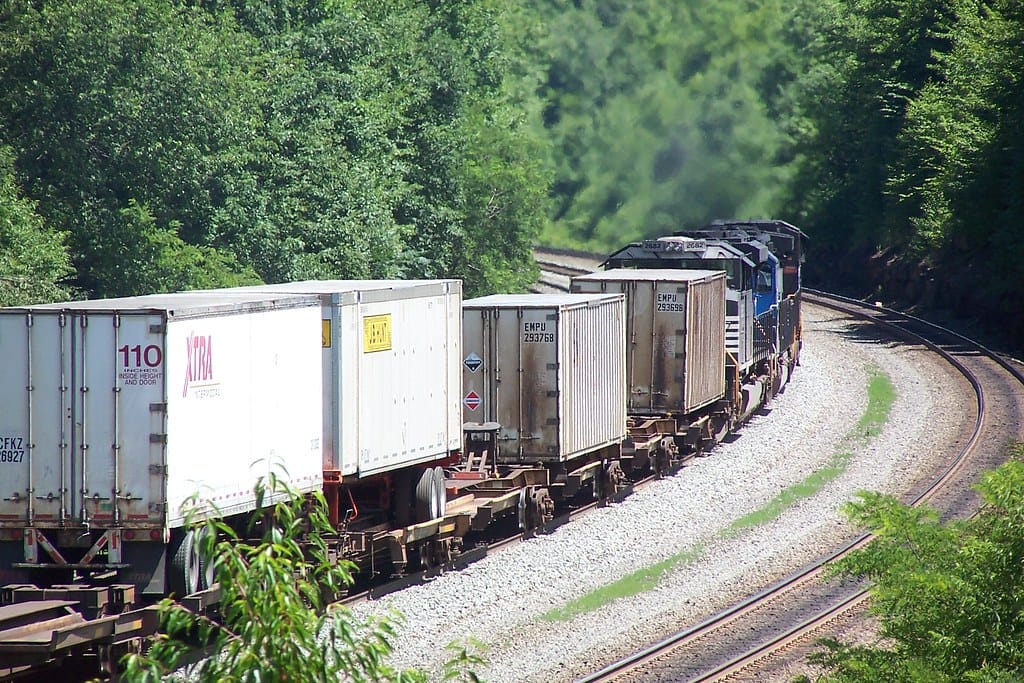
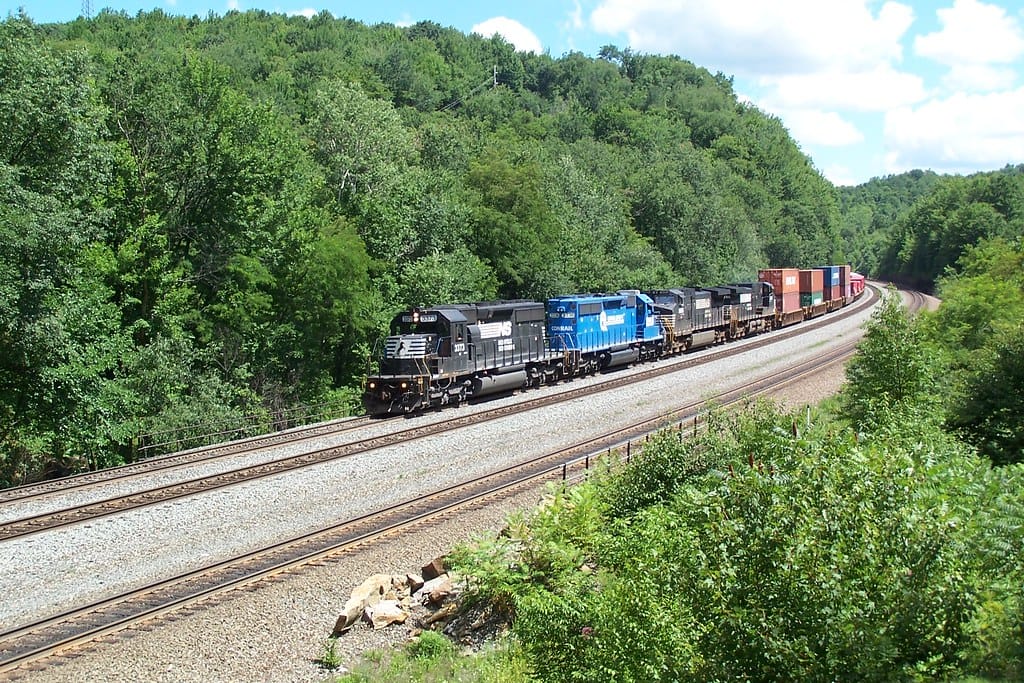
Cassandra sits on Norfolk Southern's Pittsburgh Line, the railroad's busiest freight corridor and a critical artery connecting Chicago to the Port of New York/New Jersey. The line averages 50-70 daily train movements. At Cassandra specifically, expect 50-60 freight trains in a 24-hour period (a documented count during the 2020 All-Nighter logged 45 trains excluding helper sets in a single 24-hour span). Traffic is a mix of intermodal double-stacks (priority Z-trains and other stacks), manifest freight, unit coal trains (including loads from the Sonman loadout that head east), grain hoppers, autoracks, and occasional crude oil or chemical tank trains.
The real spectacle here is the helper operations. Norfolk Southern uses SD40E helper locomotives (rated at 3,000 hp each) in pairs or "4-bangers" (four units) to assist heavy eastbound trains climbing the Allegheny grade toward Gallitzin. From Cassandra, you'll see helpers shoving hard on the rear of loaded coal drags and heavy manifests, running in full dynamics on westbound descents, and deadheading light back to their next assignment. Helper crews are based primarily at Altoona and Conemaugh/Johnstown. R.J. Corman's Pennsylvania Lines interchanges traffic with NS at nearby Cresson, generating occasional additional moves.
Amtrak's Pennsylvanian (trains 42 and 43) provides the only scheduled passenger service, passing twice daily in daylight hours.
Best Angles for Photos & What Railfans Enjoy Most
The bridge provides two distinct shooting directions. Looking east, you get over a mile of ruler-straight triple-track, one of the few purely straight stretches visible to the public on the entire former PRR Main Line. Eastbound trains appear as distant headlights that grow steadily for several minutes — ideal for telephoto sequences with a 200-300mm lens. Looking west, a gentle curve leads trains away from or toward the bridge, offering more dynamic compositions with the mountain valley as backdrop.
From the bridge deck itself, top-down shots capture locomotive roof details, double-stack heights, and coal hopper loading. For classic broadside profiles, move to the park area south of the bridge where ground-level angles show trains against the forested ridgeline. The hillside bench provides a slightly elevated mid-range perspective.
Morning sun illuminates eastbound trains from behind the photographer (shooting east from the bridge). Afternoon and evening light from the west bathes westbound trains in warm tones. The absence of overhead catenary means clean sky backdrops without wires. Bridge sides are high, so a 3-step ladder is recommended for shooting eastbound movements from the bridge railing — as noted by several experienced railfans. No tripod restrictions apply.
Historical or Cultural Relevance
The Pittsburgh Line traces directly to the Pennsylvania Railroad's Main Line, one of the most important railroads in American history. The PRR completed the route across the Alleghenies in 1854, including the famous Horseshoe Curve and the original Allegheny Tunnel (then the world's longest railroad tunnel at 3,612 feet). Cassandra's iron bridge was built in 1936 as a single-lane replacement for an older two-lane wooden bridge that carried PA Route 53 traffic across the railroad. The bridge was closed to vehicle traffic the same year when Route 53 was realigned to its current path south of the borough.
The bridge sat largely unused for decades until 1998-1999, when John Shuniak, then Mayor of Cassandra, noticed out-of-state cars headed to the bridge — railfans who had discovered the exceptional sight lines on their own. Shuniak spent three summers clearing the area, creating a parking lot and picnic park, transforming it into an official railfan destination. The first Cassandra All-Nighter event was held in 2004, using construction work lights to illuminate the tracks after dark. The event has become a beloved annual tradition, drawing enthusiasts from across the eastern United States.
The line passed from PRR through Penn Central to Conrail, and ultimately to Norfolk Southern in 1999 during the Conrail breakup. Today it remains NS's primary east-west freight artery across Pennsylvania.
What Makes This Spot Different
Three features set Cassandra apart from other railfan locations on the Pittsburgh Line. First, the overhead bridge perspective: unlike trackside platforms at Cresson Railroad Park or the curved viewing area at Horseshoe Curve, Cassandra puts you directly above three active main line tracks with zero obstructions. Second, the mile-plus straightaway visible to the east is one of the few purely straight, publicly accessible stretches on the entire former PRR Main Line between Harrisburg and Pittsburgh — most of the route follows river valleys with constant curvature. Third, this is prime helper territory: heavy eastbound trains are fighting the grade with rear-end helpers while westbound trains descend in dramatic dynamic braking, creating the sights and sounds of serious mountain railroading that flat-land corridors simply cannot replicate.
The combination of high traffic density (50+ trains daily), legal overhead access, mountain railroading operations, and a welcoming community-built park makes Cassandra a uniquely complete railfan experience.
Frequently Asked Questions
QHow many trains pass through Cassandra daily?
Expect 50-60 freight trains in a 24-hour period on Norfolk Southern's Pittsburgh Line, plus Amtrak's Pennsylvanian twice daily and numerous light helper engine movements. Total train movements can reach 60-70+ per day.
QAre there restrooms at the Cassandra Railroad Overlook?
No. The nearest restrooms and food are in Portage (3 miles southwest) or Cresson (5 miles northeast). Sheetz convenience stores and several restaurants are available in both towns.
QWhen does Amtrak pass through Cassandra?
Amtrak's Pennsylvanian runs daily. Train 42 (eastbound toward New York) passes around 9:15-9:30 AM, and Train 43 (westbound toward Pittsburgh) passes around 5:30-5:45 PM. Both pass in daylight year-round.
QWhat is the All-Nighter event?
The Cassandra Railroad Overlook All-Nighter is an annual overnight railfan gathering, typically held in late July or early August. Portable light towers illuminate the tracks and a Port-A-John is provided. The first All-Nighter was held in 2004, started by then-mayor John Shuniak.
QWhat scanner frequency should I use at Cassandra?
The primary NS road channel for the Pittsburgh Line is 160.800 MHz (AAR Channel 46). You can hear dispatchers, train crews, and helper operations on this frequency.
Safety Tips
Stay on the bridge and in the park area — do not venture onto or near the tracks. Trains pass at 30-45 mph and can approach quietly, especially westbound trains descending on dynamic braking. The bridge railing is solid but the deck can be slippery when wet or icy. In winter, the unpaved footpath from the parking lot to the bridge is not maintained and may be snow-covered. Ear protection is recommended for extended sessions — horn blasts and wheel noise are amplified in the narrow valley. The site is not lit at night (pitch black) except during organized All-Nighter events. Bring a flashlight if visiting after dark. Cell service can be spotty in the valley.
Seasonal Information
Fall (late September to mid-October) is peak season: brilliant hardwood foliage frames the tracks, temperatures are comfortable, and train traffic remains strong. Summer offers the longest daylight hours and warm weather for extended sessions, though the valley can be humid and buggy — bring insect repellent. Winter provides the starkest sight lines with bare trees, but the unpaved path to the bridge can be treacherous with snow and ice; wear boots and dress for cold mountain weather at 1,800 feet. Spring brings wildflowers and returning greenery but also mud and occasional flooding in the valley. The annual All-Nighter event (typically held in late July or early August) draws the largest crowds and provides overnight illumination of the tracks.
Nearby Lodging
- The Station Inn
THE railfan B&B — a historic 1866 hotel in Cresson, just 10 minutes from Cassandra. Front porch sits 145 feet from NS tracks. 12 rooms, family-style breakfast, scanner radios available. Founded 1993, now run by the Lang family.
- Wingate by Wyndham Altoona
Full-service hotel in downtown Altoona, about 23 miles northeast. Free breakfast, pool, gym. Close to Horseshoe Curve and Railroaders Museum.
- Fairfield by Marriott Altoona
Modern hotel off I-99 in Altoona with complimentary breakfast, indoor pool, and outdoor patio with grills. About 23 miles from the overlook.
- Cassandra Railroad Overlook Motel
Small 6-room motel located up the street from the overlook in Cassandra, run by John Shuniak. No railroad view from rooms but the closest accommodation to the bridge. Verify availability before planning — status uncertain.
Nearby Attractions
23 miles / 37 km
Iconic 1854 railroad curve with a viewing area, museum, and historic PRR locomotive on display. One of the most famous railroad sites in the United States.
8 miles / 13 km
Watch trains enter and exit the historic Allegheny Tunnel (1854, once the world's longest) from a park with benches, a restored PRR N5C caboose, and a small museum.
5 miles / 8 km
Lit observation deck right beside the tracks in Cresson, with a PRR caboose and handicapped-accessible ramp. Only 5 miles from Cassandra.
23 miles / 37 km
Museum celebrating railroad workers and communities in central Pennsylvania, with a pedestrian bridge overlook behind the building for train watching.
6 miles / 10 km
National Park Service site preserving the first railroad built across the Allegheny Mountains (1834), with a visitor center, inclined plane remnants, and the Staple Bend Tunnel — the first railroad tunnel in the US.
External Links
informative
informative
informative
Looking for more spots? Browse the complete list of train spotting locations.
Quick Information
Country
USA
Region
Pennsylvania
City
Cassandra
Spot Type
Bridge/Overpass
Best Times
Action is spread across 24 hours, but daylight hours offer the best photography. Amtrak train 42 (eastbound) passes around 9:15-9:30 AM and train 43 (westbound) around 5:30-5:45 PM. Morning light favors eastbound trains; afternoon/evening light suits westbound movements.
Visit Duration
1-3 hours typical; full-day sessions are common among dedicated railfans
Cost
Free
Train Activity
Train Types
Frequency
50-60 freight trains per 24-hour period, plus Amtrak's Pennsylvanian twice daily (trains 42 and 43) and numerous light helper engine movements. The Pittsburgh Line averages 50-70 total daily movements.
Access & Amenities
Parking
Available (Free gravel parking area near the bridge entrance)
Shelter
Not available
Restrooms
Not available