Dolton (Interlocking)
One of America's busiest at-grade rail junctions, where CSX, Union Pacific, and Indiana Harbor Belt cross in Chicago's south suburbs. Over 100 trains daily, including the iconic IHB "bottle train" carrying molten iron.
Photos
 amtrak_russ
Attribution License
vxla
Attribution License
vxla
Attribution License
vxla
Attribution License
vxla
Attribution License
vxla
Attribution License
Trainspotting Experience
Dolton Junction is widely considered one of the top rail hotspots in North America. The interlocking sits where two double-track east-west main lines — the Indiana Harbor Belt and CSX (former Baltimore & Ohio Chicago Terminal) — are crossed by the double-track Union Pacific main line running north-south (ex-Chicago & Eastern Illinois, ex-Missouri Pacific). The UP line is jointly owned by UP and CSX but operated and maintained by UP. All crossings are at grade, creating a complex web of diamonds, connectors, and signal bridges.
The primary legal viewing area is the Village Hall parking lot off Lincoln Avenue, at the southeast corner of the interlocking. You get a front-row seat for IHB and CSX traffic, though the UP line is roughly 100 yards away. The northwest quadrant lies in a city park accessible via a road off Lincoln Avenue that runs along the west side of the UP — offering closer UP views but trickier photography angles. A third vantage, nicknamed "Mount Dolton," is a large mound of excavated dirt about 35 feet high just west of the police station, providing a legal bird's-eye panorama of the entire junction.
The interlocking tower — a Pennsy-era structure with 172 mechanical levers — was closed in February 2017 and demolished that August. Traffic is now remotely controlled by IHB's East Dispatcher. On warm-weather weekends, it's common to find a dozen or more railfans gathered in the parking lot, sharing scanner frequencies and watching triple meets unfold.
Landscape, Setting & Local Atmosphere
Dolton sits in the flat Calumet industrial corridor south of Chicago, at an elevation of roughly 600 feet. The terrain is dead-level prairie, giving unobstructed sight lines of nearly half a mile in all four compass directions from the junction. The surroundings are classic blue-collar south suburban Chicago: warehouses, grain transloaders, and steel service centers line the right-of-way on most sides.
CSX's Barr Yard lies just northwest of the interlocking, and IHB's Blue Island Yard is about half a mile to the west along 138th Street. To the south, UP's Yard Center and Dolton Intermodal Yard stretch along the ex-C&EI corridor. About half a mile west, the former Illinois Central main line — now Metra Electric and CN — passes over the IHB on an overpass, visible from the junction. The overall feel is raw and industrial rather than scenic, but that's precisely what delivers the relentless train action that makes Dolton legendary among Chicago-area railfans.
Type & Frequency of Train Activity
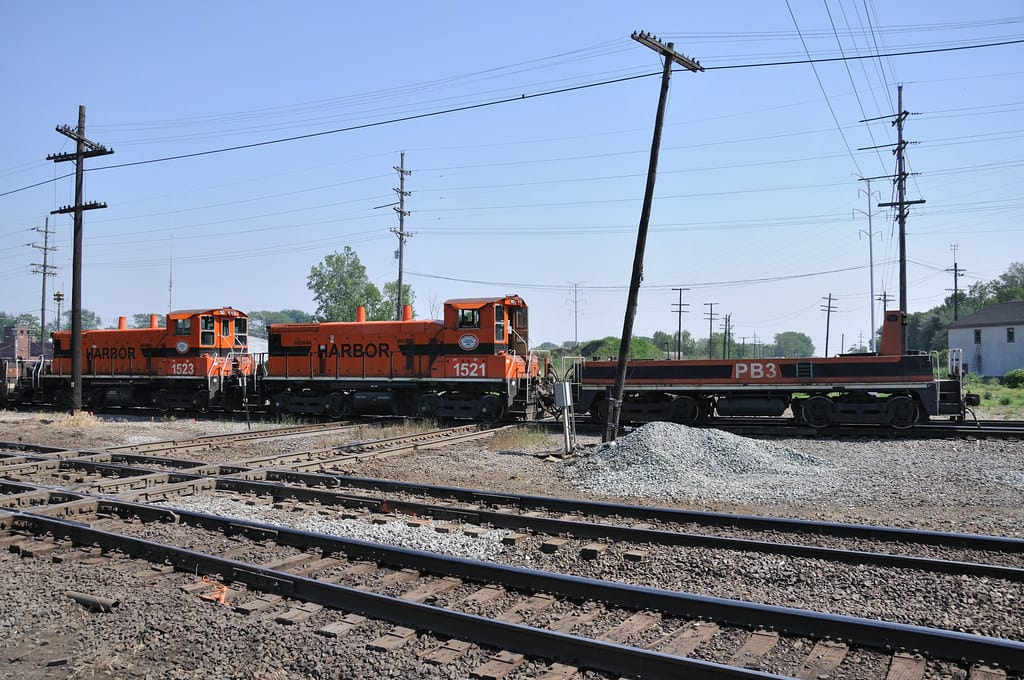
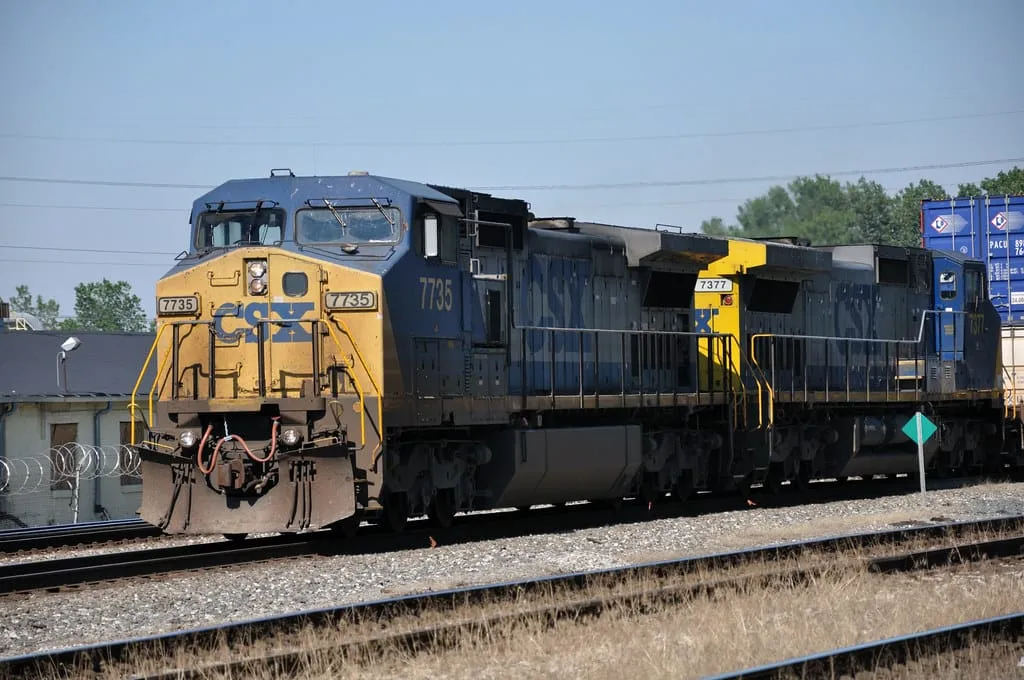
Three Class I carriers cross at Dolton: CSX runs east-west on the former B&OCT line toward Barr Yard, IHB operates east-west along its main line between Blue Island Yard and Pine Junction (near Gary, IN), and Union Pacific runs north-south on the jointly-owned ex-C&EI line connecting Dolton Yard/Yard Center with Chicago via the former Chicago & Western Indiana corridor.
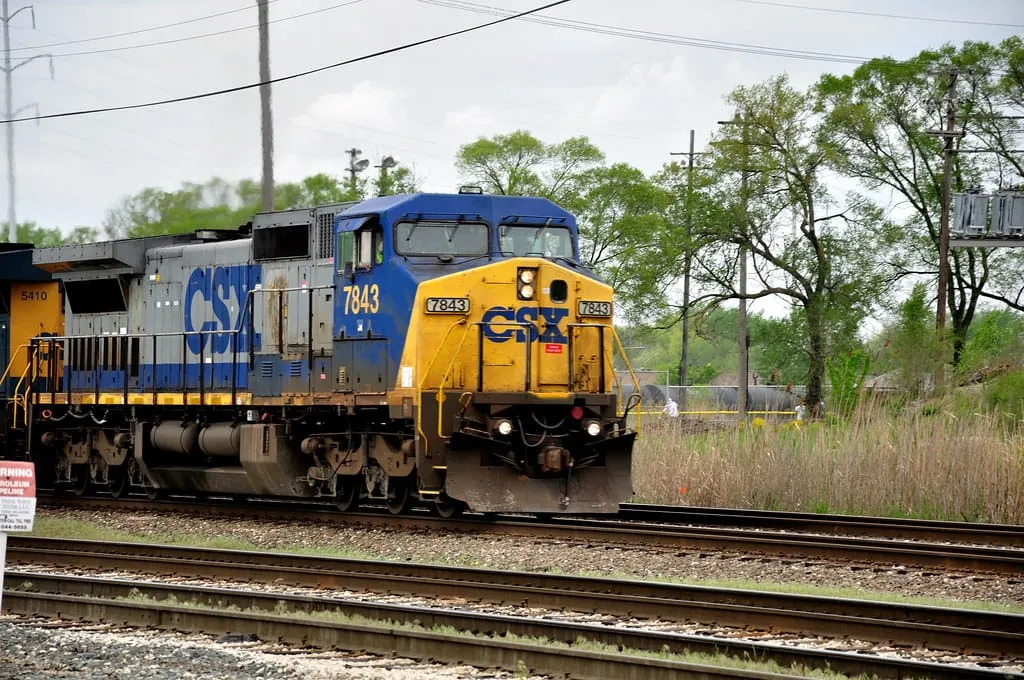
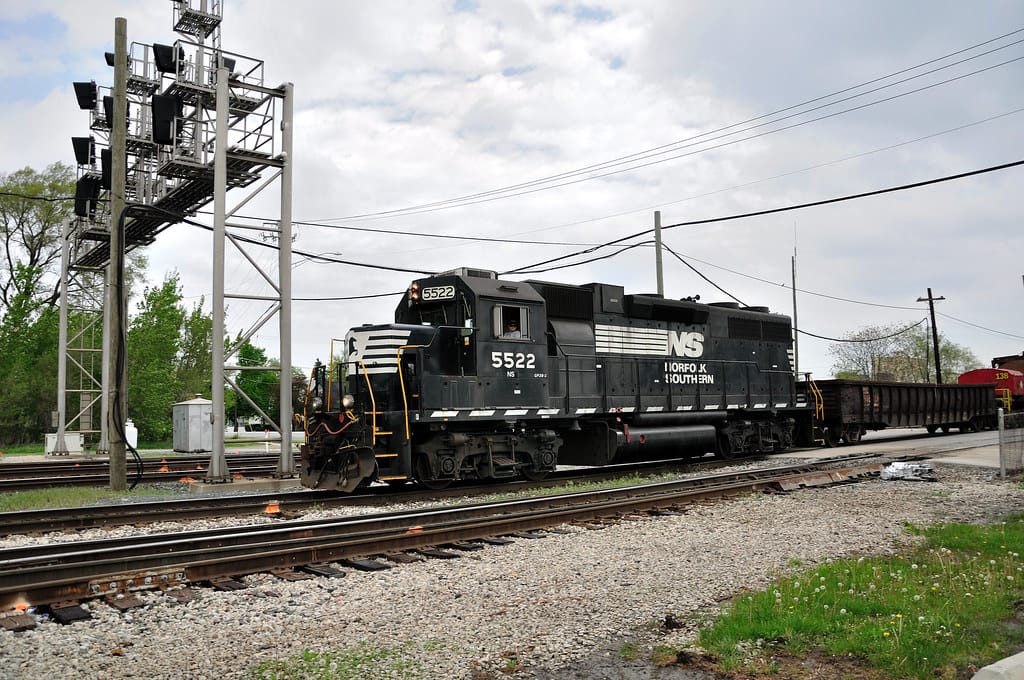
According to the CREATE program, the interlocking handles approximately 125 freight trains per day from UP, CSX, IHB, Norfolk Southern, and Canadian National, plus Amtrak's tri-weekly Cardinal. NS, BNSF, Canadian National, and Canadian Pacific Kansas City all make appearances on trackage rights over IHB and CSX tracks. CSX traffic on the UP line serves the railroad's former C&EI Evansville and former Monon Lafayette routes.
The star attraction is IHB's famous "bottle train," carrying ladles of molten iron from ArcelorMittal's facility in East Chicago, Indiana, to a steel mill in nearby Riverdale. The original operator, Acme Steel, shut down in October 2001, but the Riverdale plant reopened in 2003 and the bottle trains resumed. Older bottle cars ride on ten axles while newer ones have twelve — and you can sometimes feel the radiant heat from 20 feet away. The bottle train runs intermittently based on steel market conditions.
Best Angles for Photos & What Railfans Enjoy Most
The Village Hall parking lot (southeast quadrant) delivers eye-level shots of IHB and CSX trains crossing the diamonds. Morning light favors eastbound CSX freights; late afternoon backlights UP southbounds for dramatic silhouettes. A 200-400mm telephoto isolates locomotives on the far UP tracks from this vantage.
The city park in the northwest quadrant, accessed off Lincoln Avenue, puts you alongside the UP main and offers views of the diamonds and both east-west railroads. Photography can be challenging here due to fence lines and vegetation, but it's the best position for head-on UP shots. Wide-angle lenses (24-35mm) work well for capturing the sweep of the entire interlocking with its signal bridges.
"Mount Dolton" — the excavated dirt mound west of the police station — provides an elevated bird's-eye perspective that is unique for this area. It's particularly effective for capturing simultaneous meets across the junction. All approaches to Dolton Junction are at grade, so surrounding streets — including 142nd Street/Main Street crossing the UP/CSX tracks on the south side — also offer street-level photo opportunities.
Historical or Cultural Relevance
Dolton Junction's railroad heritage dates to May 1880, when the Chicago & Western Indiana Railroad opened its line from Dolton north to Dearborn Station in downtown Chicago. The C&WI was chartered on June 5, 1879, specifically to give the Chicago & Eastern Illinois Railroad and other carriers a shared route into Chicago's terminal district. At Dolton, the C&EI merged with the Columbus, Chicago & Indiana Central Railway, making the junction a critical interchange point from the very beginning.
Over time, the Pennsylvania Railroad's Panhandle line also passed through the junction from the northwest, crossing the IHB and UP. That line was abandoned in the early 1980s, except for a short stub off the IHB main that today carries the bottle train. The interlocking tower, located alongside the Panhandle right-of-way, was originally manned by Pennsy operators and featured 172 mechanical levers — one of the region's last staffed cabins before remote dispatching. The tower was closed in February 2017 and razed in August of the same year.
In 2019, the CREATE program (Chicago Region Environmental and Transportation Efficiency) awarded a $19.2 million federal CRISI grant for the Dolton Interlocking Upgrade project (WA11), with a total project cost of approximately $43 million. The project aims to reconfigure CSX/IHB/UP connections, build a third main line from CSX Barr Yard to the UP, and increase freight train speeds through the interlocking from 15 mph to 30 mph.
What Makes This Spot Different
Dolton's defining feature is sheer volume at grade level. Unlike flyovers or elevated viaducts, every crossing here happens on flat diamonds, placing you at railhead height with nothing between you and the action but air. With 100-plus trains daily on three Class I carriers, simultaneous meets of two or even three trains are routine rather than exceptional — a frequency almost unmatched among publicly accessible junctions in North America.
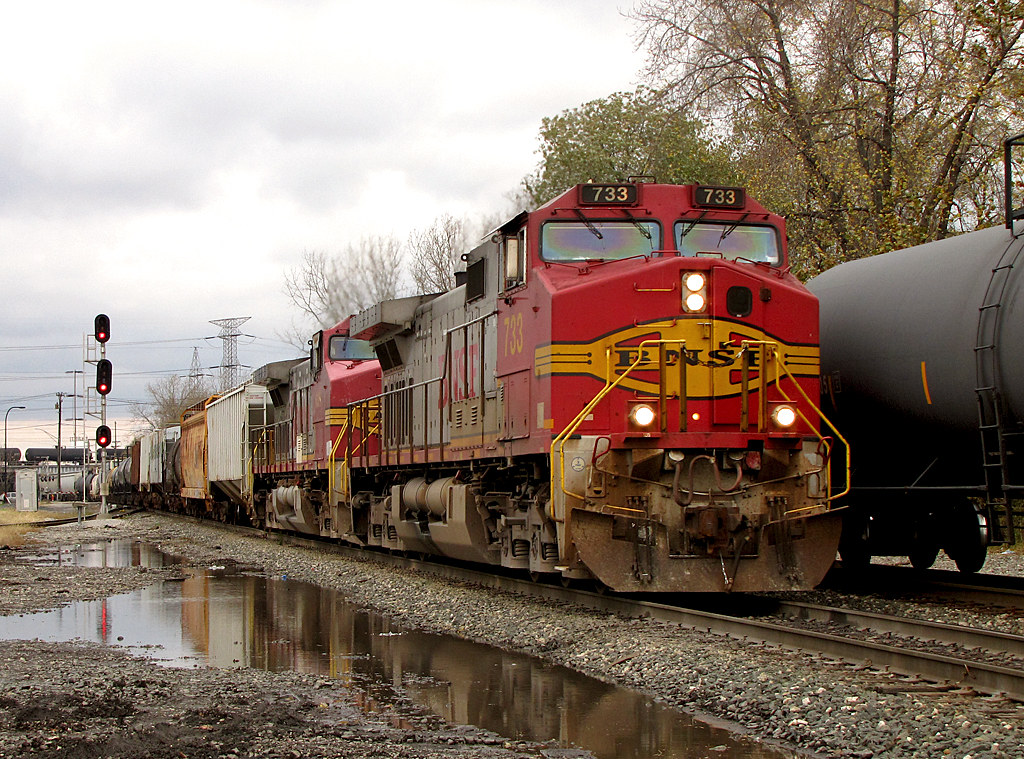
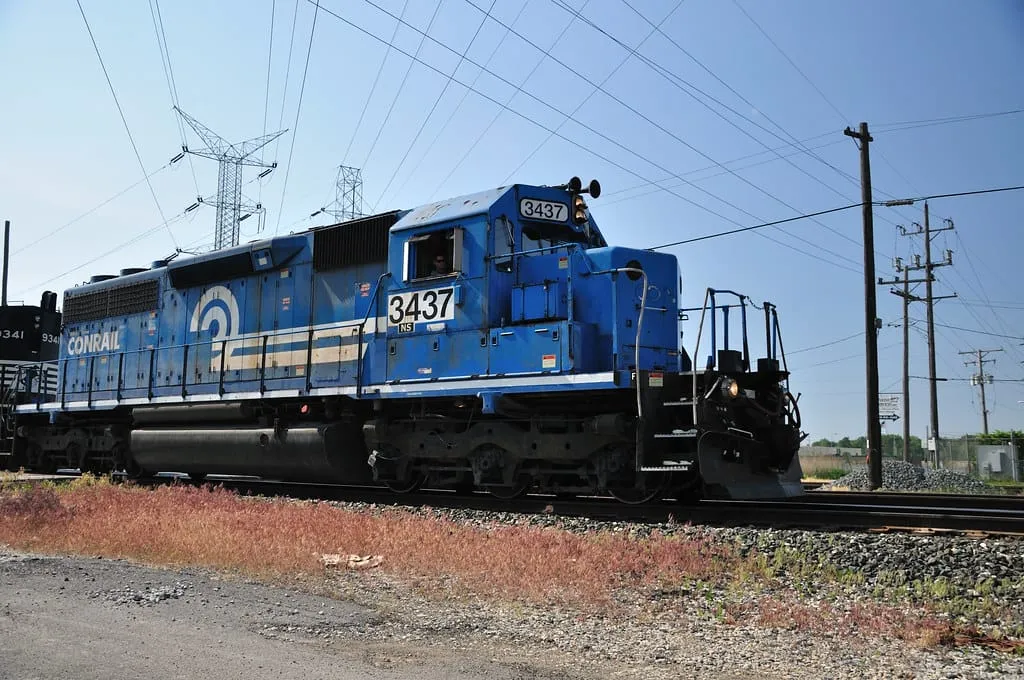
The variety of motive power and train types is equally remarkable. In a single session you might see UP intermodal stacks, CSX unit ethanol trains, IHB transfer runs, CN and NS run-throughs on trackage rights, and the extraordinary bottle train with its glowing ladles of molten iron. Dolton forms a natural pair with Blue Island Junction, about five miles west, where CN crosses CSX and IHB. Many railfans plan a full day combining both spots for comprehensive Chicago Southland coverage.
Frequently Asked Questions
QWhere should I park at Dolton Junction?
The main legal viewing area is the Village Hall (also the police station) parking lot on Lincoln Avenue. This is at the southeast corner of the interlocking and gives a front-row view of IHB and CSX traffic. Do not park on or near railroad property.
QHow many trains per day pass through Dolton?
According to the CREATE program and railfan reports, approximately 100-125 freight trains pass through daily from CSX, Union Pacific, Indiana Harbor Belt, Norfolk Southern, and Canadian National, plus Amtrak's tri-weekly Cardinal service.
QIs Dolton Junction safe for railfans?
Yes. Long-time visitors report feeling safe in the parking lot area. The police station is adjacent, and railfans regularly gather here on weekends. Stay off railroad property and away from the diamonds.
QWhat is the bottle train?
The IHB bottle train carries ladles of molten iron from ArcelorMittal's plant in East Chicago, Indiana, to a steel mill in nearby Riverdale. It runs intermittently based on market conditions. The cars radiate intense heat — you can feel it from 20 feet away.
QIs the interlocking tower still standing?
No. The former Pennsy Panhandle tower, which had 172 mechanical levers, was closed in February 2017 and demolished in August 2017. The interlocking is now remotely controlled by IHB's East Dispatcher.
Safety Tips
Stay in the Village Hall parking lot or the city park — both are legal public areas. Do not enter railroad property or approach the diamonds; IHB posted No Trespassing signs in the southeast quadrant in 2004. The police station is immediately adjacent, so enforcement is present. Train speeds through the interlocking range from 15 to 30 mph, but be aware of trains approaching from multiple directions simultaneously. Ear protection is advisable as horn echoes can be intense in this enclosed industrial corridor.
Seasonal Information
Train traffic is consistent year-round as freight operations are not seasonal. The bottle train schedule depends on steel industry demand and may be inactive during economic downturns. Summer weekends attract the most railfans. Winter conditions in the Chicago south suburbs can be harsh — wind chill, ice, and snow are common November through March.
Nearby Lodging
- Best Western Plus South Holland Chicago Southland
Full-service hotel in nearby South Holland with fitness center and free parking. About 4 miles from Dolton Junction.
- La Quinta Inn & Suites by Wyndham South Holland
Comfortable mid-range option off I-80/I-294 in South Holland. Free breakfast and parking.
- Holiday Inn Express & Suites Chicago South Lansing
Modern hotel near I-80/I-94 interchange in Lansing. About 6 miles east of Dolton. Hot breakfast included.
- Super 8 by Wyndham South Holland
Budget-friendly option in South Holland, convenient to I-94. Basic amenities.
Nearby Attractions
5 miles / 8 km
Another top Chicago Southland rail hotspot where CN crosses CSX and IHB. Heavy traffic and a wide variety of trains. About 5 miles west of Dolton.
6.2 miles / 10 km
National park preserving George Pullman's planned industrial community and the history of the Pullman Palace Car Company. Free admission.
5.3 miles / 8.5 km
Handicap-accessible elevated viewing platform overlooking Metra, Amtrak, and CN freight tracks in downtown Homewood.
11.8 miles / 19 km
Features a 35-foot elevated platform overlooking a rare double-wye junction. Handicap accessible.
11.8 miles / 19 km
Home to the Burlington Route's 1934 Pioneer Zephyr streamliner and "The Great Train Story" — one of the world's largest model train exhibits.
External Links
informative
informative
informative
Looking for more spots? Browse the complete list of train spotting locations.
Quick Information
Country
USA
Region
Illinois
City
Dolton
Spot Type
Urban Crossing
Best Times
The interlocking runs heavy around the clock, but the Village Hall parking lot is most practical during daylight hours. Morning visits catch good eastbound lighting on CSX and IHB trains; pair with a Blue Island Junction visit in the afternoon for maximum coverage.
Visit Duration
2-4 hours (or all day if combined with Blue Island Junction)
Cost
Free. No admission or parking fees at the Village Hall lot.
Train Activity
Train Types
Frequency
100-125 trains per day (per CREATE program and railfan reports). Simultaneous meets of 2-3 trains are common.
Access & Amenities
Parking
Available (Free parking at the Village Hall/police station lot)
Shelter
Not available
Restrooms
Not available