Emporia (BNSF Transcon)
A prime railfanning destination on BNSF's Southern Transcon through the Kansas Flint Hills, where 80 to 120 trains per day roll through on the railroad's busiest corridor connecting Southern California to Chicago.
Photos
 KansasScanner
Attribution License

KansasScanner
Attribution License
Trainspotting Experience
Emporia sits at a strategic railroad junction where BNSF's Topeka Subdivision merges with the Emporia Subdivision at NR Junction on the east side of town. This convergence means all Transcon traffic from Kansas City funnels through here, making it one of the highest-density rail corridors in North America. The city has 12 at-grade crossings along a two-mile stretch of the Emporia Sub, so finding trackside access is straightforward.
Fremont Park at 4th Avenue and Union Street is the traditional railfan gathering point, recommended by the Frograil Kansas Railfan Guide. From there, follow the tracks east along a gravel road to NR Junction (between East Street and Carter Street) to watch trains arriving from the Topeka Sub. The 6th Street overpass gives an elevated perspective over the Topeka Sub; stairs on the south side lead to a sidewalk across the bridge.
Downtown crossings at Commercial Street and 3rd Avenue, and Union Street and 3rd Avenue, provide level views. Emporia's flat terrain and open setting mean sight lines extend well in both directions, and you can spot approaching headlights for miles. Train speed through town varies, but mainline freights typically run at 60-70 mph on the double-track main. Scanner enthusiasts should monitor BNSF Channel 84 for Emporia yard operations.
Landscape, Setting & Local Atmosphere
Emporia lies at approximately 1,150 feet elevation on the eastern edge of the Flint Hills, where the tallgrass prairie transitions into the Cottonwood River bottomland. The Flint Hills are one of the last remaining tallgrass prairie ecosystems in North America, with grasses that can grow over six feet tall and hundreds of wildflower species providing a distinctive backdrop through the seasons.
Spring brings the dramatic Flint Hills pasture burns, followed by rapid greening and wildflower blooms. Summer temperatures regularly reach the mid-90s °F with occasional heat distortion that can affect long-lens photography. Fall produces golden grasses and warm-toned light ideal for photography. Winter offers stark blue skies over dormant prairie, with temperatures occasionally dropping to single digits and sharp northwest winds. Kansas thunderstorms in spring and summer create dramatic skies behind passing trains, though severe weather including tornadoes is a real consideration. The Cottonwood River runs through the south side of town, adding tree cover and water reflections near the rail corridor.
Type & Frequency of Train Activity
BNSF's Southern Transcon is the railroad's busiest route, stretching 2,200 miles from Southern California to Chicago. The Emporia Subdivision runs from Kansas City to Wellington, Kansas, and is one of 11 subdivisions on the Transcon. The city of Emporia reports over 77 trains per day, while local news station KVOE cited 80-120 trains daily as of November 2024. A federal corridor study documented an average of 82 daily train crossings with trains averaging 8,000 feet in length.
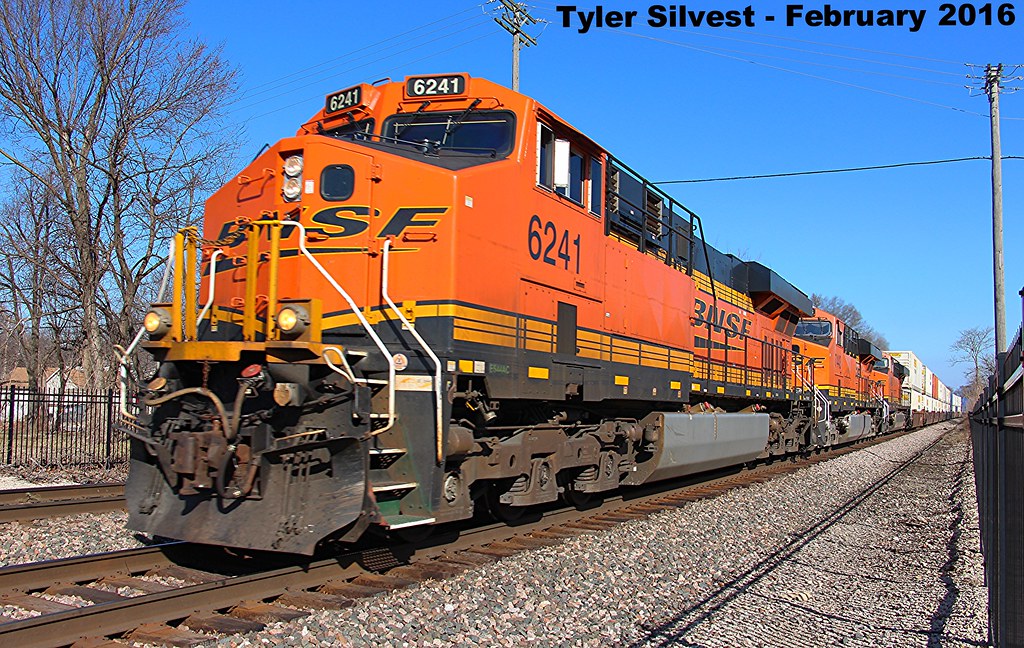
Traffic is overwhelmingly BNSF intermodal — double-stack container trains moving between LA-area ports and Chicago-area distribution hubs. High-priority Z-trains (premium intermodal) are common. Grain unit trains, automotive traffic, and mixed manifest freights round out the consist variety. Run-through power from other Class I railroads occasionally appears. In late 2024, BNSF completed a $160 million, multi-year project to double-track approximately 50 miles of the Emporia Subdivision, bringing the Southern Transcon to nearly 100% double, triple, or quadruple track.
Amtrak's Southwest Chief (Trains 3 and 4) passes through Emporia daily on the Topeka Sub but does not stop. The train passes through in the middle of the night in both directions, making it difficult to photograph. Emporia last had Amtrak service on May 11, 1997.
Best Angles for Photos & What Railfans Enjoy Most
Emporia offers multiple public vantage points along its two-mile rail corridor. The Frograil Kansas Railfan Guide recommends shooting from the south side of the tracks in the Emporia area for the best lighting.
Fremont Park area (4th Ave & Union St): The traditional railfan spot, offering trackside views of mainline traffic. Good for broadside and three-quarter angle shots with an open prairie background.
NR Junction (East St to Carter St): Where the Topeka Sub meets the Emporia Sub. A gravel access road parallels the tracks, offering opportunities to photograph converging/diverging movements. Multiple composition possibilities with junction signals and crossovers.
6th Street Overpass: Provides an elevated view over the Topeka Sub. Access via stairs on the south side. Useful for roster shots and overhead angles of intermodal loads.
Downtown crossings (Commercial St/3rd Ave and Union St/3rd Ave): Level grade-crossing shots in an urban setting. Getty Images has documented BNSF trains at these exact crossings.
Matfield Green area (about 25 miles SW): For those willing to drive, this section of the Emporia Sub through the heart of the Flint Hills is considered the most scenic part of the corridor for photography, with unbroken prairie horizons.
Historical or Cultural Relevance
Emporia has been a railroad junction since the Atchison, Topeka and Santa Fe Railway reached the city on September 14, 1870, during the railroad's rapid westward expansion across Kansas. Col. Sam Wood, a Santa Fe director, chose Emporia over rival Council Grove as a depot location. The Missouri, Kansas and Texas Railroad (the Katy) also served Emporia, running southeast through the Neosho River valley.
Emporia grew into a major Santa Fe hub. By 1950, the yard had a capacity of 4,986 cars, a 30-stall roundhouse, and extensive livestock facilities — one of the largest feeding stations on the system, required by federal law mandating that livestock be unloaded every 28-36 hours during transit. The yard handled both California-bound and Texas-bound trains, with re-blocking operations for multiple destinations. At Emporia Junction on the east side of town, the direct Ottawa cutoff from Kansas City merged with the line from Topeka.
The passenger depot, built in 1882 and remodeled in 1926 and 1957, served legendary Santa Fe trains including the Super Chief and Texas Chief. Amtrak continued service with the Southwest Chief until the Emporia stop was eliminated on May 11, 1997. The historic station was destroyed by fire on August 9, 1999. The 30-stall roundhouse was demolished in 1983, and Las Casitas Park now occupies part of the former roundhouse site. Jack Delano photographed the Emporia Junction tower and rail operations for the Library of Congress in March 1943, providing an invaluable visual record of the wartime railroad.
What Makes This Spot Different
Emporia's distinguishing feature is the junction of two major BNSF subdivisions — the Emporia Sub (the Southern Transcon main) and the Topeka Sub — converging at NR Junction. This means railfans see not only the relentless parade of Transcon intermodal traffic but also trains arriving from and departing toward Topeka. Few locations on the Southern Transcon offer this combination of through traffic plus junction operations.
The 2024 completion of the $160 million double-tracking project on the Emporia Subdivision has increased train fluidity, reducing eastbound travel times by up to 90 minutes and eliminating the need for some trains to overflow onto the longer Newton routing. This means Emporia now handles even more traffic than before.
The town's deep Santa Fe heritage — from the 1870 founding-era depot to the massive mid-century yard complex — adds historical weight. The Flint Hills setting provides a distinctively Kansas backdrop that differs markedly from the desert and mountain passes of the Transcon's western segments. And with I-35 running through town, Emporia is one of the most accessible high-volume trainspotting locations in the central United States.
Frequently Asked Questions
QHow many trains pass through Emporia per day?
Multiple sources indicate 80-120 trains daily. The City of Emporia economic development office cites over 77 trains per day. BNSF states approximately one train passes every 20 minutes through the Emporia Subdivision of the Southern Transcon.
QDoes Amtrak stop in Emporia?
No. Amtrak's Southwest Chief (Trains 3 and 4) passes through Emporia on the Topeka Subdivision but has not stopped since May 11, 1997. The historic depot was destroyed by fire in 1999. The nearest Amtrak stops are Topeka (60 miles north) and Newton (75 miles west).
QWhat is the best viewing spot in Emporia?
Fremont Park at 4th Avenue and Union Street is the traditional railfan spot. NR Junction (East Street to Carter Street) offers views of the Topeka Sub/Emporia Sub junction. The 6th Street overpass provides an elevated view. The Frograil Kansas Railfan Guide recommends shooting from the south side of the tracks.
QWhat scanner frequency should I use in Emporia?
BNSF yard operations at Emporia use Channel 84. For main line dispatching, monitor the BNSF Kansas Division frequencies.
QWhat happened to the old Santa Fe depot?
The depot was built in 1882 by the Atchison, Topeka and Santa Fe Railway, remodeled in 1926 and 1957. After Amtrak dropped its Emporia stop in 1997, the building fell into disrepair and was destroyed by fire on August 9, 1999. The 30-stall roundhouse had already been demolished in 1983.
Safety Tips
Emporia averages 82 daily train crossings with trains running at mainline speed (60-70 mph) and averaging 8,000 feet in length. Always use designated crossings with warning signals. Keep well clear of the double-track main — trains can approach simultaneously from both directions. Kansas weather can change rapidly: spring and summer storms may bring severe weather including tornadoes. Summer heat requires hydration and sun protection.
Seasonal Information
Spring: Flint Hills pasture burns (March-April) create dramatic smoky skies; wildflower season peaks May-June. Summer: Extended daylight hours but temperatures in the 90s°F with heat haze affecting telephoto photography. Fall: Golden tallgrass prairie, warm light, comfortable temperatures — the best season for photography. Winter: Cold (sometimes single-digit °F) with strong northwest winds; clear skies produce sharp images.
Nearby Lodging
- Gufler Mansion Bed & Breakfast
Restored 1900s-era home near downtown Emporia with 10 rooms. Period architecture and artwork throughout. The closest lodging option to the rail corridor.
- Hampton Inn by Hilton Emporia
Modern mid-range hotel on the west side of Emporia near I-35. Minutes from downtown and the rail corridor. Standard Hilton amenities.
- Best Western Emporia Inn
Budget-friendly hotel near I-35 with complimentary breakfast, seasonal outdoor pool, and fitness center. About 4 miles from the rail corridor.
- Holiday Inn Express Emporia Northwest
Modern hotel near the Kansas Turnpike and I-35 interchange. Business center, meeting room, and pet-friendly accommodations.
Nearby Attractions
0.3 miles / 0.5 km
Regional history museum at 711 Commercial Street with exhibits on the Flint Hills, early settlers, railroad heritage, and a model train display. Features a Kid's Zone.
0.9 miles / 1.5 km
Tudor Revival home of journalist William Allen White, the "Sage of Emporia," who hosted five U.S. presidents. Features a Frank Lloyd Wright-designed staircase, gardens, and White family artifacts.
0.2 miles / 0.3 km
Fully restored 1929 Spanish Colonial Revival movie palace in downtown Emporia. Hosts films, live performances, and community events.
1.2 miles / 2 km
Miniature train ride in a historic park along the Neosho River. A fun rail-themed stop for families visiting the area.
1.9 miles / 3 km
Compact, free-admission zoo with a variety of animals in an accessible, easy-to-follow layout. A popular family attraction.
18.6 miles / 30 km
The only unit of the National Park System dedicated to tallgrass prairie conservation. Features hiking trails, historic ranch buildings, and guided bus tours through one of North America's last remaining tallgrass ecosystems.
External Links
informative
informative
informative
Looking for more spots? Browse the complete list of train spotting locations.
Quick Information
Country
USA
Region
Kansas
City
Emporia
Spot Type
Urban Crossing
Best Times
Daylight hours offer the best photography. Train traffic is continuous around the clock, but midday through late afternoon provides the best lighting for southside shooting positions. The Amtrak Southwest Chief passes through in the middle of the night in both directions.
Visit Duration
2-4 hours
Cost
Free — all viewing spots are on public roads, crossings, or parks
Train Activity
Train Types
Frequency
80-120 trains per day (sources: KVOE Emporia, City of Emporia economic development). BNSF states approximately one train every 20 minutes through this corridor.
Access & Amenities
Parking
Available
Shelter
Not available
Restrooms
Not available