Gaviota (Coast Line)
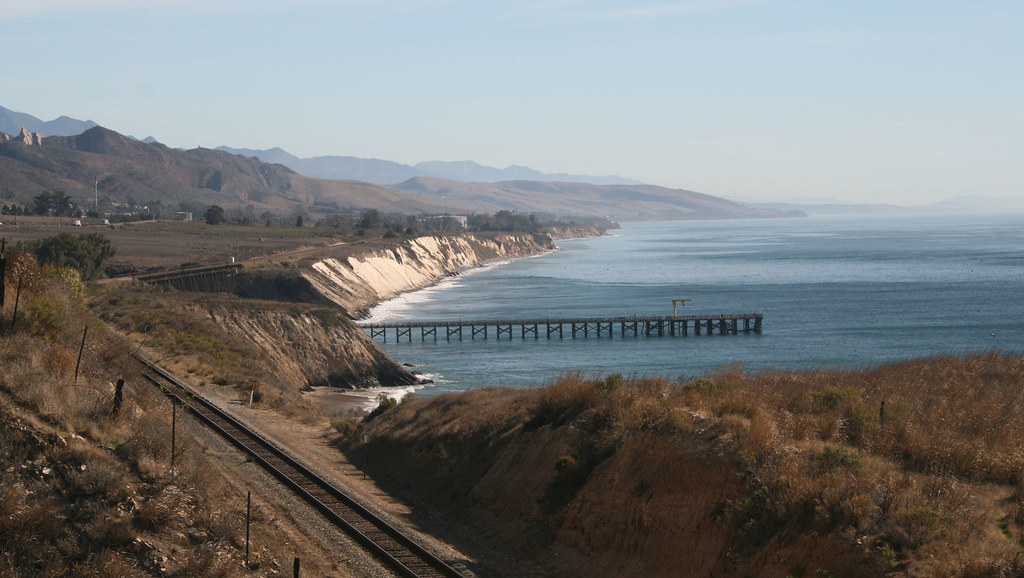
The 811-foot Gaviota Trestle carries Union Pacific's Coast Line 80 feet above Gaviota Creek at its outlet to the Pacific Ocean, inside Gaviota State Park. One of Amtrak's most photographed landmarks, the 1900 steel trestle offers accessible railfan access with camping literally beneath the bridge.
Photos
 DieselDemon
4
Trainspotting Experience
Gaviota Trestle sits inside Gaviota State Park, 33 miles west of Santa Barbara on U.S. Highway 101. Take the Gaviota State Park exit just south of the rest area, before the highway swings east through the Gaviota Tunnel. A day-use parking lot ($10 fee) sits directly beneath the trestle, and a path to the fishing pier and beach passes under the bridge, giving railfans ground-level and slightly elevated vantage points without needing to trespass.
The experience here is defined by anticipation rather than volume. Train frequency on this segment of UP's Santa Barbara Subdivision is modest — the Coast Starlight passes once each way daily, a handful of Pacific Surfliner round-trips extend north of Santa Barbara to San Luis Obispo, and a local freight (the Guadalupe Local, operating a few days per week from Guadalupe to Los Angeles) may appear. Scanner frequency 161.550 (UP Santa Barbara Sub) helps time arrivals. When a train does appear, the payoff is dramatic: locomotives emerge from around a coastal curve, horns echoing off the canyon walls, before rolling across 80 feet of open air on two dozen steel bents with the Pacific surf breaking 300 yards behind.
Landscape, Setting & Local Atmosphere
Gaviota sits where the Santa Ynez Mountains meet the Pacific, at a point where the California coast pivots from its east-west orientation to run north-south. The name comes from the Spanish word for "seagull," bestowed by soldiers of the Portolá Expedition who camped at Gaviota Creek in 1769. Coastal sage scrub, live oak, and windswept chaparral cloak the surrounding hills, with sycamores lining the creek bed. In spring, wildflowers — lupine and California poppies — color the slopes.
Morning marine layers are common and typically burn off by late morning, yielding sharp coastal light. Westerly winds can be fierce; Gaviota State Park is known for sudden gusts that have earned the campground a reputation — campers routinely warn about winds strong enough to destroy lightweight tents. Temperatures are mild year-round, generally between 55°F and 75°F. The setting combines an industrial steel bridge, a sandy beach, rugged coastal bluffs, and the white zig-zagging cliffs of the Monterey Shale Formation visible to the south.
Type & Frequency of Train Activity
The line is owned and dispatched by Union Pacific (ex-Southern Pacific) as the Santa Barbara Subdivision, part of the Coast Line connecting Los Angeles and the San Francisco Bay Area. However, UP's preferred north-south freight route is the Fresno Subdivision through the San Joaquin Valley, so freight traffic through Gaviota is light.
Passenger service: Amtrak's Coast Starlight (Train 11 northbound, Train 14 southbound) passes once daily each way — the northbound typically crosses the trestle around 1:30 PM, the southbound around 5 PM, though delays are frequent. A limited number of Pacific Surfliner round-trips extend north of Santa Barbara to San Luis Obispo via this segment. Current Surfliner power is Siemens Charger SC-44 locomotives.
Freight service: The primary freight working is the Guadalupe Local (also called the Guadalupe Hauler), which operates a few days per week between Guadalupe and Los Angeles. According to a Trains Magazine account, catching this single freight requires "perseverance and luck." Other occasional freight movements include empty bare-table trains, autoracks, and maintenance-of-way trains. As of a 2003 reference, the SLO-to-Santa Barbara segment saw approximately 9 freight trains per day, but current levels appear lower.
Best Angles for Photos & What Railfans Enjoy Most
Under the trestle (ground level): From the day-use parking lot or the path to the fishing pier, you can shoot straight up through the lattice of steel girders. When a train crosses overhead, the framing of locomotive against sky and steel creates a powerful composition. Wide-angle lenses (16-35mm) work well here.
Beach perspective (south side): Walk under the trestle to the sandy beach. From here, you can frame trains crossing the bridge with breaking waves in the foreground — particularly effective for sunset silhouettes when the southbound Coast Starlight passes around 5 PM. A tripod helps with the low light and reflective water glare.
From Highway 101 (southbound): The trestle is visible from the southbound lanes of US-101, offering a quick telephoto shot (200-400mm) of trains crossing with ocean background, though stopping safely is difficult.
Gaviota Peak trail: The Overlook Fire Road trail (about 3 miles round-trip) from the parking area climbs to a sweeping vista of the coastline, bridge, and Highway 101 in one panorama. A 100-300mm lens compresses the scene effectively. Morning light is best from this elevated angle, illuminating northbound trains against the blue Pacific.
Historical or Cultural Relevance
The Gaviota Trestle was completed by Southern Pacific in November 1900 as one of the final structures needed to close "The Gap" — the last unbuilt segment of the Coast Line between Los Angeles and San Francisco. The 811-foot bridge spanning Gaviota Creek was the largest of numerous trestles and viaducts required along this rugged coastal section, which also included the 661-foot Dos Pueblos Canyon Bridge and the 634-foot Alegria Canyon Viaduct.
Track workers from the south met workers from the north at Cementerio, one mile east of Gaviota, on December 31, 1900, and the first train ran that day. Regular passenger service commenced on March 31, 1901, completing a project that had taken 36 years since the first rails were laid in San Francisco. The route became famous as the path of Southern Pacific's Daylight streamliners. Presidents Theodore Roosevelt and William McKinley both crossed the trestle during their tenures.
The bridge has also seen tragedy — in 1910, two girls walking on the trestle were caught by an approaching train. Though they attempted to save themselves by hanging from the side, one was killed. The incident contributed to the trestle's local nickname, the "Ghost Bridge." The area featured in the 2004 Oscar-nominated film "Sideways," which was partly shot at Gaviota beach.
What Makes This Spot Different
Gaviota Trestle stands out for one key reason: it is one of very few locations in North America where you can camp directly beneath an active mainline railroad bridge and wake up to trains crossing 80 feet overhead. Gaviota State Park's 39 campsites sit just yards from the trestle bents, and the path to the beach passes directly under the bridge — no trespassing, no fences, no permission needed.
The combination of a major steel trestle, Pacific Ocean surf, coastal bluffs, and a sandy beach in a single frame is genuinely rare. The location is also notable for what it lacks: urban clutter, overhead wires, and heavy traffic. The trade-off is patience — train frequency is modest, and the single daily freight can easily be missed. But when a train does appear, the setting delivers a shot that few coastal rail locations can match. The remoteness, the sound of surf mixing with rail noise, and the scale of the century-old bridge against the wild coastline make this a memorable spot even on days when trains don't cooperate.
Frequently Asked Questions
QHow do I get to the Gaviota Trestle viewing area?
From Highway 101, take the Gaviota State Park exit (signed as Gaviota State Beach) just south of the rest area, before the highway turns east through the Gaviota Tunnel. Follow Gaviota Beach Road down into the park. The day-use parking lot is directly beneath the trestle. Day-use fee is $10 per vehicle.
QHow many trains pass the Gaviota Trestle daily?
Train frequency is modest. The Amtrak Coast Starlight passes once each way daily (northbound around 1:30 PM, southbound around 5 PM), a limited number of Pacific Surfliner trips extend through this segment, and 1-2 freight trains (primarily the Guadalupe Local) may appear on weekdays. Delays are common on all services.
QCan I camp near the Gaviota Trestle?
Yes. Gaviota State Park has 39 campsites located just yards from the trestle. The campground is open seasonally (typically April through September) and costs $45 per night. Reservations are recommended via ReserveCalifornia.com. Be warned: the campground is notoriously windy.
QWhat scanner frequency should I use at Gaviota?
The Union Pacific Santa Barbara Subdivision is dispatched on 161.550 MHz. This will help you monitor train movements and time your setup.
QIs there anything else to do nearby?
Gaviota State Park offers beach access, a fishing pier (currently closed for repairs), hiking trails including the 3-mile Overlook Fire Road, and Gaviota Hot Springs (a 2.5-mile hike from a trailhead north of the park entrance on Highway 1). The Danish village of Solvang is about 15 miles northeast.
Safety Tips
Gaviota State Park is known for sudden, powerful wind gusts — secure camera gear and tripods firmly. Do not walk on the trestle or climb the bridge structure; this is active Union Pacific track and trespassing is both illegal and extremely dangerous. Stay on established paths and the beach. Rattlesnakes are present in the area, particularly on hiking trails — watch where you step. The beach has strong currents; check conditions before swimming. The pier is currently closed due to storm damage.
Seasonal Information
The campground operates seasonally, typically April 1 through September 30. Day-use is available year-round, 7 AM to sunset. Winter storms can temporarily close access roads. Marine layer fog is heaviest June through August mornings. Wind is a constant factor but tends to be strongest in spring and early summer afternoons.
Nearby Lodging
- Gaviota State Park Campground
39 campsites directly beneath the trestle. Tent and RV camping (up to 27 ft). Seasonal: April-September. $45/night. Restrooms, showers, camp store.
- Santa Ynez Valley Marriott
3-star hotel in Buellton, about 10 miles north of Gaviota via US-101. Pool, fitness center, on-site restaurant. Pet-friendly.
- Pea Soup Andersen's Inn
Budget-friendly motel in Buellton, about 10 miles from Gaviota. Pool. Adjacent to the historic Pea Soup Andersen's restaurant.
- Hotel Corque (Solvang)
Boutique hotel in downtown Solvang, about 15 miles from Gaviota. Walking distance to Danish village shops and restaurants.
Nearby Attractions
2.5 miles / 4 km
Natural sulfur hot springs accessible via a moderate 2.5-mile hike from a trailhead on Highway 1, just north of the park entrance. Small warm pools in a secluded canyon setting.
2 miles / 3.2 km
Sandstone formations carved by coastal winds, reached via a 2.5-mile out-and-back hike with ocean views from the Santa Ynez Mountains above Gaviota.
15 miles / 24 km
Charming Danish-themed town founded in 1911, featuring windmills, bakeries with aebleskivers, wine tasting rooms, Old Mission Santa Inés (1804), and the Solvang Vintage Motorcycle Museum.
7 miles / 11 km
A short, easy 0.6-mile trail leads to a scenic 160-foot seasonal waterfall. Located just north of the Gaviota Tunnel off Highway 101.
10 miles / 16 km
Coastal state beach with palm-lined campground, tide pools, and a sheltered cove. Part of the same $10 day-use pass as Gaviota State Park.
External Links
informative
informative
informative
informative
Looking for more spots? Browse the complete list of train spotting locations.
Quick Information
Country
USA
Region
California
City
Gaviota
Spot Type
Bridge/Overpass
Best Times
The northbound Coast Starlight typically crosses around 1:30 PM and the southbound around 5 PM, though delays are common. Pacific Surfliner round-trips through this segment are limited; check current Amtrak schedules. Morning light favors northbound shots, late afternoon favors southbound.
Visit Duration
2-4 hours (full day if combining with hiking or beach time)
Cost
Day-use parking $10 per vehicle. Camping $45/night (seasonal, April-September).
Train Activity
Train Types
Frequency
Low — approximately 4-6 Amtrak trains plus 1-2 freight trains daily
Access & Amenities
Parking
Available ($10 day-use fee per vehicle)
Shelter
Not available
Restrooms
Available