Santa Susana Pass
Santa Susana Pass carries the Union Pacific Coast Line through three sandstone tunnels bored in 1904, including the 7,369-foot Santa Susana Tunnel — the longest railroad tunnel in Southern California. Located 30 miles northwest of downtown Los Angeles, this pass sees Metrolink, Pacific Surfliner, Coast Starlight, and UP freight daily.
Photos
 railfan 44
10
Trainspotting Experience
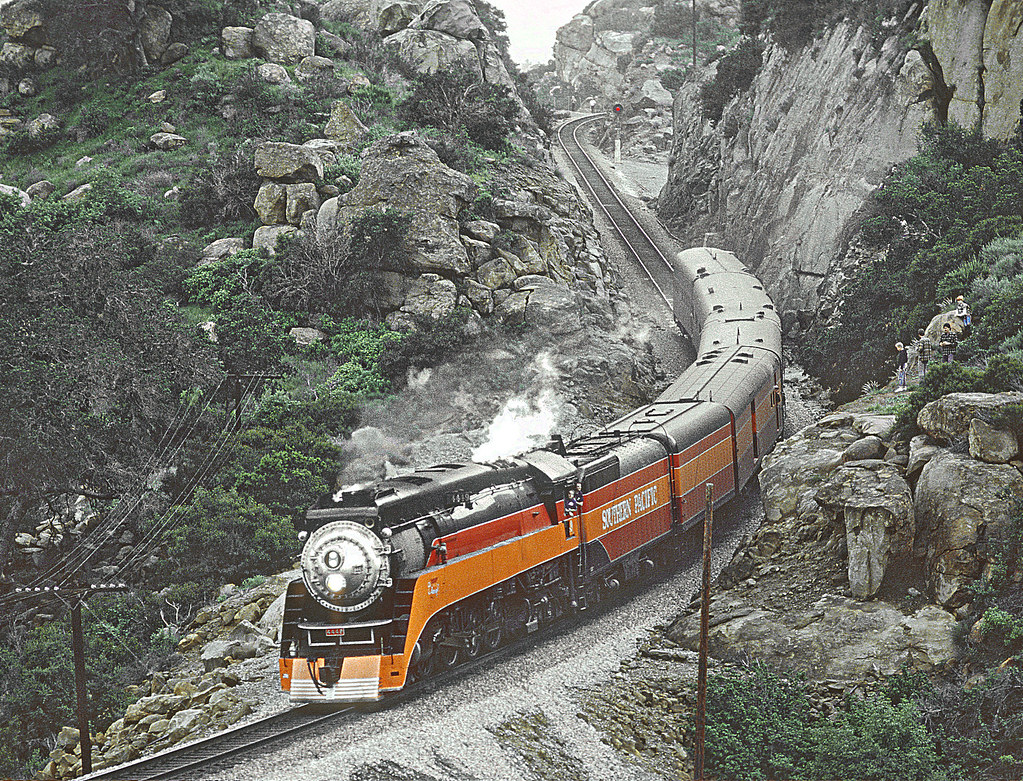
Three Southern Pacific tunnels — numbered 26, 27, and 28 running west to east — bore through sandstone at Santa Susana Pass, creating a single-track corridor that concentrates all rail traffic through a narrow canyon. The single-track section extends from Chatsworth station westward through all three tunnels into Simi Valley.
Most railfans position themselves at Stoney Point, a rocky outcropping directly off Topanga Canyon Boulevard at the SR-118 overpass, where the curved approach to Tunnel 28 (the easternmost, 500-foot portal) is fully visible from a legal public vantage. A second popular spot is Rocky Peak Fire Road, accessed via Rocky Peak Park north of SR-118, where a 4.75-mile round-trip hike with 900 feet of elevation gain reaches a ridge with commanding views down to the track.
Westbound trains (toward Ventura/Oxnard) labor visibly against the grade through the pass; dynamic brakes and flange squeal echo off the sandstone canyon walls as train speeds drop to roughly 35–45 mph through the single-track segment. Headlights appear well before locomotive arrival through the tunnel portals, giving ample time to set up cameras. On weekdays, two to three movements per hour are common during peak windows.
Landscape, Setting & Local Atmosphere
Santa Susana Pass sits at approximately 1,480 feet elevation in the Simi Hills, on the boundary between the City of Los Angeles and Simi Valley. The terrain is dominated by massive Chatsworth sandstone boulders — some reaching 50 feet in height — interspersed with coastal sage scrub, toyon, and black walnut. The canyon corridor through which the tracks run has a raw, undeveloped character that feels surprisingly remote for a location 30 miles from downtown Los Angeles.
Santa Susana Pass State Historic Park protects 670 acres of this landscape along both sides of the tracks, preserving the surroundings from urban encroachment. Morning marine layer is common from October through April, occasionally adding atmospheric mist to early-morning photographs. Summer days push past 95°F by midday — early arrival is essential. Broad views of the Santa Monica Mountains open to the south from the Rocky Peak Fire Road ridge.
Type & Frequency of Train Activity
The line through Santa Susana Pass carries three distinct passenger operators plus Union Pacific freight, all sharing a single-track segment through the tunnels.
Metrolink Ventura County Line operates 22 trains per weekday through Chatsworth (11 each direction), connecting East Ventura to Los Angeles Union Station. Service is concentrated in peak hours — heavy inbound (toward LA) flow in the morning, outbound in the late afternoon. Weekend service is dramatically reduced to just 2 round trips per day.
Amtrak Pacific Surfliner runs 10 trains daily (5 each direction) through Chatsworth, with service spread between 6 AM and 10 PM. These multi-car bi-level consists are among the most photogenic trains on the corridor.
Amtrak Coast Starlight passes once daily in each direction — typically mid-morning southbound and afternoon northbound, though times vary seasonally.
Union Pacific freight operates under trackage rights on the Coast Line, running intermodal, auto-rack, and manifest freight. Estimated 8–12 freight movements per day based on observer reports; no official count is published.
Best Angles for Photos & What Railfans Enjoy Most
Stoney Point (Tunnel 28 East Portal): The most accessible vantage is from the Stoney Point Park parking area off Topanga Canyon Boulevard, adjacent to the SR-118 overpass. The curved approach to Tunnel 28 is clearly visible — eastbound trains (toward LA) emerge from the tunnel framed by the rock cut, best lit in morning light. A 200–400mm telephoto works well from the parking area. This is the site of the September 2008 Chatsworth collision and carries historical significance.
Rocky Peak Fire Road (Elevated Ridge): From the Rocky Peak Park trailhead off Rocky Peak Road (north of SR-118), a 4.75-mile round-trip hike with ~900 feet of elevation gain reaches a ridge above the track alignment. Wide-angle shots (24–70mm) capture the full canyon, rock outcrops, and train in context. Best in winter when vegetation is lower and the air is clearer.
Corriganville Park (East Side): Located about 4 miles from Stoney Point, Corriganville Park offers intermediate-distance views of the line from a former Hollywood Western filming location. Morning light favors westbound trains here.
Metrolink and Pacific Surfliner schedules are published at metrolinktrains.com and amtrak.com. For freight, monitoring UP scanner frequencies gives several minutes of advance notice of approaching trains.
Historical or Cultural Relevance
Southern Pacific began construction of three railroad tunnels through the pass in 1898 and completed the route on March 20, 1904. Tunnels 26, 27, and 28 — running west to east — were all bored through sandstone to eliminate a winding surface alignment prone to landslides and seasonal washouts. The largest, Tunnel 26 (the Santa Susana Tunnel), stretches 7,369 feet (1.4 miles) through the Simi Hills and remains the longest railroad tunnel in Southern California. Its wooden lining was encased in concrete in 1921, reopening in 1922. The route shortened the distance between Montalvo and Burbank to 61 miles, reducing travel time between Los Angeles and San Francisco on the Coast Line.
The September 12, 2008 Chatsworth train collision — at the east portal of Tunnel 28 — is a defining event in the pass's modern history. A Metrolink commuter train ran a red signal and collided head-on with a Union Pacific freight train, killing 25 people and injuring 135. The NTSB investigation found the Metrolink engineer had been texting while on duty. The disaster accelerated passage of the Rail Safety Improvement Act of 2008 and drove federal mandates for Positive Train Control (PTC) installation across U.S. passenger rail corridors.
What Makes This Spot Different
Santa Susana Pass is one of the few locations within the Los Angeles metro area where railfans can observe multiple passenger operators and freight traffic working through genuinely rugged terrain, accessible entirely from public parks and trailheads. The 7,369-foot Santa Susana Tunnel — Southern California's longest railroad tunnel — forces all traffic onto a single track, creating a natural concentration point with consistent train frequency. Three sandstone tunnel portals offer varied photographic perspectives within walking distance of each other. No other accessible pass near Los Angeles combines this mix of daily train volume, dramatic geology, historical depth (1904 engineering, 2008 collision), and proximity to public open space.
Frequently Asked Questions
QHow do I access the Santa Susana Pass viewpoints?
The most accessible viewpoint is Stoney Point Park, off Topanga Canyon Boulevard at the SR-118 overpass in Chatsworth — free parking at the rock climbing area. For elevated views, Rocky Peak Park (off Rocky Peak Road, north of SR-118) offers a 4.75-mile round-trip hike to a ridge above the track. Santa Susana Pass State Historic Park (22400 Devonshire St, Chatsworth) also has trail access with views of the corridor.
QWhat trains can I see at Santa Susana Pass?
On a typical weekday: 22 Metrolink Ventura County Line commuter trains, 10 Amtrak Pacific Surfliner trains, 2 Amtrak Coast Starlight trains (1 each direction), and Union Pacific freight. All pass through the single-track bottleneck at the tunnels.
QIs it safe to watch trains near the tunnels?
Stay on the public park side of all fencing — never enter or approach the tunnel portals on foot. No pedestrian clearance exists inside the tunnels. Keep at least 25 feet from the nearest rail. Trains emerge at speed with little warning from the 500-foot Tunnel 28.
QWhat is the Santa Susana Tunnel?
Tunnel 26 (the Santa Susana Tunnel) is a 7,369-foot (1.4-mile) railroad bore completed in March 1904 by Southern Pacific — the longest railroad tunnel in Southern California. Two shorter tunnels (27 and 28) also run through the pass. All three are in active service on the Union Pacific Coast Line.
QDoes Metrolink run on weekends through the pass?
Yes, but with a dramatically reduced schedule — only 2 round trips per day on weekends, compared to 22 trains on weekdays. Amtrak Pacific Surfliner (10 daily) and Coast Starlight (1 each direction daily) operate on weekends as well, providing consistent coverage for railfans.
Safety Tips
The single-track tunnels have no walkways or pedestrian clearance — never enter or approach the portals on foot. Maintain a minimum of 25 feet from the nearest rail at all times. At Stoney Point, stay on the public park side of the fence; trespassing on the rail right-of-way is illegal and dangerous. The 2008 Chatsworth collision at Tunnel 28 — where 25 people were killed — is a reminder of how quickly trains emerge from this tight corridor. At Rocky Peak Fire Road, the trail is unpaved with loose rock; wear sturdy footwear. Summer temperatures in the exposed canyon regularly exceed 100°F — carry at least 2 liters of water and avoid midday heat.
Seasonal Information
**Spring (March–May):** Best overall season — wildflowers bloom in Santa Susana Pass State Historic Park, temperatures are mild (60–75°F), and morning marine fog occasionally creates atmospheric backdrops. Chaparral is at its greenest. **Summer (June–August):** Hot and dry; temperatures in the canyon regularly exceed 95°F by midday. Train frequency is unchanged, but visitor comfort demands early morning arrivals (6–9 AM). Carry at least 2 liters of water. Fire risk in the surrounding chaparral is elevated. **Fall (September–November):** Excellent conditions — temperatures drop, skies are often clear, and golden-hour light in October–November creates warm tones against the sandstone. The September 12 anniversary of the 2008 collision sometimes draws rail historians. **Winter (December–February):** Rain brings lush green to the hillsides. Santa Ana winds create dramatic dust-haze backdrops. Rocky Peak trail may briefly close after heavy rain due to mud. Coast Starlight tends to be more punctual in winter.
Nearby Lodging
- Residence Inn by Marriott Chatsworth
3-star extended-stay hotel in Chatsworth with full kitchens, outdoor pool, and fitness center. Convenient for multi-day railfan visits to the pass area.
- DoubleTree by Hilton Chatsworth
Full-service hotel in Chatsworth with restaurant and conference facilities. Located a short drive from Stoney Point and the Chatsworth Metrolink station.
- Best Western Posada Royale Hotel & Suites
Mid-range hotel in Simi Valley, convenient for reaching the Simi Valley side of Santa Susana Pass and the Santa Susana Depot Museum on Katherine Road.
- Extended Stay America — Los Angeles/Simi Valley
Budget-friendly extended-stay option in the Santa Susana Knolls area of Simi Valley, with free parking and Wi-Fi. Good base for multi-day visits.
Nearby Attractions
5 miles / 8 km
The 1903 Southern Pacific depot relocated to 6503 Katherine Road, Simi Valley, now houses a railway museum and a 50'x30' HO-scale layout depicting the Coast Line in the transition era. Open Saturdays and Sundays, 1–4 PM. Essential visit for any rail historian coming to the pass.
0.3 miles / 0.5 km
A distinctive cluster of Chatsworth sandstone boulders directly adjacent to Tunnel 28's east portal, off Topanga Canyon Boulevard at SR-118. Popular with rock climbers and the most accessible railfan vantage at the pass — the curved single-track approach to Tunnel 28 is clearly visible from the park.
0.9 miles / 1.5 km
A 670-acre California State Park preserving the rugged chaparral landscape around the pass, with hiking trails offering views of the railroad corridor. Access from 22400 Devonshire St, Chatsworth. Free entry.
1.2 miles / 2 km
A rugged open space north of SR-118 with a trailhead off Rocky Peak Road. The 4.75-mile round-trip hike to the Rocky Peak ridge gains 900 feet and offers panoramic views of the railroad corridor below, the Simi Hills, and the San Fernando Valley. Limited free parking — arrive early on weekends.
4 miles / 6.5 km
A former movie-ranch filming location used for 1930s–1950s Western films, often with the Santa Susana railroad as backdrop. Easy trails with views of the line from the eastern approach. Located about 4 miles from Stoney Point in Simi Valley.
1.9 miles / 3 km
A fully accessible Metrolink and Amtrak station with platform seating and shelters. The Chatsworth Transportation Center (1996) was designed to echo the community's original railroad depot. Good place to observe train movements and access the rail corridor legally.
External Links
informative
informative
informative
Looking for more spots? Browse the complete list of train spotting locations.
Quick Information
Country
USA
Region
California
City
Chatsworth
Spot Type
Mountain Pass
Best Times
Weekday mornings (7–9 AM) for peak inbound Metrolink traffic; late afternoon (4–6 PM) for peak outbound flow. Best photography light is mid-morning for westbound trains and late afternoon for eastbound trains at Stoney Point (south portal of Tunnel 28).
Visit Duration
2–4 hours for a focused railfan visit from Stoney Point. A full day including a Rocky Peak Fire Road hike and visit to the Santa Susana Depot Museum in Simi Valley is highly worthwhile.
Cost
Free access to Stoney Point Park and Santa Susana Pass State Historic Park. Rocky Peak Park has free limited parking.
Train Activity
Train Types
Frequency
Approximately 36 train movements daily on weekdays: 22 Metrolink Ventura County Line trains (11 each direction), 10 Amtrak Pacific Surfliner trains (5 each direction), 2 Amtrak Coast Starlight trains (1 each direction), and Union Pacific freight. Weekend Metrolink service is dramatically reduced to 2 round trips per day.
Access & Amenities
Parking
Available (Free at Stoney Point Park and Rocky Peak Park trailheads. Arrive early on weekends — spaces fill quickly.)
Shelter
Not available