Skyline Trestle (Mullan Pass)
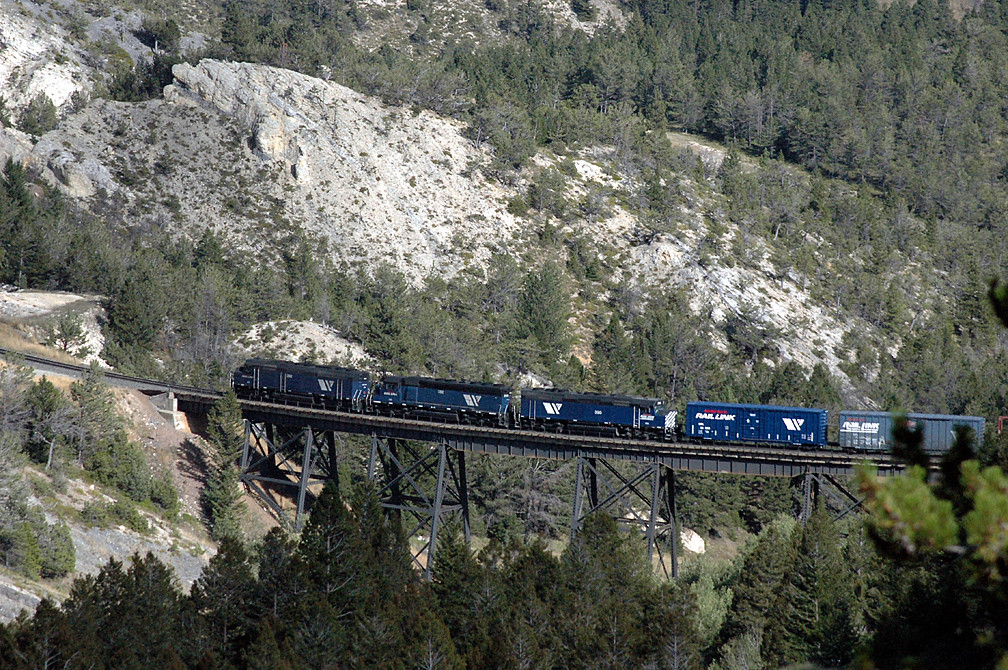
A curved steel trestle spanning Austin Creek on BNSF's former Northern Pacific mainline over Mullan Pass, offering dramatic views of heavy freight battling a 2.2% grade through the Montana Rockies.
Photos
 drewj1946
4
Trainspotting Experience
Skyline Trestle sits alongside Mullan Pass Road, making it one of the most accessible railfan locations on the pass. From the road, you watch BNSF freight trains crawl across the curved steel viaduct spanning Austin Creek, fighting or controlling the 2.2% ruling grade that defines this Continental Divide crossing. Eastbound trains climbing from the west often run with mid-train distributed power units (DPUs) added at Helena, producing deep exhaust roar and frequent horn blasts as engineers negotiate the curve. Westbound trains dynamic-brake down the grade, adding flange squeal that echoes off the surrounding canyon walls. The bridge's curve forces trains to slow considerably, giving photographers extended shooting windows. Expect heavy consists — coal, grain, manifest, and intermodal — with multi-unit locomotive sets on both ends. The natural amphitheater created by the surrounding ridgelines amplifies every sound, making this a rewarding spot for audio recording enthusiasts as well.
Landscape, Setting & Local Atmosphere
The trestle sits at approximately 5,500-5,600 feet elevation amid lodgepole pine and Douglas-fir forest, with open sage meadows along Austin Creek below. The surrounding ridgelines of the Elkhorn and Big Belt mountain ranges frame wide views in every direction. Summers bring dry, pine-scented air with golden light lingering until nearly 9 p.m., while dramatic afternoon cumulus clouds build photogenic backdrops. Winters are severe — deep snow accumulates and temperatures drop well below zero — but the contrast of dark steel, white drifts, and bright locomotive paint draws hardy photographers. October brings golden larch foliage, and crisp autumn air produces exceptional visibility for distant mountain shots.
Type & Frequency of Train Activity
Since BNSF absorbed Montana Rail Link on January 1, 2024, all traffic over Mullan Pass operates under BNSF's Montana Division (formerly MRL Subdivision). The line carries a mix of Powder River Basin coal trains, Midwest grain shuttles, manifest freight, intermodal stacks, and occasional Boeing aircraft-component loads. Helper locomotives are still added at Helena for the 20-mile eastbound climb, continuing a tradition dating back to Northern Pacific days. Positive Train Control (PTC) was activated on this segment in December 2025, adding modern signaling to this historic route. Traffic volume fluctuates with commodity demand, but the corridor remains one of BNSF's key northern transcontinental routes connecting the Pacific Northwest to the Midwest.
Best Angles for Photos & What Railfans Enjoy Most
The trestle's curve and elevation offer multiple compositions throughout the day. From the east hillside above the road, a scramble up the slope puts you roughly level with the railhead for classic broadside views of entire trains arching across the viaduct with Austin Creek far below. Morning light favors eastbound nose-lit shots from this angle. From the meadow beside Austin Creek, shoot upward for dramatic under-bridge compositions emphasizing the steel lattice and bridge height — a wide-angle lens (24-35mm) captures the full span, while a 70-200mm isolates locomotives on the curve. At the west abutment, late afternoon and evening sun creates backlit silhouettes against pastel skies. Because the bridge curves north, glint-light opportunities occur at various times of day depending on season. A polarizing filter helps manage glare in summer when the sun tracks high.
Historical or Cultural Relevance
The Northern Pacific Railway completed the original wooden trestle here in 1883 as part of the nation's second transcontinental route, connecting St. Paul to the West Coast via Mullan Pass. The wooden structure was one of the tallest on the line. In 1909, it was replaced with the riveted steel viaduct that still stands today. The nearby Mullan Tunnel, originally built in 1883 at less than 13 feet wide, was enlarged in 2009 to accommodate double-stack intermodal cars — though part of the tunnel roof collapsed during the work, reopening 28 days later on August 14, 2009. The pass itself was first surveyed by Captain John Mullan in 1853 during the Isaac Stevens railroad survey; Mullan later supervised construction of the 624-mile Mullan Road from Walla Walla, Washington to Fort Benton, Montana. The Northern Pacific, Burlington Northern (1970), Montana Rail Link (1987-2023), and now BNSF (2024-present) have all operated over this crossing, making it one of the most storied rail corridors in the American West.
What Makes This Spot Different
Skyline Trestle combines several features rarely found together: an accessible roadside vantage point, a towering curved bridge, heavy Class I freight tonnage fighting a 2.2% mountain grade, and sweeping Rocky Mountain scenery. Unlike many pass summits where trains disappear into tunnels, the trestle provides prolonged, unobstructed views of entire consists from headend to tail. The natural amphitheater of the Austin Creek canyon amplifies diesel exhaust and flange squeal, creating an immersive audio experience. The bridge's curve means both east and westbound trains can be photographed with favorable light on the same day, a practical advantage for visiting railfans planning a full-day shoot.
Frequently Asked Questions
QHow do I get to Skyline Trestle?
From Helena, take I-15 south and exit onto Mullan Pass Road heading west. The trestle is visible from the road approximately 15-20 miles west of Helena. No special access or permits are required — the public road runs alongside the bridge.
QWho operates trains over Mullan Pass?
BNSF Railway has operated this line since January 1, 2024, when it absorbed Montana Rail Link. Before that, MRL operated the line from 1987 to 2023, and the route was originally built by the Northern Pacific Railway in 1883.
QHow many trains pass per day?
Traffic varies with commodity demand, but railfan reports suggest roughly 15-25 trains per day, including coal, grain, manifest, and intermodal. Helper locomotives added at Helena often cluster movements together.
QWhat is the best time of year to visit?
Summer offers the longest daylight hours and comfortable weather, while October brings golden larch foliage. Winter provides dramatic snow scenes but prepare for severe cold. Spring and fall offer mild temperatures and clear mountain air.
QIs there parking at the trestle?
There are informal pullouts along Mullan Pass Road near the trestle. No formal parking lot exists, but the roadside shoulders accommodate several vehicles.
Safety Tips
Stay well clear of the tracks and bridge structure at all times — this is an active BNSF mainline with heavy freight moving at significant speed. Mullan Pass Road can be narrow and winding; park fully off the travel lane and watch for logging trucks and local traffic. In winter, carry chains or use 4WD, and be prepared for rapidly changing mountain weather. Cell service may be limited in the canyon. Bears and mountain lions inhabit the surrounding forest — make noise and carry bear spray if hiking off-road.
Seasonal Information
Summer brings warm days (70-85°F) and long golden evenings ideal for photography. Fall is spectacular — larch trees turn gold in October against evergreen forests. Winter is severe with deep snow, sub-zero temperatures, and shorter days, but offers dramatic high-contrast scenes. Spring (April-May) is muddy and unpredictable but wildflowers appear in the meadows. Train traffic can increase during fall grain harvest season.
Nearby Lodging
- Holiday Inn Express & Suites Helena
Located off I-15 at exit 194, about 2 miles from Helena Regional Airport. Mid-range option with breakfast included, good base for early-morning Mullan Pass trips.
- Fairfield Inn & Suites by Marriott Helena
Clean, reliable 3-star hotel in Helena. Central location makes it easy to resupply and reach Mullan Pass Road in about 20-25 minutes.
- Residence Inn by Marriott Helena
Extended-stay option with kitchen suites, ideal for railfans planning multi-day visits to the pass. Located in Helena with easy highway access.
- Americas Best Value Inn & Suites Helena
Budget-friendly option in Helena for railfans prioritizing more time trackside than in the hotel.
Nearby Attractions
34 miles / 55 km
Scenic boat tour through the limestone canyon on the Missouri River where Lewis and Clark famously noted the towering rock formations. One of Montana's top attractions, about 25 minutes north of Helena.
19 miles / 30 km
The state's most comprehensive history museum with exhibits on wildlife, Lewis and Clark, Native American culture, and Montana's railroad heritage. Located in Helena's capitol complex.
19 miles / 30 km
A motorized tour train that has roamed Helena's historic streets since 1954, offering narrated tours past the cathedral, mansions, and the Last Chance Gulch historic district.
31 miles / 50 km
Family-friendly ski area in Marysville, about 30 miles northwest of Helena, with terrain for all skill levels and affordable lift tickets. Winter-only attraction.
17 miles / 28 km
Over 600 acres of hiking and mountain biking trails just a mile from Helena's historic Walking Mall, with panoramic views of the Elkhorn Mountains and the Helena Valley.
External Links
informative
informative
official
Looking for more spots? Browse the complete list of train spotting locations.
Quick Information
Country
USA
Region
Montana
City
Skyline (near Helena)
Spot Type
Bridge/Overpass
Best Times
Morning through early afternoon offers the best combination of eastbound nose-lit trains and manageable sun angles. Helper sets from Helena often appear in clusters, so patience between 9 a.m. and 1 p.m. can pay off with back-to-back movements.
Visit Duration
2-4 hours
Cost
Free — public road access
Train Activity
Train Types
Frequency
Estimated 15-25 trains per day based on railfan reports; traffic varies with seasonal grain and coal demand
Access & Amenities
Parking
Available