Thurmond (New River Gorge)
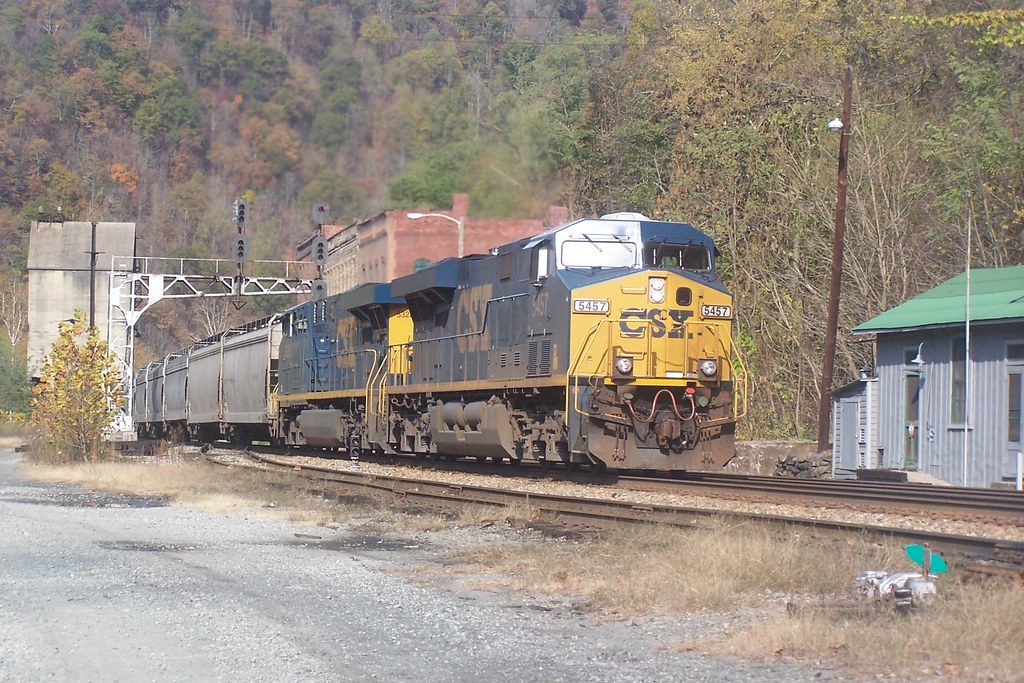
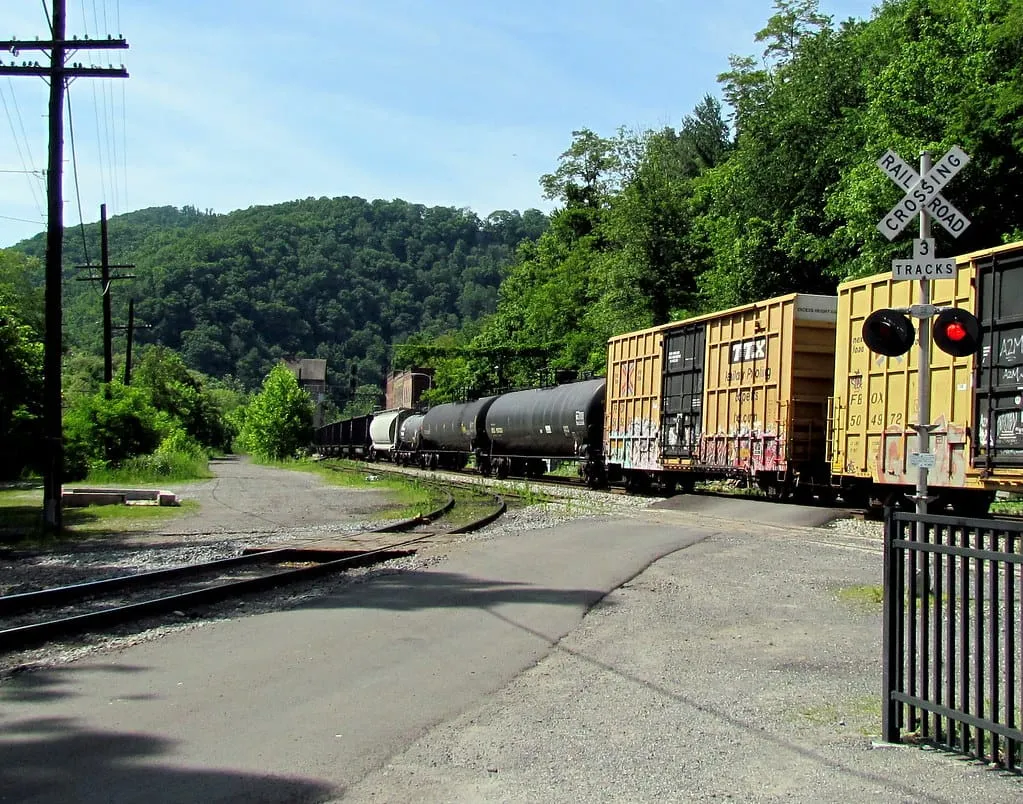
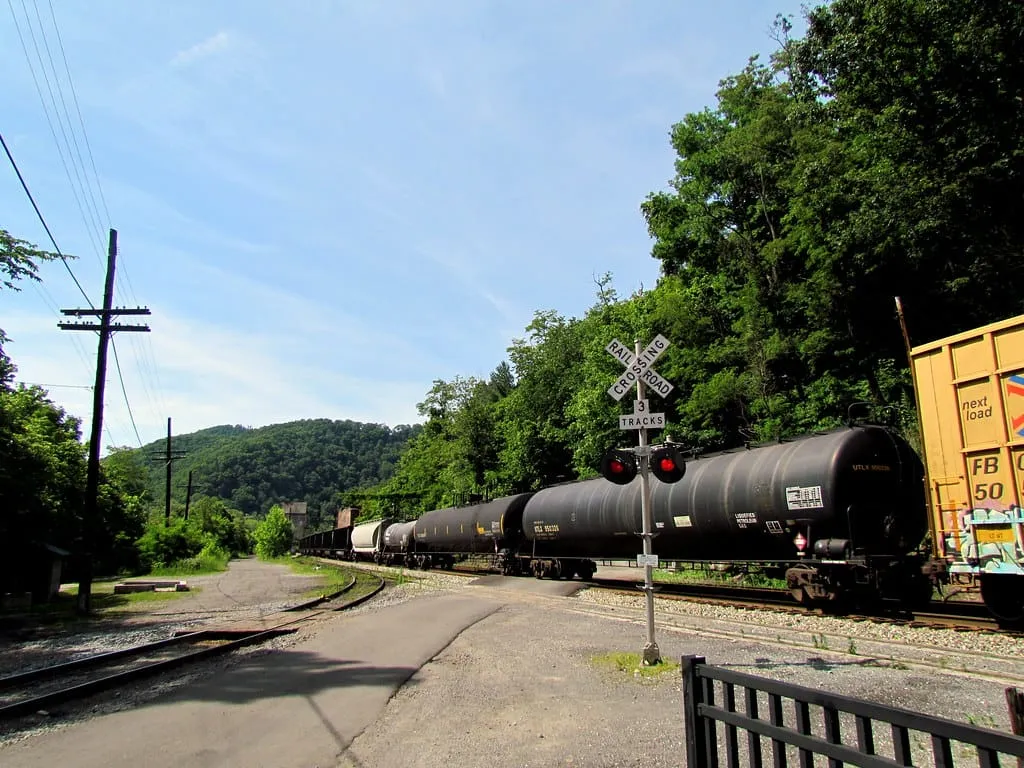
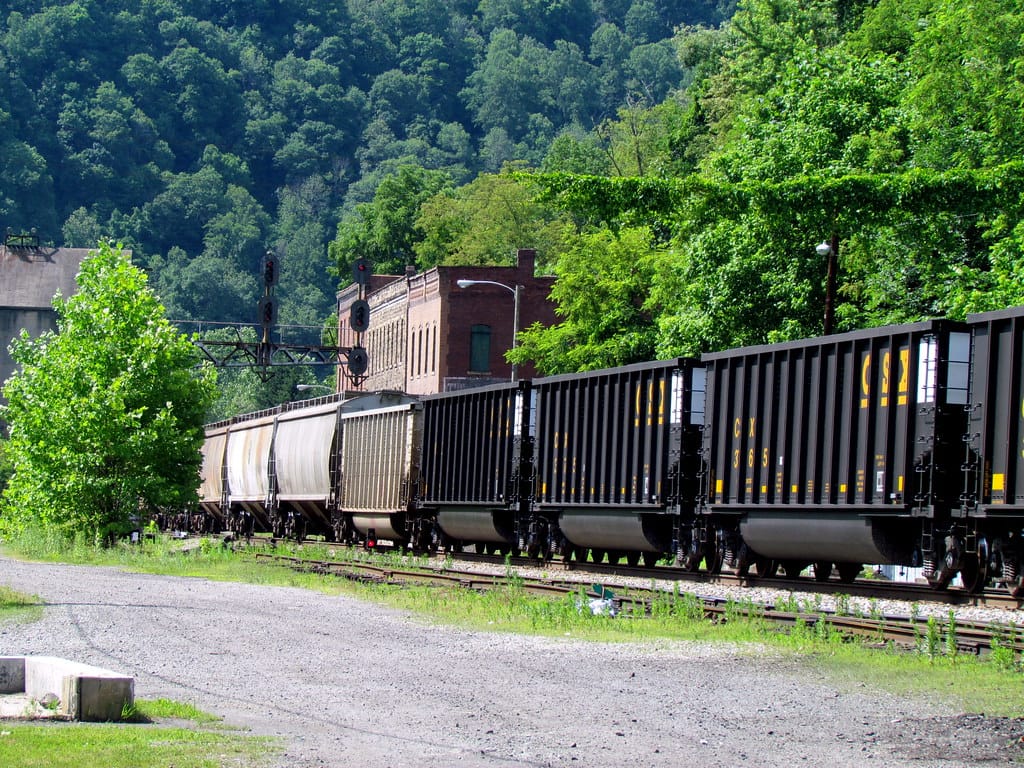
Thurmond sits on CSX's New River Subdivision inside New River Gorge National Park, where an active Class I main line passes within yards of a restored 1904 C&O depot. The site offers close-range views of CSX coal and merchandise trains, R.J. Corman West Virginia Line interchange moves, and the tri-weekly Amtrak Cardinal flag stop — all amid a nearly-abandoned railroad town frozen in time.
Photos
 jpmueller99
4
bobistraveling
4
bobistraveling
4
bobistraveling
4
bobistraveling
4
bobistraveling
4
bobistraveling
4
bobistraveling
4
Trainspotting Experience
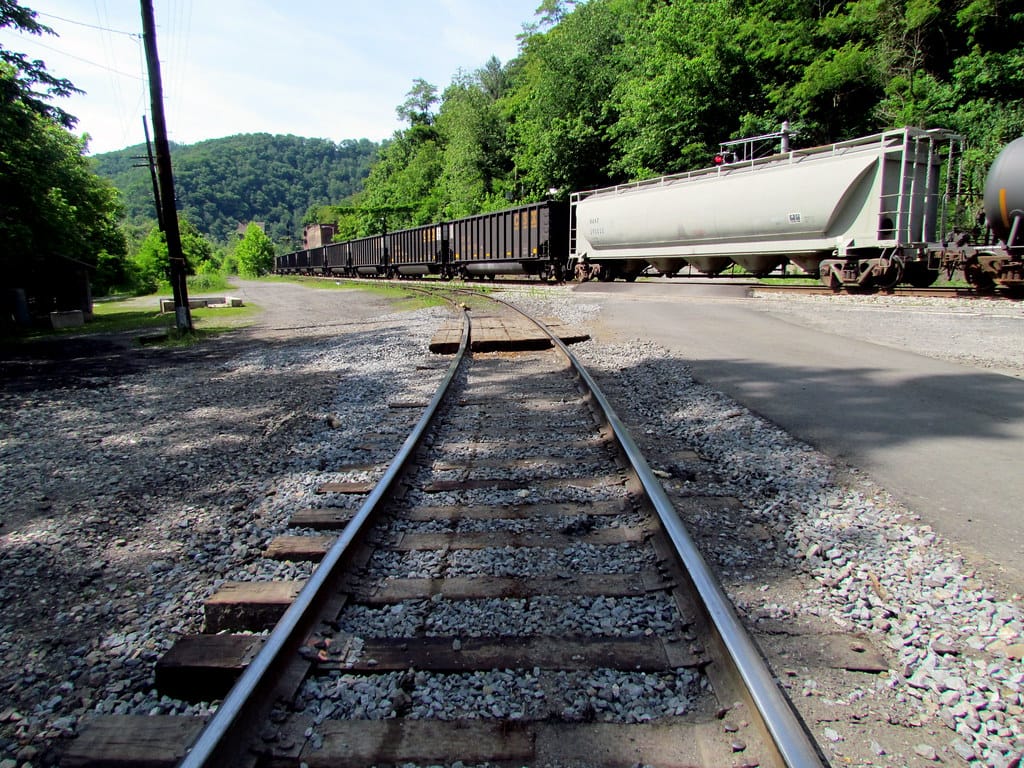
Thurmond delivers what few Class I trackside spots can: ground-level access to an active freight main line at the heart of a historic ghost town. A wooden boardwalk parallels the CSX New River Subdivision main for approximately 400 feet, putting observers within 20 yards of passing locomotives. The restored 1904 depot — now a National Park Service visitor center — provides a platform canopy as rain shelter without blocking sight lines.
Trains approach from either direction announcing themselves with extended horn sequences for the grade crossing just east of town; the sound bounces between the canyon walls and the river well before headlights appear. CSX freights typically hold 25–30 mph through Thurmond while negotiating the river curves — slow enough to study consists and document individual units, yet fast enough to feel the mass of 100–150 cars shaking the ballast. Coal trains frequently run with rear distributed-power units, giving railfans two separate locomotive passages per movement.
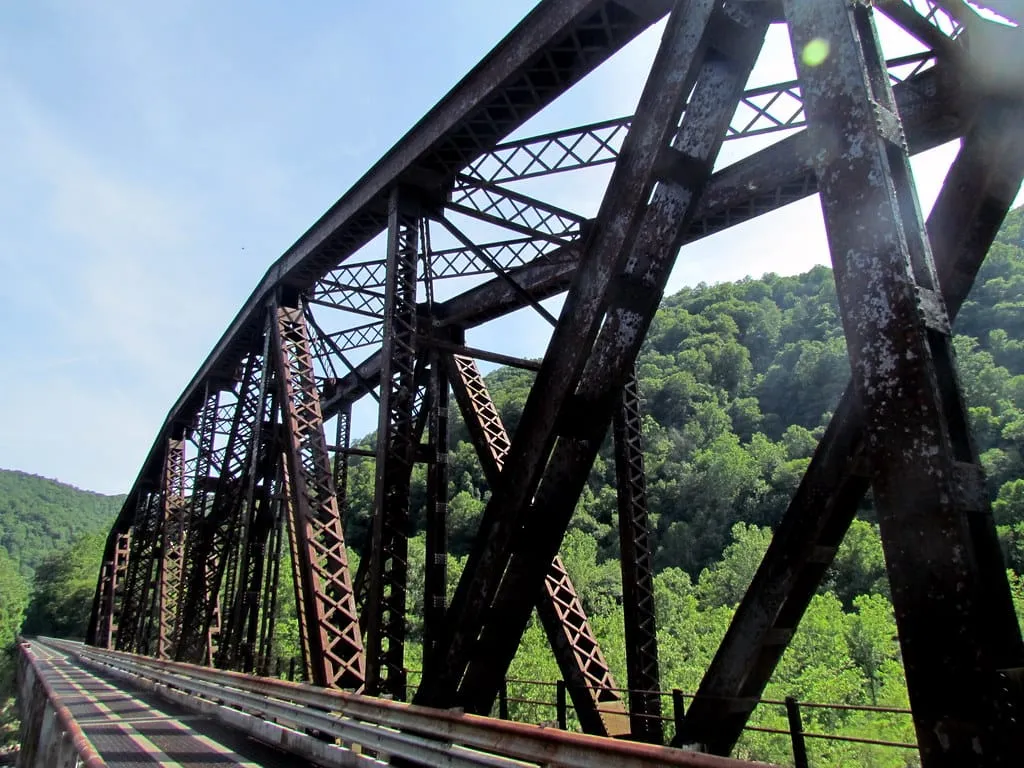
On certain days, R.J. Corman West Virginia Line power crosses the old C&O New River bridge into town for the CSX interchange — an additional sighting unique to Thurmond. The Amtrak Cardinal stops here as a flag stop three times weekly in each direction; passengers can board or detrain at the historic platform with advance arrangement.
Landscape, Setting & Local Atmosphere
Thurmond occupies a narrow shelf between the New River and forested bluffs cloaked in oak, hemlock, and rhododendron at approximately 1,050 feet elevation — well below the gorge's 2,200-foot rim. Mist rises off the water most mornings, burning off to reveal emerald slopes that turn scarlet and gold in autumn. The gorge funnels weather: summers are humid with sudden thunderstorms; winters bring still, frosty air and occasional snow dusting the ties. Aside from the hum of insects and river rapids, the area is remarkably quiet — until the next train announces itself in surround-sound stereo against the canyon walls.
Type & Frequency of Train Activity
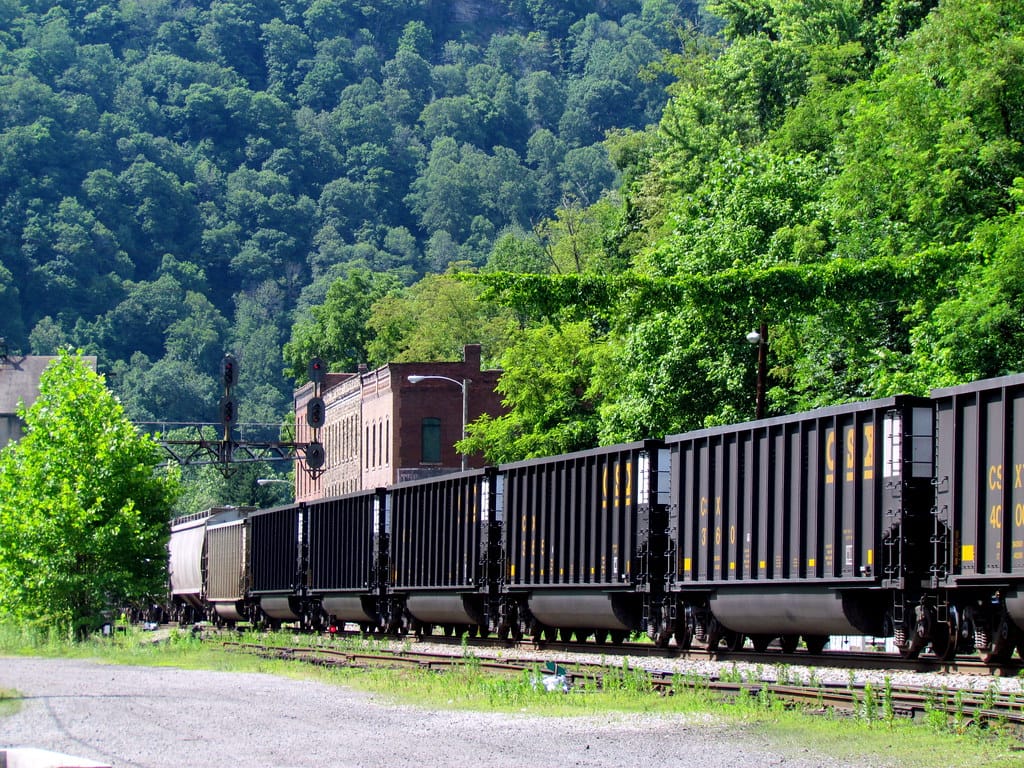
The line through Thurmond is CSX's New River Subdivision, the primary artery for Appalachian coal moving between the interior coalfields and the Atlantic seaboard — part of the original Chesapeake & Ohio mainline. Traffic runs approximately 10–20 trains per day on weekdays, though counts vary significantly with coal market conditions. Coal unit trains make up roughly 85% of movements (loaded hoppers eastbound, empties returning westbound), with the balance consisting of general merchandise, grain unit trains, and mixed manifest freights.
CSX motive power regularly seen includes ES44AH and ET44AH units in pairs on coal trains, often with a mid-train distributed-power unit. Manifest freights show a wider locomotive mix, occasionally including run-through or leased power.
The Amtrak Cardinal (trains 50 and 51) stops at Thurmond as a flag stop three days a week in each direction on the Chicago–New York/Washington corridor. Train 51 westbound runs Tuesday/Thursday/Saturday; Train 50 eastbound runs Sunday/Wednesday/Friday — verify current times at Amtrak.com, as the Cardinal frequently runs off-schedule.
R.J. Corman's West Virginia Line interchanges with CSX at Thurmond via the historic C&O New River bridge and runs 18 miles west to Pax. Watch for RJCV motive power on interchange moves — a sighting uncommon at most Class I locations.
Best Angles for Photos & What Railfans Enjoy Most
Depot Platform (best for eastbound): Morning sun illuminates eastbound trains from the south, highlighting the weathered Dun Glen Hotel remnants and coaling facility foundations in the background. A 50–85 mm lens captures a full locomotive consist with the historic depot facade.
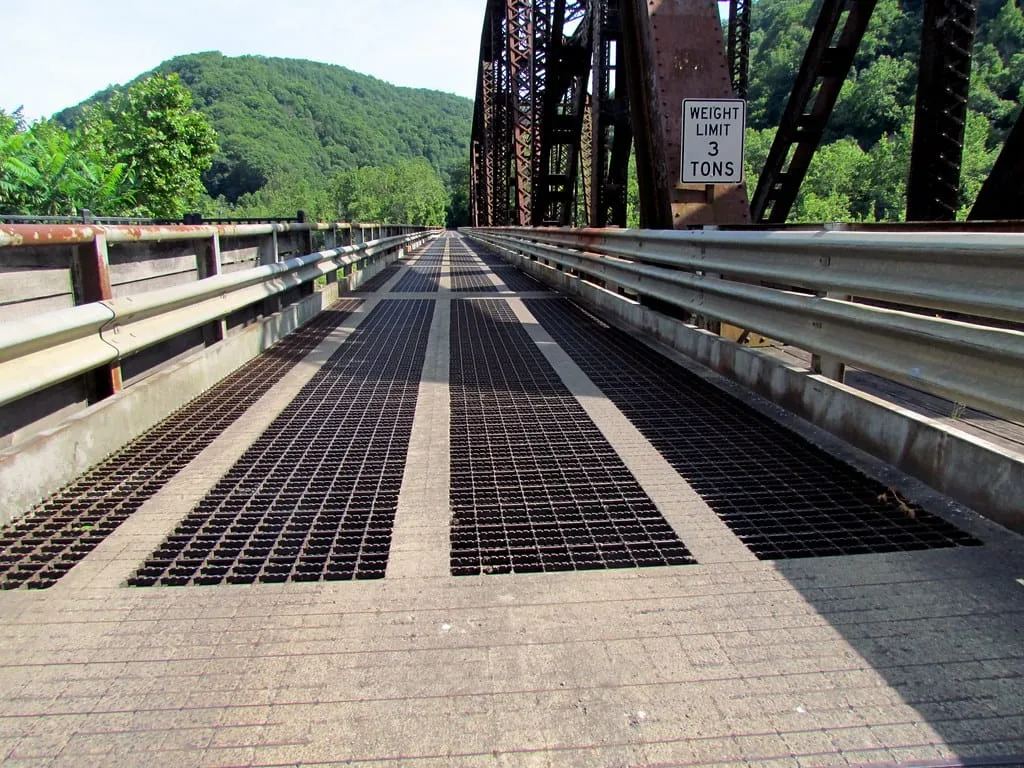
Pedestrian Bridge: The footbridge at the east end of town provides a top-down composition combining train, river, and forested ridge. Late afternoon backlights westbound trains without harsh front glare. Wider lenses (24–35 mm) encompass the full curve and canyon walls.
South Bank River Trail: A short walk across the single-lane road bridge and along the old railroad grade yields low-angle shots with New River reflections, best at sunrise. Morning mist creates atmospheric silhouette opportunities before it burns off.
S-Curve West of Town: The natural S-curve immediately west of the depot is Thurmond's signature composition — a 135–200 mm telephoto captures leading locomotives bent against the gorge skyline. This angle works especially well for westbound container or auto-rack trains where the tail end can still be seen entering the curve.
Historical or Cultural Relevance
Thurmond was founded by Captain W.D. Thurmond in the 1880s after the C&O Railway completed through the gorge in 1873. At its early 20th-century peak, Thurmond was the top revenue-producing station on the entire Chesapeake and Ohio Railway — outperforming both Cincinnati and Richmond in freight tonnage. In 1910 alone, four million tons of coal were shipped from Thurmond, generating nearly $4.9 million in freight revenues, with 150–200 men employed in rail operations and 15 daily passenger trains serving the station. The population peaked at 462 residents in 1930.
Thurmond's decline began with automobile roads penetrating the gorge in the 1940s; the 2010 Census counted just five residents. The original 1904 wooden C&O passenger depot was fully restored in 1995 and now serves as a National Park Service visitor center and official Amtrak flag stop. Remaining downtown structures — the Dun Glen Hotel foundation, coaling facility ruins, and vacant commercial blocks — stand largely intact, preserved within New River Gorge National Park & Preserve. The Amtrak Cardinal continues a passenger tradition that began with C&O varnish like the Fast Flying Virginian and the George Washington streamliner.
What Makes This Spot Different
Unlike typical trackside pull-offs, Thurmond delivers unrivaled proximity to active Class I operations amid a largely abandoned townscape frozen in the 1940s. Railfans are enveloped simultaneously by geology, history, and railroading: coal hoppers roll where boarding houses once bustled, the river gorge confines every movement to a cinematic stage, and the absence of modern commercial clutter keeps sightlines pristine. The R.J. Corman interchange and the Amtrak Cardinal flag stop make this one of the few eastern U.S. locations where a single day can yield Class I freight, shortline operations, and intercity passenger service all within walking distance of a single spot.
Frequently Asked Questions
QIs Thurmond accessible year-round?
Thurmond is generally accessible year-round, but Cunard Road (Route 9) is subject to seasonal closures for maintenance and weather. Check nps.gov/neri for current road conditions before visiting in winter or during prolonged wet weather.
QHow do I reach Thurmond by car?
From Fayetteville, WV, take WV-16 south then follow Cunard Road (Route 9) into the gorge to river level. The road is paved but narrow and winding; allow extra time. GPS may show the route as longer than expected due to switchbacks.
QHow many trains pass through Thurmond per day?
Approximately 10–20 CSX trains pass through on a typical weekday, primarily coal unit trains with some merchandise freight. Counts vary significantly with coal market conditions. The Amtrak Cardinal stops three days per week each direction, and R.J. Corman West Virginia Line interchange moves occur intermittently.
QIs there a fee to visit Thurmond?
No. Thurmond is within New River Gorge National Park & Preserve and there is no entry fee. Parking at the depot is free.
QWhat are the Thurmond Depot visitor center hours?
The Thurmond Depot operates seasonally, generally May through October. Check nps.gov/neri for current operating hours before planning your visit.
QHow close do trains pass to the viewing area?
Very close — CSX trains pass within 20 yards of the boardwalk at approximately 25–30 mph. Stay on the designated boardwalk and behind posted boundaries at all times. Never approach or cross the active CSX main line.
Safety Tips
Stay on the designated boardwalk and behind posted track boundaries at all times — CSX trains pass within 20 yards of the viewing area at 25–30 mph with minimal advance warning. Trains approach around river curves, so the sound of a horn does not indicate the train is still distant; headlights may appear almost simultaneously with the horn. Never cross or step onto the active main line except at posted grade crossings. Keep children and pets under close supervision. CSX is a private railroad; trespassing beyond the designated visitor area is illegal and dangerous. Cunard Road (Route 9) into Thurmond is narrow and winding — drive carefully and be alert for oncoming vehicles on blind curves.
Seasonal Information
Spring and fall are the most photogenic seasons. Autumn foliage peaks in mid-October when the gorge walls turn orange and crimson behind passing coal trains — the most photographed version of this spot. Spring wildflowers and rhododendron blooms (late May to mid-June) fill the understory. Summer visibility is high but midday temperatures in the gorge can exceed 90°F with high humidity; dawn visits are strongly recommended. Winter reduces crowds to near zero and opens longer sightlines through bare canopy, though Cunard Road may close periodically for ice or maintenance — always check nps.gov/neri for road conditions before visiting.
Nearby Lodging
- ACE Adventure Resort
The largest outdoor recreation resort in the U.S., located near Oak Hill on the New River. Offers economical four-person cabins to luxury lodges sleeping up to 14 guests, plus full activity packages including rafting and zip-lining. Approximately 18 km from Thurmond.
- Comfort Inn New River (Oak Hill)
Full-service hotel in Oak Hill, approximately 15 km from Thurmond. Rated 8.4 by recent guests. Good base for accessing both the gorge and Thurmond Depot. Standard amenities including breakfast.
- Adventures on the Gorge
Cabins and vacation rentals off US-19 near the New River Gorge Bridge, approximately 20 km from Thurmond. Range from basic cabins to five-bedroom rentals with gorge views. Popular with outdoor enthusiasts and families.
- Historic Fayetteville B&Bs and Inns
Fayetteville (approximately 22 km from Thurmond) is the gateway town to New River Gorge National Park with several bed-and-breakfast properties, inns, and vacation rentals. Check the New River Gorge CVB website for current listings.
Nearby Attractions
The restored 1904 C&O passenger depot now serves as an NPS visitor center with historical exhibits on Thurmond's railroad past, including telegraph offices and original fittings. Also the official Amtrak Cardinal flag stop platform.
11.2 miles / 18 km
The longest steel arch bridge in the Western Hemisphere at 3,030 feet, spanning 876 feet above the New River. The Canyon Rim Visitor Center has exhibits on bridge construction and overlooks of the gorge. Home of the annual Bridge Day festival.
24.9 miles / 40 km
Hinton served as the C&O Railway's division headquarters and still has its original depot. The town retains extensive railroad-era architecture and hosts the New River Scenic Railway excursion trains. Another Amtrak Cardinal stop on the same line.
59 miles / 95 km
A preserved Shay and Climax geared steam locomotive operation running on former Greenbrier, Cheat & Elk Railroad logging grades to Bald Knob (4,842 ft). One of the premier steam tourist railroads in the eastern United States.
0.3 miles / 0.5 km
A 4.3-mile trail following the old C&O railroad grade along the south bank of the New River, linking Cunard, Thurmond, and Stone Cliff. Flat terrain alongside the active CSX line provides additional train-watching vantage points away from the depot.
External Links
informative
informative
official
informative
official
Looking for more spots? Browse the complete list of train spotting locations.
Quick Information
Country
USA
Region
West Virginia
City
Thurmond
Spot Type
Railway Station
Best Times
Morning hours (7–10 AM) favor eastbound CSX trains lit from the south. Late afternoon (3–6 PM) provides good front light on westbound movements. The Amtrak Cardinal typically arrives in early afternoon westbound and early evening eastbound — verify exact times at Amtrak.com as the Cardinal frequently runs late.
Visit Duration
2–4 hours for a focused railfan visit; allow a full day if combining train watching with hiking the Cunard–Thurmond–Stone Cliff trail network or exploring the ghost-town structures
Cost
Free. No entry fee for New River Gorge National Park & Preserve. Parking at Thurmond is free.
Train Activity
Train Types
Frequency
Approximately 10–20 CSX trains per day (predominantly coal unit trains and merchandise freight); traffic has declined from a peak of 20–30 daily trains in recent years. Amtrak Cardinal flag stop 3x weekly each direction (Train 51 westbound Tue/Thu/Sat, Train 50 eastbound Sun/Wed/Fri). R.J. Corman West Virginia Line intermittent interchange moves.
Access & Amenities
Parking
Available (Free)
Shelter
Available
Restrooms
Available