Topeka (BNSF Yard)
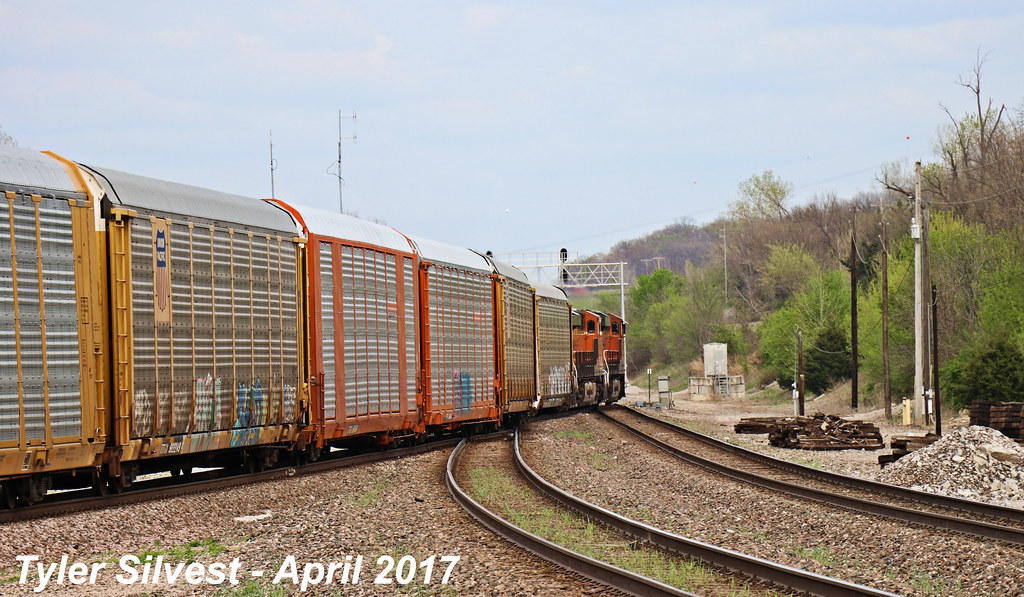
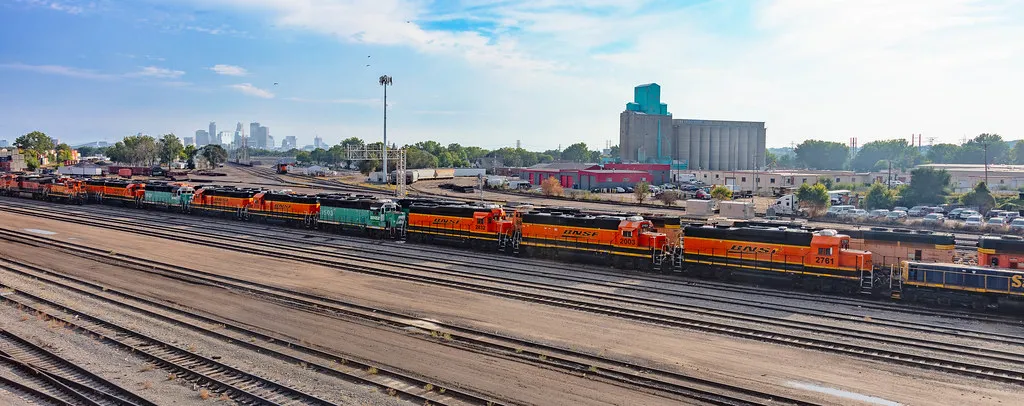
BNSF's only system-wide locomotive back shop anchors this 120-acre East Topeka rail complex at 100 NE Jefferson St, employing 425 rail workers. Watch freight on the Topeka Subdivision and the daily Amtrak Southwest Chief from public streets surrounding one of the most significant maintenance facilities in North American railroading.
Photos
 KansasScanner
Attribution License
KansasScanner
Attribution License
Me in ME
Attribution License
Trainspotting Experience
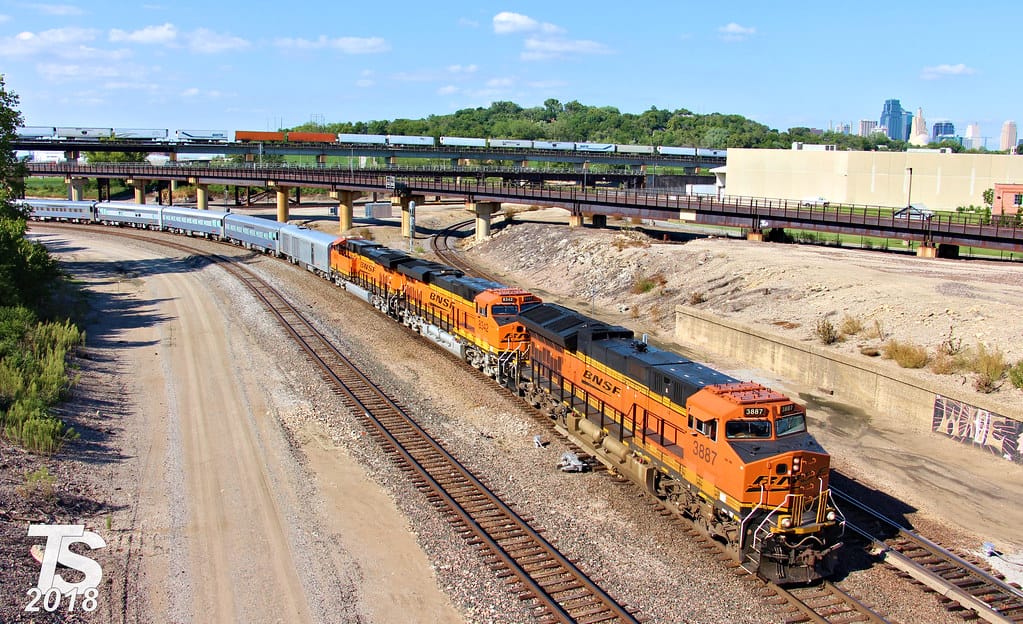
The BNSF Topeka System Maintenance Terminal occupies 120 acres in East Topeka, centered on 100 NE Jefferson St, and employs 425 workers. It is the only locomotive back shop in the entire 32,500-mile BNSF network — meaning every major locomotive rebuild and heavy overhaul for the whole system passes through these tracks. Street-level viewing from NE Jefferson St and NE Branner St provides sightlines into the facility's main shop leads, where yard switchers and light engine moves happen continuously. Shop transfers feature locomotives in various stages of maintenance: units with trucks removed, power in primer, or freshly painted returnees ready to return to service across the system. On the adjacent Topeka Subdivision main line, through freights pass at track speed in the yard approach zone before accelerating west toward Emporia. The Amtrak Southwest Chief (trains #3 and #4) passes daily — the westbound typically in the afternoon, the eastbound in the pre-dawn hours — stopping at Topeka station (815 Kansas Ave), approximately one mile from the yard. Bring a scanner tuned to BNSF Topeka Subdivision frequencies to track movements before they arrive.
Landscape, Setting & Local Atmosphere
East Topeka sits in the broad Kansas River valley at roughly 875 feet elevation, giving the yard flat, open sightlines across multiple tracks. The surrounding landscape is working industrial — warehouses, grain facilities, and maintenance shops mark the terminal district. The Kansas sky dominates with wide, unobstructed 180-degree views. Morning light illuminates westbound trains from the east; afternoon sun favors eastbound shots and catches the orange BNSF swoosh scheme at its richest. In winter, ice storms can frost over locomotives and rail for striking photographs. Summer afternoons build dramatic Great Plains thunderheads visible from miles across the flat terrain, though heat regularly exceeds 95°F by midday.
Type & Frequency of Train Activity
The Topeka Subdivision runs 111 miles from Holliday (8 miles west of BNSF's Argentine Yard in Kansas City) southwest to NR Junction near Emporia, where it rejoins the main Southern Transcon. The subdivision acts as an alternate routing around the busier Emporia Subdivision and handles dedicated Topeka-area freight along with overflow traffic. Locomotive types cycling through the maintenance terminal span BNSF's active GE fleet — ES44AC and ES44C4 units — along with EMD SD70ACe power undergoing back-shop overhauls. Road freight consists are predominantly intermodal stacks, unit grain and ethanol trains serving Kansas agriculture, coal sets, and mixed manifest. Amtrak's Southwest Chief (trains #3 and #4) runs daily on the Topeka Sub, stopping at Topeka station (815 Kansas Ave). The Southern Transcon's broader network moves approximately one train every 20 minutes at its busiest segments; the Topeka Sub carries a lower but consistent volume, with the busiest windows typically mid-morning through mid-afternoon on weekdays.
Best Angles for Photos & What Railfans Enjoy Most
NE Jefferson Street provides the primary street-level access, with direct sightlines to the shop tracks and main line leads. The road crossing on NE Jefferson is the best roster spot — locomotives move at walking pace during shop transfers, allowing time to compose shots. Position on the east side of the crossing for morning light on westbound units; shift to the west side in afternoon for eastbound light. For longer consists on the main Topeka Subdivision, position further east of the yard limits where trains accelerate to track speed and can be captured broadside. A 200–400mm lens isolates locomotives against the industrial backdrop; 50–85mm captures the sweep of the shop area with multiple units in frame. Avoid midday summer sun (11am–3pm) when overhead light flattens BNSF's orange paint. Early morning and late afternoon from April through October give the best color rendering.
Historical or Cultural Relevance
The Atchison, Topeka and Santa Fe Railway began construction from Topeka in 1868 and established its first general office building in the city in 1869 — a structure that also served as the first passenger station and freight depot. East Topeka's original AT&SF shops sustained thousands of workers through the steam era, constructing and overhauling locomotives that pushed the frontier railroad across Kansas and eventually to California. When BNSF formed from the 1995 merger of Burlington Northern and Atchison, Topeka and Santa Fe, the Topeka shops were retained and consolidated into the system's sole remaining locomotive back shop, representing an unbroken thread of railroad craft work stretching back over 150 years. The Great Overland Station at 701 N. Kansas Ave — a 1927 Union Pacific depot designed by architect Gilbert Stanley Underwood and listed on the National Register of Historic Places — served Topeka's passenger trains until 1971 and is now a railroad heritage museum open Tuesday through Saturday.
What Makes This Spot Different
Topeka holds a distinction unique in North American railroading: the BNSF System Maintenance Terminal at 100 NE Jefferson St is the only locomotive back shop in the entire 32,500-mile BNSF network. Every major locomotive rebuild and heavy overhaul across the railroad passes through this 120-acre facility. No other location on BNSF allows a railfan to observe the full lifecycle of motive power maintenance at this scale. The combination of active shop transfers — locomotives in primer, with trucks removed, or freshly returned to service — alongside through freight and daily Amtrak Southwest Chief service makes Topeka a uniquely layered railfan destination. As the birthplace of the Atchison, Topeka and Santa Fe Railway's operations, the site also carries 150-plus years of continuous railroad history.
Frequently Asked Questions
QIs the BNSF maintenance terminal open to visitors?
No. The terminal is an active industrial facility closed to the public. All viewing must be done from public streets and sidewalks surrounding the yard.
QWhat makes Topeka unique for railfans?
The BNSF System Maintenance Terminal at 100 NE Jefferson St is the only locomotive back shop in the entire 32,500-mile BNSF network. Every major locomotive rebuild across the railroad passes through this 120-acre facility — a concentration of motive power maintenance unmatched anywhere else on the railroad.
QDoes Amtrak stop in Topeka?
Yes. The Southwest Chief (trains #3 westbound and #4 eastbound) stops daily at Topeka station, 815 Kansas Ave, approximately one mile from the BNSF yard. The westbound #3 typically arrives in the early-to-mid afternoon. Check Amtrak.com for current schedules.
QWhat locomotive types can I expect to see?
Road freight is predominantly GE ES44AC and ES44C4 units and EMD SD70ACe power in BNSF's orange swoosh scheme. The maintenance terminal may also have locomotives in various stages of rebuild — units stripped to frames, power in primer, or freshly painted — making roster photography uniquely rewarding.
QIs there parking near the yard?
Street parking is generally available along NE Jefferson St and surrounding East Topeka roads. No dedicated railfan parking area exists. Check local signage before parking.
Safety Tips
Never enter BNSF property — the maintenance terminal is an active industrial facility with 24-hour operations and strict trespass enforcement. Stay on public streets and sidewalks at all times. Locomotive movements at shop facilities can be unexpectedly slow and quiet at idle — never assume a track is clear. Kansas summer heat regularly exceeds 95°F (35°C); carry water and plan for shade during midday sessions. Severe thunderstorm risk is elevated from April through June — monitor weather forecasts before visiting and know your shelter options in advance.
Seasonal Information
Spring (April–May) and fall (September–October) are the best seasons: moderate temperatures, favorable light angles, and active freight patterns. Summer is viable with an early start before 10am, but midday temperatures regularly exceed 95°F and harsh overhead light reduces photo quality between 11am and 3pm. Winter can produce dramatic frost and ice on locomotives, but sub-zero wind chills make extended outdoor sessions challenging. Kansas severe thunderstorm season runs April through June — check forecasts before any visit.
Nearby Lodging
- Hotel Topeka at City Center
Modern hotel in downtown Topeka close to the state capitol, within a short drive of the BNSF yard. Offers full amenities including restaurant and conference facilities.
- Cyrus Hotel (Tribute Portfolio)
Boutique hotel near the Kansas State Capitol with a popular restaurant, valet parking, and a historic atmosphere. One of Topeka's higher-end downtown accommodation options.
- Ramada by Wyndham Topeka Downtown Hotel & Convention Center
Full-service downtown hotel with convention facilities, an indoor pool, and dining. Conveniently located near downtown Topeka attractions and within a short drive of the BNSF yard.
- Hyatt Place Topeka
Modern Hyatt Place with outdoor pool, complimentary breakfast, and consistent amenities. Located in Topeka with easy freeway access to East Topeka and the BNSF terminal area.
Nearby Attractions
1.6 miles / 2.5 km
A restored 1927 Union Pacific Railroad depot at 701 N. Kansas Ave., designed by architect Gilbert Stanley Underwood and listed on the National Register of Historic Places. Now a railroad heritage museum with exhibits, photos, and two train simulators, open Tuesday through Saturday 10am–4pm.
1.1 miles / 1.8 km
Topeka's active Amtrak stop at 815 Kansas Ave serves the daily Southwest Chief (trains #3 and #4) between Chicago and Los Angeles. The station building is a historic structure worth a visit even outside of train times.
2.2 miles / 3.5 km
Located in the former Monroe Elementary School that was central to the landmark 1954 Supreme Court desegregation case, this NPS site offers powerful exhibits on the fight for equal education. A nationally significant historic site within Topeka.
5.3 miles / 8.5 km
World's most comprehensive collection of Evel Knievel artifacts at 2047 SW Topeka Blvd, inside Historic Harley-Davidson of Topeka. Includes famous jump motorcycles, jumpsuits, X-rays of broken bones, and interactive exhibits. A uniquely American roadside attraction.
4.3 miles / 7 km
The Kansas Historical Society's flagship museum covering the state's history from pre-European contact through the 20th century, including exhibits on the Atchison, Topeka and Santa Fe Railway's role in Kansas's development. Located at 6425 SW 6th Ave.
External Links
informative
informative
Looking for more spots? Browse the complete list of train spotting locations.
Quick Information
Country
USA
Region
Kansas
City
Topeka
Spot Type
Yard/Depot
Best Times
Morning (7–11am) for the best light on westbound freight and early shop activity. The westbound Southwest Chief #3 typically passes mid-afternoon — check Amtrak.com for current timing. Weekday mornings tend to show the most locomotive transfer and shop movement activity.
Visit Duration
2–4 hours
Cost
Free — public street access along NE Jefferson St and surrounding East Topeka roads
Train Activity
Train Types
Frequency
Topeka Subdivision carries moderate freight volume (lower than the parallel Emporia Sub main line). Daily Amtrak Southwest Chief service (trains #3 westbound and #4 eastbound). Continuous yard and shop switching activity throughout the day.
Access & Amenities
Parking
Not available
Shelter
Not available
Restrooms
Not available