Two Medicine Trestle
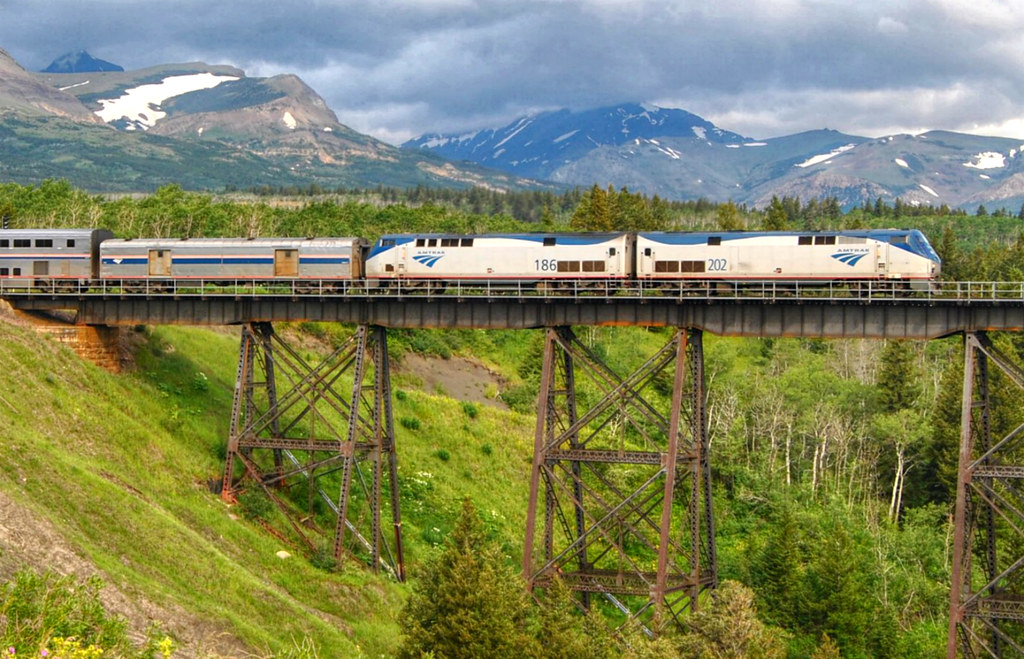
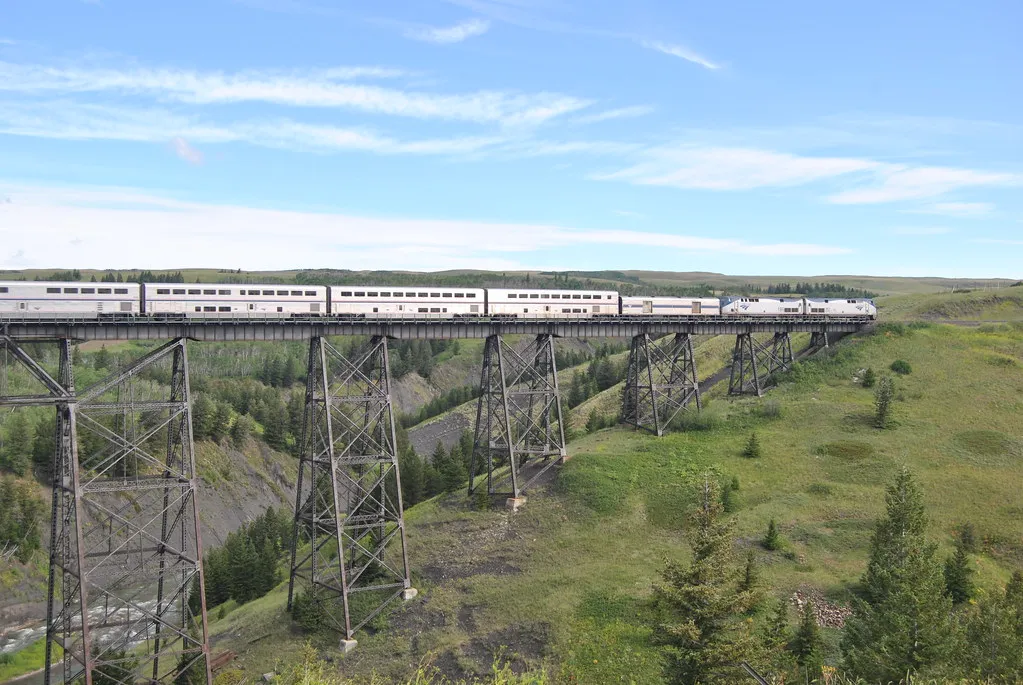
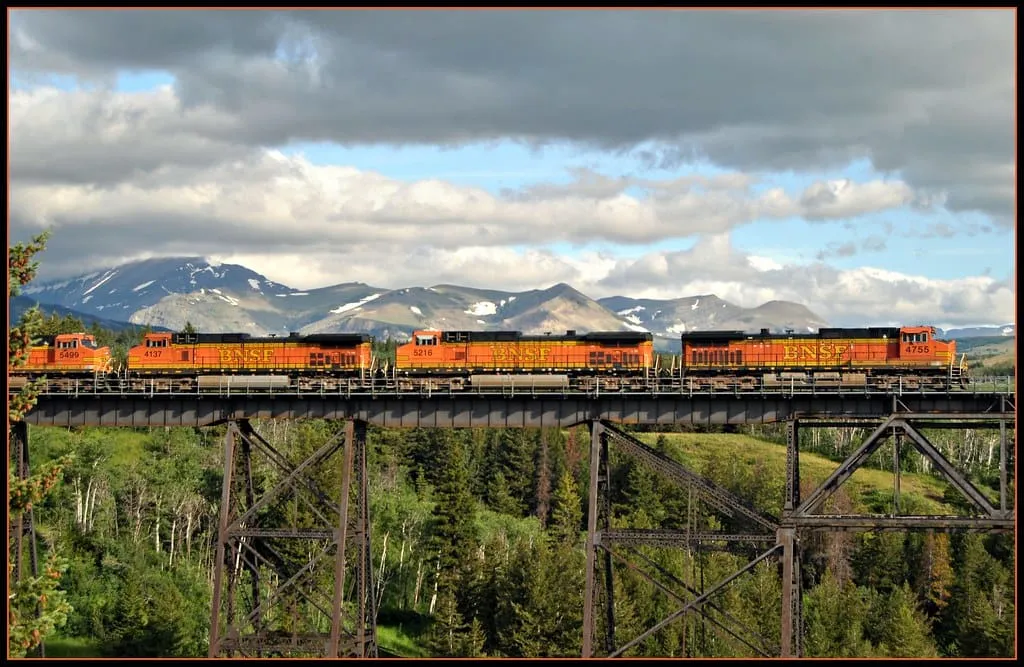
Two Medicine Trestle is a 761-foot steel deck truss bridge carrying BNSF's Northern Transcon 153 feet above the Two Medicine River, just east of Marias Pass near East Glacier Park. Built for the Great Northern Railway around 1900, it sees 25–30 freight trains daily plus Amtrak's Empire Builder — all framed by the peaks of the Rocky Mountain Front.
Photos
 Loco Steve
Attribution-ShareAlike License
Loco Steve
Attribution-ShareAlike License
Loco Steve
Attribution License
Loco Steve
Attribution License
Trainspotting Experience
The classic viewpoint is the publicly accessible hillside south of the trestle. A short walk from the US Highway 2 shoulder leads to a grassy knoll that puts you even with or slightly above the trackbed, giving a clean broadside angle on the full 761-foot bridge. The approach of a train is unmistakable: dynamic brakes whine for minutes as westbound freights crawl down the 1.8% eastern grade off Marias Pass, while eastbounds hammer throttle to crest the Continental Divide. Freights typically roll across the bridge at 25–40 mph — slow enough for careful framing, fast enough to convey the raw power of modern railroading. Long intermodal trains can take 90 seconds or more to clear the span from end to end.
A key advantage here is the silence between trains. The river gorge below carries only the sound of rushing water and wind, which makes the arrival of each freight feel like an event. Two Medicine Trestle is a walkable distance from downtown East Glacier Park — roughly 10–15 minutes on foot from the town center — so no vehicle access to the viewing area is required, though limited shoulder parking is available along US-2. Expect moderate foot traffic in summer as hikers and tourists occasionally share the hillside.
Landscape, Setting & Local Atmosphere
The Two Medicine River cuts a steep-sided gorge below the bridge, framed by lodgepole pine, Douglas-fir, and Rocky Mountain juniper on the slopes above. The valley sits at roughly 4,800 feet elevation on the eastern flank of Marias Pass, where the Rocky Mountain Front drops sharply toward the Great Plains. On clear days, the Lewis Range peaks of Glacier National Park form a dramatic backdrop to the northwest.
Light at this location is directional and seasonal. Morning sun illuminates the south face of eastbound trains; late afternoon light from the southwest catches westbounds, creating warm sidelight in summer. The steel latticework of the bridge responds well to afternoon sun from the south knoll. October brings golden larch and aspen color to the slopes above the gorge. Winter visits require serious preparation — temperatures can drop to −20°F with windchill — but the bridge coated in hoar frost against a Montana sky makes for compelling images. Afternoon thunderstorms are common from June through August; plan for early arrivals and keep an eye on weather.
Type & Frequency of Train Activity
Two Medicine Trestle sits on BNSF Railway's Marias Pass Subdivision, part of the Northern Transcon — one of the highest-volume rail corridors in North America, linking Pacific Northwest ports to Chicago. BNSF operates the majority of traffic, with 25–30 trains crossing the trestle on a typical day. Expect double-stack intermodal trains carrying containers from Puget Sound ports, unit grain trains serving northern Montana and Alberta elevators, loaded coal trains, tank car strings, and mixed manifest freights carrying lumber, automotive parts, and consumer goods.
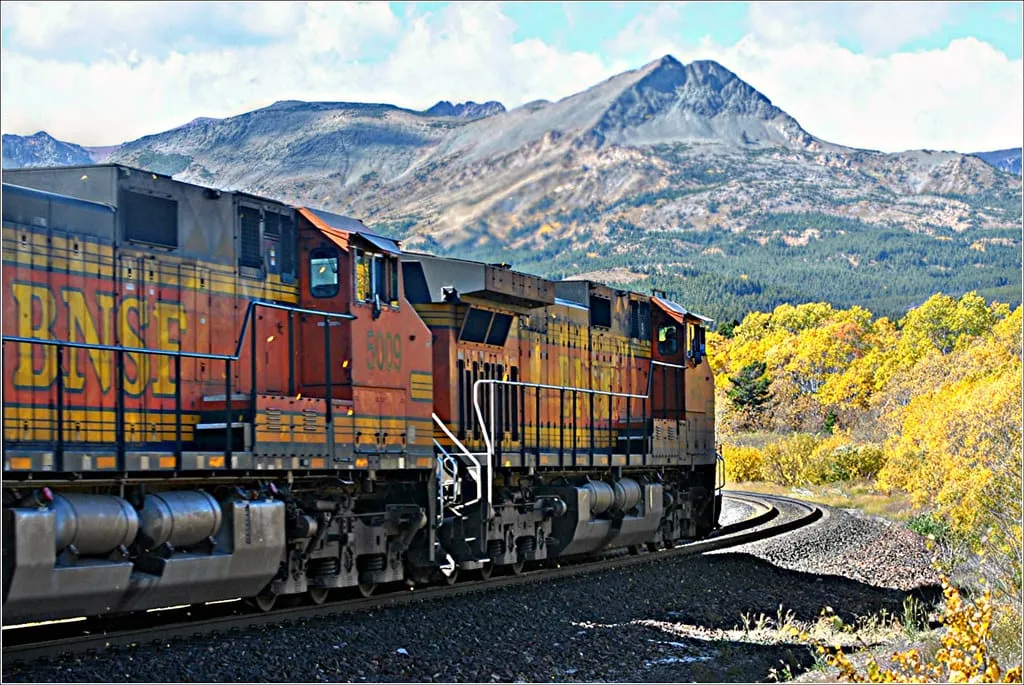
Run-through power from other Class I railways — most notably Union Pacific — appears on intermodal services under reciprocal trackage arrangements. BNSF's own fleet of GE and EMD locomotives dominates, typically in pairs or sets of three units on heavy manifest trains.
Amtrak's Empire Builder is the passenger highlight: Train 7 (westbound to Seattle) crosses the trestle around 7:00–7:15 PM, while Train 8 (eastbound to Chicago) passes around 9:30–10:00 AM. Both are subject to frequent Amtrak delays — check the Amtrak status app before timing a visit around the passenger service.
Best Angles for Photos & What Railfans Enjoy Most
South Knoll (primary viewpoint): Walk south from the highway shoulder to a grassy rise for a broadside angle on the full 761-foot span. Morning light (6–10 AM in summer) illuminates eastbound trains cleanly; afternoon light from the southwest creates warm sidelight on westbounds after 3 PM. A 70–200mm lens captures the full bridge with locomotives prominent; a 300–400mm telephoto compresses the scene against the mountain backdrop. This position works equally well for video and stills.
Riverbank below: An informal scramble trail descends the gorge toward river level, where wide-angle lenses (16–35mm) can capture the full 153-foot clearance of the structure looking upward through the latticework. Access is rough with loose footing; wear boots and avoid during high-water spring runoff.
East embankment: From positions east of the bridge, frame eastbound trains emerging from the pine forest and rolling onto the span with Lewis Range peaks visible on clear days behind the train. A 200mm lens compresses the mountain backdrop effectively.
Note: Drone use requires careful regulatory research — Glacier National Park boundaries are nearby and drone restrictions apply within park limits.
Historical or Cultural Relevance
The Two Medicine River Bridge was constructed for the Great Northern Railway around 1900, as part of James J. Hill's program to upgrade grades and structures along the Montana mainline. At completion, it was the longest deck truss structure in Montana, spanning 761 feet across the gorge with its deck 153 feet above the average water level — notable engineering achievements for the era. The bridge is a steel deck truss with subdivided Warren truss geometry, replacing earlier timber cribbing used during initial construction of the Marias Pass route in the 1890s.
The route itself holds deep historical significance: Marias Pass at 5,213 feet is the lowest crossing of the Continental Divide for any railway in the United States, a competitive advantage the Great Northern leveraged over rival transcontinental railroads. The Two Medicine corridor also borders the traditional territory of the Blackfeet Nation; the railroad's arrival in the 1890s fundamentally altered the region's economy and opened what would become Glacier National Park to tourism — a relationship the Great Northern cemented by building the iconic Glacier Park Lodge in 1913. Today the bridge remains working original infrastructure, carrying 21st-century intermodal freight and the Amtrak Empire Builder on the same corridor Hill envisioned over a century ago.
What Makes This Spot Different
Few railfan locations in the American West combine main-line train density, a single photogenic structure, and a national park mountain backdrop in one frame. At Two Medicine Trestle, a full intermodal train can be photographed in its entirety crossing 153 feet above the Two Medicine River gorge, with Glacier National Park peaks as a backdrop — a composition impossible at most cut-and-fill alignments along the Northern Transcon.
The consistent 25–30 trains per day means action is never far away, yet the site remains little-known enough that it rarely crowds with other photographers. The acoustic experience is also distinctive: the gorge acts as a natural amplifier, and the combination of dynamic brakes, diesel exhaust, and steel wheels on a deck truss produces a sound signature unlike a flat, open-country crossing. Combined with walkability from East Glacier Park, it offers an unusually complete one-day railfan destination.
Frequently Asked Questions
QHow do I get to the Two Medicine Trestle viewpoint?
The trestle sits along US Highway 2, about 10–15 minutes on foot east of downtown East Glacier Park. Limited shoulder parking is available along US-2. No Glacier National Park entrance fee is required for this viewpoint, which sits outside the park boundary.
QHow many trains cross the trestle per day?
Approximately 25–30 BNSF freight trains cross daily. Amtrak's Empire Builder adds two passenger trains: westbound (Train 7) around 7:00–7:15 PM and eastbound (Train 8) around 9:30–10:00 AM — both subject to frequent delays.
QWhat are the bridge dimensions?
The Two Medicine River Bridge is 761 feet long with its deck 153 feet above the average water level of the river. It is a steel deck truss bridge built for the Great Northern Railway around 1900.
QCan I walk on the trestle?
No. The trestle is active BNSF mainline property. Trespassing is illegal and dangerous. All viewing takes place from the public hillside south of the right-of-way.
QWhat types of trains can I see here?
Predominantly BNSF freight: double-stack intermodal trains, unit grain trains, tanker trains, and mixed manifest freights. Run-through Union Pacific power appears on some intermodal services. The Amtrak Empire Builder is the passenger highlight, crossing twice daily.
QIs this spot walkable from East Glacier Park?
Yes — roughly 10–15 minutes on foot from downtown along US Highway 2, making it one of the rare main-line railfan spots accessible on foot from a town with hotels and Amtrak service.
Safety Tips
Never trespass on the bridge itself or the active BNSF right-of-way — trains approach faster than they appear and the bridge provides no safe refuge. All observation must take place from the public hillside south of the tracks. The informal descent to river level involves loose rock; wear boots and avoid the riverbank during high-water spring runoff. This is bear country: carry bear spray, make noise while moving through brush, and never leave food unattended. In winter, be aware of ice on the highway shoulder and sudden weather changes at elevation.
Seasonal Information
**Spring (May–June):** Snowmelt raises the Two Medicine River, making the gorge visually dramatic. Wildflowers appear on the hillside by late May. The viewing area is usually snow-free by mid-May, though mountain storms remain common. **Summer (July–August):** Longest daylight and most comfortable conditions, but afternoon thunderstorms are frequent — arrive early and monitor weather. Peak tourist traffic means the hillside may be shared with non-railfan visitors. **Fall (September–October):** Often the best season overall. Golden larch and aspen foliage, fewer crowds, clear skies, and low-angle afternoon light. Snow can arrive at Marias Pass as early as late September — pack layers. **Winter:** The bridge coated in hoar frost is spectacular, but access demands snowshoes or skis plus extreme cold-weather preparation. Temperatures can drop below −20°F. US-2 stays open year-round.
Nearby Lodging
- Glacier Park Lodge
Historic 1913 Great Northern Railway hotel directly across from the East Glacier Park Amtrak station. Premium seasonal lodging with original Douglas-fir log lobby, restaurant, golf course, and a front porch facing the train tracks. Book well in advance for summer.
- East Glacier Motel & Cabins
Budget-friendly motel and cabin accommodation in East Glacier Park village, within walking distance of the trestle viewpoint and the Amtrak station. Basic amenities; ideal for a practical one-night railfan stopover.
- St. Mary / East Glacier KOA Holiday
Campground open from late May through late September, offering tent sites, RV hookups, and basic cabins. Located between St. Mary and East Glacier Park, providing affordable access to both the trestle and Glacier National Park's east-side entrances.
- Eastside Glacier Park Cabins & Glamping Tipis
Unique glamping tipis and cabin rentals near Browning, roughly 25 km east of the trestle on the Blackfeet Reservation. Offers an immersive cultural experience combined with proximity to the Northern Transcon mainline.
Nearby Attractions
0.3 miles / 0.5 km
Amtrak's daily Empire Builder stop in East Glacier Park, located directly across from Glacier Park Lodge on US-2. One of the most scenically situated small-town train depots in North America, with the Rocky Mountain Front as a backdrop.
0.3 miles / 0.5 km
Iconic 1913 hotel built by the Great Northern Railway to promote rail tourism to Glacier National Park. The lobby features massive original Douglas-fir logs over 40 feet tall. Still open seasonally, it remains the heart of East Glacier Park's railfan history.
0.6 miles / 1 km
Small but worthwhile gallery featuring woodcarvings and paintings by renowned Blackfeet artist John L. Clarke, located in East Glacier Park. Free admission; a worthwhile stop between trains.
6.2 miles / 10 km
The scenic Two Medicine valley inside Glacier National Park offers trails, a glacial lake, a seasonal boat tour, and dramatic views of the Lewis Range peaks. Accessible via Two Medicine Road, approximately 8 miles from East Glacier Park. Park entrance fee applies.
15.5 miles / 25 km
Smithsonian-affiliated museum in Browning, the tribal capital of the Blackfeet Nation, holding one of the most comprehensive Plains Indian art and artifact collections in the United States. Essential context for understanding the cultural landscape the railroad traverses.
External Links
official
Looking for more spots? Browse the complete list of train spotting locations.
Quick Information
Country
USA
Region
Montana
City
East Glacier Park
Spot Type
Bridge/Overpass
Best Times
Early morning (6–9 AM) for eastbound Empire Builder and golden sidelight on eastbound freight. Late afternoon through early evening for westbound freight in warm light, followed by the westbound Empire Builder around 7:00–7:15 PM.
Visit Duration
1–3 hours for a typical visit. Full-day stays are rewarding given the 25–30 trains per day; bring food and water as there are no facilities at the viewpoint.
Cost
Free to access the viewing hillside. Glacier National Park entrance fee ($35/vehicle as of 2025) applies only if entering the park via the Two Medicine Road entrance, not for this viewpoint along US-2.
Train Activity
Train Types
Frequency
25–30 freight trains daily; Amtrak Empire Builder twice daily (westbound ~7:00 PM, eastbound ~9:30 AM)
Access & Amenities
Parking
Not available
Shelter
Not available
Restrooms
Not available