SpotatrainSpotatrain
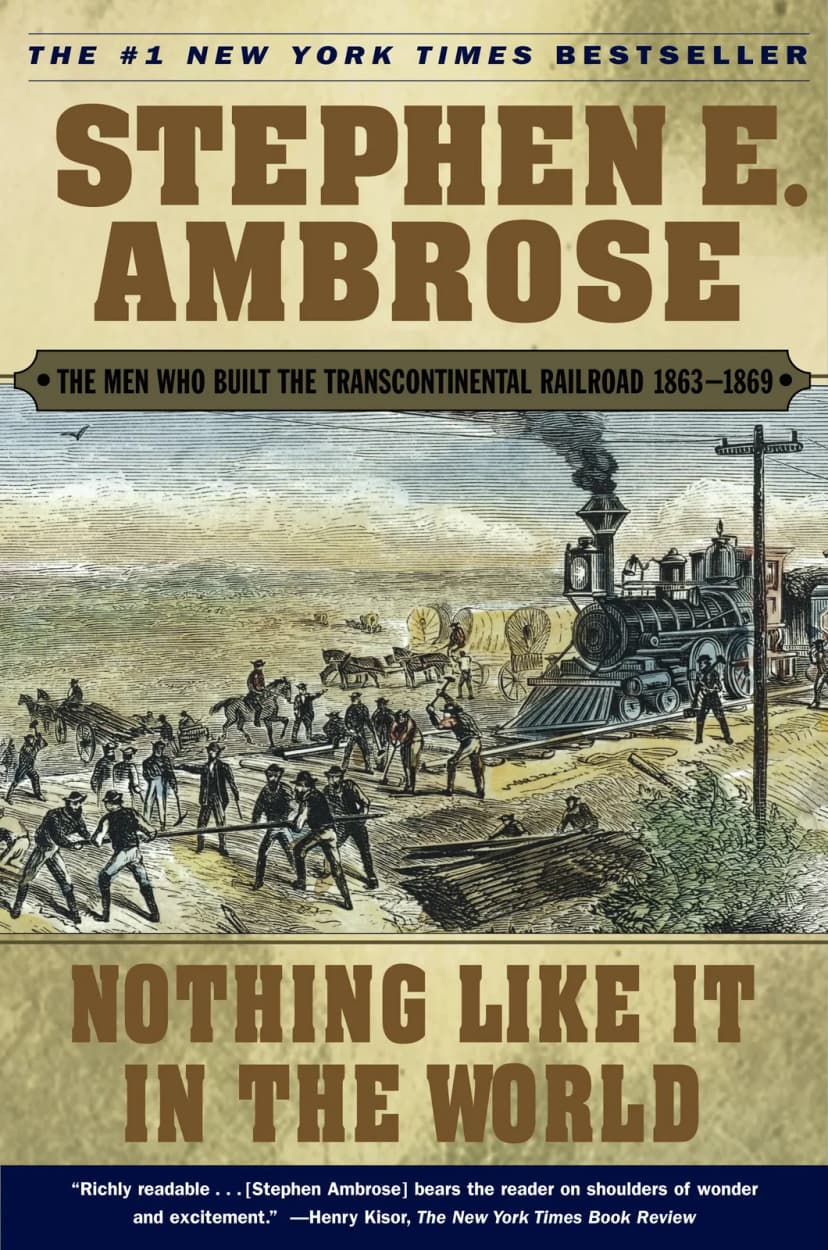
Front cover of Nothing Like It in the World by Stephen E. Ambrose

Image: Simon & Schuster · source

Railway books

Nothing Like It in the World: The Men Who Built the Transcontinental Railroad

Simon & Schuster · Budget

Stephen E. Ambrose's account of the men who built the transcontinental railroad, from investors and engineers to the Irish and Chinese immigrants who laid the track.

Check price on Amazon (affiliate link, opens Amazon in a new tab)

As an Amazon Associate I earn from qualifying purchases. How we pick our gear

We have not tested it ourselves: strengths and weaknesses below come from the tests cited.

Why Railfans Carry It

The publisher describes the book as the story of an unprecedented feat of engineering, vision and courage. It follows the investors who risked their businesses, the politicians who understood the line's importance, the engineers and surveyors who risked and sometimes lost their lives, and the Irish and Chinese immigrants, defeated Confederate soldiers and other laborers who did the backbreaking work on the tracks. The publisher adds that, in Ambrose's hands, the enterprise with its huge expenditure of brainpower, muscle and sweat comes vibrantly to life. The publisher's excerpt of the first chapter opens in Council Bluffs, Iowa, where Abraham Lincoln asks a twenty-eight-year-old railroad engineer, Grenville Dodge, for the best route for a Pacific railroad. Dodge answers that it runs out the Platte Valley, citing the railroads building from Chicago and the uniform grade to the Rocky Mountains. The excerpt goes on to describe the early railroads as rickety, with wood-fired boilers whose sparks set cars on fire, brakemen stationed on each car and wooden bench seats, and says American engineers invented the swiveling truck that lets a locomotive run around curves of almost any radius.

In the Field

This is a book for the armchair or a long journey. The publisher explains that the U.S. government pitted the Union Pacific and the Central Pacific Railroads against each other in a race for funding, encouraging speed over caution, and that locomotives, rails and spikes were shipped from the East through Panama or around South America to the West, or lugged across the country to the Plains. The trade paperback runs 432 pages. The publisher files it under United States history, the Civil War period and railroad history.

Strengths and Weaknesses

Strengths

  • Covers the Union Pacific and Central Pacific race to build the line
  • Tells the story of the investors, engineers and laborers, including Irish and Chinese immigrants
  • Time named it the #1 Nonfiction Book of the Year, as quoted by the publisher
  • By historian Stephen E. Ambrose
  • First chapter readable as an excerpt on the publisher's page

Weaknesses

  • Long: 432 pages
  • Focused on building the line, not on riding it today

Key Specifications

Nothing Like It in the World: The Men Who Built the Transcontinental Railroad — key specifications
SpecificationValue
AuthorStephen E. Ambrose
FormatTrade paperback
Length432 pages
ISBN-139780743203173
SubjectTransportation > Railroads > History
PublisherSimon & Schuster

Who It’s For

It suits an adult who likes railroad history and wants one narrative of how the first line across the continent was financed, surveyed and built. A reader who wants locomotive specifications should look at a reference book such as Train: The Definitive Visual History, already in this catalogue. The publisher's page quotes Time calling it a magnificent tale of high finance, low finagling, and workers hacking through 2,000 miles. Its author biography says Ambrose was a retired Boyd Professor of History at the University of New Orleans and the author of more than thirty books, among them Band of Brothers, D-Day and Undaunted Courage, so a reader who liked those will know his style. Reviews reprinted on the page include Henry Kisor in The New York Times Book Review calling it richly readable, Conn Nugent in the New York Post calling it a colorful, edifying story of U.S. history, and Bob Minzesheimer in USA Today saying Ambrose should be read as much for his muscular prose as for his research.

Alternatives

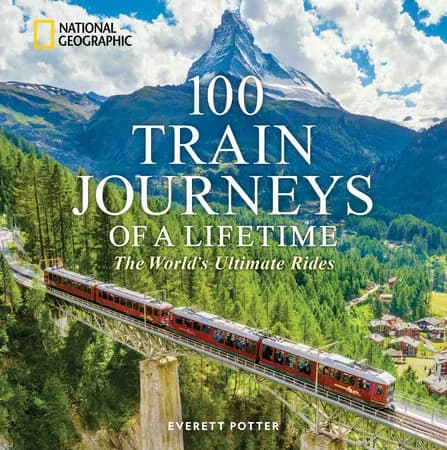
Train: The Definitive Visual History (DK) is already in this catalogue for readers who want pictures and locomotive detail rather than one narrative. 100 Train Journeys of a Lifetime (National Geographic) is already in this catalogue for readers who want to ride.

As an Amazon Associate I earn from qualifying purchases. How we pick our gear

Compare all railway books.