Railway Experience
Museo Nazionale Ferroviario di Pietrarsa
Italy's national railway museum in the Bourbon workshops of Pietrarsa, between Vesuvius and the Bay of Naples, where Italian railways began.
Updated
About This Experience
The Museo Nazionale Ferroviario di Pietrarsa occupies the former Reale Opificio Borbonico, a royal engineering works squeezed between the Naples-Salerno railway and the sea at Via Pietrarsa 15A, on the edge of Naples where the city runs into Portici and San Giorgio a Cremano. The site covers 36,000 square metres and holds over 55 pieces of heritage rolling stock, with botanical gardens between the halls and the water. Run by Fondazione FS Italiane, it is one of the largest railway museums in the world by area - and it is built on the ground where Italian railways started.
Italy's first railway line, from Naples to Portici, was inaugurated on 3 October 1839 and ran along this shore. The royal decree to buy the Pietrarsa land followed in 1840, on a site that had previously carried a Napoleonic coastal artillery battery. Ferdinand II of Bourbon founded the works to build steam engines and locomotive boilers and to free the Kingdom of the Two Sicilies from British and French technical supremacy; by the middle of the nineteenth century it had become the largest industrial plant in Italy, employing around 1,100 workers. Production ran from 1842 until 1975, when the works closed as obsolete in the age of diesel and electric traction. The museum was inaugurated on 7 October 1989.
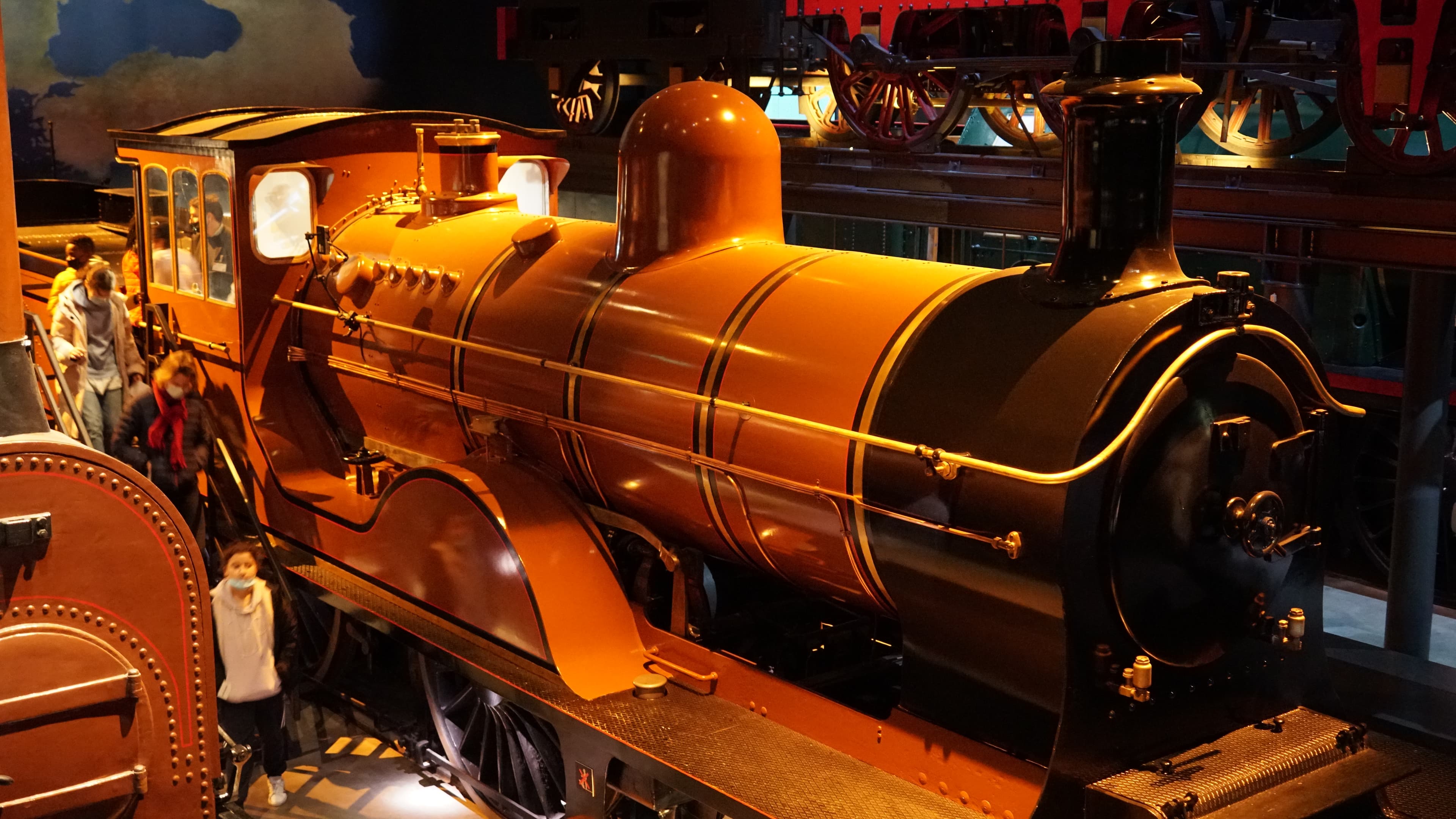
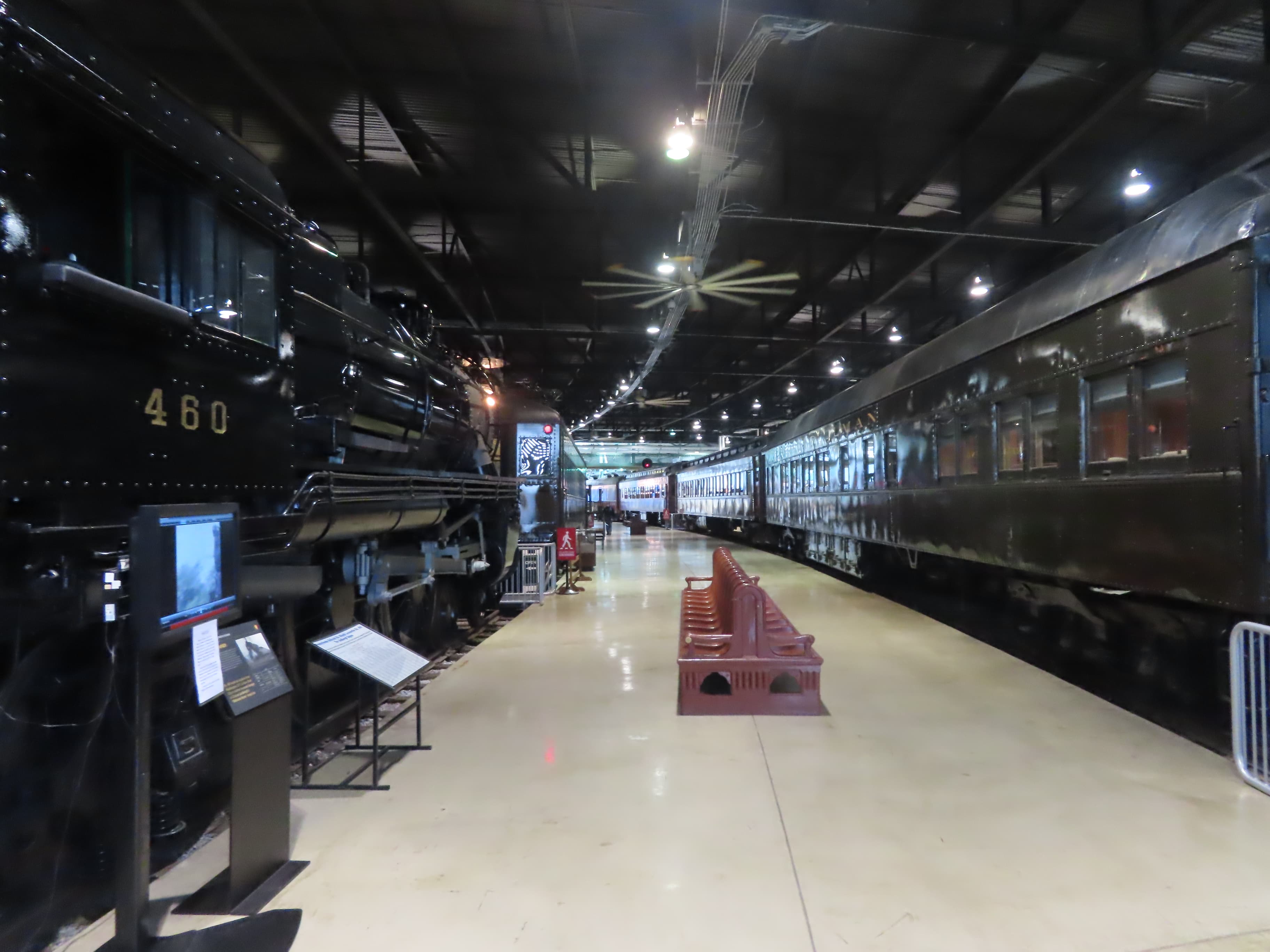
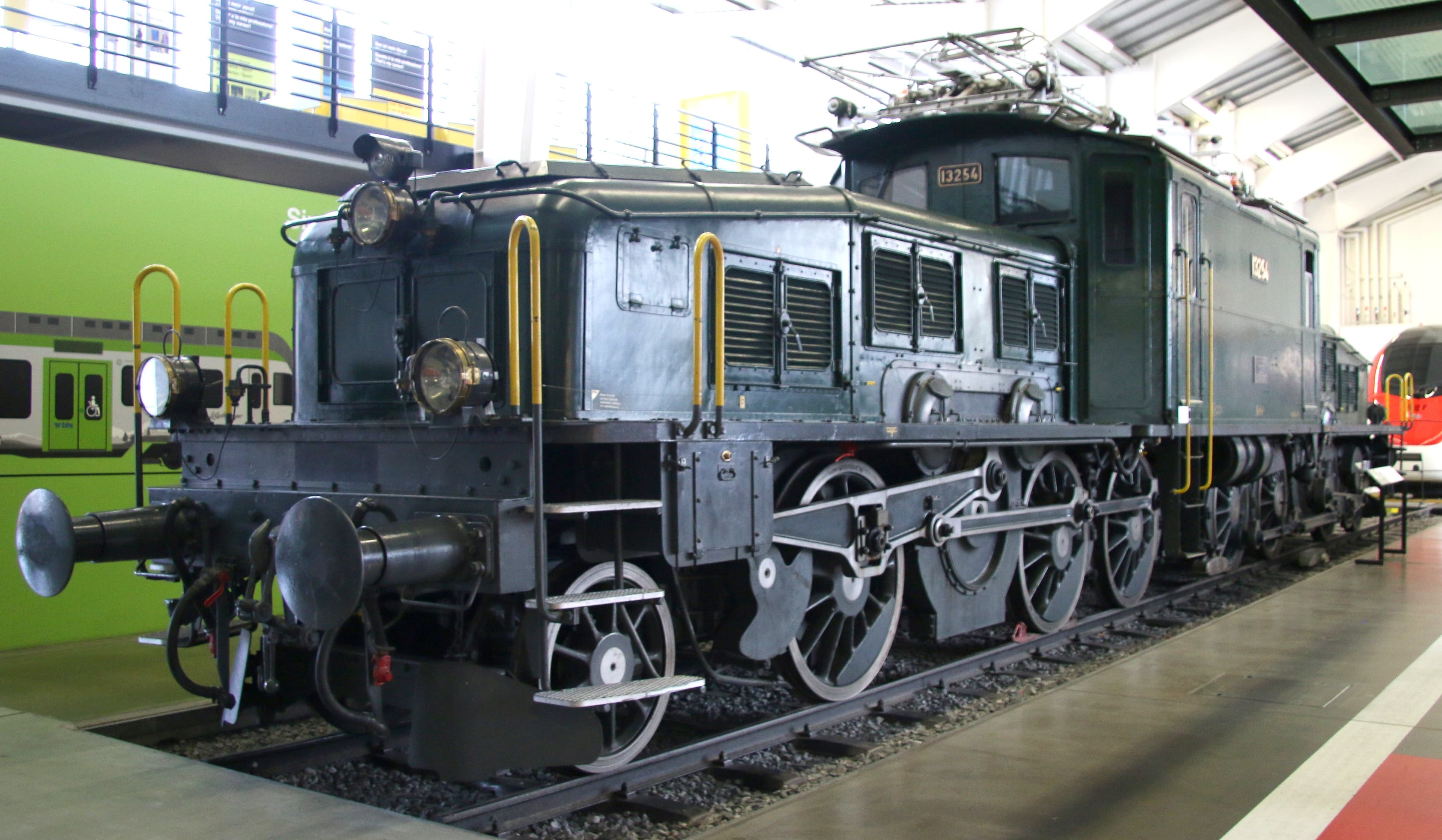
The collection is arranged through the original pavilions, each of which once had its own place in the production cycle. Pavilion A holds 26 steam locomotives and four three-phase electric locomotives. Pavilions B and C hold passenger carriages, among them the royal carriage built for the wedding of Umberto II in 1944. Pavilion D is given to diesel locomotives and railcars. Pavilion G, put up in 1840 and the oldest structure on the site, holds models and memorabilia.
Photo Opportunities
The setting does most of the work. The museum sits directly on the shore of the Bay of Naples with Vesuvius behind it and the Naples-Salerno line running along its landward edge, which means you can frame preserved equipment, live Trenitalia traffic, the sea and an active volcano within a short walk of each other. Late afternoon light comes off the water and onto the pavilion facades.
Inside, Pavilion A is the frame that sells the place: 26 steam locomotives ranked in a nineteenth-century industrial hall, with the roof structure of the original Bourbon workshop overhead. The halls are working buildings rather than designed galleries, so light is uneven and mixed - worth a fast lens. Pavilion G, built in 1840, is the oldest structure on the site and the one that most looks its age.
The gardens between the buildings and the sea give you options no indoor museum has: equipment and architecture with palms, open sky and the Gulf behind. If you arrive on the Pietrarsa Express heritage train from Naples rather than by car, the arrival itself is a photograph.
Featured Video
Tour virtuale - Museo Nazionale Ferroviario di Pietrarsa
Why Visit
The name to look for is Bayard - the locomotive that hauled the inaugural train on the Naples to Portici line in October 1839, and the twin of Vesuvio. What stands at Pietrarsa is the replica built in 1939 for the centenary of that line, and the museum presents it through a virtual and augmented-reality experience sold as a €1 supplement on the entrance ticket.
Twenty-six steam locomotives under a single roof in Pavilion A is a concentration few museums in Europe can match, and the four three-phase electric locomotives beside them document an electrification system Italy pursued further than anyone else. The carriages in Pavilions B and C include the royal carriage built for Umberto II's wedding in 1944 - the last years of the Italian monarchy, preserved in upholstery and marquetry.
The buildings are the other half of the argument. These are not exhibition halls built to look industrial; they are the actual Bourbon workshops where the Kingdom of the Two Sicilies tried to build its own locomotives, standing where a Napoleonic gun battery had been, with the Naples-Salerno line running past the gate and the Bay of Naples on the far side. Few railway museums put you between live railway traffic, an active volcano and the Mediterranean at the same time.
What to Expect
The museum opens Tuesday to Sunday from 9:30 to 18:00. Plan two to three hours: four main pavilions, a fifth in the oldest building, and gardens running down towards the sea that are worth walking rather than crossing. The site is large and mostly flat, and much of the movement between pavilions is outdoors, so it reads more like a works than like a gallery.
Admission is €9 full and €6 reduced for ages 6 to 17 and over-65s, with under-6s and disabled visitors with a companion free. A guided tour costs €11 full and €8 reduced, and you can upgrade an unguided ticket for €2 at the museum. There are two standing promotions worth knowing: Thursdays drop the price to €5 full and €4 reduced, and the Saturday "Arlecchino" offer covers two adults and two children aged 6 to 17 for €15. Ordinary family tickets are €20 for two adults and one child and €25 for two adults and two children. A Pietrarsa Card season ticket costs €20 for adults.
Check the calendar before travelling: the museum publishes fixed annual closures on 1 to 3 September and 6 October. And note the Bayard virtual reality experience carries a €1 supplement rather than being included.
Best Time to Visit
May, June and October are the strongest months - warm enough for the gardens and the seafront, short of the peak-summer heat. Thursdays are the cheapest day of the week at €5 full admission, and Tuesday to Friday is quieter than the weekend, when Neapolitan families and the Pietrarsa Express arrivals fill the site. Avoid 1 to 3 September and 6 October, which are published annual closures.
Frequently Asked Questions
QHow much does admission cost?
€9,00 full and €6,00 reduced for ages 6 to 17 and visitors over 65. Under-6s are free, as are visitors with a disability and their companion. Guided tours are €11,00 and €8,00, and an unguided ticket can be upgraded on site for €2,00. On Thursdays admission drops to €5,00 full and €4,00 reduced.
QWhen is the museum open?
Tuesday to Sunday from 9:30 to 18:00, closed Mondays. Fondazione FS also publishes fixed annual closures on 1 to 3 September and on 6 October.
QHow do I get there by train?
The museum is on the Naples-Salerno line with its own stop, Pietrarsa-San Giorgio a Cremano. Fondazione FS also runs the Pietrarsa Express, a heritage train from central Naples that goes directly to the museum; tickets for it are sold through Trenitalia.
QWhat is the Bayard?
The locomotive that worked the inaugural train on Italy's first railway, Naples to Portici, on 3 October 1839, and the twin of Vesuvio. The machine at Pietrarsa is the replica built in 1939 for the line's centenary, and the museum presents it through a virtual and augmented-reality experience carrying a €1,00 supplement.
QWhy is the museum in these particular buildings?
They are the Reale Opificio Borbonico, the royal engineering works Ferdinand II founded on this shore in the 1840s to build steam engines and locomotive boilers and free the Kingdom of the Two Sicilies from British and French technical dependence. It became the largest industrial plant in Italy, with around 1,100 workers, and produced from 1842 until it closed in 1975.
QHow long should I plan for a visit?
Two to three hours. There are four main exhibition pavilions plus the 1840 Pavilion G, and the botanical gardens running down towards the Bay of Naples are worth walking rather than crossing.
QIs it suitable for children?
Yes. Under-6s are free, family tickets cover two adults with one or two children aged 6 to 17 for €20,00 and €25,00, and the Saturday Arlecchino offer takes two adults and two children for €15,00. The Bayard virtual reality experience is the part children tend to remember.
QCan I combine it with Herculaneum or Pompeii?
Easily. The Parco Archeologico di Ercolano is about 3 km / 1.9 miles away and Pompeii about 16 km / 10 miles, both on the same side of the bay and both reachable by rail from the same corridor. Vesuvius itself is roughly 9 km / 5.5 miles inland.
How to Plan Your Visit
Season and Schedule
Open Tuesday to Sunday all year, with a small number of fixed annual closure dates published by Fondazione FS.
- Operating Hours
- Tue-Sun 09:30-18:00; closed Mondays
- Annual Closures
- 1-3 September and 6 October
- Cheapest Day
- Thursday - €5,00 full / €4,00 reduced
Ticket Information
Tickets are sold at the museum and through the Fondazione FS online shop. Guided tours cost more but an unguided ticket can be upgraded on site for €2.
- Full (intero)
- €9,00
- Reduced (6-17 and 65+)
- €6,00
- Under 6
- Free
- Visitors with a Disability + Companion
- Free
- Guided Tour
- €11,00 full / €8,00 reduced; €2,00 to upgrade an unguided ticket
- Thursday Promotion
- €5,00 full / €4,00 reduced
- Family
- €20,00 for 2 adults + 1 child (6-17); €25,00 for 2 adults + 2 children
- Saturday Arlecchino Offer
- €15,00 for 2 adults + 2 children (6-17)
- Bayard Virtual Reality
- €1,00 supplement
- Pietrarsa Card (annual)
- €20,00 adults 18-64; €10,00 for 6-17, 65+ and university students; €50,00 family
Accessibility Details
The museum states it has facilities for visitors with disabilities, but access through the gate has to be arranged ahead of arrival by telephone. Disabled visitors and their companion enter free.
- Advance Arrangement
- Call 081 472003, option 1 or 2, before arriving to arrange gate access
- Admission
- Free for visitors with a disability and their companion
What to Bring
A good part of the visit is outdoors, moving between pavilions and through the gardens on the seafront, so bring sun protection and water in summer and a coat in winter - the halls are unheated industrial buildings.
Photography Tips
Work the contrast between the industrial halls and the open seafront, and keep an eye on the Naples-Salerno line at the museum's landward edge for live traffic. No photography policy is published on the museum pages, so ask on arrival before using a tripod.
- Signature Frame
- Pavilion A - 26 steam locomotives under the original Bourbon workshop roof
- Best Light
- Late afternoon, off the Bay of Naples onto the pavilion facades
The operator does not publish a pet policy — contact them directly before traveling with an animal.
Travel Information
By Air
Naples Capodichino is the arrival airport and is close to the city centre; from there it is a short transfer to Napoli Centrale and a suburban train to the museum.
- Naples Capodichino (NAP)
- About 7.5 km / 4.7 mi north-west
By Train
The museum is on the Naples-Salerno line and has its own stop. Fondazione FS also runs the Pietrarsa Express heritage train from central Naples directly to the museum, which is the way to arrive if the timetable allows.
- Nearest Station
- Pietrarsa-San Giorgio a Cremano, on the Naples-Salerno line
- Heritage Train
- Pietrarsa Express, from central Naples to the museum - tickets via Trenitalia
- Napoli Centrale
- About 5.3 km / 3.3 mi north-west
By Car
Take the A3 Naples-Salerno motorway. Coming from Rome, exit at Napoli Centro and follow the via Marittima to the A3, then leave at San Giorgio a Cremano; coming from Salerno, use the Ercolano-Bellavista or San Giorgio a Cremano exits towards Naples.
- Address
- Via Pietrarsa 15A, 80146 Napoli
- Motorway
- A3 Napoli-Salerno, exit San Giorgio a Cremano
Parking
Pietrarsa Parking is a guarded car park on via Pietrarsa, about 30 metres from the museum entrance.
- Car Park
- Pietrarsa Parking, about 30 m from the entrance on via Pietrarsa
Local Transportation
The suburban railway is the practical local link; the museum's own guidance leads with the train rather than with buses.
- Recommended
- Naples-Salerno line to Pietrarsa-San Giorgio a Cremano
Nearby Lodging
Find places to stay near Museo Nazionale Ferroviario di Pietrarsa.
This lodging map is provided by Stay22, a third-party service that may set cookies. It loads only with your consent.
Accommodation results are provided by Stay22; we may earn a commission on bookings made through this map.
Nearby Attractions
- Parco Archeologico di Ercolano3 km
Herculaneum, the Roman town buried by Vesuvius in AD 79 and better preserved than Pompeii - the closest major site to the museum, on the same stretch of coast.
- Museo Archeologico Nazionale di Napoli6.8 km
Naples' national archaeological museum, holding the finds from Pompeii and Herculaneum, including the Farnese collection.
- Parco Nazionale del Vesuvio8.9 km
The national park around the volcano that dominates the view from the museum, with the trail to the crater rim of the Gran Cono.
- Parco Archeologico di Pompei16.2 km
Pompeii, the largest excavated Roman city in the world, further round the bay and reachable by rail from the same corridor.
Official Resources
Photos

 RobertoGuido
4

RobertoGuido
4

Marinaio56
CC BY 4.0

Marinaio56
CC BY 4.0

Marinaio56
CC BY 4.0

B.Zsolt
CC BY-SA 3.0

B.Zsolt
CC BY-SA 3.0

B.Zsolt
CC BY-SA 3.0
More Videos
Pietrarsa Museo Ferroviario | Pietrarsa Railway Museum - 2019
Discover Pietrarsa Museo Ferroviario – A Hidden Gem in Naples, Italy! 🚂🌊
Museo nazionale ferroviario di Pietrarsa, Portici #ProntiPartenzaVia #focus
Help improve this page
Spotted something out of date or incorrect? Let our community know.
Explore more experiences: Browse all rail travel experiences.
Booking & Pricing
Price range
$6 – $9 EUR
Standard admission. Guided tours cost €11,00 full and €8,00 reduced, or €2,00 to upgrade on site. Thursdays are €5,00 / €4,00. Family tickets €20,00 and €25,00; Saturday Arlecchino offer €15,00. The Bayard virtual reality experience adds €1,00. Annual Pietrarsa Card from €10,00.
Quick Information
Country
Region
City
Naples
Best Season
Spring and autumn are the best compromise: the pavilions are unheated industrial halls and a good part of the visit is outdoors between buildings and gardens, which makes a Naples July heavy going and a wet January exposed. April to June and late September through October give comfortable temperatures and the clearest light over the Gulf.
Visit Duration
2-3 hours
Cost
€9,00 full, €6,00 reduced (6-17 and 65+); free under 6; guided tours €11,00 / €8,00
Tags
Contact
+39 081 472003