

Railway Experience
New Brunswick Railway Museum
New Brunswick''s largest railway collection, in the old Hillsborough station yard: 1912 steam, MLW diesels and walk-through cars.
Updated
See everything in New Brunswick1 spot · 3 live cams · 1 experienceAbout This Experience
The New Brunswick Railway Museum occupies the former Hillsborough station and rail yard at 2847 Main Street, on the east side of Route 114 in Albert County, about 21 km (13 mi) south of Moncton. It is run by volunteers of the Canadian Railroad Historical Association, New Brunswick Division, a registered charity, and it holds the largest collection of railway equipment in the province — more than a dozen pieces of rolling stock, roughly half of it from passenger service and the rest freight, maintenance-of-way and service equipment.
Rails reached Hillsborough long before the museum did. The Hillsborough Plaister and Rail Road Company ran horse-drawn tramways here from 1851, hauling albertite and gypsum, and the Salisbury and Albert Railway worked the line from 1877 to 1982 — 105 years. Canadian National kept the subdivision alive to serve a gypsum quarry into the late 1970s. In 1982 a group of volunteers and retired railroaders took over about 20 miles (32 km) of the branch, from CN''s Moncton–Saint John main line at Salisbury east to just past Hillsborough, and founded the Salem and Hillsborough Railroad. Trial trains ran in 1983; the museum and the public excursions opened in 1984.
The S&H ran coach and dinner trains between Hillsborough, Salem and Baltimore until 2004, and the site has been a static museum since 2005 — the rails were eventually superseded by Highway 114. It was recognised as a Local Historic Place on 7 December 2009 and added to the Canadian Register of Historic Places on 9 May 2011. The main museum building is not the original station: an arson fire on 16 September 1994 destroyed the engine house, several locomotives and cars, and the offices with the division''s historical records. The replacement building was built in the idiom of a rural New Brunswick station — single-storey, moderately pitched gable roof, wrap-around awning with exposed rafters, double-hung windows — and the original section shed still stands beside it with its period maintenance equipment.
Photo Opportunities
The collection is the subject. Interiors are the unusual opportunity — a caboose cupola, coach seating, and locomotive cabs you can actually stand in — so a fast wide lens and a willingness to work in low light matter more here than a long telephoto. CN 1009 is under cover on indoor static display, which means controlled light and no weather, but also no run-past and no smoke.
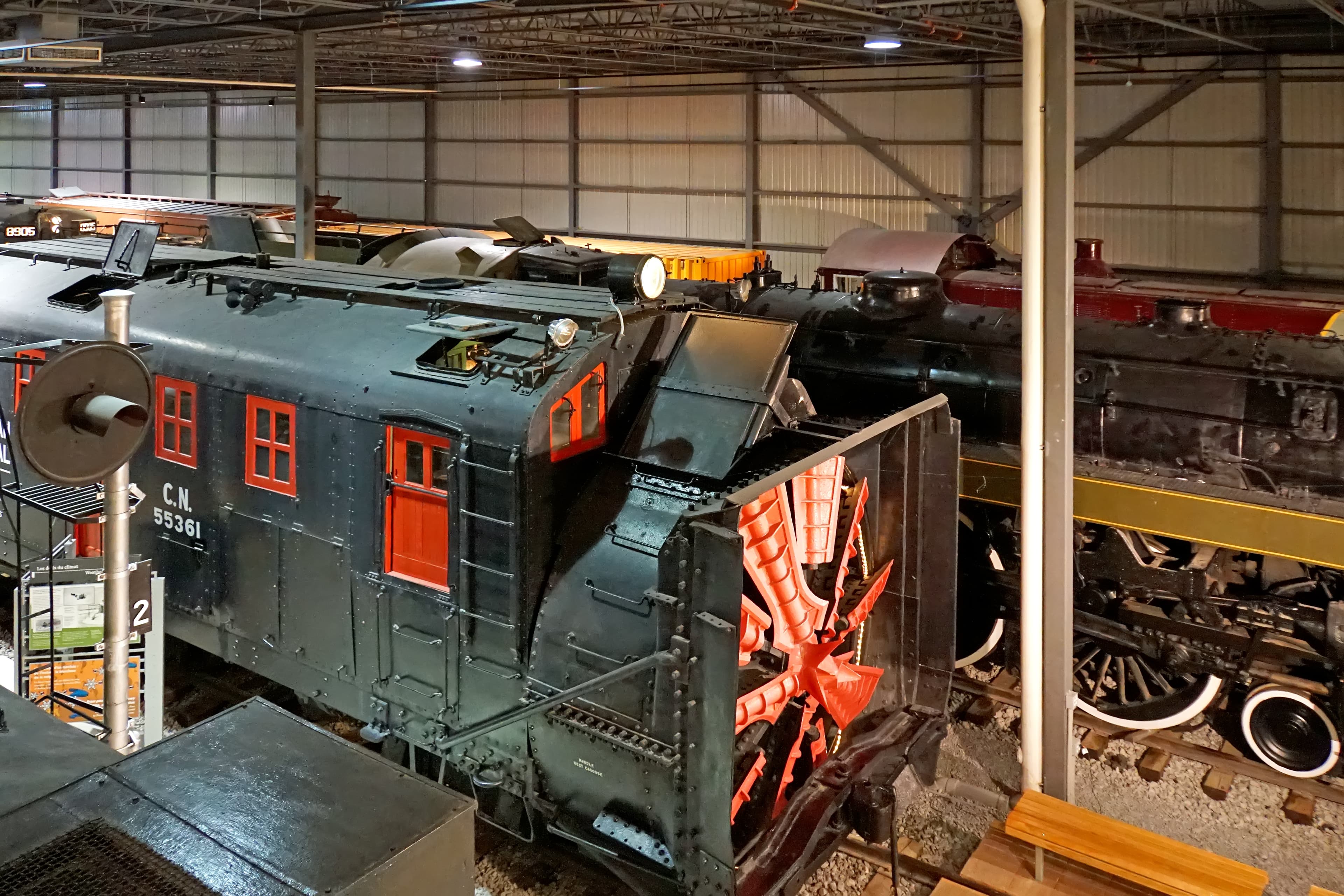
Outdoors, the yard gives you three-quarter views of 1754 and 8245 in S&H red and white, the 1913 ex-CPR 100-ton steam crane, the Jordan spreader and the double-ended snowplough — maintenance-of-way equipment that most museums scrap and that photographs beautifully in raking light. The named passenger cars carry their heralds and drumhead names, worth framing tight.
The replacement station building and the original section shed are the architectural subjects: single-storey gable roof, wrap-around awning with exposed rafters, double-hung windows. Shoot them from across Main Street to get the whole elevation. Summer mornings are the safer bet for outdoor work, since the yard sits open to the sky and midday sun on light-coloured equipment is harsh.
Featured Video
Touring the New Brunswick Railway Museum
Why Visit
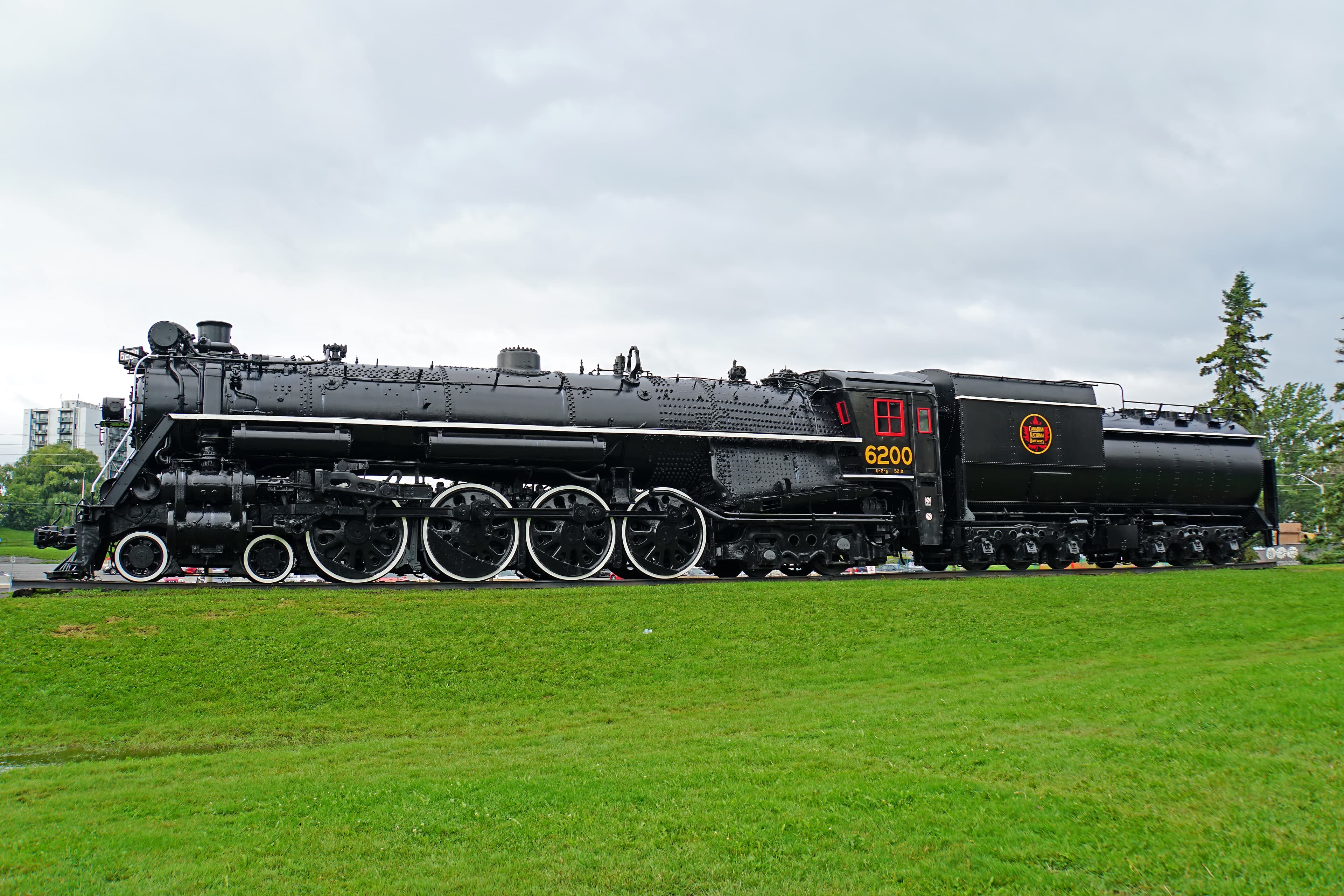
The centrepiece is Canadian National 1009, a 4-6-0 Ten-wheeler of class F-1-b built by the Montreal Locomotive Works in 1912, works number 51132. It started life as contractor''s engine O''Brien McDougall & O''Gorman No. 15 on construction of the National Transcontinental, became Canadian Government Railways 4529, then CN 1009. Class F-1 engines worked Maritime branch lines — including this one — until the bigger G-16-A 1100s arrived. Renumbered 1165 in 1957 to clear the 1000 series for new diesels, it made a farewell run out of Montreal in March 1958 and went to the CRHA museum at Delson, Quebec, where it got its old number back. It came to Hillsborough slung over two flat cars in November 1983, was rebuilt in the S&H shops, pulled the railroad''s inaugural train in May 1986 and worked excursions until 1998. It is a genuinely powerful small engine: 18 by 24 inch cylinders, 51 inch drivers, 160 psi, 20,735 lbf tractive effort, Stephenson valve gear, 89.1 tonnes (98 tons) in working order with 4,000 gallons of water and 8 tons of coal. It is now on indoor static display.
The two diesels are Montreal Locomotive Works products with unusually well-documented lives. CN 1754 was built in 1959 as CN 3847, an 1,800 hp unit on four-wheel trucks; in 1975 it received six-wheel A-1-A trucks salvaged from CN 1702 and was derated to 1,400 hp for light branch-line axle loading. It worked Prince Edward Island, Cape Breton, southwestern Nova Scotia and Halifax''s Rockingham yard before CN donated it in 1995 to replace the RS-1, No. 208, lost in the fire; it made the last 12 miles from CN''s Moncton shops to Pine Glen Road by road. CN 8245 is rarer still — an S-12 switcher of 1958, works number 82268, CN class MS-10P. Only eleven S-12s were built, all for CN, and 8245 was the last of the order. It carries the turbocharged six-cylinder 539 engine used in the MLW RS-1, weighs 232,000 lb and tops out at 60 km/h (40 mph). Retired in 1985 and stored at Gordon Yards in Moncton, it came to the S&H in 1989 in a trade for NW2 7941, which went for scrap, and wears S&H red and white applied in early 1992.
The passenger fleet is the part most museums cannot match. First-class car ex-CNR 4275 started as Grand Trunk 2335; coaches 5297 CRESCENT and 5229 CASCADE and colonist car 2737 CHESTERFIELD (originally Pullman 6175) sit alongside dining car 6733 SUNSET, lounge cars 1000 VALLEY VIEW and 1002 MOUNTAIN VIEW — both former CNR observation cars, Fort Francis and Fort George — and sleeper 2079 SAINT JOHN RIVER, born as New York Central 10161 Agawan River. The maintenance-of-way line-up includes a 100-ton ex-CPR steam crane of 1913, a Jordan spreader, a double-ended snowplough, and a ballast car built to the patented Improved Hart Convertible Car design.
What to Expect
This is a static museum, not a tourist railway: no train has carried passengers here since 2004. What you get instead is access. Several cars — a caboose, coaches and locomotives — are open to walk through, climb into and inspect from the inside, which is rarer than it sounds and is the reason the visit rewards a slow pace. The museum reckons a detailed tour takes slightly more than an hour.
The site is a working yard rather than a polished gallery. Volunteers set the artefacts out for the summer and put them away again in the autumn, so shoulder-season visitors may find displays incomplete; the museum says so itself. Buildings house the smaller artefacts, and the volunteers have been refurbishing a CN baggage car to add exhibit space, with a model railway planned for younger visitors in one half and displays on the local albertite, gypsum and petroleum industries in the other.
Expect quiet. Hillsborough is a village of a few thousand in rural Albert County, and this is not a high-traffic attraction — which for a photographer or a rolling-stock enthusiast is the point. Bring your questions: the people staffing the site are volunteers of the CRHA New Brunswick Division, several of them retired railroaders, and they are the ones who moved 1009 here on flat cars and rebuilt it.
Best Time to Visit
Combine the visit with the Bay of Fundy tides: Hopewell Rocks is 13 km (8 mi) away and its walk-on-the-ocean-floor window is set by low tide, so build the day around the tide table and slot the museum into the high-tide half. July and August give the warmest weather and the fullest displays. If you want a shoulder-season visit in June, September or early October, email the museum first — it explicitly asks visitors and bus tours to prearrange so a volunteer is on site.
Frequently Asked Questions
QCan you ride a train at the New Brunswick Railway Museum?
No. The Salem and Hillsborough Railroad ran coach and dinner trains here from 1984 until 2004, but the site has been a static museum since 2005 and the rails were eventually superseded by Highway 114. What you can do instead is walk through the equipment: a caboose, coaches and locomotives are open to enter and inspect.
QHow long does a visit take?
The museum states that most visitors spend slightly more than one hour on a detailed tour, and that it cannot guarantee a full tour for anyone arriving after 5:00 p.m.
QWhen is the museum open?
The daily summer season runs from late June to Labour Day, with select Saturdays in June and September. Outside that, volunteers are often on site from mid-May and again until about mid-October, but not guaranteed - the museum asks visitors and bus tours to prearrange shoulder-season visits by email at nbrailway@nb.aibn.com.
QHow much is admission?
The last fee schedule the museum published, for the 2021 season, listed CA$10 for adults 18 and over, CA$8 for seniors 65 and over and for students, CA$5 for youth 6 to 18, free for children 5 and under, and CA$25 for a family. Groups and bus tours were CA$1 per person. Confirm current rates by phone at (506) 734-3195 before travelling.
QWhat is the most important item in the collection?
Canadian National 1009, a 4-6-0 Ten-wheeler built by the Montreal Locomotive Works in 1912. It worked as a contractor engine on the National Transcontinental, then for Canadian Government Railways and CN until 1958, came to Hillsborough on flat cars in 1983, pulled the Salem and Hillsborough inaugural train in May 1986 and ran excursions until 1998. It is now on indoor static display.
QWhy is the museum building not the original station?
An arson fire on 16 September 1994 destroyed the engine house, several locomotives and cars, and the offices holding the division historical records. The replacement building was designed in the idiom of a rural New Brunswick station, and the original section shed still stands beside it with its period maintenance equipment.
QWhat else is worth seeing nearby?
Hopewell Rocks is 13 km (8 mi) away and the Steeves House Museum is a few hundred metres up the road in Hillsborough itself. The Albert County Museum at Hopewell Cape is 10 km, Cape Enrage 38 km, and Fundy National Park about 46 km.
How to Plan Your Visit
Season and Schedule
The museum runs a daily summer season from late June to Labour Day, plus select Saturdays in June and September. Shoulder-season visits should be arranged in advance by email so that a volunteer is on site.
- Operating Hours
- Summer season: daily 9:30 a.m. to 5:00 p.m. (last published schedule, 2021 season - confirm before travelling)
- Summer Season
- Late June to Labour Day, plus select Saturdays in June and September
- Shoulder Season
- Mid-May to opening, and Labour Day to mid-October - volunteers often on site but not guaranteed; prearrange by email
- Typical Visit
- Slightly more than one hour for a detailed tour
- Last Entry
- The museum cannot guarantee a full tour for arrivals after 5:00 p.m.
Ticket Information
Admission is paid on arrival; there is no online booking. The fee table below is the last one the museum published, for the 2021 season - call or email to confirm current rates before you travel.
- Adults (18+)
- CA$10 (2021 published rate)
- Seniors 65+ / Students
- CA$8 (2021 published rate)
- Youth 6-18
- CA$5 (2021 published rate)
- Children 5 and under
- Free
- Family
- CA$25 (2021 published rate)
- Groups and Bus Tours
- CA$1 per person; day-care groups a flat CA$10 per group. In the shoulder season, individuals by donation and groups CA$1 per person, guide and driver free.
Accessibility Details
The museum publishes no accessibility statement. The buildings are single-storey, but the attraction is a rail yard and the walk-through cars are entered by steps from ground level, which will rule them out for some visitors. Contact the museum before travelling if access matters.
- Rolling Stock
- Entered by steps from ground level
- Site
- Outdoor rail yard with a single-storey museum building
- Before You Go
- Call (506) 734-3195 or email nbrailway@nb.aibn.com to check
What to Bring
Most of the collection stands outdoors in an open yard, so dress for the weather and expect uneven ground underfoot. Cash is worth having for admission at a small volunteer-run site.
- Footwear
- Closed shoes - this is a working yard, not a paved gallery
- Weather
- Most equipment is displayed outdoors; CN 1009 is under cover
- Tides
- A Bay of Fundy tide table, if you are pairing the visit with Hopewell Rocks
Photography Tips
The unusual opportunity here is interiors - caboose, coaches and locomotive cabs are open to walk through. A fast wide lens earns its place; a long telephoto mostly will not.
- Indoors
- CN 1009 is on indoor static display - controlled light, no weather
- Outdoors
- Best light early on summer mornings; the yard is open to the sky
- Architecture
- Shoot the station building and section shed from across Main Street
The operator does not publish a pet policy — contact them directly before traveling with an animal.
Travel Information
By Air
Greater Moncton Roméo LeBlanc International is the nearest airport, about 21 km north. From there it is a straightforward drive south on Route 114 through Riverview into Albert County.
- Nearest Airport
- Greater Moncton Roméo LeBlanc International (YQM), about 21 km / 13 mi north
By Train
VIA Rail Canada calls at Moncton station on Main Street, about 21 km north of Hillsborough. There is no rail link onward to the museum - the branch that once connected them was lifted after 2004.
- Nearest Rail Station
- VIA Rail Moncton, about 21 km / 13 mi north - check VIA for current frequency
By Car
The museum is on the east side of Main Street, which is Route 114, in the middle of Hillsborough. Coming from Moncton, cross to Riverview and follow Route 114 south along the Petitcodiac River.
- Address
- 2847 Main Street, Hillsborough, NB E4H 2X7
- Route
- Route 114, on the east side of Main Street
- From Moncton
- South through Riverview on Route 114
Parking
The museum publishes no parking guidance. It occupies the former station yard on Main Street; contact the museum in advance if you are arriving by bus or with a tour group.
Local Transportation
Albert County is rural and the museum gives no transit directions. A car is the practical way in, and it is what you will want anyway for Hopewell Rocks, Cape Enrage and Fundy National Park.
Nearby Lodging
Find places to stay near New Brunswick Railway Museum.
This lodging map is provided by Stay22, a third-party service that may set cookies. It loads only with your consent.
Accommodation results are provided by Stay22; we may earn a commission on bookings made through this map.
Nearby Attractions
- Steeves House Museum0.2 km
The 1814 birthplace of William Henry Steeves, a Father of Confederation, a few hundred metres up Mill Street from the rail yard. Thirteen rooms of Albert County and Steeves family history, open mid-June to Labour Day with off-season tours by appointment.
- Albert County Museum and R.B. Bennett Commemorative Centre9.7 km
County museum at Hopewell Cape, on the site of the former county gaol and courthouse, with the centre devoted to R.B. Bennett — the only Canadian prime minister born in New Brunswick.
- Hopewell Rocks Provincial Park12.8 km
The Bay of Fundy flowerpot rocks, where the highest tides in the world let you walk on the ocean floor at low tide and kayak the same ground at high tide. Check the tide table before you go — access is tide-dependent.
- Cape Enrage38.1 km
Lighthouse and clifftop site on the Fundy shore, with rappelling, a zip line and one of the widest views of the bay in Albert County.
- Fundy National Park46.3 km
Parks Canada national park at Alma, covering the Fundy coast, the Caledonia Highlands and about 100 km of hiking trails.
Official Resources
Photos

 Dennis G. Jarvis
CC BY-SA 2.0

Dennis G. Jarvis
CC BY-SA 2.0

Dennis G. Jarvis
CC BY-SA 2.0

Dennis G. Jarvis
CC BY-SA 2.0

Dennis G. Jarvis
CC BY-SA 2.0

Dennis G. Jarvis
CC BY-SA 2.0

Dennis G. Jarvis
CC BY-SA 2.0

Dennis G. Jarvis
CC BY-SA 2.0
More Videos
New Brunswick Railway Museum, Hillsborough
NB Railway Museum | Musée ferroviaire du Nouveau-Brunswick
100th Anniversary of CNR steam engine 1009
Salem and Hillsborough 1009
Help improve this page
Spotted something out of date or incorrect? Let our community know.
Explore more experiences: Browse all rail travel experiences.
Booking & Pricing
Quick Information
Country
Region
City
Hillsborough
Best Season
Late June to Labour Day is the only period with reliable staffed opening — that is when the museum runs its daily summer season and when the outdoor equipment is fully set out. From mid-May until the summer opening, and again from Labour Day to roughly Canadian Thanksgiving in mid-October, volunteers are often on site but not guaranteed, and displays are being set up or packed away. Winter is not a visiting season.
Visit Duration
About 1 to 1.5 hours
Cost
Paid admission; last published rates (2021 season) were CA$10 adult, CA$8 senior/student, CA$5 youth, free under 6, CA$25 family
Tags
Contact
(506) 734-3195
nbrailway@nb.aibn.com