Railway Experience
Railway Museum of Eastern Ontario
A National Historic Site station in Smiths Falls, Ontario, with a yard of preserved rolling stock and North America's last dental car.
Updated
About This Experience
The Railway Museum of Eastern Ontario occupies the former Canadian Northern Ontario Railway station at 90 William Street West, a brick building on a stone foundation raised between 1912 and 1914 to a design by R.B. Pratt. Canada's federal heritage register singles out its Chateauesque conical rooflines and one-and-a-half-storey polygonal tower, its broad eaves carried on prominent brackets, and its surviving original doors and paired wooden windows with overlights. The station stands set back from the road beside its own track on a 10.5-acre site, on the abandoned Canadian Northern right-of-way that once ran southwest toward Napanee. Beyond the town that grade is now the Cataraqui Trail, a 104-kilometre (65-mile) recreational corridor running to Strathcona. Parks Canada designated the building a National Historic Site of Canada on 18 November 1983.
Smiths Falls was a railway town long before the Canadian Northern reached it. The first train ran from Brockville to Smiths Falls in 1859 over the Brockville and Ottawa Railway, absorbed into the Canadian Pacific in 1881, and in 1885 the CPR made the town a division point on its Montreal-Toronto main line. After a right-of-way dispute with the Grand Trunk was settled in 1898, all CPR traffic moving west was routed through Smiths Falls, and twenty-three trains a day passed through. The CPR yard on Victoria Avenue covered several acres and its roundhouse held twenty-two stalls, with seven more added before the decade was out. By 1924 an estimated 1,600 people worked for the CPR in the Smiths Falls Division, 1,200 of them living in the town itself. Construction of the rival Canadian Northern station began in 1911, and the museum's own history dates its official opening to 1912.
The station's working life ended in 1979, when the last passenger train ran through it. Canadian National embargoed the Smiths Falls Subdivision that April and applied for permission to demolish the building. A Save Our Station committee formed the same month, started by a local resident, Bill LeSurf, and opened negotiations with CN; the group incorporated as the Smiths Falls Railway Museum Corporation and the museum was established in 1985, the same October that Parks Canada unveiled the commemorative plaque on the station wall. Restoration ran from 1985 to 2000 and included structural repairs, a new platform built from British Columbia fir timber, and the reinstallation of restored train order signal equipment. A CN duplex section house was moved onto the property, and Nolan's Flag Station now stands there as well.
Photo Opportunities
The station itself is the strongest subject on the property. Work the polygonal tower and its conical roof against the sky, then move in on the details the heritage register lists as character-defining: the paired wooden windows with overlights, the bracketed eaves, and the brick cladding meeting its stone foundation. The restored train order signal and the British Columbia fir platform laid during the 1985-2000 restoration give a foreground that belongs to the building.
On the grounds, the line of four cabooses in CN and CP paint is the shot most visitors leave with, and the 1935 wedge snowplow rewards a low angle that puts the blade against the sky. CNR 1112 stands in the open, so its side rods and the G-16-a proportions read cleanly, and the 1947 Cadillac M-260 on its flanged wheels is the oddity people do not expect to find. Because the collection is outdoors and unroofed, overcast days work better here than hard midday sun, which throws heavy shadow between closely spaced cars.
Two off-site subjects are worth building into the same visit. The Smiths Falls bascule bridge, a Scherzer rolling-lift span built in 1912 by the same Canadian Northern Railway to carry its line over the Rideau Canal, has stood permanently raised since 1978 and sits about 0.7 km (0.4 mi) south of the museum, with parking on Abbott Street North. And the Station Theatre at 53 Victoria Avenue, in the 1887 station building, backs onto live CPKC track: the Town of Smiths Falls names it in its own railfan guide as the place in town to watch trains pass.
Featured Video
Big Canadian Railway Town - Smiths Falls, Ontario - The Railway Museum of Eastern Ontario
Why Visit
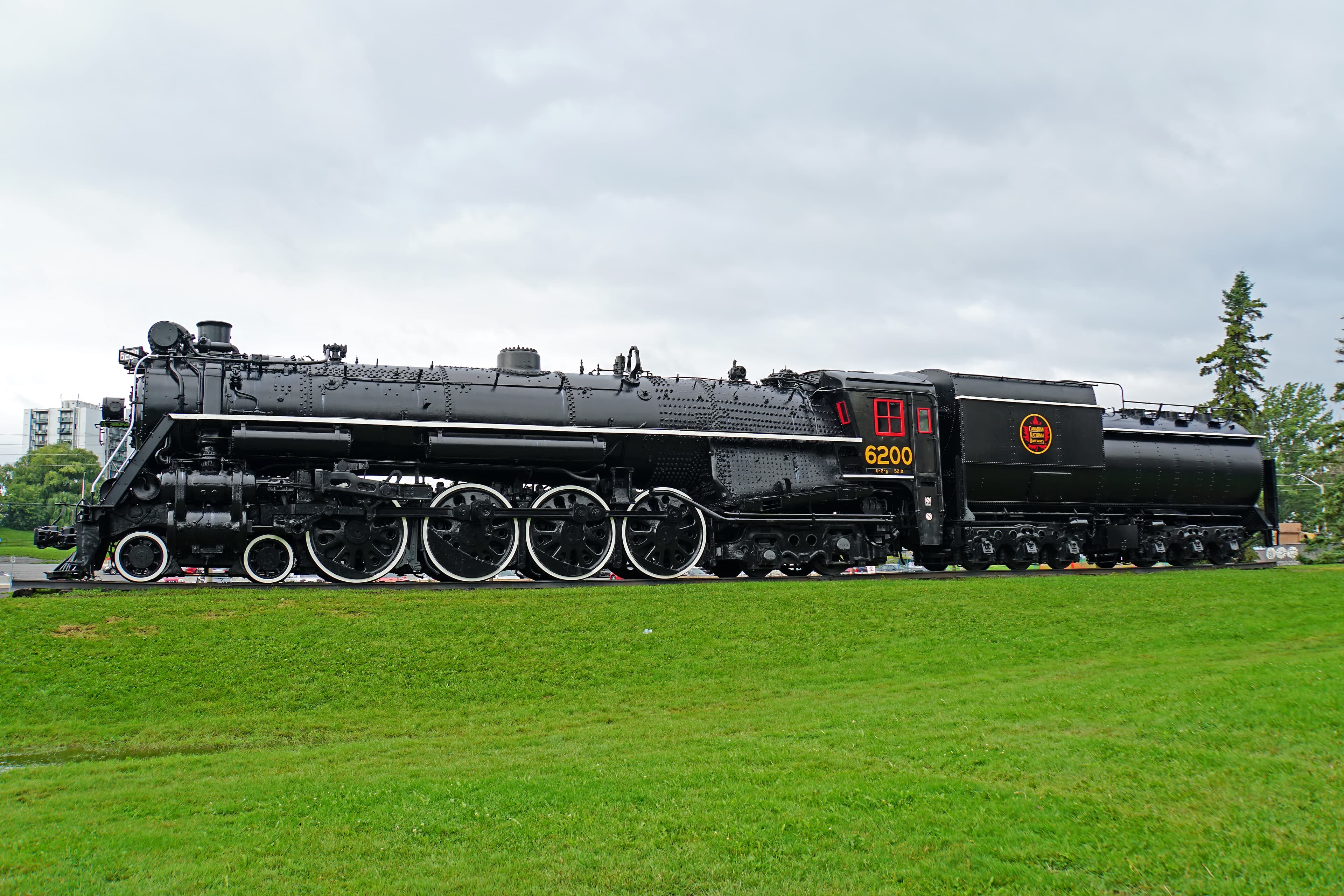
The centrepiece is CNR 1112, a 4-6-0 ten-wheeler built by Montreal Locomotive Works in 1912. It is one of fifty G-16-a class engines turned out in 1912 and 1913 for the Canadian Northern Railway, which went bankrupt and was folded into the government-created Canadian National Railways in 1919. Built as a coal burner, 1112 was sold with a classmate to the Quebec, North Shore and Labrador Railway in 1952 and converted to burn oil. It was retired in 1961, donated to the Canadian Railroad Historical Association, displayed at Exporail outside Montreal, and moved to the museum grounds on 6 June 1992. Only one other locomotive of its class escaped the scrapper.
The rarest vehicle on the site is not a locomotive at all. CNR 15095 was built in 1913 for the Canadian Northern as a heavyweight sleeping car finished in mahogany, carrying twenty-six passengers, and it covered more than a million miles in forty years before leaving passenger service in 1951. That same year it was rebuilt as a dental car, part of an Ontario government programme that sent dentists to live and work aboard railway cars serving remote Northern Ontario communities; Canadian Pacific donated two cars to the scheme and Canadian National donated this one. It worked until 1977, was bought by John Weir in 1990 from the Toronto and York Division of the Canadian Railroad Historical Association, and was fully restored after arriving here. It is the only remaining dental car in North America.
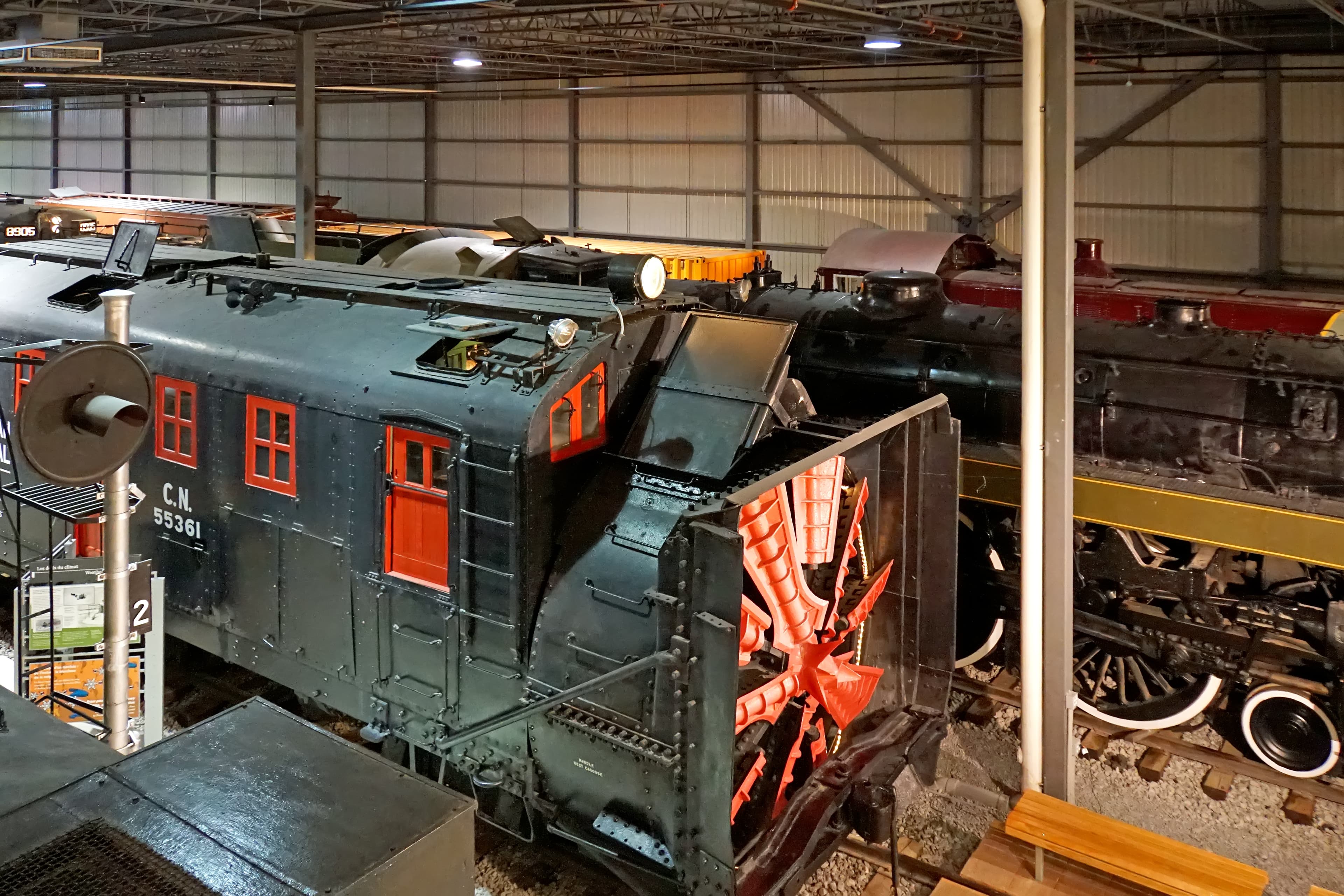
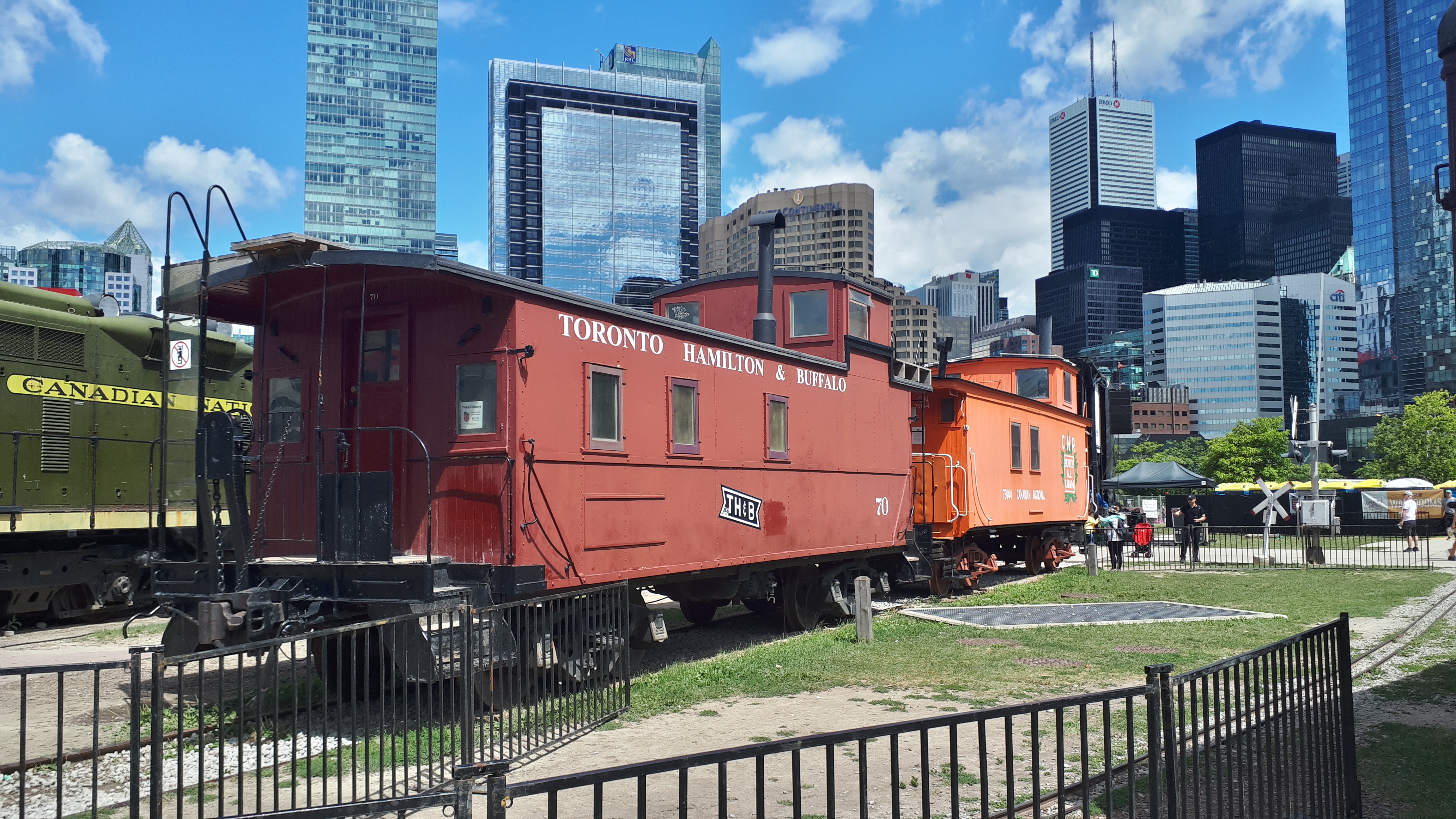
Around them sits a working railway's worth of hardware. CP 6591 is an S-3 diesel-electric switcher built by Montreal Locomotive Works in July 1957. Four cabooses are preserved: CN 79274 from Hawker Siddeley in 1967, CN 79095 built as a boxcar in 1921 and converted in 1957, CP 437183 from 1945 and CP 436757 from 1921. CNR 55400 is a single-track wedge snowplow built by National Steel Car in 1935, its wings worked by compressed air. CN 574493 is a wooden automobile boxcar from Canadian Car and Foundry, built in 1927 with double doors so cars could be driven aboard. CNR 23 is a 1954 Wickham inspection car from England that carried up to nine people in a climate-controlled enclosure, and CPR M-260 is a 1947 Cadillac sedan limousine converted to run on rails for the railway's president or general manager. A Green Frog trackmobile that once handled switching at the Hershey Chocolate Company plant in Smiths Falls, a locomotive listed as Brookville #4, a handcar, a velocipede and a speeder round out the roster.
What to Expect
This is an outdoor museum on a 10.5-acre former railyard, and most of the collection stands on track in the open air with grass and ballast underfoot. Visitors typically spend one to two hours here. The station interior holds the exhibits, a telegraph office display and a gift shop; washrooms are on site and parking is free. Reviewers consistently praise the volunteers, describing one long-serving curator as a walking encyclopedia of railway knowledge, while just as consistently noting that interpretive signage is thin and that several of the cars cannot be entered. A guided tour costs CA$10 per person and is the reliable way to get the stories that the labels do not tell.
Some of the site is genuinely hands-on. A hand car ride costs CA$10 for up to three people. The STEAM Train is a children's educational exhibit housed inside train cars rather than a locomotive ride: it presents Science, Technology, Engineering, Arts and Math through railway history, with a dedicated S.T.E.A.M. car of hands-on stations, magnet boards, multi-tiered train sets and a reading nook. Families with young children get more out of the site than the equipment roster alone would suggest, in part because there is simply room to move between the cars.
Events are where the equipment comes alive. Summer train rides run every Sunday in July and August from 11:30 a.m. to 2:00 p.m. aboard a vintage caboose, ticketed first come, first served. Afternoon Tea in the Dining Car is served on scheduled Sundays and sells out. The Hallow's Express evening rides run on 19 September 2026. Three of the cabooses are also let overnight through Airbnb, where the museum holds Superhost status with a 4.9-star average: CN 79274 from 1967 sleeps three, CN 79095 from 1921 sleeps two, and CP 437183 from 1945 sleeps three. Staying over is the only way to have the yard to yourself after the gates close.
Best Time to Visit
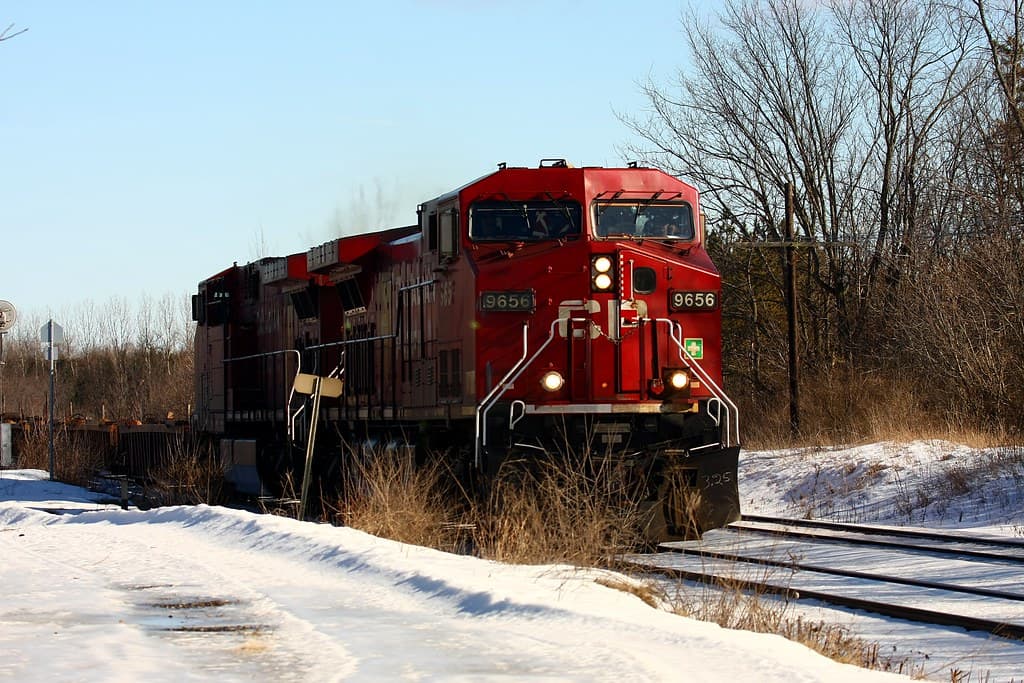
Sundays in July and August are the days to come if the caboose ride matters; the rides run 11:30 a.m. to 2:00 p.m. and tickets are first come, first served, so arrive near opening. A weekday morning gives you the quietest grounds and the best chance of an unhurried conversation with a volunteer. Weekdays also suit anyone pairing the museum with lineside railfanning: enthusiasts report a CPKC crew change at Smiths Falls around midday, with a couple of freights and a VIA train typically passing in the late-morning to early-afternoon window, so a 10 a.m. museum arrival leaves the middle of the day free for the trackside spots. September adds the Hallow's Express evening rides, dated 19 September in 2026.
Frequently Asked Questions
QHow long should I plan for my visit?
Most visitors spend one to two hours on the grounds, and some are through in about 45 minutes. Add time if you take the CA$10 guided tour, which is where most of the collection's history actually gets told, or if you are visiting on a Sunday in July or August when the caboose train rides run from 11:30 a.m. to 2:00 p.m.
QIs the museum open year-round?
The museum's own Plan Your Visit page lists daily hours of 10:00 a.m. to 5:00 p.m. and does not name a season. Third-party museum listings describe the site as open seven days a week from late May to Canadian Thanksgiving, with other times by appointment only. Since almost the entire collection is outdoors in eastern Ontario, phone 613-283-5696 to confirm before travelling outside the summer.
QCan I go inside the locomotives and rail cars?
Some of them. Visitors report being able to enter or look into a locomotive, a passenger car and several specialty vehicles, with the restored dental car singled out as the highlight. Others stay closed, and reviewers note that the site's interpretive signage is thin, which is the main argument for taking the guided tour at CA$10 per person.
QCan you really sleep in a caboose here?
Yes. Three cabooses are let overnight through Airbnb, where the museum holds Superhost status with a 4.9-star average: CN 79274 from 1967 sleeps three, CN 79095 from 1921 sleeps two, and CP 437183 from 1945 sleeps three. The museum does not publish nightly rates on its own site, so check the individual Airbnb listings for pricing and availability.
QWhat is the dental car, and why does it matter?
CNR 15095 was built in 1913 for the Canadian Northern as a mahogany-fitted heavyweight sleeping car for twenty-six passengers, and it ran more than a million miles in forty years. In 1951 it was rebuilt as a dental car for an Ontario government programme that sent dentists to live and work aboard rail cars serving remote Northern Ontario communities. It worked in that role until 1977 and is the only remaining dental car in North America.
QIs the STEAM Train a train ride?
No. The STEAM Train is a children's educational exhibit housed inside train cars, presenting Science, Technology, Engineering, Arts and Math through Canadian railway history. It includes a dedicated S.T.E.A.M. car with hands-on stations, magnet boards, multi-tiered train sets and a reading nook. The actual rides are the summer caboose trains on July and August Sundays and the hand car, which costs CA$10 for up to three people.
QIs Smiths Falls worth visiting for trainspotting beyond the museum?
Yes. The town sits at the junction of CPKC's Winchester, Belleville and Brockville subdivisions, and VIA Rail serves it on the Toronto-Ottawa corridor. The Town of Smiths Falls names the active line behind the Station Theatre at 53 Victoria Avenue as its trainspotting location, and enthusiasts report a weekday crew change around midday. The permanently raised 1912 bascule bridge over the Rideau Canal is a short walk south of the museum.
How to Plan Your Visit
Season and Schedule
The museum's own Plan Your Visit page publishes daily hours of 10:00 a.m. to 5:00 p.m. without naming an operating season, while third-party museum listings describe a late-May to Thanksgiving season with off-season visits by appointment. Phone 613-283-5696 before travelling outside July and August.
- Operating Hours
- Daily 10:00 a.m. to 5:00 p.m.
- Reported Season
- Late May to Canadian Thanksgiving, seven days a week; other times by appointment
- Summer Train Rides
- Every Sunday in July and August, 11:30 a.m. to 2:00 p.m.
- Typical Visit
- 1 to 2 hours
Ticket Information
General admission is paid at the station door; the museum does not sell it online. Tickets for train rides, afternoon tea and seasonal events are sold separately through the museum's events page and sell out.
- Admission
- Adults CA$12, seniors CA$10, children 5-12 CA$8
- Children 4 and Under
- Free
- Guided Tour
- CA$10 per person
- Hand Car Ride
- CA$10 for up to three people
- Annual Pass
- Individual CA$35, family CA$90 - general admission only, excludes train ride tickets
Accessibility Details
The site is listed as having partial wheelchair access. The grounds are a former railyard, so track, ballast and grass lie between the exhibits, and the interiors of the heritage vehicles are reached by their original steps. Washrooms are on site.
- Wheelchair Access
- Partial
- Washrooms
- On site
- Ground Surface
- Track, ballast and grass across a former railyard
What to Bring
Almost the whole collection stands outdoors on the 10.5-acre site, with no roof over the rolling stock. Dress for the weather and wear footwear you do not mind taking across ballast.
- Site Size
- 10.5 acres, largely outdoors
- Group Tours
- Arrange in advance at programs@rmeo.org
Photography Tips
The museum publishes no restriction on personal photography, and it rents the station and grounds for shoots and events; confirm any commercial use with staff first. Overcast light suits the closely spaced outdoor cars better than hard midday sun.
- Best Subjects
- CNR 1112, the four-caboose line, the 1935 wedge snowplow, the station tower
- Nearby Subject
- 1912 Scherzer rolling-lift bascule bridge, permanently raised, 0.7 km / 0.4 mi south
- Trackside
- Live CPKC lines behind the Station Theatre, 53 Victoria Avenue
The operator does not publish a pet policy — contact them directly before traveling with an animal.
Travel Information
By Air
Ottawa Macdonald-Cartier International Airport is the closest major gateway, roughly an hour northeast of Smiths Falls by road. Montreal-Trudeau and Toronto Pearson are the nearest long-haul alternatives, both several hours away.
- Nearest Airport
- Ottawa Macdonald-Cartier International (YOW)
- Approximate Drive
- About one hour
By Train
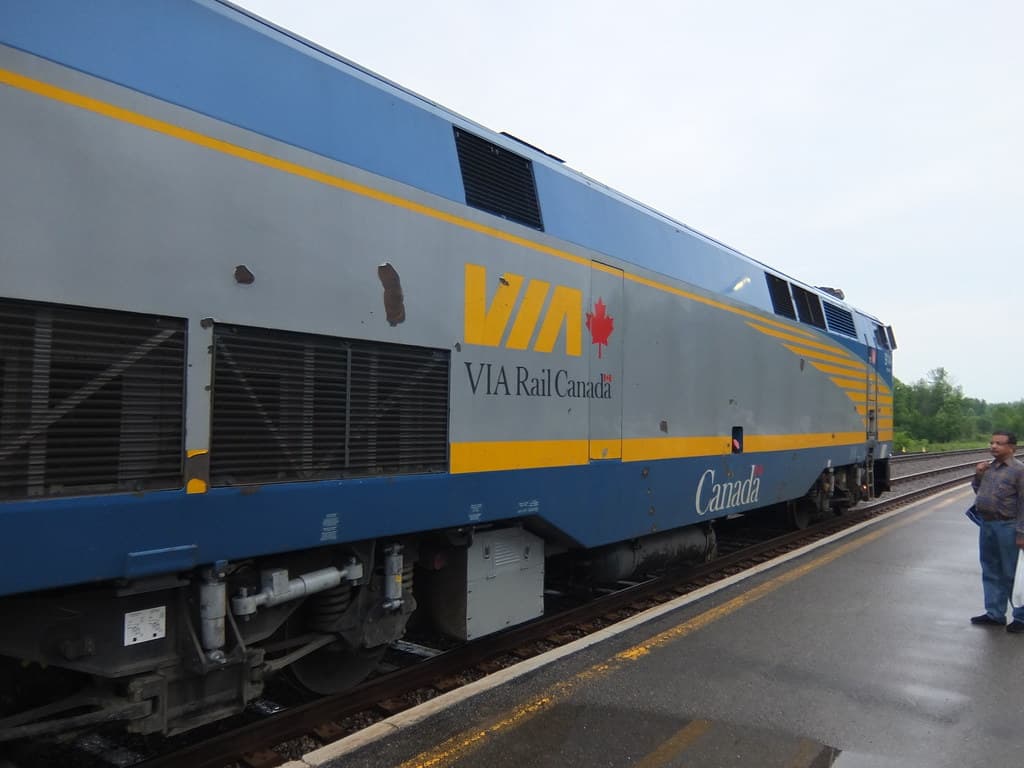
VIA Rail's Smiths Falls station at 46 Union Street sits about 1.2 km (0.8 mi) north of the museum on the Toronto-Ottawa corridor. The building is unstaffed and opens 60 minutes before a train arrives, closing 30 minutes after departure.
- Station
- Smiths Falls, 46 Union Street - 1.2 km / 0.8 mi from the museum
- Service
- 4 to 6 trains a day toward Ottawa, 2 to 4 toward Toronto (as of October 2023)
- Accessibility
- Accessible entrance and platform, wheelchair lift, courtesy assistance
- Restriction
- No unaccompanied minors may travel to or from this station
By Car
The museum is on the west side of Smiths Falls at 90 William Street West, roughly an hour southwest of Ottawa. The station sits back from the road beside its original track, so look for the polygonal tower rather than a street-front facade.
- Address
- 90 William St W, Smiths Falls, ON K7A 5A5
- From Ottawa
- About one hour
Parking
Parking at the museum is free. Overflow parking runs along the east fence at the end of Church Street West.
- Cost
- Free
- Overflow
- Along the east fence at the end of Church Street West
Local Transportation
Smiths Falls is small enough to cross on foot: the Rideau Canal Visitor Centre is about 0.7 km (0.4 mi) from the museum and the Station Theatre about 1.0 km (0.6 mi). Parking at the VIA station is operated by Indigo Park Canada.
- To the Canal
- About 0.7 km / 0.4 mi on foot
- To Downtown
- About 1 km / 0.6 mi on foot
- VIA Station Parking
- Operated by Indigo Park Canada
Nearby Lodging
Find places to stay near Railway Museum of Eastern Ontario.
This lodging map is provided by Stay22, a third-party service that may set cookies. It loads only with your consent.
Accommodation results are provided by Stay22; we may earn a commission on bookings made through this map.
Nearby Attractions
- Cataraqui Trail0 km
The 104-kilometre (65-mile) rail trail to Strathcona follows the very Canadian Northern right-of-way the museum stands on, abandoned beyond Smiths Falls in 1979. Walk or cycle west from the station and you are on the grade the trains used to take toward Napanee.
- Smiths Falls Bascule Bridge0.7 km
A Scherzer rolling-lift railway bridge built in 1912 by the same Canadian Northern Railway that raised the station, carrying its line over the Rideau Canal. Operated by hand from 1915 until the line closed in 1978, it has stood permanently raised ever since and was designated a National Historic Site in 1983. Park on Abbott Street North.
- Rideau Canal Visitor Centre0.7 km
Parks Canada''s visitor centre for the Rideau Canal sits in a 19th-century mill at 34 Beckwith Street South, beside the Smiths Falls locks. The canal is a UNESCO World Heritage Site running 202 km from Ottawa to Kingston through 22 lockstations, and the combined lock here is one of its most-watched.
- The Station Theatre1 km
A community theatre, cinema and gallery in the 1887 station building at 53 Victoria Avenue. The Town of Smiths Falls names the still-active track behind it as the place in town to watch trains, which makes it the natural lineside complement to a museum visit.
- Smiths Falls VIA Rail Station1.2 km
The working passenger station at 46 Union Street, opened around 2010 to move VIA off the old site in the middle of a busy CP junction. Four to six trains a day run toward Ottawa and two to four toward Toronto. Unstaffed, it opens 60 minutes before an arrival and closes 30 minutes after departure.
- Heritage House Museum2.2 km
The 1861 residence of Joseph Bates, run by the town as a community museum at 11 Old Slys Road. Its mirror-image facades, indoor brick bake oven and two-storey privy survive intact, and it carries changing exhibitions and local genealogy holdings. Open Wednesday to Sunday, 10:30 a.m. to 4:30 p.m.
Official Resources
Photos

 Doktor Ellis
CC BY-SA 3.0

shankar s.
4
More Videos
RAILWAY MUSEUM OF EASTERN ONTARIO | Smiths Falls, Canada
Canadian Pacific Railway S3 Switcher at Smiths Falls Railway Museum of Eastern Ontario
Smiths Falls Railway Museum
Help improve this page
Spotted something out of date or incorrect? Let our community know.
Explore more experiences: Browse all rail travel experiences.
Booking & Pricing
Price range
$8 – $12 CAD
Adults CA$12, seniors CA$10, children 5-12 CA$8, ages 4 and under free. Guided tours CA$10 per person and hand car rides CA$10 for up to three people are extra. Annual passes cost CA$35 individual and CA$90 family, and cover general admission only - not train ride tickets. Prices from the museum's Plan Your Visit page.
Quick Information
Country
Region
City
Smiths Falls
Best Season
Late May through Canadian Thanksgiving in mid-October is the window in which the museum is described as open seven days a week, and it is the only period when the grounds are comfortable to walk at length. July and August are the only months carrying the Sunday caboose train rides. Late September and early October bring fall colour along the Rideau corridor, thinner crowds on the grounds, and the low light that suits an outdoor collection. Outside that window the museum is reported to open by appointment only, so phoning ahead is not optional.
Visit Duration
1-2 hours
Cost
CA$12 adults, CA$10 seniors, CA$8 children 5-12; ages 4 and under free
Tags
Contact
613-283-5696
programs@rmeo.org