
Railway Experience
Saskatchewan Railway Museum
Seven acres of prairie railway heritage on a former CN siding near Saskatoon: 20 relocated buildings, 30 railcars, three city streetcars.
Updated
See everything in Saskatchewan1 spot · 1 experienceAbout This Experience
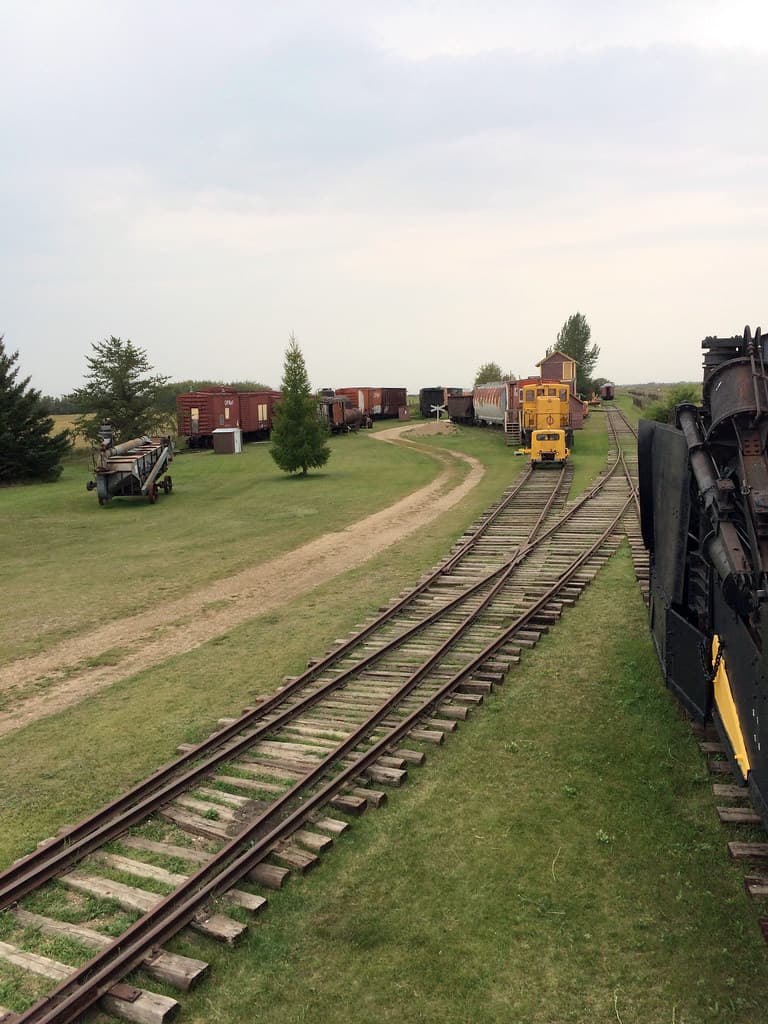
The Saskatchewan Railway Museum occupies seven acres of former Canadian National station grounds on the Pike Lake Highway (Highway 60), roughly two kilometres (1.2 miles) south of Highway 7 and outside the Saskatoon city limits in the Rural Municipality of Corman Park No. 344. The site is a real siding rather than a recreated one. It was laid out as the station grounds of Eaton and renamed Hawker in late 1919 to end the confusion with the town of Eatonia, and it still has a live rail connection off the west end of the second yard, which is how rolling stock arrives. The Saskatchewan Railroad Historical Association, founded in 1987, leased and later bought the ground and opened the museum in 1990.
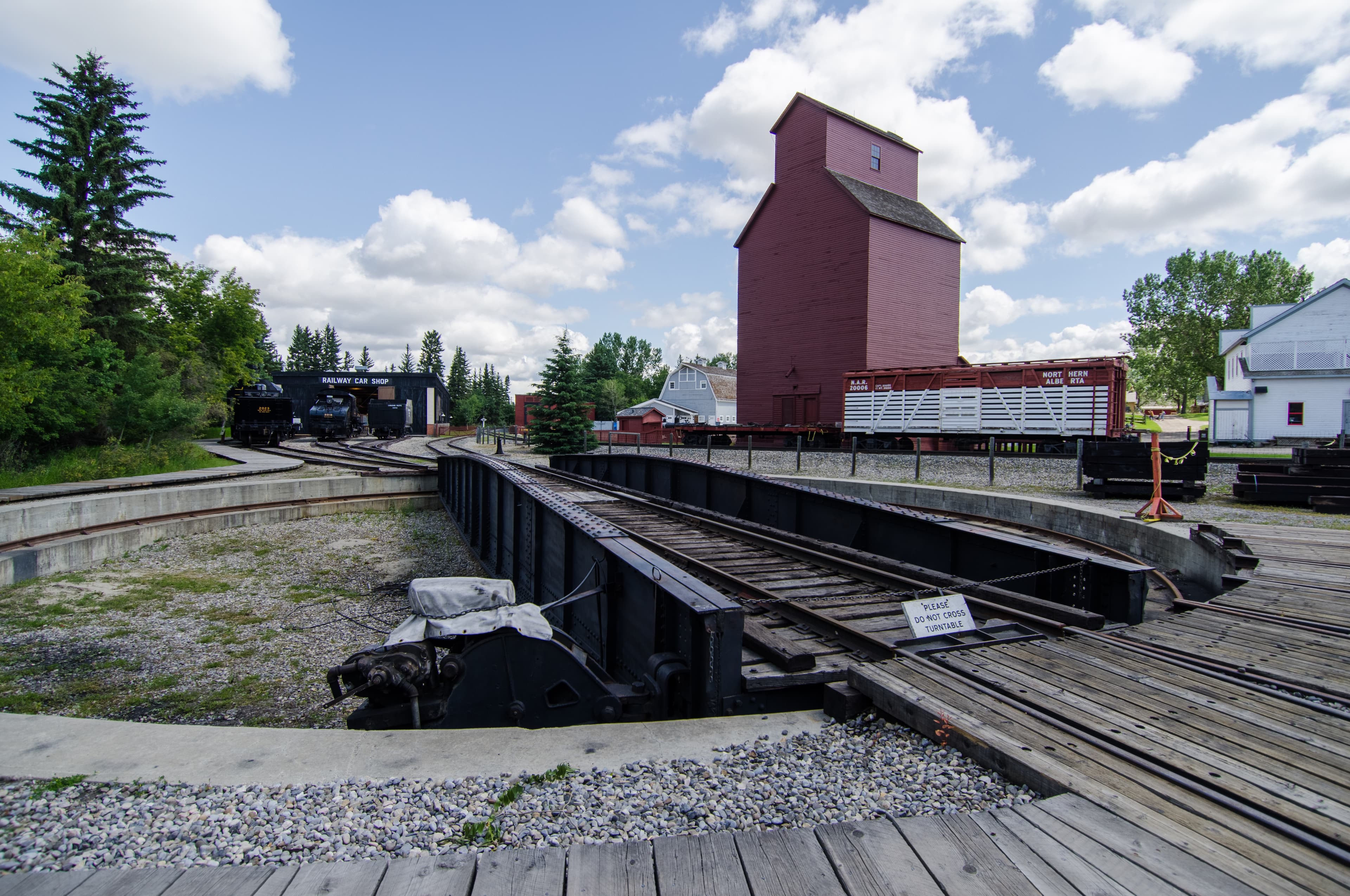
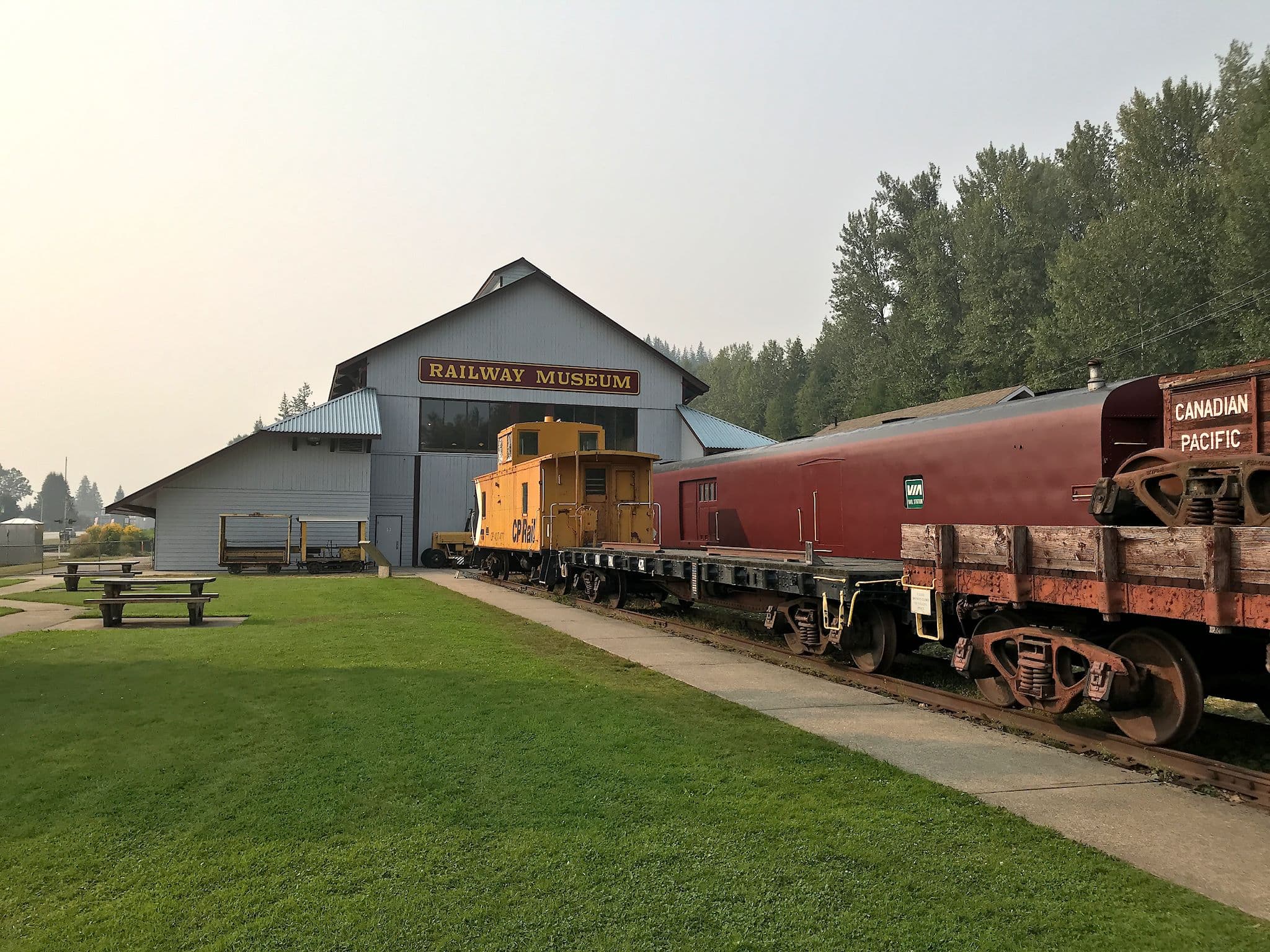
About twenty historic railway buildings and roughly thirty vintage railcars are spread along two yards. The buildings were moved in from small towns across the province. Argo Station is a Grand Trunk Pacific type "E" depot built at Argo, south-west of Biggar, in 1913 for $2,011, sold to a farmer in 1961 and moved to the museum in 2000. The Unity express and baggage shed is another Grand Trunk Pacific structure, built in 1919 and moved here in 1994. The Brisbin portable station was built at Debden in 1918 by the Canadian Northern Railway, small enough to fit on a standard flatcar. The Oban interlocking tower was put up by the Grand Trunk Pacific around 1910 where its Biggar-to-Battleford line crossed the Canadian Pacific main line from Winnipeg to Edmonton, and was believed to be the last mechanical interlocking tower in western Canada when it was retired. The Kopko Interpretive Centre, a Canadian National enginemen bunkhouse brought in from south Saskatoon, holds the interpretive displays and a Centralized Traffic Control panel donated by CN from the Chappell yards, which once directed trains over the 247.3 miles of the Watrous Subdivision between Biggar and Melville.
The ground carries a second history. In March 1919, sixty-five internees, most of German or Ukrainian descent, were moved to Eaton from a camp at Munson, Alberta, and put to work for the railways; resistance among them led the authorities to close the site and release or transfer the prisoners. The Rural Municipality of Corman Park has designated the museum grounds a heritage site on that basis. A monument was erected in 2004, an interpretive plaque in four languages and a memorial garden followed in 2018, and a permanent indoor exhibit on Canada internment operations of 1914 to 1920 opened in June 2022.
Photo Opportunities
Everything here is shot outdoors on a former station ground, so the light is prairie light: hard and flat at midday, long and warm after about seven in the evening in high summer. The rebuilt platform in front of Argo Station is the strongest set piece, giving a period three-quarter view of railcars spotted alongside a Grand Trunk Pacific depot with a working train order board.
The streetcar display is the other must-shoot. Car 51 sits on rails taken from Saskatoon streets beside a replica waiting shed, with real trolley poles, a timeclock box and city cobblestones, which lets you frame a streetscape rather than an object on a plinth. For hardware, the ALCO S-3 in Tuscan red, the two snow ploughs and the Jordan spreader reward low angles; the Oban interlocking tower was built with sight lines in four directions, so it photographs cleanly from any approach and its rebuilt staircase gives the yard its only elevation.
The property sits against the Canadian National line that gave Hawker siding its name, and the museum posts drive-by clips of CN freights passing the site on its own YouTube channel, so keep an ear open while you work. No published photography restrictions were found; ask staff before setting up a tripod inside a building or climbing on equipment, and mind the footing warning about uneven siding ground and gopher holes.
Featured Video
Sask Rail Museum walk through #1
Why Visit
The locomotive roster is entirely diesel-era, and that is the character of the place: a Prairie branch-line and industrial railway collection rather than a steam park. Canadian Pacific 6568 is an ALCO S-3 switcher built in 1957 by Montreal Locomotive Works, one of 101 S-3s the CPR owned out of 292 built at Montreal and Schenectady between 1950 and 1957. It carries a 660-horsepower McIntosh and Seymour series 539 diesel driving a General Electric generator that feeds four traction motors. It was retired in 1985 and acquired from Inland Metals in Saskatoon in 1987, and its exterior was returned from the later scheme to traditional CP Tuscan red. Beside it stand two SaskPower units: an 80-ton General Electric centre-cab of 1957 that spent its entire career switching coal hoppers at the Queen Elizabeth Power Station in Saskatoon and has never left the Saskatoon area, and a 23-ton General Electric built in 1941 for the US Army, later sold into Saskatchewan utility service, then to a grain terminal at Moose Jaw, and donated to the museum in 1998. A 1957 Whiting Trackmobile still does the shunting.
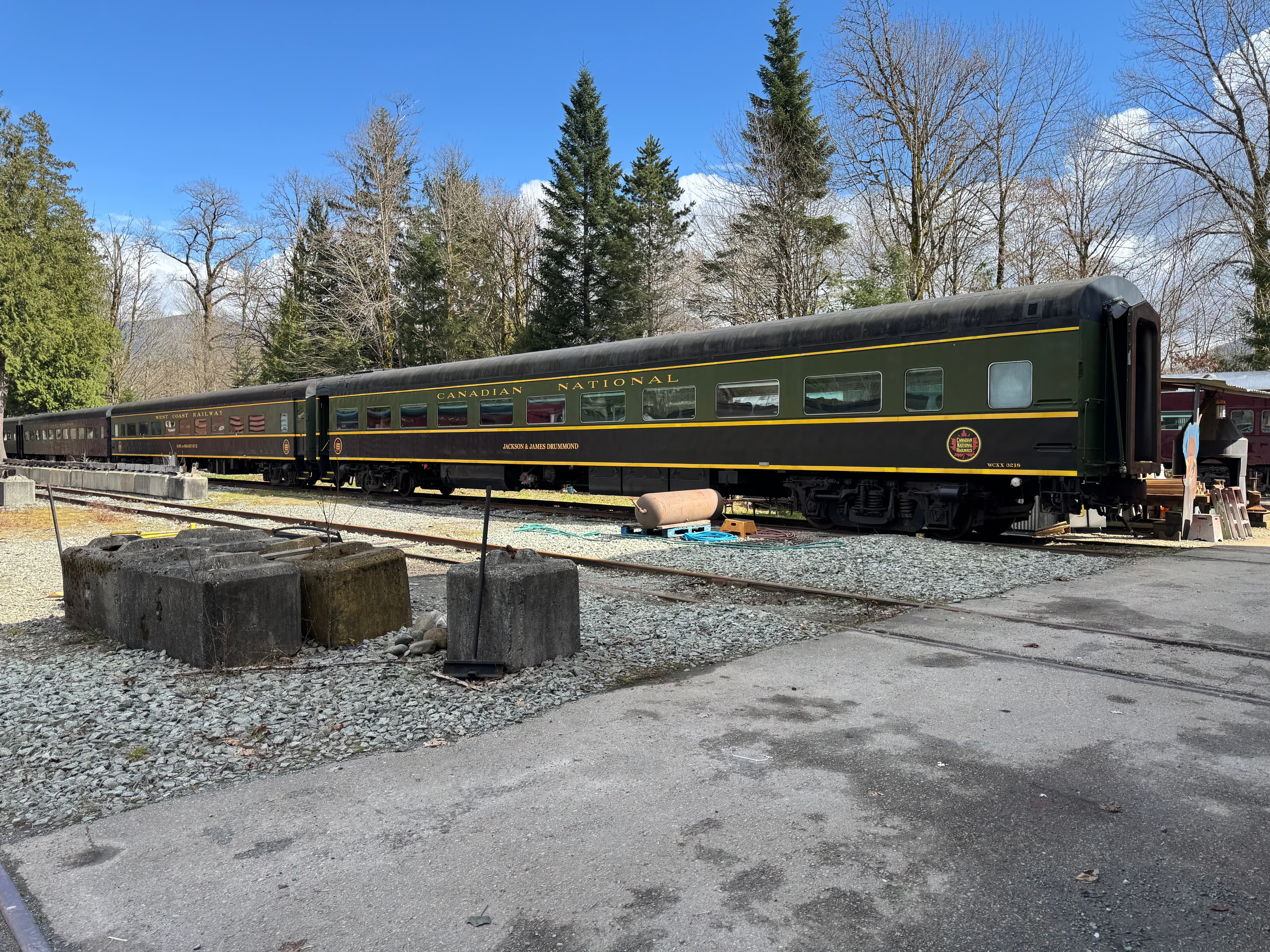
The passenger and work equipment is where the collection earns a detour. Kirkella is a Pullman-built sleeping car of 1913, originally a first-class car with twelve open sections and one drawing room riding on six axles, later downgraded to tourist class and finally used by Canadian Pacific carmen as a bunkhouse and washroom at derailment sites. It was retired in 1996, donated by CP, and refurbished in 1997 for the film Summer of the Monkeys. Two Canadian National coaches, 5302 and 5307, come from a batch of twenty-five cars (5283 to 5307) built by Canadian Car and Foundry between April and June 1942, seating 48 in the main compartment and 16 in the smoking compartment. Four cabooses include CN 78687, built as a boxcar in 1912 and rebuilt as a van by the CN Moncton shops in 1949 with no electricity, an oil stove and an icebox, and steel CN 79282 from Hawker-Siddeley of Thunder Bay in 1967. Work equipment runs to a 1950 Jordan spreader donated by Canadian Pacific after service in the Moose Jaw district, Canadian Pacific snow plough 400657 built at Angus Shops in Montreal in 1913, Canadian National plough 55229 of 1927, a 1929 CP wash car (412718), a CP tool and supply car (412702) and a 300-horsepower generator car built in 1928 by Canadian Car and Foundry.
Three of the fifty-six streetcars the Saskatoon Municipal Railway owned over its 1913 to 1951 lifetime survive here. Car 51 is a steel double-ended tram built in 1927 by National Steel Car of Hamilton, Ontario, with horsehair and rattan seats, birch trim, period advertising and its original buzzer buttons and foot gong; it was recovered from a farm in 1994 and restored by museum volunteers with the Saskatoon Auto Body Association. Car 40 is a wooden single-truck puddle-jumper built by the Preston Car Company in 1911 for the Calgary Municipal Railway and traded to Saskatoon in 1919 because six larger cars exceeded the load limit of the city Traffic Bridge; it awaits major restoration and is not open to the public. Car 203 was built in 1918 by the Cincinnati Car Company for Cleveland, passed to London, Ontario, and was bought by Saskatoon in 1941 during the wartime car shortage. Car 51 is displayed on rails lifted from Saskatoon streets, beside a replica of the University of Saskatchewan loop waiting shed, with poles, a timeclock box, a bench and cobblestones donated by the city.
What to Expect
This is a hands-on outdoor museum on a working industrial site, staffed in season by summer students and volunteers of the Saskatchewan Railroad Historical Association. You check in and pay admission at the Welcome Centre, a purpose-built structure raised in 2021-22 that also holds the gift shop, staff room and washrooms; before that, admissions ran out of a 1919 bunkhouse. Visitors climb into locomotives and cabooses, walk through Argo Station and the Brisbin shelter, and go inside most of the railcars.
The signature ride uses the museum own motorcars. Three restored speeders carry passengers down the line to Argo Station at the far end of the property, and most visitors then walk back through the exhibits at their own pace. Inside the Brisbin portable station, members of the Morris Telegraph Club keep a working telegraph line and operate it on special occasions: you can send yourself a message and collect it at Argo Station at the other end of the grounds. A picnic area is open to the public.
Crowds are modest and the museum runs only three or four days a week, so the yard is usually quiet. The exception is Railway Heritage Day in early August, whose thirtieth edition ran on Monday 3 August 2026 from 10 am to 5 pm with caboose rides, miniature steam train rides, a food truck and visiting exhibitors. Wheelchair and scooter access is limited and not every display is reachable. The museum states plainly that this is an industrial site, that clothing and footwear should suit one, and that gophers dig holes across the grounds.
Best Time to Visit
Operating days are Fridays, Saturdays, Sundays and long-weekend Mondays, 10 am to 5 pm. Arriving near opening gets you the motorcar ride down to Argo Station before the yard fills and leaves the afternoon for the buildings. The one date worth planning a trip around is Railway Heritage Day in early August, the museum largest event of the year, which adds caboose rides, miniature steam train rides, a food truck and visiting exhibitors. Check the museum news page before travelling, since operating days and event dates are set season by season.
Frequently Asked Questions
QWhen is the Saskatchewan Railway Museum open?
The museum opens for the summer only. It runs Fridays, Saturdays, Sundays and long-weekend Mondays from the May long weekend to the September long weekend, 10 am to 5 pm, and closes for the winter. Check the museum news page before travelling, as operating days are set season by season.
QHow much does admission cost?
Adults CAD $10, students aged 6 to 16 CAD $7, seniors over 65 CAD $7, and children under 6 free. An annual membership in the Saskatchewan Railroad Historical Association costs CAD $30 single or CAD $45 family and includes admission for the balance of the year. Admission is paid at the Welcome Centre on arrival; there is no online ticketing.
QHow long should I plan for a visit?
Two to three hours suits most visitors. The site covers seven acres in two yards, with about twenty buildings and thirty railcars, and the usual pattern is a motorcar ride down to Argo Station followed by a walk back through the exhibits.
QCan you ride a train at the museum?
Yes, on the museum own motorcars. Three restored speeders have been fitted to carry passengers down the line to Argo Station at the far end of the property. Railway Heritage Day in early August adds caboose rides and miniature steam train rides.
QAre there steam locomotives on site?
No. The locomotive roster is diesel-era: a 1957 ALCO S-3 built by Montreal Locomotive Works for Canadian Pacific, an 80-ton General Electric centre-cab of 1957 and a 23-ton General Electric of 1941, both from SaskPower, plus a 1957 Whiting Trackmobile. Miniature steam train rides appear at the August Railway Heritage Day event.
QIs the museum wheelchair accessible?
Only partly. The museum states that wheelchair and scooter access is limited and that not all displays are accessible. The grounds are a former railway siding with uneven footing, and the museum warns visitors about gopher holes. The Welcome Centre has washrooms, listed as accessible by Tourism Saskatchewan.
QWhat is the Eaton internment camp exhibit?
The museum site was the station ground of Eaton, renamed Hawker in late 1919. In March 1919 sixty-five internees, most of German or Ukrainian descent, were transferred here from a camp at Munson, Alberta, and set to work for the railways. The Rural Municipality of Corman Park has designated the site as heritage on that basis, and a permanent indoor exhibit on Canada 1914 to 1920 internment operations opened in June 2022, alongside a monument, a four-language plaque and a memorial garden.
QCan you go inside the railcars and buildings?
Yes. This is a hands-on museum: visitors climb aboard locomotives and cabooses, walk through Argo Station and the Brisbin portable station, and enter most of the railcars. Streetcar 40 is an exception, as it awaits major restoration and is not open to the public.
How to Plan Your Visit
Season and Schedule
The museum is open Fridays, Saturdays, Sundays and long-weekend Mondays from the May long weekend to the September long weekend, and is closed for the winter. Outside public hours a volunteer crew works on site every Wednesday from 9 am to 2 pm.
- Operating Hours
- Fri-Sun and long-weekend Mondays, 10:00-17:00
- Season
- May long weekend to the September long weekend; closed in winter
- Main Event
- Railway Heritage Day, early August (30th edition on 3 August 2026)
- Group Tours
- Listed as not currently available during the operating season; enquire at tours@saskrailmuseum.org
Ticket Information
Admission is paid on arrival at the Welcome Centre, which also houses the gift shop; the shop accepts Interac, credit cards, cash and cheques. There is no online ticketing.
- Admission
- Adults CAD $10
- Students (6-16)
- CAD $7
- Seniors over 65
- CAD $7
- Children under 6
- Free
- Annual Membership
- CAD $30 single, CAD $45 family - includes admission for the balance of the year
Accessibility Details
The museum states that wheelchair and scooter access is limited and that not all displays are accessible. The grounds are a former railway siding with uneven footing.
- Wheelchair Access
- Limited - not every display is reachable
- Washrooms
- In the Welcome Centre; listed as accessible by Tourism Saskatchewan
- Terrain
- Uneven former siding ground; the museum warns about gopher holes
What to Bring
The museum asks visitors to wear clothing and footwear suited to an industrial site. There is very little shade in the yard, so sun protection and water matter on a hot afternoon.
- Footwear
- Sturdy closed shoes - the site is a former working railway yard
- Food
- Picnic grounds on site; bring your own
- Cash or Card
- Gift shop takes Interac, credit cards, cash and cheques
Photography Tips
Everything is outdoors, so plan around the sun rather than around opening hours. The Argo Station platform and the streetcar streetscape are the two set pieces worth the most time.
- Best Light
- Late afternoon and evening in July and August
- Elevation
- The rebuilt staircase of the Oban interlocking tower
- Restrictions
- None published; ask staff before using a tripod indoors
The operator does not publish a pet policy — contact them directly before traveling with an animal.
Travel Information
By Air
Saskatoon John G. Diefenbaker International Airport is the gateway. It sits on the north-west side of the city while the museum lies to the south-west, so a rental car is the practical link.
- Nearest Airport
- Saskatoon John G. Diefenbaker International (YXE)
- Airport Location
- About 5.6 km (3.5 mi) north-west of downtown Saskatoon
By Train
VIA Rail transcontinental service The Canadian calls at Saskatoon on its Toronto to Vancouver run. The station is well outside downtown and has no onward link to the museum, so arriving by train still means renting a car.
- Nearest Station
- Saskatoon (VIA Rail), Unit 38, 1701 Chappell Drive
- Service
- The Canadian, Toronto-Vancouver, twice weekly each direction
- Station to Downtown
- About 8 km
By Car
From Saskatoon take Highway 7 west, then turn south onto Highway 60, the Pike Lake Highway. The museum is roughly 2 km down Highway 60, where the road meets the Canadian National tracks at Hawker siding.
- From Saskatoon
- Highway 7 west, then Highway 60 south about 2 km
- Coordinates
- 52.0778, -106.8164
- Onward
- Highway 60 continues about 23 km south to Pike Lake Provincial Park
Parking
Parking is on site at the Highway 60 entrance. The museum first yard begins at the parking lot and runs west toward the streetcar display.
- Parking
- On-site lot at the Highway 60 entrance
Local Transportation
The museum is outside the Saskatoon city limits in the Rural Municipality of Corman Park and no public transport route to the site is published. A car, taxi or ride-hail is the only practical way in.
- Public Transit
- None published to the site
- Getting Around On Site
- On foot, with a motorcar ride to Argo Station at the far end
Nearby Lodging
Find places to stay near Saskatchewan Railway Museum.
This lodging map is provided by Stay22, a third-party service that may set cookies. It loads only with your consent.
Accommodation results are provided by Stay22; we may earn a commission on bookings made through this map.
Nearby Attractions
- Western Development Museum - Saskatoon20 km
The province largest human-history museum and the natural companion visit for railfans. Its Rail Gallery holds CPR steam locomotive 2634, CPR diesel-electric 6553, an 1880s superintendent coach, a combination baggage-passenger coach and a caboose, alongside the indoor 1910 Boomtown street of more than thirty buildings.
- Pike Lake Provincial Park21 km
The far end of the same road. Highway 60 runs about 23 km south from Highway 7 to the park, an oxbow lake on the South Saskatchewan River with camping, beaches and trails - the easiest way to turn a museum morning into a full day out.
- Wanuskewin Heritage Park32 km
A national historic site since 1986, north of Saskatoon, protecting twenty archaeological sites that span nearly 6,000 years of Northern Plains First Nations history in the coulees along Tipperary Creek and the South Saskatchewan River.
- Remai Modern22 km
Saskatoon riverfront art museum, the obvious indoor option if the prairie weather turns while you are out at an open-air railway yard.
- Meewasin Valley Trail20 km
The riverbank trail network that threads through Saskatoon along the South Saskatchewan River, managed by the Meewasin Valley Authority, with river crossings on the city historic bridges.
Official Resources
Photos

 daryl_mitchell
5

daryl_mitchell
5

daryl_mitchell
5

daryl_mitchell
5

daryl_mitchell
5
More Videos
Sask Rail Museum walk through #2
Sask Railway Museum walk through #3
SRM Motorcar
CN drive by
Help improve this page
Spotted something out of date or incorrect? Let our community know.
Explore more experiences: Browse all rail travel experiences.
Booking & Pricing
Price range
$7 – $10 CAD
Adults CAD $10, students aged 6-16 and seniors over 65 CAD $7, children under 6 free. Tour rates are listed separately at CAD $5 (seniors/toddlers) and CAD $6 (other tours). A CAD $30 single or CAD $45 family SRHA membership includes admission for the balance of the year. Prices taken from the museum Admission and Hours of Operation page.
Quick Information
Country
Region
City
Saskatoon
Best Season
The season decides itself: the museum opens for the Saskatchewan summer only, from the May long weekend to the September long weekend, and is closed all winter. July and August bring the longest days and the warmest weather for a walk around an unshaded yard. Late May and June are quieter, and late August into early September gives lower light and cooler working conditions for a long visit on foot.
Visit Duration
2-3 hours
Cost
CAD $10 per adult; CAD $7 for students aged 6-16 and seniors over 65; children under 6 free
Tags
Contact
(306) 382-9855
srha@saskrailmuseum.org