Railway Experience
National Railroad Museum
The only Congressionally designated national railroad museum in the United States, home to Big Boy 4017 and the A4 Dwight D. Eisenhower.
Updated
See everything in Wisconsin7 spots · 24 live cams · 3 experiences · 9 eventsAbout This Experience
The National Railroad Museum occupies 33 acres on Cooke Memorial Park along the west bank of the Fox River in Ashwaubenon, a suburb immediately south of downtown Green Bay, Wisconsin. It was established in 1956 by a group of local businessmen who formed a Steam Locomotive Committee to preserve a favourite steam locomotive and other rolling stock. At the same time General Carl R. Gray, who commanded military railroads during the Second World War, was advocating for a national railroad museum. Two years later, a joint resolution of Congress — driven by U.S. Representative John Byrnes and Senator Alexander Wiley — recognised the Green Bay institution as the National Railroad Museum, making it the only Congressionally designated railroad museum in the country. It has operated as a privately funded 501(c)(3) organisation since 1958 and receives no federal, state or local tax support.
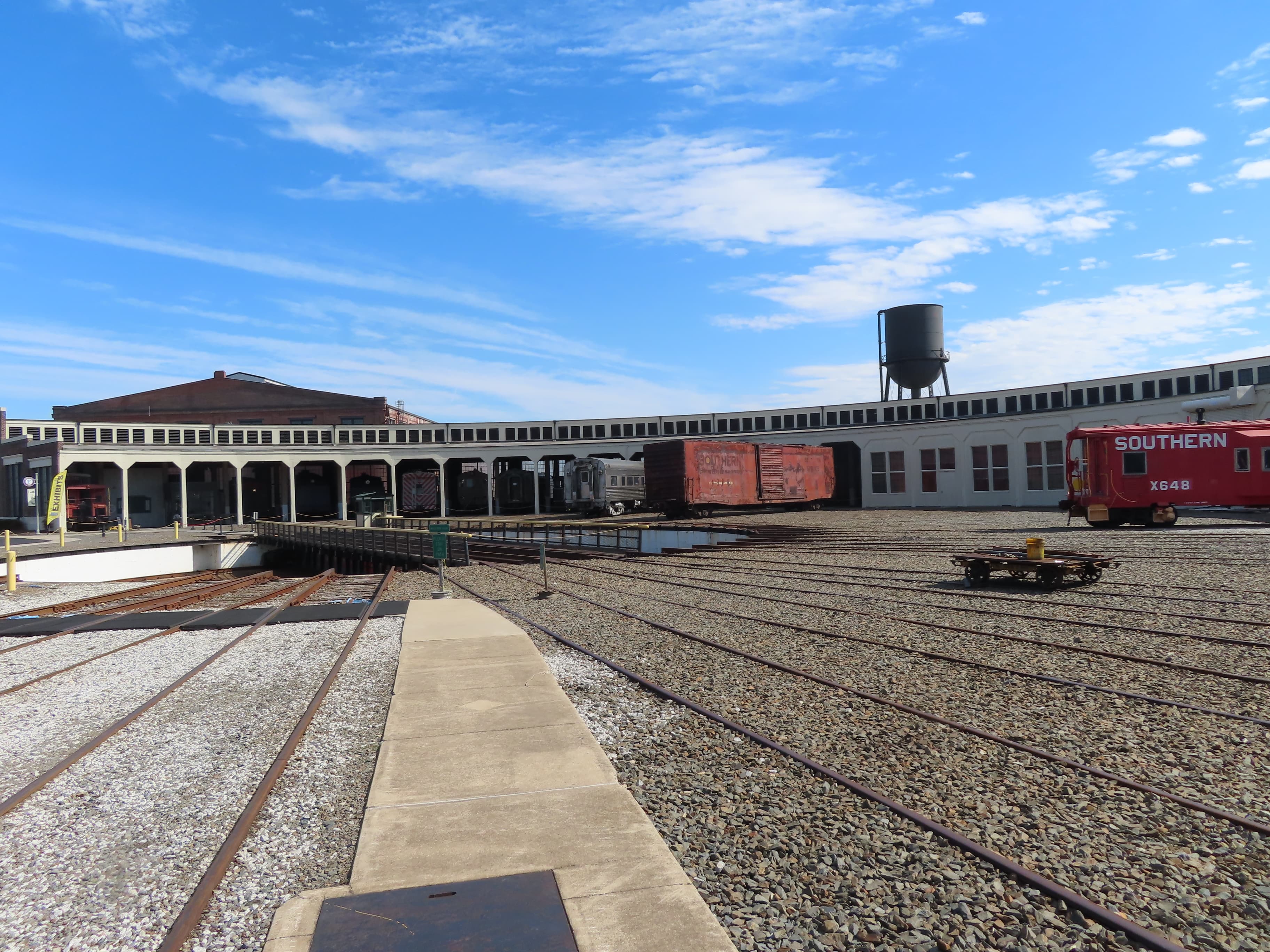
The collection now runs to more than 70 pieces of rolling stock and over 100,000 small artifacts. The rarest and most fragile pieces live indoors in the climate-controlled Frederick J. Lenfestey Center, while others stand outside under the roof of the Victor McCormick Train Pavilion or in the open air. A standard gauge track rings the grounds, and an 80-foot (24 m) wooden observation tower gives views over the Fox River and Green Bay. The museum's archives hold corporate records, annual reports, maps, mechanical and engineering drawings, oral histories and ephemera from railroad companies, labour unions and fraternal organisations; the photograph collection runs to 15,000 prints, slides and negatives of U.S. railroading since 1890.
The site changed substantially in 2025. A $17 million Fox River Expansion — the first of four planned phases, roughly ten years in the making and supported by $7 million in American Rescue Plan Act funds contributed by the state of Wisconsin — opened on 20 September 2025. The glass-walled exhibit hall faces the river, houses several historic cars on tracks, and was designed with education in mind: museum director Jacqueline Frank has said roughly two-thirds of visitors are children, and the building can accommodate 200 schoolchildren touring at once. Annual attendance is over 100,000, served by museum staff and more than 200 volunteers.
Photo Opportunities
The Lenfestey Center is the best photographic asset here: Big Boy 4017 and the A4 Eisenhower are indoors, lit and shootable regardless of weather, which is unusual for locomotives of this size. Indoor light is mixed and uneven — a fast lens or a high ISO is more useful than a tripod in a busy hall. The Big Boy's sheer length rewards a wide angle from the front quarter; the A4's streamlined casing reads better in a tighter side-on frame that isolates the curve.
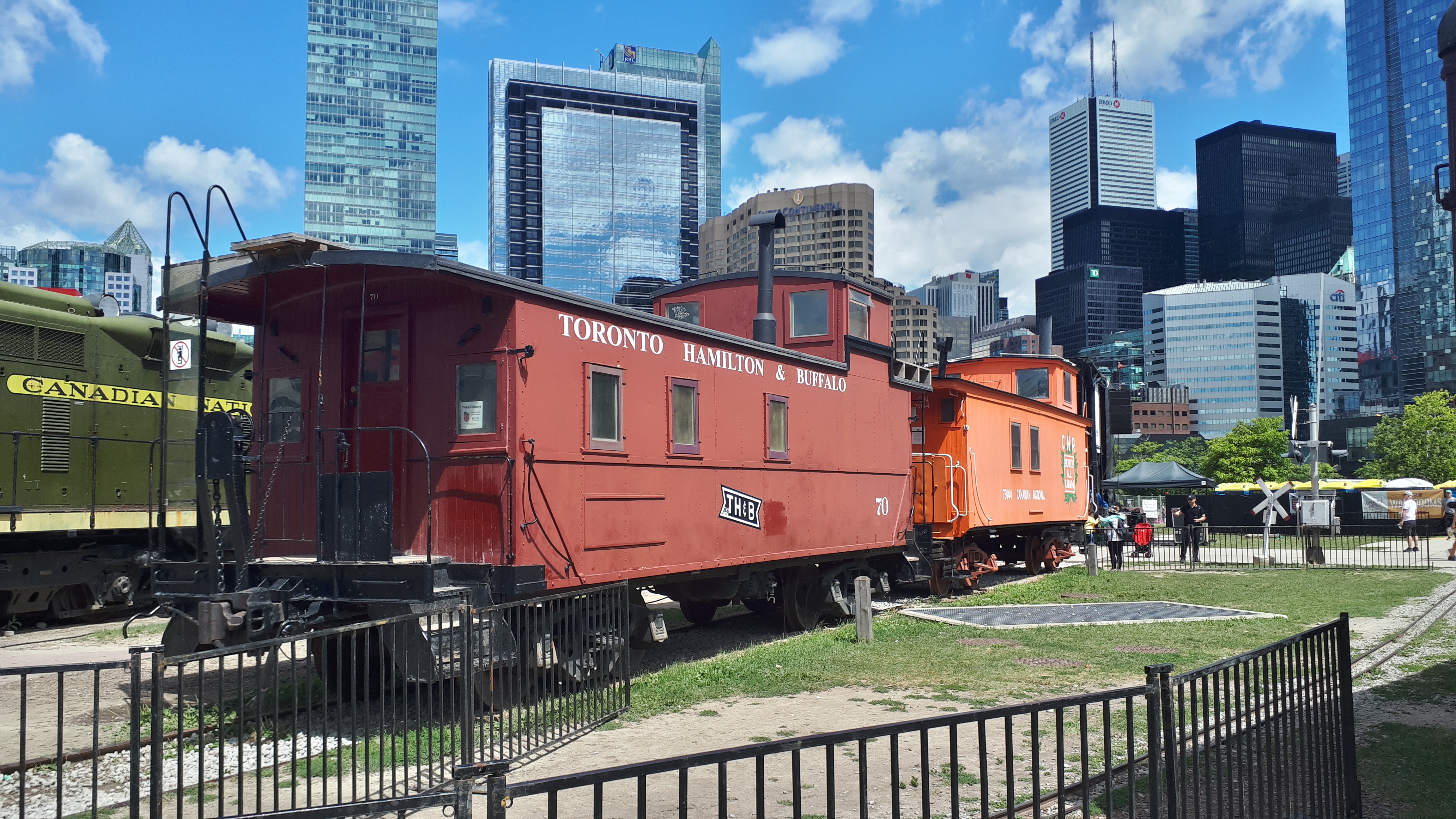
The new Fox River Expansion, opened in September 2025, is glass-walled specifically so daylight falls on the cars inside and the river shows behind them. Late afternoon and the hour before closing give the warmest light through that glass, and the museum has published sunset images of the space. Outdoors, the McCormick Pavilion and open-air track give clean full-side elevations of freight equipment, cabooses and maintenance-of-way pieces without the interior clutter.
The 80-foot (24 m) wooden observation tower on the grounds is the one elevated vantage point, looking out over the Fox River and Green Bay. The seasonal train ride, running May through September and October weekends, puts you trackside along the river shoreline for a perspective on the grounds you cannot get on foot. The museum explicitly encourages visitors to bring a camera or smartphone, and note that by entering you consent to being photographed or filmed by the museum. Personal photography sessions on the grounds are handled as a separate bookable private-event category.
Featured Video
National Railroad Museum: A Closer Look at Union Pacific #4017 "Big Boy"
Official museum channel walkthrough of Big Boy 4017 in the Lenfestey Center.
Why Visit
Two locomotives make this museum a genuine pilgrimage rather than a regional stop. Union Pacific 4017, a 4-8-8-4 "Big Boy" built by Alco in December 1944, is one of eight Big Boys Union Pacific donated to museums and one of only two preserved indoors. It weighs 1.1 million pounds and measures nearly half a football field in length. Its 14-wheel tender was among the largest ever built, carrying 24,000 gallons of water and — after Union Pacific added steel coal boards around the bunker — 32 tons of coal, up from the 28 tons it was designed for. That load was enough to work a 3,600-ton train over the 55 mountainous miles between Ogden and Echo, Utah. Seeing a Big Boy under a roof, lit and approachable rather than weathering in a park, is a distinctly different experience from the outdoor survivors.
The second is British Railways Class A4 No. 60008 Dwight D. Eisenhower, built at Doncaster Works in 1937 as LNER No. 4496 Golden Shuttle and renamed for the Supreme Allied Commander after the war. It is the only A4 in the United States and the only British passenger locomotive in the collection. It arrived in Green Bay on Memorial Day 1964, and Eisenhower himself visited that September. In 2012 the museum loaned it to the National Railway Museum in York for the 2013 "Great Gathering" of A4s; York carried out a cosmetic restoration as part of the loan agreement and the locomotive returned to Green Bay in June 2014. Coupled behind it are LNER teak sleepers 1591 and 1592, converted for Eisenhower's use during the war — 1591 restored to its post-war donation appearance, 1592 complete with armour plating as it looked in wartime. All three sit in the Lenfestey Center.
Beyond those two, the roster rewards a slow walk. Atchison, Topeka and Santa Fe 5017, a 5011-class 2-10-4 built by Baldwin in July 1944, is the second largest locomotive on site. Chesapeake and Ohio 2736 is a K-4 2-8-4 built by Alco in 1944, one of twelve preserved. Lake Superior and Ishpeming 24, an Alco 2-8-0 of 1910, is the oldest locomotive in the collection. Pennsylvania Railroad GG1 No. 4890 represents the great electric era, and one of only two surviving General Motors Aerotrain sets — the Rock Island trainset with its power car and two cars — stands as a monument to 1950s streamlining that did not work out. The Bauer Drumhead Gallery, built on over three dozen drumheads donated by Frederick Bauer in 1999, holds one of the rarest categories of railroad memorabilia; most were scrapped along with the observation cars they hung on.
What to Expect
Plan on two to three hours. The museum is a mix of indoor halls and outdoor display track, so the experience shifts with the weather and the season. The Lenfestey Center, Fuller Hall and Bauer Hall are temperature-controlled; the McCormick Pavilion is roofed but open to the air, and a good share of the rolling stock stands entirely outside. Dress for the forecast — this is northeastern Wisconsin, and winter here is not nominal.
The crowd skews strongly toward families with children rather than dedicated railfans, which is a deliberate result of a programming shift the museum made after realising two-thirds of its visitors were children. The Children's Discovery Depot, the theatre presentations and the summer train ride are all built around that audience. For a railfan this mostly means the halls are livelier than a hushed archive and that midweek mornings outside school-trip season are calmer than weekend afternoons. Note that the Discovery Depot can close during special events such as The Polar Express and The Great Pumpkin Train — call (920) 437-7623 ahead if it matters to your visit.
From May through 30 September the museum runs a diesel-hauled train ride daily, weekends only in October, and none from November through April. The ride lasts about 25 minutes and covers two miles — two loops of a one-mile circuit through wooded ground, along the Fox River shoreline and past museum property — while the conductor talks through the rolling stock, railroad safety and hobo culture. It costs $6 per person on top of admission. Two theatre films run daily: "Last of the Giants" on the Big Boy locomotives, and "A Brief History of Railroad Snowplows" produced by board member Brian Buchanan. Many cars have ramps or stairs that let visitors look inside from a level platform, and most educational programming is deliberately staged outside the cars, since equipment built before the ADA is difficult to enter.
Best Time to Visit
June through September is the sweet spot: full train-ride operation, comfortable weather for the outdoor pavilion and grounds, and long daylight through the glass of the Fox River Expansion. October weekends still carry train rides plus The Great Pumpkin Train. Mid-November to mid-December is dominated by The Polar Express Train Ride, which is popular and closes the museum an hour before each day''s first show — charming if you have children, disruptive if you came for the collection. January through March is the quietest stretch: the museum closes Mondays, the outdoor equipment is snowbound, but the Lenfestey Center halls are heated and nearly empty. Tuesdays are worth noting year-round — the museum stays open to 8 PM, with a 6 PM train ride in season and a 6:30 PM screening.
Frequently Asked Questions
QHow long should I plan for my visit?
Two to three hours covers the indoor halls, the outdoor rolling stock and a theatre presentation comfortably. Add about 25 minutes if you take the seasonal train ride, and more if you are photographing the collection seriously or visiting with children who will want time in the Children''s Discovery Depot.
QCan I see Big Boy 4017 indoors?
Yes. Union Pacific 4017 is preserved inside the climate-controlled Frederick J. Lenfestey Center, making it one of only two Big Boy locomotives displayed indoors anywhere. It is viewable year-round regardless of weather.
QIs the Dwight D. Eisenhower locomotive still in Green Bay?
Yes. British Railways Class A4 No. 60008 was loaned to the National Railway Museum in York, England in 2012 for the 2013 Great Gathering and returned to Green Bay in June 2014. It is displayed in the Lenfestey Center with LNER command cars 1591 and 1592.
QWhen do the train rides operate and what do they cost?
Diesel-hauled rides run daily from May 1 to September 30 and on weekends only in October, with no service from November through April. The ride is $6 per person on top of paid museum admission, lasts about 25 minutes and covers two miles in two loops of a one-mile circuit.
QHow much is admission?
Admission is $15 for adults and children 13 and older, $12 for seniors 62+ and college students with valid ID, $10 for children 2 to 12, and free for children under 2. Prices vary on special event days. Members, NARM members and qualifying ASTC members receive free daily admission.
QIs the museum open in winter?
Yes, year-round. From January through March it closes Mondays and shortens hours to 9 AM-4 PM Tuesday through Saturday (Tuesdays to 8 PM) and 11 AM-4 PM Sunday. Outdoor equipment is snowbound in that period, but the Lenfestey Center, Fuller Hall and Bauer Hall are heated.
QIs photography allowed?
Yes, and the museum explicitly recommends bringing a camera or smartphone. Note that by entering the grounds you grant the museum permission to photograph or film you. Formal photography sessions on the property are handled separately as a bookable private event.
QWhat is the Fox River Expansion?
A $17 million glass-walled exhibit hall along the Fox River that opened on 20 September 2025, the first of four planned expansion phases. It houses historic cars including the Pullman sleeper Lake Mitchell, home to the Pullman Porters: From Service to Civil Rights exhibit, and was designed to accommodate large school groups.
How to Plan Your Visit
Season and Schedule
The museum is open year-round, with reduced winter hours and a Monday closure from January through March. Seasonal train rides run daily from May to 30 September and on October weekends only.
- Operating Hours
- April-December: Mon 9 AM-5 PM, Tue 9 AM-8 PM, Wed-Sat 9 AM-5 PM, Sun 11 AM-5 PM. January-March: Mon closed, Tue 9 AM-8 PM, Wed-Sat 9 AM-4 PM, Sun 11 AM-4 PM
- Closed
- Easter, Thanksgiving, Christmas Eve, Christmas Day, New Year''s Day; closes 2 PM New Year''s Eve
- Train Ride Season
- Daily May 1 - September 30; weekends only in October; no rides November-April
- Train Departures
- 10 AM (not Sundays), 12 PM, 2 PM, 4 PM, 6 PM (Tuesdays only)
- Peak Season
- June-September, plus Polar Express mid-November to mid-December
Ticket Information
Admission can be bought online in advance or at the ticket desk, and prices vary on special event days. Train rides are a separate $6 add-on and require paid admission.
- Admission
- Adults and children 13+ $15
- Children 2-12
- $10 (free under 2)
- Seniors 62+
- $12
- College Students
- $12 with valid college ID
- Train Ride
- $6 per person, in addition to admission
- Museums for All
- $5 per person with SNAP EBT card and photo ID, up to four people
- Reciprocal
- Free admission for NARM members; free admission for ASTC members beyond 90 miles (train rides $6)
Accessibility Details
Free on-site parking includes five accessible stalls next to the entrance, and complimentary wheelchairs are available at the Museum Store. Many railcars predate the ADA, so most programming happens outside the cars rather than in them.
- Accessible Parking
- Five stalls beside the museum entrance
- Wheelchairs
- Complimentary, ask at the Museum Store or call ahead
- Climate Control
- Lenfestey Center, Fuller Hall and Bauer Hall are temperature-controlled
- Railcar Access
- Some cars have ramps or stairs for level viewing; interiors may be difficult for limited mobility
- Dementia Friendly
- Staff are Purple Angel certified through the ADRC
What to Bring
The museum recommends comfortable shoes, a camera, and clothing suited to the forecast since exhibits are both indoors and outdoors. Picnic spots are available on the grounds, though food and drink cannot be carried into exhibit areas.
- Recommended
- Comfortable shoes, camera or smartphone, weather-appropriate clothing, water and sunscreen in summer
- Picnics
- Permitted on the grounds; no food or beverage inside exhibit areas
- Not Permitted
- Alcohol, firearms, nicotine products and vapes, pets (service animals welcome)
Photography Tips
Big Boy 4017 and the A4 Eisenhower are both indoors under mixed artificial light, so a fast lens or high ISO beats a tripod in a busy hall. The glass-walled Fox River Expansion is best in late-afternoon daylight.
- Best Indoor Subjects
- UP 4017 Big Boy and BR A4 60008 in the Lenfestey Center
- Elevated Vantage
- 80-foot (24 m) wooden observation tower over the Fox River
- Consent Notice
- Entering the museum grants it permission to photograph or film visitors
Traveling with Pets
Service animals only
"For the safety of our patrons and their pets, service animals are the only animals allowed outside of vehicles on National Railroad Museum property." The rule covers the grounds, the exhibit buildings and the train rides alike — a pet may only stay in the visitor's vehicle. Comfort, support, therapy and companion animals are not permitted.
Verified — operator's pet policy
Travel Information
By Air
Green Bay Austin Straubel International Airport (GRB) is the closest airport and sits in the same suburb of Ashwaubenon, a short drive west of the museum. Milwaukee Mitchell (MKE) and Chicago O''Hare (ORD) offer wider schedules for a longer drive north.
- Nearest Airport
- Green Bay Austin Straubel International (GRB), Ashwaubenon
- Larger Hubs
- Milwaukee Mitchell (MKE) and Chicago O''Hare (ORD), both a longer drive south
By Train
There is no scheduled passenger rail service to Green Bay, so arriving by train is not practical. The nearest Amtrak service is in southeastern Wisconsin, roughly a two-hour drive south.
- Amtrak Service
- None in Green Bay; nearest stations are in the Milwaukee area
By Car
The museum publishes route directions from the north, south and east, all built around I-41, WI-172 and South Ashland Avenue. The final approach is via Cormier Road onto South Broadway.
- From the North
- I-41 S to Exit 165, WI-172 East, ramp toward Ashland Ave/Oneida St, left on Vanderperren Way/CR-HH, left on WI-32 N/Ashland Ave, right on Cormier Rd, left on S. Broadway
- From the South
- I-41 N to exit 163B (S. Ashland Ave, De Pere), follow Ashland Ave 2.75 miles to Cormier Rd, right 0.25 miles, left on S. Broadway
- From the East
- I-43 N to WI-172 W, exit toward WI-32/Oneida St/Ashland Ave, right on Pilgrim Way, left on S. Broadway
- Address
- 2285 South Broadway, Green Bay, WI 54304
Parking
The museum has its own free parking lot on the grounds, open during business hours, including five accessible stalls beside the entrance.
- Cost
- Free
- Location
- On-site lot within the museum grounds
- Accessible Stalls
- Five, next to the museum entrance
Local Transportation
Green Bay Metro operates the local bus network serving Green Bay and Ashwaubenon, and ride-hailing services are available. A car remains the simplest way to combine the museum with Lambeau Field and the other Green Bay attractions.
- Public Transit
- Green Bay Metro city bus network
- Recommended
- Car or ride-hailing for combining nearby attractions
Nearby Lodging
Find places to stay near National Railroad Museum.
This lodging map is provided by Stay22, a third-party service that may set cookies. It loads only with your consent.
Accommodation results are provided by Stay22; we may earn a commission on bookings made through this map.
Nearby Attractions
- Green Bay Packers Hall of Fame & Lambeau Field Stadium Tours3.5 km
The Hall of Fame and stadium tours operate from the Lambeau Field Atrium at 1265 Lombardi Avenue, the closest major attraction to the museum and the obvious pairing for a Green Bay day.
- Titletown District3.7 km
A year-round community development immediately west of Lambeau Field with parks, Ariens Hill, restaurants and a full events calendar. Walkable from the Hall of Fame.
- Heritage Hill State Historical Park6.4 km
A Wisconsin state park at 2640 S. Webster Avenue with 27 original and reconstructed buildings interpreting northeastern Wisconsin from the 1600s to the early 20th century, with live print shop and blacksmithing demonstrations.
- Neville Public Museum6 km
Brown County's museum of art, history and science in downtown Green Bay, covering regional history alongside travelling exhibitions. A natural indoor companion on a cold or wet day.
- Green Bay Botanical Garden7 km
A large public garden northwest of the museum with seasonal displays and a well-known winter light event, offering an outdoor counterpoint to a morning spent indoors with locomotives.
Official Resources
Photos

 TrainDriverYoda
4

TrainDriverYoda
4

TrainDriverYoda
4

David Wilson
CC BY 4.0
Chad Davis
CC BY-SA 2.0

Michael Barera
CC BY-SA 4.0
More Videos
Trains Presents: Big Boy No. 4017 at the National Railroad Museum
Trains Magazine feature on 4017, one of only two Big Boys preserved indoors.
UP Big Boy 4017 tour at the National Railroad Museum
Railfan tour by GFW Trains covering the cab, drivers and tender.
X4017 BIG BOY - indoors at the National Railroad Museum
Indoor walkaround of 4017 by Too Many Hobbies Jeremy.
Inside the Big Boy 4017 National Railroad Museum Green Bay, WI 2-14-20
Visitor footage from inside and around the locomotive.
Help improve this page
Spotted something out of date or incorrect? Let our community know.
Explore more experiences: Browse all rail travel experiences.
Booking & Pricing
Price range
$10 – $15 USD
Adults and ages 13+ $15; seniors 62+ and college students $12; children 2-12 $10; under 2 free. Seasonal train rides are an additional $6 per person. Admission prices vary on special event days.
Quick Information
Country
Region
City
Green Bay
Best Season
Late spring through early autumn is the strongest window. Train rides run daily from May to 30 September and on October weekends only, so a visit outside that period misses the ride entirely. Summer also opens up the outdoor rolling stock, the observation tower and the picnic grounds along the Fox River without a winter coat.
Visit Duration
2-3 hours
Cost
$15/adult, $10/child 2-12; train rides $6 extra
Tags
Contact
(920) 437-7623
info@nationalrrmuseum.org