


Updated
Length
870 km
Max speed
249 km/h
Stations
7
Budget
EUR 23.8B
Rail Baltica is a new 1435 mm railway of about 870 km (541 miles) across Estonia, Latvia and Lithuania, designed for 249 km/h (155 mph). RB Rail said in April 2026 that 267 km were construction-ready; on 22 September 2026 the three Baltic prime ministers moved the target to the 2028-2034 EU budget.
About This Project
Every railway in Estonia, Latvia and Lithuania was built to the 1520 mm gauge, while the rest of the European Union, which the three states joined in 2004, uses 1435 mm. Rail Baltica is a new standard-gauge, electrified line from the Ülemiste terminal in Tallinn via Pärnu, Riga, Riga International Airport, Panevėžys and Kaunas to the Lithuanian-Polish border, with a branch to Vilnius. The three national sections add up to about 870 km (541 miles): 213 km in Estonia, 265 km in Latvia and 392 km in Lithuania, according to the Lithuanian Transport Ministry; RB Rail's infrastructure page speaks of nearly 900 km (560 miles) without defining the scope. RB Rail AS, the joint venture the three states founded on 28 October 2014, plans seven international passenger stations and more than 40 local stops, with design speeds of 249 km/h (155 mph) for passengers and 120 km/h (75 mph) for freight.
Progress is uneven by country. At its Industry Day on 27 April 2026, RB Rail said 267 km (166 miles) of main line were construction-ready, which it described as 43% of the Phase I main line. Rail Baltic Estonia reported 103 km (64 miles) of main-line embankment under construction between Tallinn and Pärnu and alliance contracts signed for the complete construction of 200 km (124 miles). In Lithuania, 114 km (71 miles) between Panevėžys and Kaunas are under construction, and track laying began on 6 October 2025 on the 8.8 km (5.5 mile) Šveicarija-Žeimiai segment in the Jonava district. In Latvia, RB Rail counted work on a 30 km (19 mile) priority southern section, alongside the Riga Central Station and Riga Airport works.
The money is where the story turns. Estimates based on 2017 data put the bill at 5.8 billion euro. The updated cost-benefit analysis published on 10 June 2024 set Phase 1 at 15.3 billion euro, about 26 million euro per kilometre, and the full scope at up to 23.8 billion euro, which the European Court of Auditors expresses in 2023 prices; since mid-2026 RB Rail has cited 14.3 billion euro for the first phase, of which 5.5 billion in Latvia. In January 2026 the Court found that the objective of integrating the Baltics into the European network by 2030 will not be achieved, that 2030 now applies only to a first phase, and that there is no timeline for the full project.
The calendar then moved politically. On 22 September 2026 the prime ministers of Estonia, Latvia and Lithuania agreed, as reported by LSM, that the main line should be in service within the 2028-2034 EU budget, and asked for at least 10 billion euro of EU funding. Matīss Paegle, chairman of RB Rail's supervisory board, told LSM that 2030 had not been cancelled and that 2034 was not recognised as a new deadline; the EU's own implementing decision still refers to 2030. Estonia's plan, reported by ERR, targets Tallinn-Pärnu by the end of 2032 and the cross-border section by the end of 2034. South of the border, Poland is modernising almost 400 km (about 250 miles) of the existing E75 line from Warsaw to Trakiszki; on 15 September 2026 PKP PLK signed the contract for the Białystok-Ełk section.
Video
Why This Project Matters
Rail Baltica exists to remove a gauge break. Because the Baltic network is 1520 mm and the rest of the EU is 1435 mm, there is no through passenger service to Poland and westbound freight has to change bogies or be transhipped at the border. The updated cost-benefit analysis of June 2024 forecasts 51.7 million passenger trips and 10.9 million tonnes of cargo a year by 2046.
The second motivation is strategic. RB Rail presents the line as a military-mobility corridor as well as a passenger railway: it received 5.29 million euro under an EU military-mobility agreement signed in August 2022 and 51.55 million euro from the CEF military-mobility call announced in January 2024, according to LSM. The project is part of the TEN-T North Sea-Baltic corridor, where Connecting Europe Facility grants can cover up to 85% of eligible costs.
The third motivation is economic. The 2024 analysis puts direct net economic benefits at 6.6 billion euro and the contribution to Baltic GDP at 15.5 to 23.5 billion euro, or 0.5 to 0.7% of GDP.
Technical Details
According to RB Rail's infrastructure page, Rail Baltica is built to 1435 mm standard gauge, electrified at 2x25 kV AC and signalled with ERTMS Level 2, with a 25-tonne axle load. Design speed is 249 km/h (155 mph) for passenger trains and 120 km/h (75 mph) for freight, there are no level crossings, and the route counts more than 40 bridges, overpasses, viaducts and tunnels.
The first phase is narrower than the design. Estonia's Ministry of Climate told the Riigikogu in August 2025 that the Estonian section would be built single-track, with traffic control at 80% and electrification at 70% of full capacity, 11 to 13 viaducts deferred and 12 local stops built at a minimal level. The prime ministers' agreement of 22 September 2026 also refers to single-track sections and cost cuts.
Systems and rolling stock are lagging. RB Rail reported in April 2026 that the electrification contract had been signed in 2025. The three Baltic states launched a joint procurement for regional trains on 19 March 2026, but ERR reported that no compliant bid had arrived by the 8 September 2026 deadline and that a new tender would follow.
Economic Impact
The June 2024 cost-benefit analysis puts direct net economic benefits at 6.6 billion euro and the contribution to the combined GDP of the three Baltic states at 15.5 to 23.5 billion euro, or 0.5 to 0.7% of GDP. It splits benefits roughly 80% passenger transport, 14% environment and 5% freight, and counts better affordability for 351,000 lower-income residents and better access for 59,000 reduced-mobility passengers.
The contracts are large for the region. The Latvian main-line contract signed on 21 December 2023 with the joint venture of Eiffage Génie Civil, Budimex and Rizzani de Eccher is estimated at 3.7 billion euro for about 230 km (143 miles), according to Budimex. BESIX and Rere Būve signed the Riga Central Station contract on 29 May 2019 for about 430.5 million euro before VAT, and in Poland PKP PLK signed the Białystok-Ełk contract for 4.084 billion zloty net in September 2026.
The financing gap is the counterweight. More than 4 billion euro of EU money had been secured by 2025, while RB Rail's first-phase figure is 14.3 billion euro and the three prime ministers asked in September 2026 for at least 10 billion euro more from the 2028-2034 EU budget.
Environmental Impact
Rail Baltica is fully electrified, and the 2024 cost-benefit analysis attributes about 14% of the project's benefits to environmental improvement and projects a 1.5 to 3.3% reduction in energy consumption, mainly through modal shift from road and air.
Habitat fragmentation is the main local impact. RB Rail plans more than 90 wildlife crossings along the corridor, and the Latvian main-line contract includes 11 animal crossings alongside 175 engineering structures, according to Budimex. The 2011 AECOM study favoured the Pärnu corridor over routes via Tartu partly on environmental grounds.
Challenges & Controversies
Cost is the central dispute. Estimates based on 2017 data put the project at 5.8 billion euro; the June 2024 cost-benefit analysis raised the full scope to up to 23.8 billion euro, and LRT reported that the European Court of Auditors put the cost at nearly four times the initial estimate. The 2024 analysis attributes the increase 31% to a larger scope, 51% to more precise data as design advanced and 18% to external requirements, and cites about 40% cumulative inflation between 2017 and 2022. According to LSM, auditor Guido Fara stressed the many unknowns of the second phase, which has no completion schedule.
Latvia has had the roughest ride. Transport Minister Rihards Kozlovskis said in July 2026 that the management of the Latvian implementing company Eiropas Dzelzceļa līnijas had changed eleven times since 2014, called this unacceptable and proposed a four-member board (LSM, 21 July 2026). LSM reported on 13 May 2026 that audits ordered on 10 March 2026 by then Prime Minister Evika Siļņa found 72 million euro spent on a Daugava bridge pier and the Mārupe overpass after a December 2024 government decision to suspend them. LSM also reported in February 2026 that Latvia had money for only 52.66 km (33 miles) of main-line embankment.
Critics have long argued that the business case was weak: TalTech economist Karsten Staehr titled a March 2026 essay “Rail Baltica – a predictable failure”, and ERR reported in 2024 that the three Baltic national audit offices saw a funding gap of about 19 billion euro. The 2011 AECOM study also weighed routes through Tartu before favouring Pärnu. Even the deadline is contested inside the project: RB Rail's supervisory board chairman said in September 2026 that 2034 was not recognised as a new deadline.
Project Timeline
RB Rail AS founded as the joint venture of the three Baltic states
Estonia, Latvia and Lithuania founded RB Rail AS to coordinate the design and procurement of the line. Rail Baltic Estonia had been set up earlier the same year.
SourceBaltic prime ministers sign the intergovernmental agreement
The agreement between Estonia, Latvia and Lithuania set the legal basis for building the 1435 mm line.
SourceEstonian parliament ratifies the agreement by 63 votes
The Riigikogu ratified the intergovernmental agreement; county spatial plans for Harju, Pärnu and Rapla followed in February 2018.
SourceFirst basic design contract awarded to IDOM for the Rapla-Tootsi section
The Spanish engineering firm IDOM took the 71 km (44 mile) Rapla-Tootsi design package for 6.8 million euro excluding VAT.
SourceConstruction begins with the cornerstone of the Saustinõmme viaduct
The first Rail Baltica structure was started in Estonia, 25 years after the 1994 regional study that first argued for the link.
SourceLatvian main-line contract signed with the Eiffage, Budimex and Rizzani de Eccher joint venture
The consortium led by Eiffage Génie Civil signed a contract estimated at 3.7 billion euro for about 230 km (143 miles) of main line, with 175 engineering structures and 11 animal crossings, according to Budimex.
SourceUpdated cost-benefit analysis puts Phase 1 at 15.3 billion euro
The analysis set Phase 1 at 15.3 billion euro, about 26 million euro per kilometre, and the full scope at up to 23.8 billion euro, against 5.8 billion euro on 2017 data. It put direct net benefits at 6.6 billion euro.
SourceEuropean Commission adopts Implementing Decision (EU) 2025/1332
The decision repealed the 2018 decision under the revised TEN-T Regulation, set new milestones and restated the goal of integrating the Baltic states into the European rail network by 2030.
SourceEstonia cuts its first phase to single track to keep 2030
Deputy Secretary General Sander Salmu told the Riigikogu Economic Affairs Committee that the Estonian section would be single-track, with traffic control at 80% and electrification at 70% of full capacity, 11 to 13 viaducts deferred and 12 local stops built at a minimal level.
SourceFirst Rail Baltica track laid, in the Jonava district of Lithuania
Leonhard Weiss began laying 8.8 km (5.5 miles) of track between Šveicarija and Žeimiai under a 13.9 million euro contract, using 86,200 tonnes of ballast, 29,500 concrete sleepers and 42 km of rail.
SourceEuropean Court of Auditors: the 2030 integration objective will not be achieved
Presenting special report 02/2026, the Court found that 2030 now applies only to a first phase, that there is no timeline for the full project, and that costs are nearly four times the initial estimate, as reported by LSM and LRT.
SourceLatvia has funding for just over 50 km of main-line embankment
LSM reported that Latvia could build 52.66 km (33 miles) of main-line embankment with the money available, first on the Lithuanian border-Misa section plus a short Misa-Daugava stretch.
SourceBaltic states launch a joint procurement for Rail Baltica regional trains
Estonia, Latvia and Lithuania announced a joint tender for the regional trains that will run on the new line.
SourceLithuania sets the end of 2033 for its Rail Baltica section
A Lithuanian government planning document set the end of 2033 as the completion date for the Lithuanian section, according to LRT.
SourceRB Rail reports 267 km construction-ready, 43% of Phase I main line
At its Industry Day, RB Rail reported 107 km under construction in Estonia, 114 km in Lithuania with track laying under way, and work on a 30 km priority section in Latvia.
SourceLatvian audits find 72 million euro spent on suspended works
LSM reported that audits ordered on 10 March 2026 by then Prime Minister Evika Siļņa found work had continued on a Daugava bridge pier and the Mārupe overpass after a December 2024 decision to suspend them.
SourceJoint regional train procurement fails to attract a compliant bid
ERR reported that no compliant tender had been received by the 8 September 2026 deadline and that a new procurement would be launched.
SourcePKP PLK signs the Białystok-Ełk modernisation contract in Poland
A consortium led by Track Tec Construction, with INTOP, Unibep and PPMT, signed a contract of 4.084 billion zloty net for about 95 km (59 miles) of the E75, with completion planned in the fourth quarter of 2029, according to PKP PLK.
SourceBaltic prime ministers move the main-line target to the 2028-2034 EU budget
Kulbergs, Sinkevičius and Michal agreed that the main line should be in service within the 2028-2034 EU budget and asked for at least 10 billion euro of EU funding. RB Rail supervisory board chairman Matīss Paegle said 2030 had not been cancelled.
SourceEstonia plans Tallinn-Pärnu for 2032 and the cross-border section for 2034
According to ERR, Estonia's plan targets completion of the Tallinn-Pärnu section by the end of 2032 and of the section to the Latvian border by the end of 2034.
SourceVideos
Rail Baltica construction updates: April 2026
Rail Baltica Progress in Lithuania: Q2 2026
Rail Baltica Riga Central Station visualisation
European Railway Project of the Century: Rail Baltica
Photos
External Resources
Official resources
Learn more
Frequently Asked Questions
When will Rail Baltica open?▾
Why did the cost jump from 5.8 to 23.8 billion euro?▾
Can I ride Rail Baltica today?▾
How far along is construction?▾
Does Rail Baltica reach Warsaw?▾
How fast will the trains run?▾
What happens to the existing 1520 mm railways?▾
Who is paying for it?▾
Help improve this page
Spotted something out of date or incorrect? Let our community know.
Related on Spotatrain
More Cross-Border Rail Mega-Projects
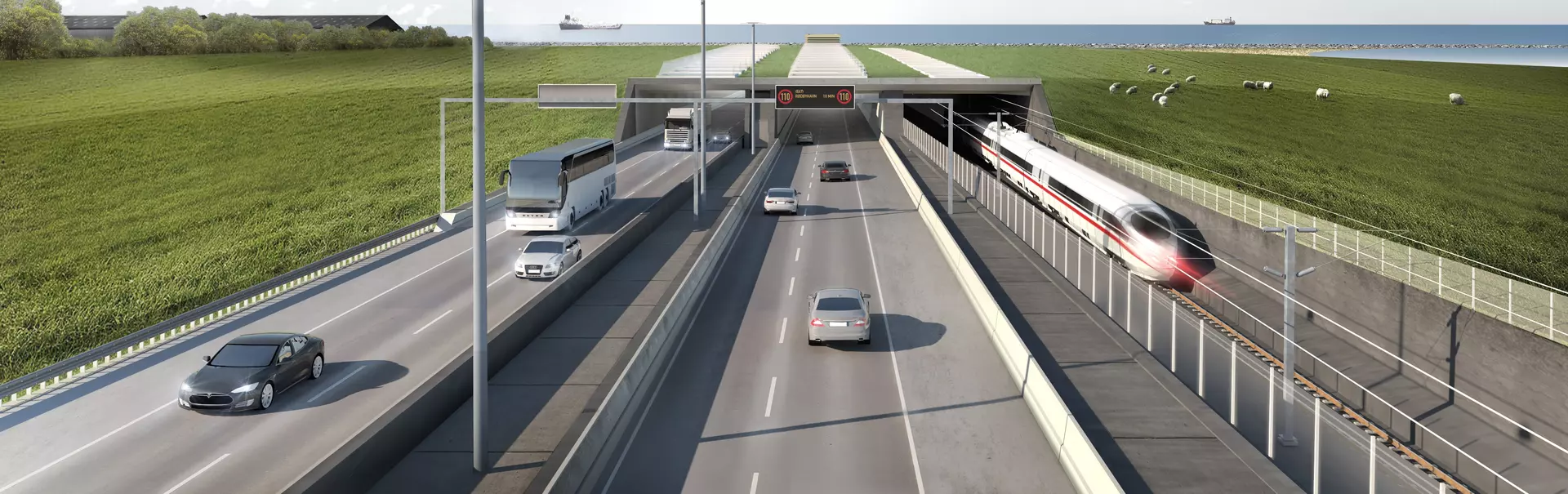
More Mega-Projects Worldwide
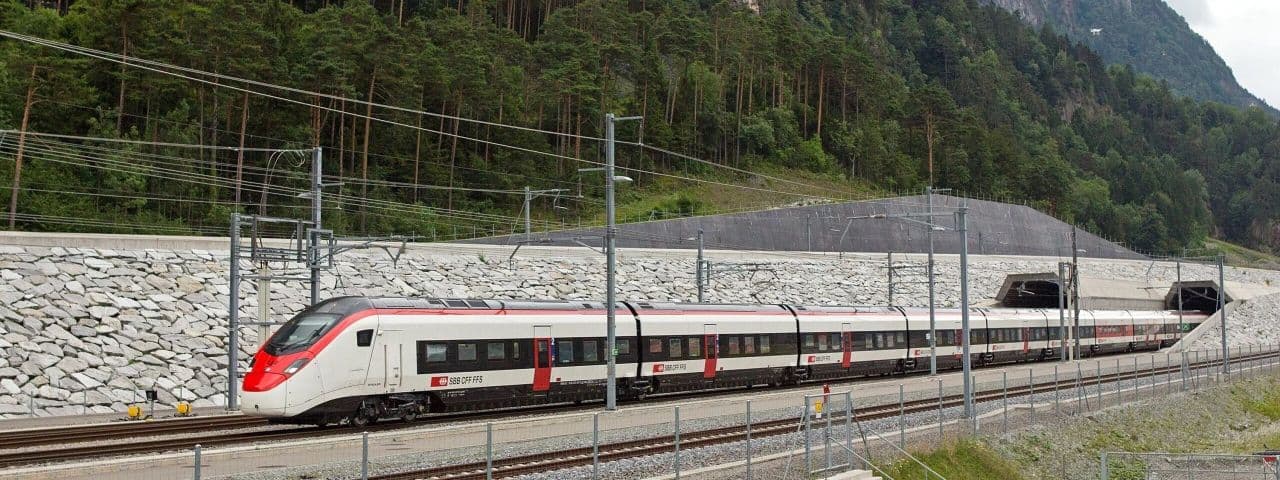
Gotthard Base Tunnel
The world's longest railway tunnel, slicing 57 km flat through the Swiss Alps.
HS2
Britain's most ambitious post-war railway, halved in scope and being rebuilt under a 2026 programme reset.


California High-Speed Rail
San Francisco to Los Angeles in under three hours — the high-speed line taking shape in California's Central Valley
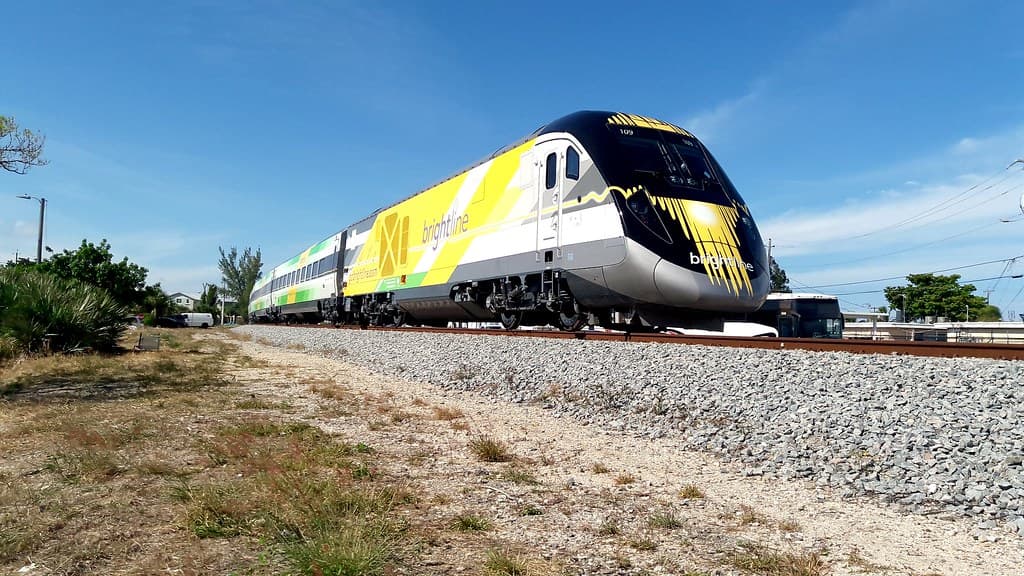
Brightline West
America's first true high-speed rail: Las Vegas to greater Los Angeles at 200 mph

Explore around this project
1 place on Spotatrain within 25 km of this project — 1 event.