Spotting Location
Argo Crossing (Seattle)
Argo Crossing is where Union Pacific's line crosses the BNSF Railway main line in Seattle's industrial south end, adjacent to UP's Argo Yard. This at-grade diamond sits at the junction of two Class I railroads, offering a front-row seat to intermodal freights, Amtrak Cascades, the Coast Starlight, and yard switching operations in the heart of the Georgetown neighborhood.
Updated
Photos

 Dcoetzee
Public domain
Trainspotting Experience
Argo Crossing delivers the rare spectacle of two Class I railroads intersecting at grade in an urban setting. The diamond where Union Pacific's line crosses BNSF's Seattle Subdivision sits in the industrial lowlands south of downtown, flanked by Argo Yard to the north and Georgetown's brick-and-warehouse streetscape to the south. From public streets along Denver Ave S and Colorado Ave S, you can watch UP freights pause at dwarf signals while BNSF intermodal trains grind slowly over the jointed diamond, or catch an Amtrak Cascades trainset gliding through on the BNSF main. The rumble of heavy rail traffic competes with the constant hum of I-5 overhead, creating an unmistakably industrial atmosphere. Yard switching moves to and from UP's Argo Yard — a near-dock facility handling intermodal traffic and BNSF/UP interchange — add spontaneous short-car movements between through trains. Bring a scanner tuned to BNSF 161.550 MHz (road channel) and UP 160.515 MHz (Western Washington dispatcher) to follow the action in real time.
Landscape, Setting & Local Atmosphere
The crossing occupies flat, reclaimed tideland east of the Duwamish Waterway at roughly 25 feet above sea level. The landscape is unambiguously industrial: container yards, warehouses, truck depots, and the sprawl of Argo Yard's 16,600 feet of track define the immediate surroundings. To the south lies Georgetown — Seattle's oldest neighborhood, settled in 1851 and annexed by the city in 1910. Once the sixth-largest beer-producing district in the world thanks to the Seattle Brewing and Malting Company (later Rainier), Georgetown today retains its red-brick character along Airport Way S, now home to craft breweries, art galleries, and restaurants. On clear days, Mount Rainier dominates the southeastern skyline, framing locomotives in a dramatic Pacific Northwest backdrop. The marine climate delivers overcast skies and drizzle for much of the year, but summer afternoons are bright and mild, rarely exceeding 85°F.
Type & Frequency of Train Activity
Argo Crossing handles traffic from both BNSF Railway and Union Pacific. BNSF's Seattle Subdivision is the primary north-south freight corridor through western Washington, carrying intermodal, grain, and manifest trains between Portland and Seattle, with connections north to Everett and east over Stevens Pass (Scenic Subdivision, limited to 30 trains/day through the Cascade Tunnel). Union Pacific operates its own line from Reservation Junction at Tacoma to Black River Junction near Tukwila, where it crosses onto its own tracks running north to Argo. UP's Argo Yard is a near-dock facility primarily handling intermodal traffic and interchange with BNSF. Passenger service includes Amtrak Cascades (seven daily round trips on the full corridor, with six operating Seattle–Portland and two extending to Vancouver, BC), the daily Coast Starlight (Seattle–Los Angeles), and Sound Transit Sounder commuter trains between Tacoma and Seattle. Total daily train movements at this junction likely number in the dozens, though exact counts vary with seasonal demand and operational schedules.
Best Angles for Photos & What Railfans Enjoy Most
The flat, open terrain around the crossing provides several workable vantage points from public streets. Denver Ave S and Colorado Ave S offer side-on views of trains negotiating the diamond at restricted speed, giving photographers extended time to capture locomotive details. Afternoon light from the west illuminates eastbound locomotive noses. A telephoto lens in the 135–200mm range compresses the approach curves effectively, while wider angles (24–35mm) can capture the full scope of the diamond, signal bridges, and surrounding industrial context. The most prized shot at Argo is the simultaneous meet: a UP freight holding at the dwarf signal while a BNSF train or Amtrak Cascades set clears the diamond, producing dynamic contrast in a single frame. On clear days, positioning to include Mount Rainier in the background elevates an ordinary rail photo into a signature Pacific Northwest image. Dusk sessions with a tripod can produce dramatic headlight streaks against the industrial skyline.
Historical or Cultural Relevance
The Argo area dates to the arrival of Union Pacific's subsidiary, the Oregon & Washington Railroad, which built its Seattle terminus here. Track gangs and pile drivers rushed to complete trestling and filling across the tideflats, and by 1908 a large freight yard, 11-stall roundhouse, car shop, and commissary were operational at the location the railroad named Argo. The first O&W train arrived in Seattle in January 1910, and UP's grand Oregon-Washington Station (now known as Union Station) opened downtown on May 20, 1911. Before the Burlington Northern merger of 1970, this junction saw traffic from Northern Pacific, Great Northern, Union Pacific, and the Milwaukee Road — all four of Seattle's major railroads. The Milwaukee Road ended all operations west of Miles City, Montana, in 1980. Georgetown's railroad heritage runs even deeper: rail lines connecting the area to local coal mines were established as early as 1878, and the freight hub fostered industries including the massive Seattle Brewing and Malting Company, whose 885-foot-long brewery complex (built 1900–1915) still stands along Airport Way S.
What Makes This Spot Different
Few locations on the West Coast offer an at-grade diamond crossing of two Class I railroads combined with daily Amtrak passenger service in an urban setting. Unlike nearby King Street Station, where trains are mostly viewed head-on from platforms, Argo provides unobstructed side-on views of full-length trains at slow speed — ideal for cataloging locomotives, reading car reporting marks, and capturing the mechanical detail of diamond-crossing operations. The surrounding Georgetown neighborhood adds cultural depth: visitors can combine a railfanning session with stops at Georgetown Brewing Company (Washington's largest independent brewery), the historic Rainier Brewery complex (now home to Fran's Chocolates and artist studios), and the Georgetown Steam Plant, a 1906 power station museum. UP's Argo Yard is also the only near-dock rail facility in Seattle still under UP control, connecting port container traffic with the national rail network.
Frequently Asked Questions
QIs Argo Crossing a formal public viewing area?
No. Argo Crossing is an informal railfan location. There is no designated viewing platform or public facility. Visitors watch from public streets and sidewalks adjacent to the crossing and Argo Yard. Stay off all railroad property.
QWhat railroads operate at Argo Crossing?
Two Class I carriers: BNSF Railway and Union Pacific. BNSF operates the Seattle Subdivision (the main north-south freight line through western Washington), while UP operates its own line into Argo Yard. Amtrak Cascades, the Coast Starlight, and Sound Transit Sounder commuter trains also use the BNSF tracks through this area.
QWhat scanner frequencies should I monitor?
For BNSF, monitor 161.550 MHz (road channel). For Union Pacific Western Washington dispatcher, use 160.515 MHz. Amtrak operations generally appear on the host railroad's channels. Online live feeds are also available at RailroadRadio.net for the BNSF/UP Seattle Sub.
QHow do I get to Argo Crossing?
The Argo Yard area is located at approximately 4700 Denver Ave S, Seattle, WA 98134, in the industrial zone between Georgetown and the Duwamish Waterway. From I-5, take the Corson Ave / Michigan St exit and follow local streets south. Street parking is available in the industrial area. The nearest light rail station is SODO on Link Line 1, about 1.5 miles north.
QIs there food and drink nearby?
Georgetown, immediately south of the crossing, is packed with restaurants, breweries, and cafes along Airport Way S. Georgetown Brewing Company, Jellyfish Brewing, and Great Notion Brewing are all within a short drive. For sit-down meals, try Fonda La Catrina (Mexican) or Ciudad Grill (Mediterranean).
Safety Tips
This is an active dual-railroad junction. Trains approach from multiple directions simultaneously and may be difficult to hear over ambient traffic noise from I-5 overhead. Maintain situational awareness at all times. Wear high-visibility clothing if visiting at dawn or dusk. The area is industrial — watch for truck traffic on Denver Ave S and Colorado Ave S.
Seasonal Information
Seattle's marine climate means overcast skies and drizzle dominate from October through April, with occasional clear breaks. Summer months (June–September) bring reliably dry conditions with long daylight hours, rarely exceeding 85°F — ideal for extended trackside sessions with minimal heat shimmer. Winter visits can reward patient visitors with moody low-light photography but require rain gear.
Nearby Lodging
Find places to stay near Argo Crossing (Seattle).
This lodging map is provided by Stay22, a third-party service that may set cookies. It loads only with your consent.
Accommodation results are provided by Stay22; we may earn a commission on bookings made through this map.
Nearby Attractions
0.7 miles / 1.2 km
Washington State's largest independent brewery, founded in 2002. Famous for Manny's Pale Ale. Tasting room with pints, growlers, and cans to go.
0.9 miles / 1.5 km
A 1906 power station built to supply electricity for streetcars and the nearby brewery. Now a museum and Seattle city landmark, open the second Saturday of each month.
0.8 miles / 1.3 km
Luxury chocolatier located inside the historic Seattle Brewing and Malting Company complex (built 1900–1915), featuring a Carnegie Steel spiral staircase and viewing room.
0.6 miles / 1 km
Quirky 1953 roadside art — giant cowboy hat and boots originally built for a western-themed gas station, now preserved in a public park in Georgetown.
2.5 miles / 4 km
The world's largest nonprofit air and space museum, adjacent to Boeing Field. Extensive aviation exhibits, flight simulators, and historic aircraft.
2.8 miles / 4.5 km
Seattle's beautifully restored 1906 Amtrak station with its iconic clock tower, about 3 miles north. Board Amtrak Cascades, Coast Starlight, or Sounder commuter trains here.
Official Resources
Related on Spotatrain
Spots Near Seattle
Edmonds Waterfront
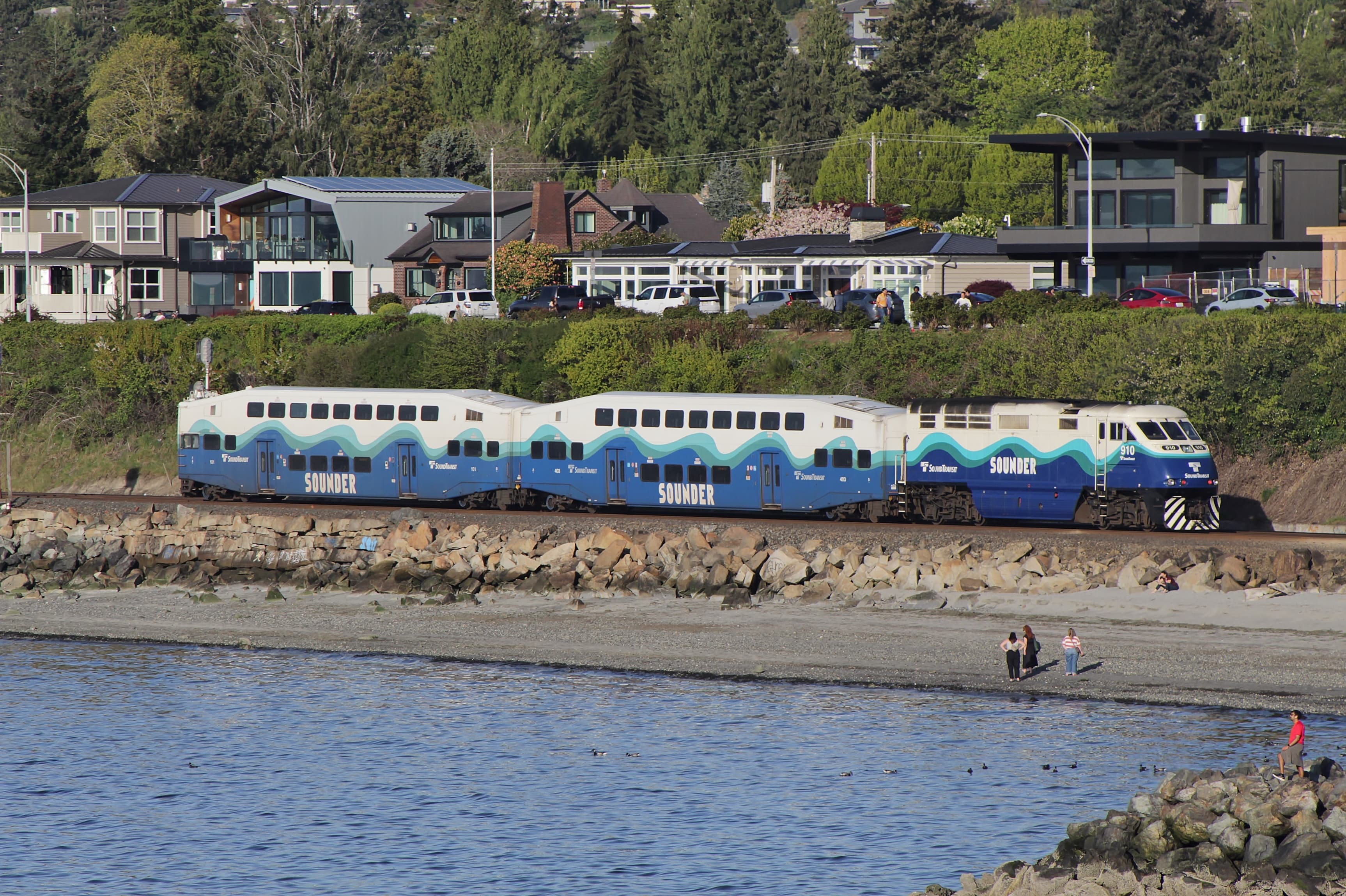
Watch BNSF freight, Amtrak Cascades, Empire Builder, and Sounder commuter trains at Milepost 18 on the Scenic Subdivision, with Puget Sound and the Olympic Mountains as backdrop. City-maintained benches on Sunset Avenue offer front-row seats just feet from the mainline.
Point Defiance (Tacoma)
A freight-only BNSF mainline hugging the Puget Sound shoreline south of Point Defiance Park, offering trackside views of 30-40 daily trains passing through the historic Nelson Bennett Tunnel and under the Tacoma Narrows Bridge.
Everett (Tunnel Junction)
Watch BNSF freight, Amtrak Cascades, Empire Builder, and Sounder commuter trains emerge from or enter the 1.5-mile Everett Tunnel on BNSF's Scenic Subdivision at the junction with the Bayside Main Line along Puget Sound.
Steilacoom (Puget Sound)
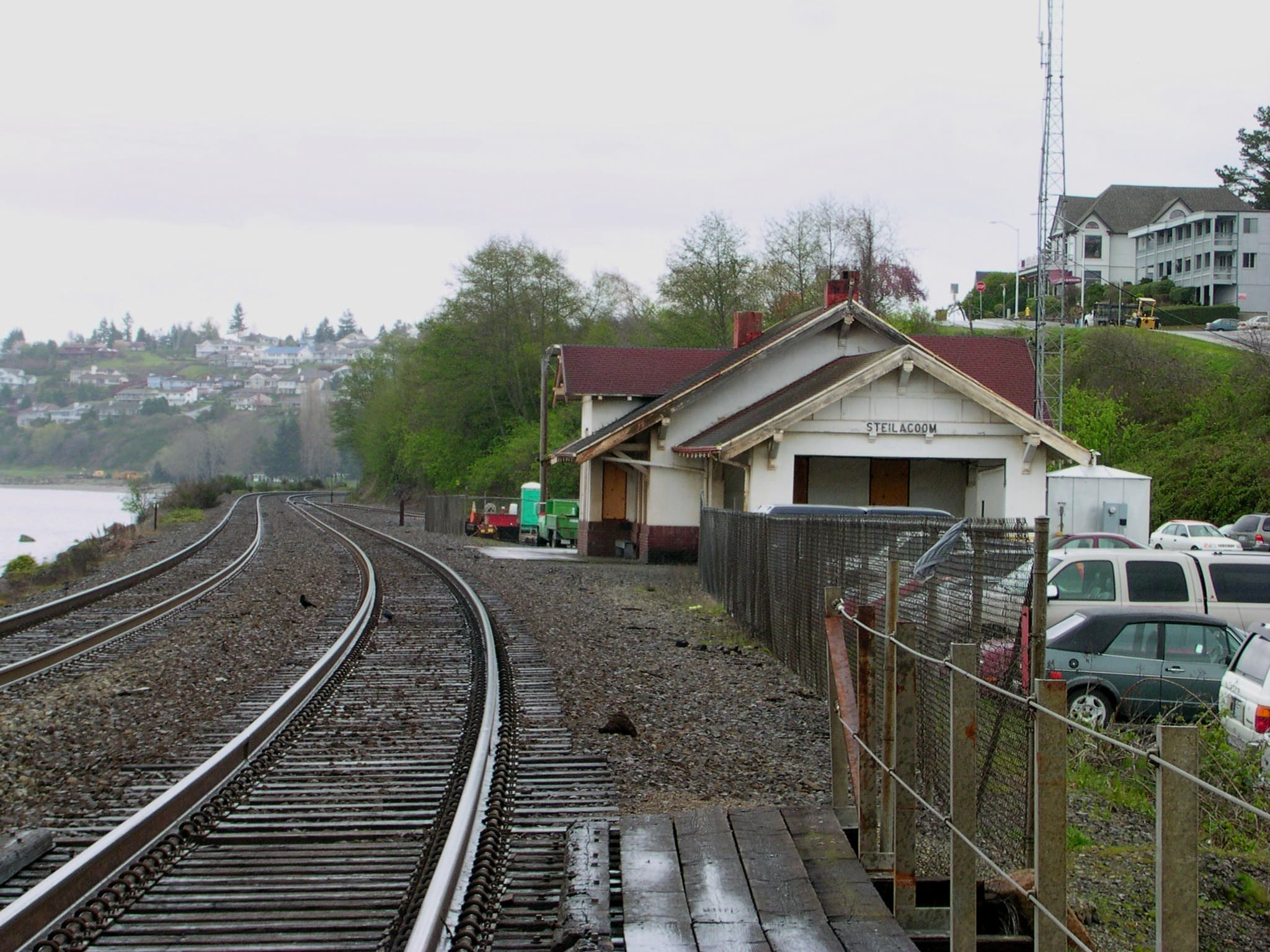
Steilacoom puts railfans trackside on BNSF's Seattle Subdivision where the former Northern Pacific main line runs alongside Puget Sound. A short walk north leads to Bridge 14 at Chambers Bay — the last Strauss direct-lift railroad bridge in active service in the United States, designed by the same engineer who later built the Golden Gate Bridge.
Scenic (Cascade Tunnel)
West portal of the 7.8-mile Cascade Tunnel on BNSF's Scenic Subdivision at Stevens Pass. Trains emerge from the longest railroad tunnel in the United States into dense Cascade Range forest, with up to 28-30 movements daily.
More Spots in Washington
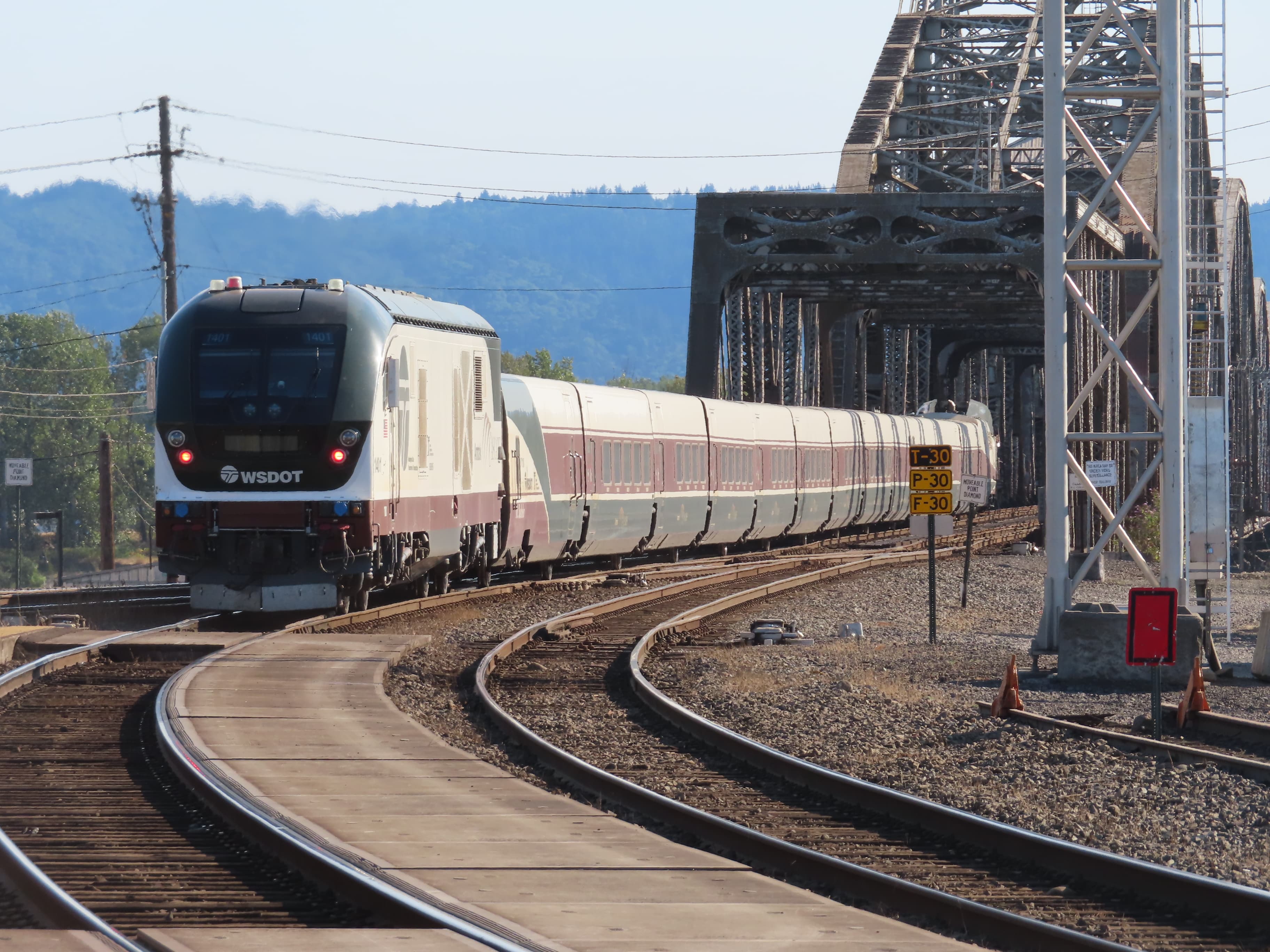
Vancouver (Columbia R. Crossing)
BNSF Railway Bridge 9.6, the first railroad bridge across the lower Columbia River, carries BNSF, Union Pacific, and Amtrak trains between Portland and Vancouver, WA. The adjacent Amtrak station — set inside a wye of two BNSF subdivisions — ranks among the Pacific Northwest's finest railfan perches.
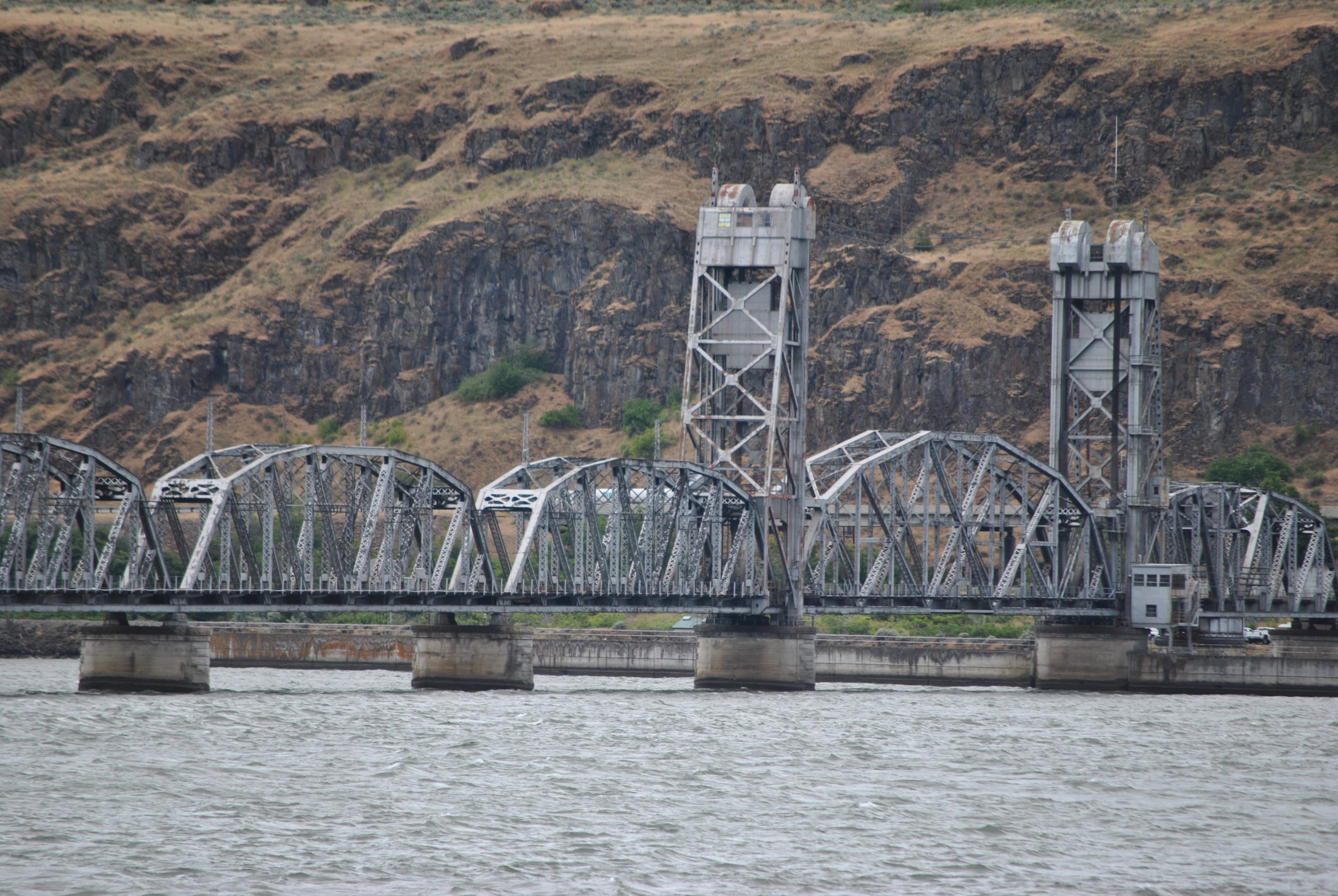
Wishram (BNSF Gorge)
Wishram sits at one of the Pacific Northwest's premier railfan junctions: the BNSF Fallbridge Subdivision threads the Columbia River Gorge on the Washington bank, while the Oregon Trunk Line diverges south over the 1912 Oregon Trunk Rail Bridge toward Bend, Oregon. With 40–45 BNSF freight trains daily, a visible Oregon Trunk sub, and Amtrak's Empire Builder Portland section stopping here, Wishram delivers continuous, high-tonnage railroading at the foot of striking basalt canyon walls.
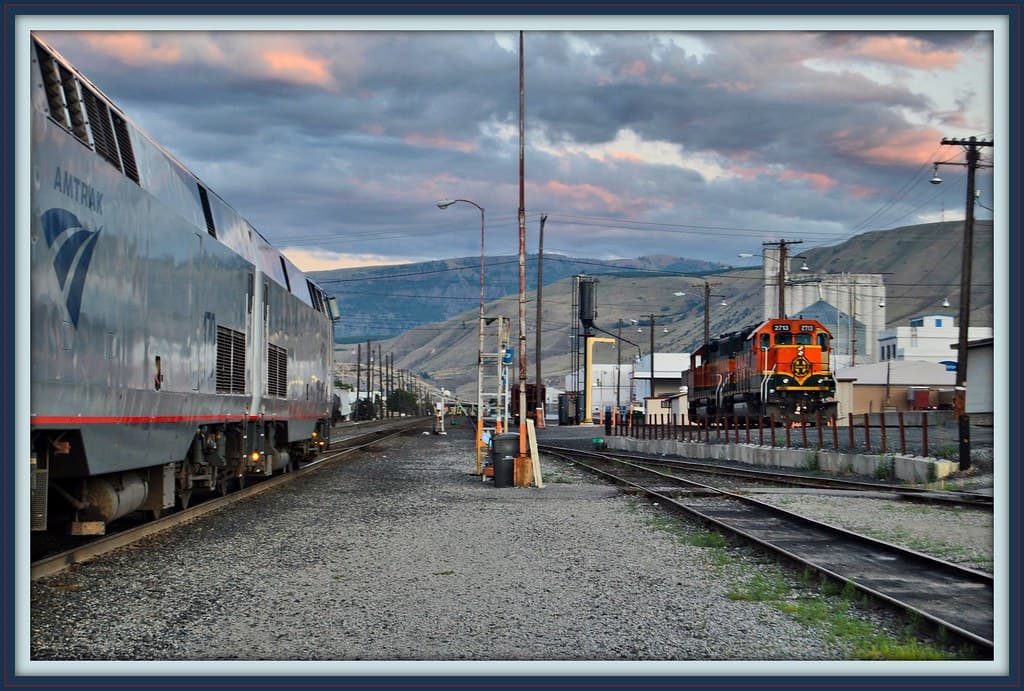
Pasco (Tri-Cities)
BNSF's major hump classification yard in Pasco, Washington, where the Northern Transcon meets the former SP&S Columbia River route. Over 50 trains per day pass through this critical Pacific Northwest junction, including Amtrak's Empire Builder.
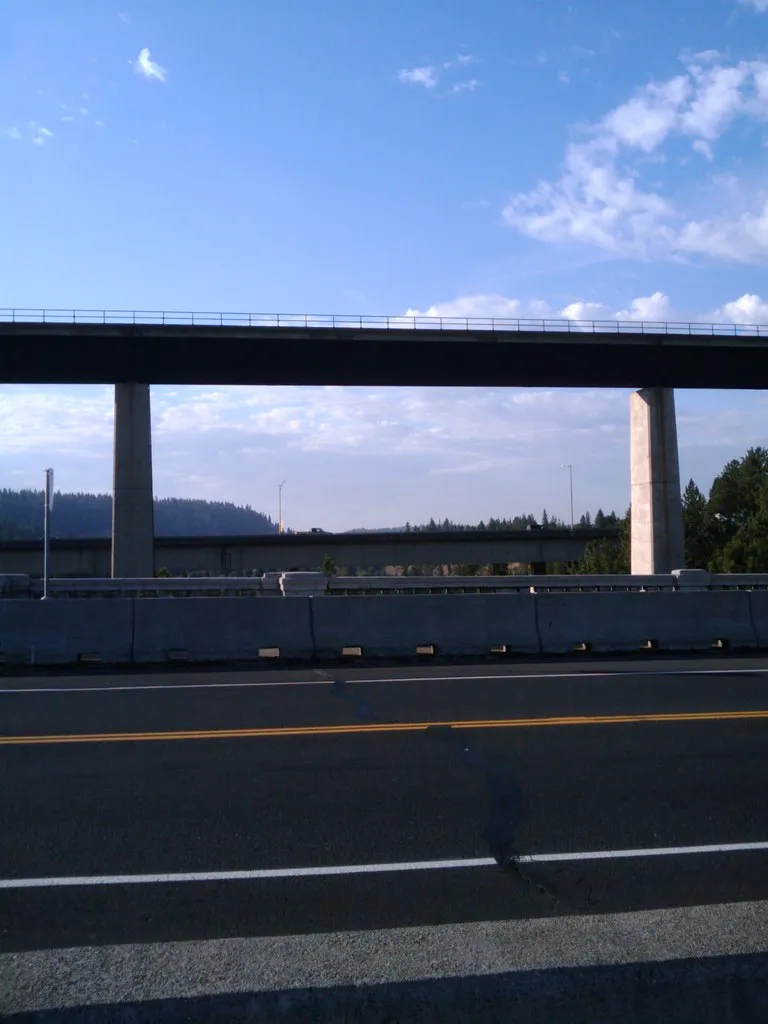
Latah Creek Bridge (High Bridge)
BNSF's Latah Creek railroad bridge in Spokane — commonly called High Bridge — towers up to 175 feet above the canyon floor. Built in 1972 by Burlington Northern, the 3,950-foot structure carries 50+ daily BNSF freights plus Amtrak's Empire Builder through a dramatic wye junction.
Railway Experiences in the United States
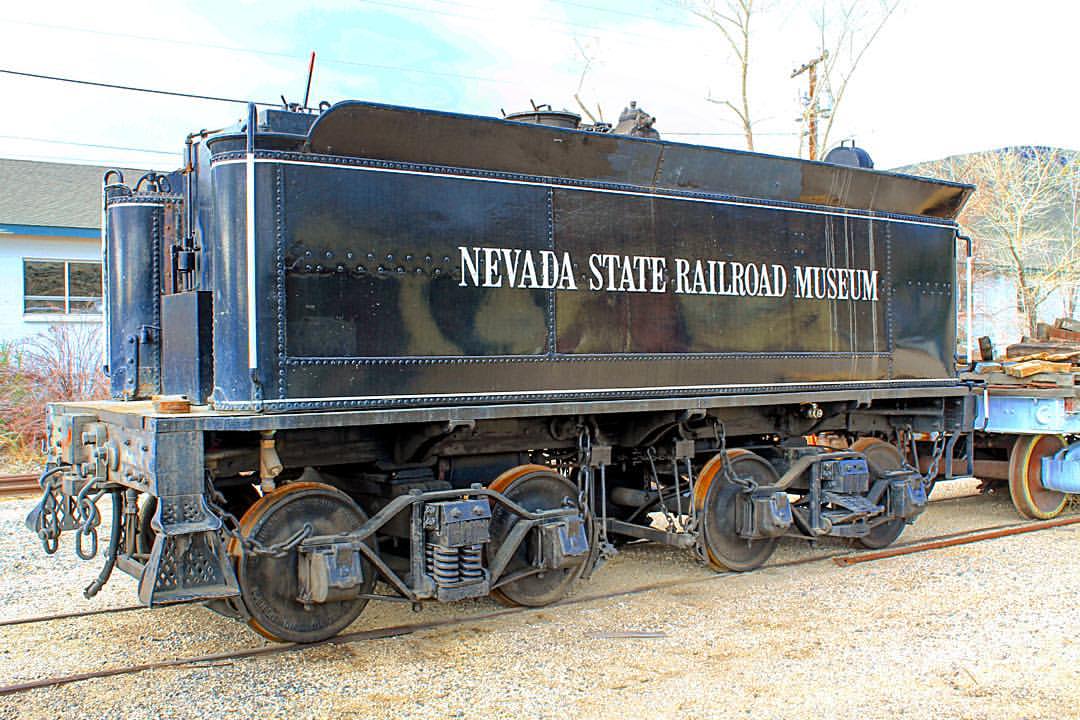
Nevada State Railroad Museum, Carson City
Home of Virginia & Truckee Railroad locomotives and the world's only operable McKeen motor car, in Carson City, Nevada.
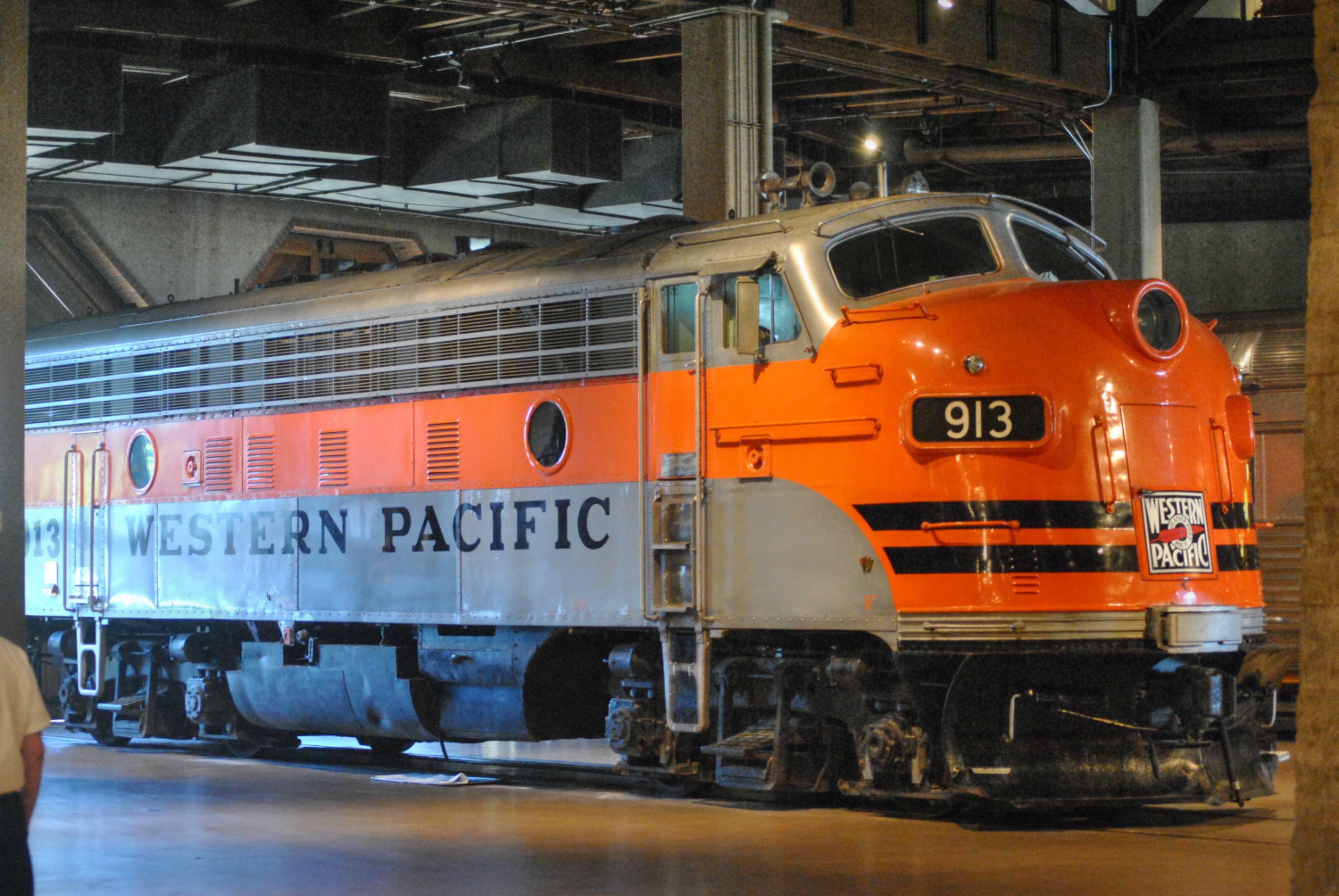
California State Railroad Museum
A world-class railroad museum in Old Sacramento featuring historic locomotives, rail cars, and immersive exhibits that bring California’s railroading past to life.
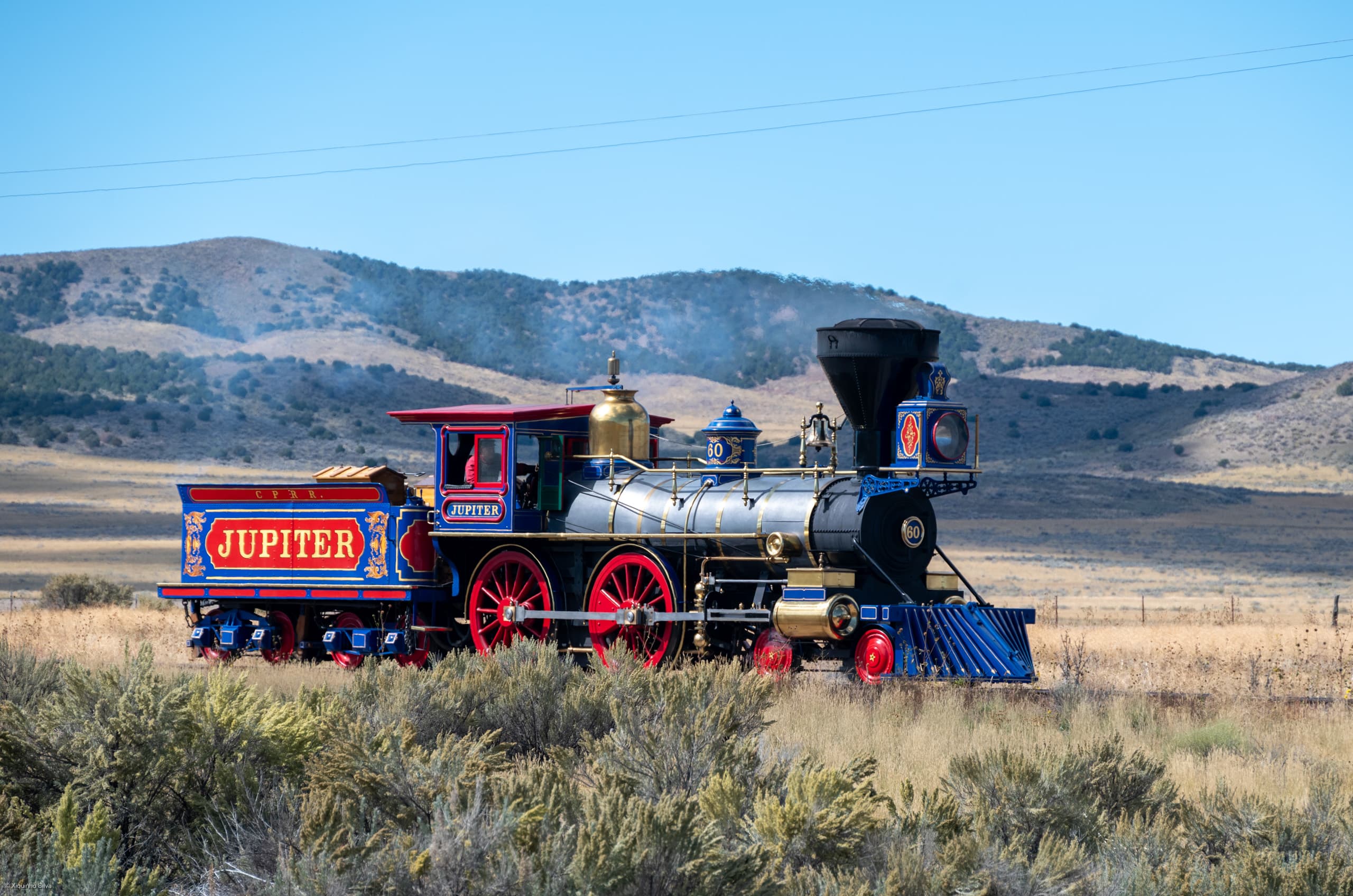
Golden Spike National Historical Park
Promontory Summit site where the first transcontinental railroad was completed in 1869, with working replica steam locomotives Jupiter and No. 119.
Explore around Seattle
4 places on Spotatrain within 50 km of Seattle — 4 spots.
- Edmonds Waterfront 28 km
- Point Defiance (Tacoma) 32 km
- Everett (Tunnel Junction) 47 km
- Steilacoom (Puget Sound) 48 km
Help improve this page
Spotted something out of date or incorrect? Let our community know.
Looking for more spots? Browse the complete list of train spotting locations.
Quick Information
Country
Region
City
Seattle
Spot Type
Junction
Best Times
Train activity at Argo runs around the clock. Daytime visits offer the best photography conditions and the widest variety of traffic, including Amtrak Cascades and Coast Starlight passenger trains. Peak freight activity tends to cluster in early morning and late afternoon. Weekend visits may see reduced passenger and commuter movements but steady freight operations.
Visit Duration
2-4 hours
Cost
Free
Train Activity
Train Types
Frequency
The Seattle metropolitan area sees over 100 train movements per day across both Class I carriers and passenger services. At this specific junction, traffic includes BNSF and UP freight trains, Amtrak Cascades corridor trains (currently seven daily round trips on the full corridor, with six operating between Seattle and Portland), the daily Amtrak Coast Starlight, and Sound Transit Sounder commuter runs between Tacoma and Seattle. UP yard transfers to and from Argo Yard add local switching moves throughout the day.
Access & Amenities
Parking
Available (false)
Shelter
Not available
Restrooms
Not available