Spotting Location
Vancouver (Columbia R. Crossing)
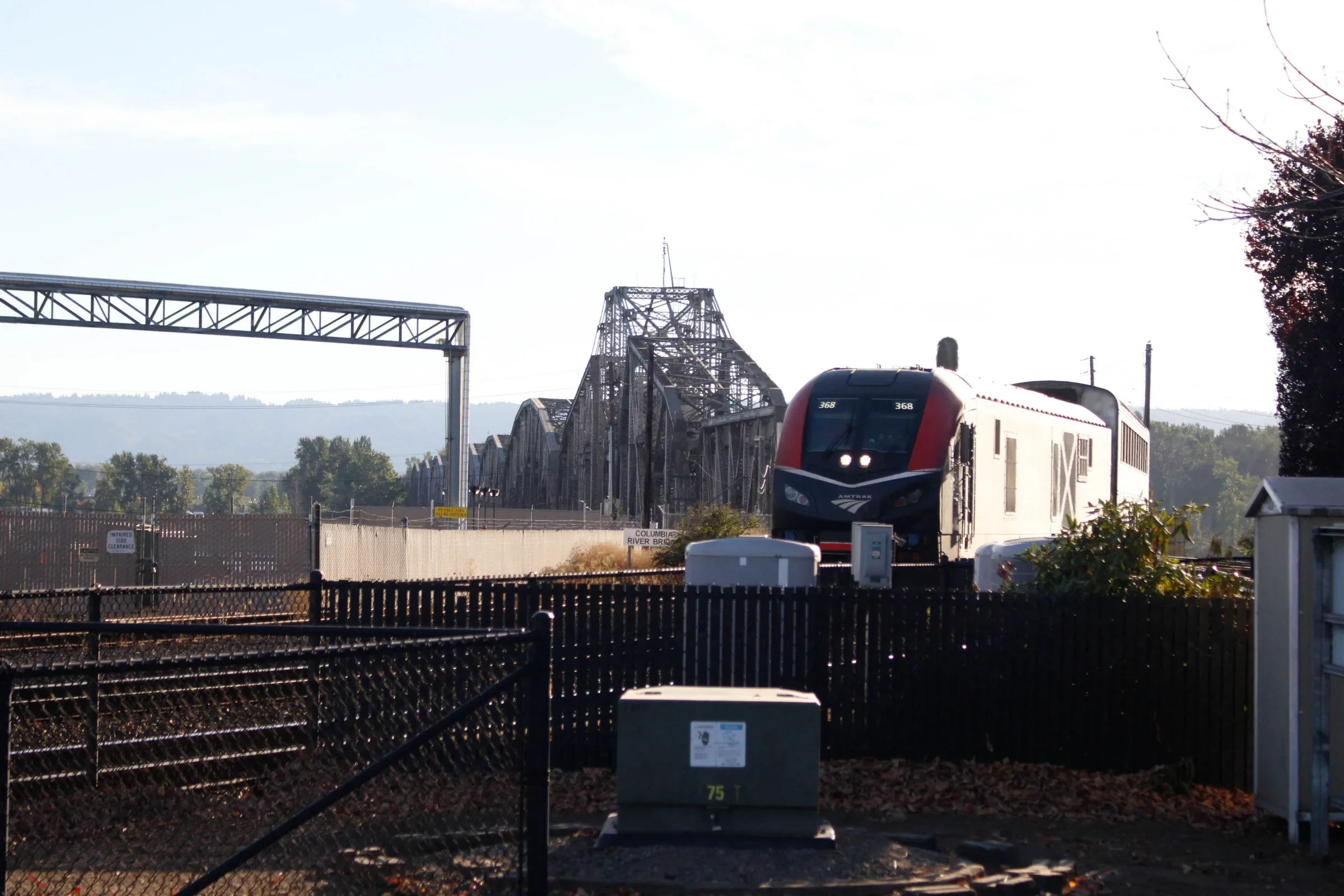
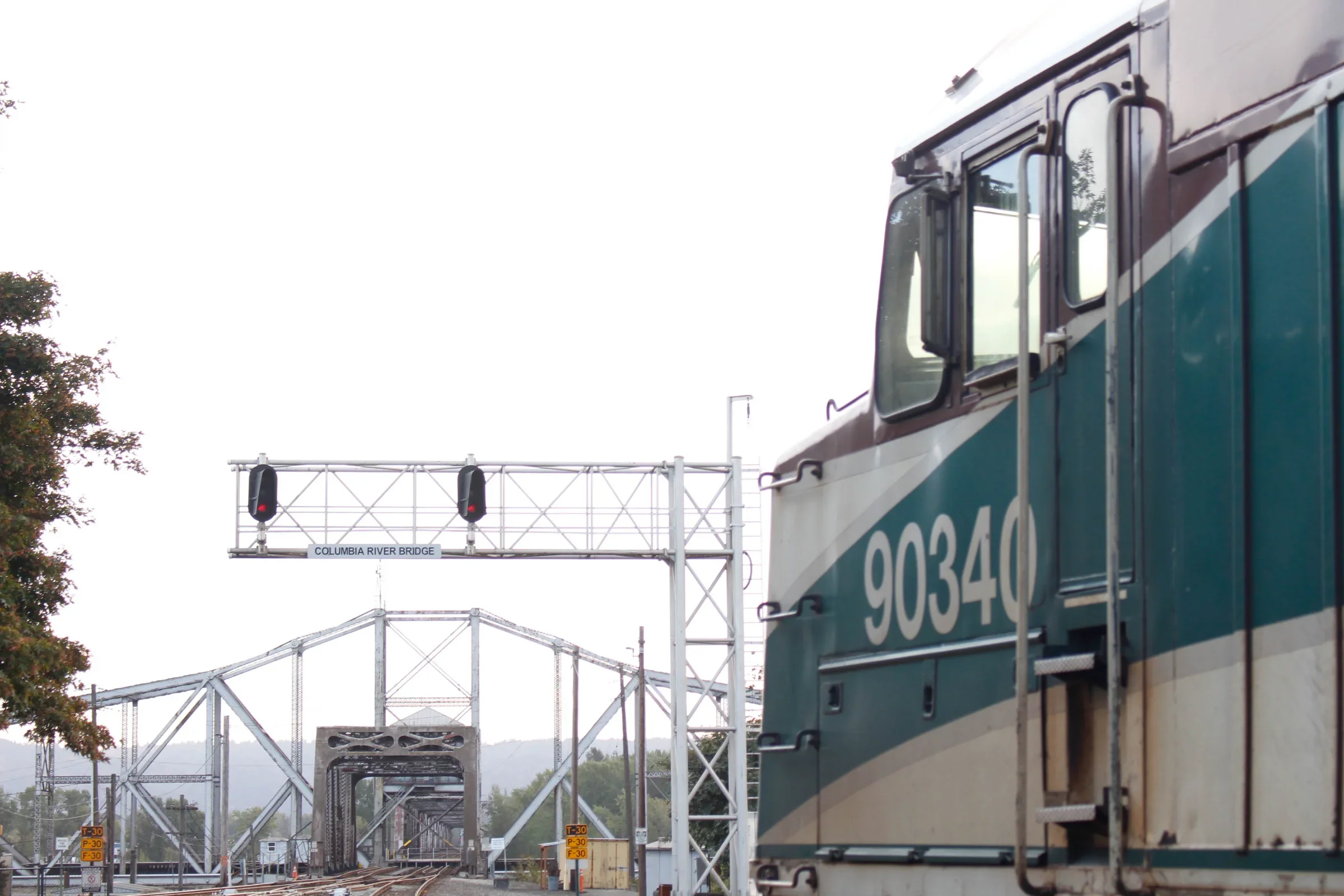
BNSF Railway Bridge 9.6, the first railroad bridge across the lower Columbia River, carries BNSF, Union Pacific, and Amtrak trains between Portland and Vancouver, WA. The adjacent Amtrak station — set inside a wye of two BNSF subdivisions — ranks among the Pacific Northwest's finest railfan perches.
Vancouver, Washington, United States
Plan your visit
Coordinates: 45.627379, -122.687699
- Parking
- Yes
- Shelter
- None
- Restrooms
- None
- Best times
- Late morning to early afternoon offers the best combination of light and Amtrak activity. The Empire Builder Portland section typically crosses southbound late morning and northbound early afternoon. BNSF freight runs around the clock, but Bridge 9.6 rarely sits quiet for more than 20–30 minutes at any time of day.
- Duration
- 2–4 hours
- Cost
- Free; parking at the Amtrak depot and along the Columbia River Renaissance Trail is free
Weather & light
Sun times calculated for this spot’s coordinates.
Seasons
Spring and fall deliver the best balance of mild weather and photogenic conditions. Summer fog clears by mid-morning most days; winter fog can linger but rarely past noon. The swing span opens most frequently during spring and summer boating season. Cottonwoods and willows along the trail provide shade in summer; bare in winter for improved sightlines.
Safety
Stay on the public trail and station platform at all times — Bridge 9.6 and the adjacent rail right-of-way are BNSF private property. The swing span area at the north abutment is fenced; do not approach the tracks. The waterfront is exposed with minimal shade in summer — bring sunscreen and water. Trains on this corridor move faster than they appear; keep children and pets well back from any unguarded track approaches near the station wye.
Trains here
Through trains per day
28reported to the FRA — Fallbridge Subdivision only
More than one line meets here. This count covers the Fallbridge Subdivision alone — each other line is counted separately below.
Daytime
14
6 AM – 6 PM
≈ 1 every 51 min
Nighttime
14
6 PM – 6 AM
≈ 1 every 51 min
Other lines here
- Seattle Subdivision17 trains/day (FRA 967511H, 120 m)
Reported by the railroad for FRA grade crossing 101790M, 120 m from this spot (FRA inventory, July 2026). An estimate, not a schedule — crossings on this line within 5 km report 2 to 32.
- Railroad
BNSF, Union Pacific, Amtrak, Portland & Western Railroad — Fallbridge Subdivision / Seattle Subdivision
≈ MP 136.4 on the Seattle Subdivision — derived from FRA grade crossing 967511H, 120 m away
- Track at the crossing
- 1 main track · 30 mph timetable speed
Train types
What runs here
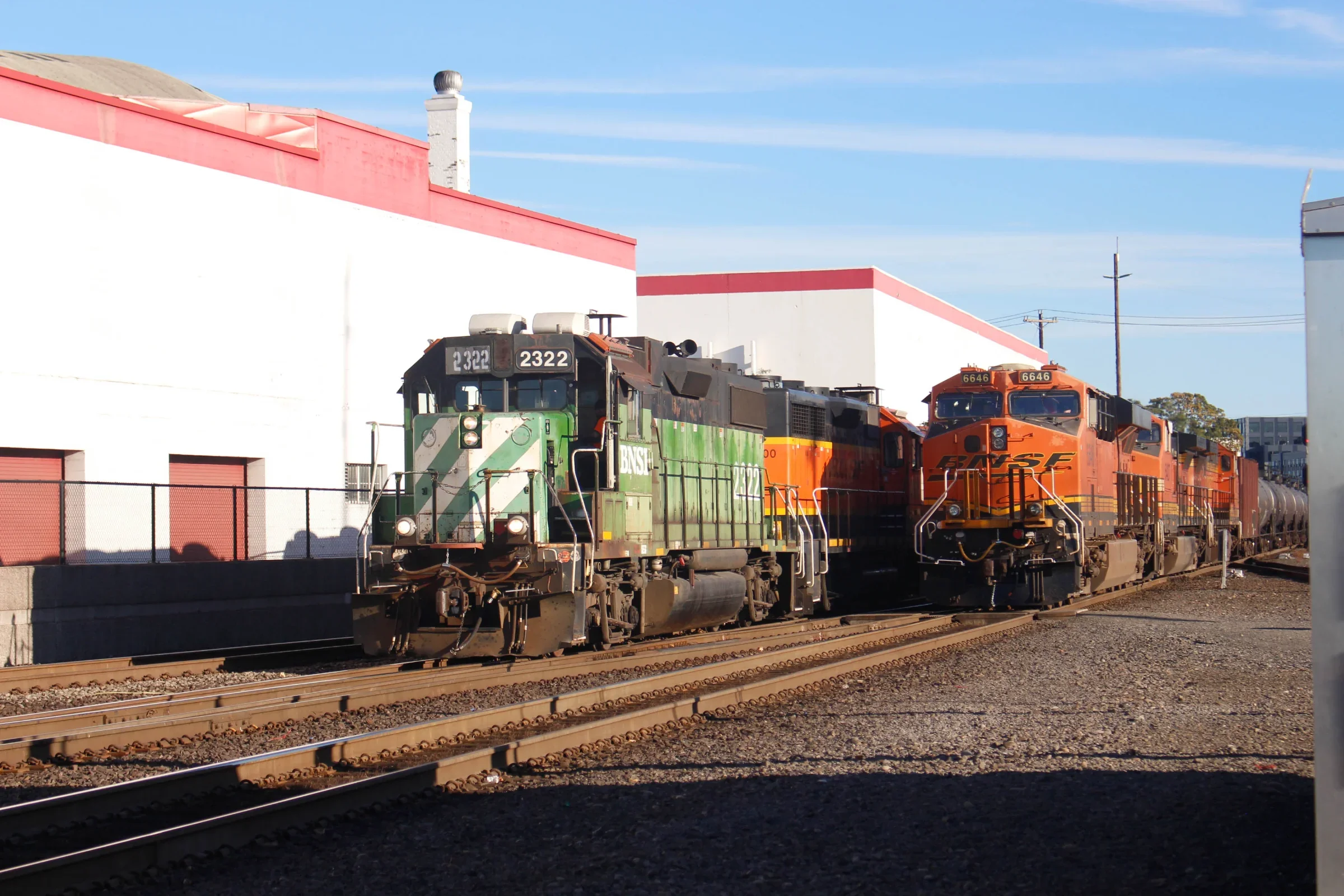
BNSF Railway owns and operates Bridge 9.6 as part of its Fallbridge Subdivision, a 229.7-mile main line running east along the Columbia River Gorge to Pasco, Washington, connecting to BNSF's Northern Transcon. The line carries an estimated 30–40 total train movements per day through this crossing, including BNSF freight, Union Pacific (operating under trackage rights), and Amtrak. Primary BNSF freight includes intermodal, grain, merchandise, and unit trains bound for Pacific Northwest ports.
Amtrak adds significant passenger density: the Cascades corridor provides up to six daily round trips between Seattle and Portland (12 daily movements through Vancouver), the Coast Starlight (Trains 11 and 14) contributes two more, and the Empire Builder's Portland section (Trains 27 and 28) adds two further — approximately 16 scheduled Amtrak movements on a typical day. Portland & Western Railroad also operates over the BNSF between Portland and the Vancouver area.
The Empire Builder and Coast Starlight are long-distance consists pulled by Superliner equipment, offering dramatic contrast against the shorter Cascades trainsets. All northbound trains depart Vancouver Amtrak station 1.3 miles north of the bridge's swing span.
Passenger trains on this line
- Train 500, to SeattleDaily7:01 AMarrives Vancouver, 200 m away
- Train 502, to SeattleDaily8:46 AMarrives Vancouver, 200 m away
- Train 503, to EugeneDaily10:09 AMdeparts Vancouver, 200 m away
- Train 504, to SeattleDaily10:56 AMarrives Vancouver, 200 m away
- Train 505, to PortlandDaily11:54 AMdeparts Vancouver, 200 m away
- Train 518, to VancouverDaily2:26 PMarrives Vancouver, 200 m away
- Train 517, to PortlandDaily3:09 PMdeparts Vancouver, 200 m away
- Train 507, to EugeneDaily5:19 PMdeparts Vancouver, 200 m away
- Train 506, to SeattleDaily6:11 PMarrives Vancouver, 200 m away
- Train 508, to SeattleDaily7:41 PMarrives Vancouver, 200 m away
- Train 509, to PortlandDaily8:39 PMdeparts Vancouver, 200 m away
- Train 511, to PortlandDaily10:49 PMdeparts Vancouver, 200 m away
- Train 11, to Los AngelesDaily1:15 PMdeparts Vancouver, 200 m away
- Train 14, to SeattleDaily4:13 PMarrives Vancouver, 200 m away
- Train 27, to PortlandDaily10:35 AMdeparts Vancouver, 200 m away
- Train 28, to ChicagoDaily5:09 PMarrives Vancouver, 200 m away
Tap a train for its times.
Scheduled times from Amtrak’s official timetable, updated October 15, 2026 — trains often run late.
On the line here
FRA / NTAD — crossing inventory Jul 21, 2026 · bridge inventory Oct 14, 2022 · rail yards (FRA / NTAD)
Photos & videos

 davidwilson1949
4

davidwilson1949
4

davidwilson1949
4

davidwilson1949
4

C Jill Reed
5
Swipe to see all 8 photos
Best angles for photos
The station platform provides the most accessible shooting position: trains are framed head-on as they exit the bridge from the south, or departing north with the truss visible in the background. A 70–135mm lens covers both locomotive portraits and full-train compositions from this position. Because the station sits inside the wye, you can quickly pivot to catch movements on either the Fallbridge or Seattle subdivision within seconds of each other.
From the Columbia River Renaissance Trail, an 85–200mm lens from the east-facing viewpoints captures trains mid-bridge with the Portland skyline framing the south end. Morning light (roughly 8–11am in summer) falls squarely on northbound subjects from these positions. Grant Street Pier offers an elevated perspective roughly 90 feet over the water; from here a wide-angle (24–35mm) can include river traffic below a passing train. Bring a polarizing filter to manage midday glare off the river. Tripods are welcome on the trail and at the pier.
The full guide
Trainspotting Experience
The Vancouver Amtrak station (1301 W 11th St) sits inside the wye formed by the BNSF Fallbridge Subdivision — heading east through the Columbia River Gorge toward Pasco — and the BNSF Seattle Subdivision heading north toward Kelso and Tacoma. This geometry puts the depot at the exact junction where all northbound trains diverge and all southbound trains converge, making it an unusually productive vantage point. Trains are visible both crossing Bridge 9.6 from the south and accelerating or braking through the station. Free parking is typically available around the depot, and it is common to find other railfans there at any hour.
The 467-foot swing span at the bridge's north end is immediately adjacent to the station, and its pivot mechanism is plainly visible from the platform area. The span opens an average of 12 times per day for river traffic, and rail operations typically resume within minutes of closure. When two movements conflict near the swing span, the meet plays out within sight of the station — a rare treat at any Class I location.
For those preferring the riverfront, the Columbia River Renaissance Trail is a paved, accessible path along the north bank. From various points on the trail, you can observe trains rolling onto or departing the bridge against the Portland skyline and Hayden Island backdrop. Grant Street Pier, jutting 90 feet over the Columbia, offers an elevated angle looking upstream toward the bridge trusses.
Landscape, Setting & Local Atmosphere
The bridge spans a wide reach of the Columbia River where the channel runs roughly west-to-east, placing the Washington bank (Vancouver) to the north and the Oregon bank to the south. The north bank rises gradually from a narrow flood plain into downtown Vancouver's grid, while Hayden Island and the Portland industrial waterfront create a layered southern backdrop of grain elevators, container cranes, and the truss spans of the parallel Interstate Bridge highway crossings.
Morning light from the east back-lights westbound departures emerging from Portland, while late-afternoon sun bathes the truss steelwork and incoming northbound trains in warm tones. Fog is common on autumn and winter mornings, often pooling at river level and leaving only the upper truss chords visible — a photogenic effect before it burns off mid-morning. The paved waterfront trail provides shade in summer under riverside cottonwoods and willows; in winter, once leaf-drop opens the canopy, sightlines to the bridge improve considerably.
Historical or Cultural Relevance
Construction of the Columbia River Railroad Bridge began on February 8, 1906, financed by the Spokane, Portland and Seattle Railway (SP&S) — a joint venture of James J. Hill's Great Northern Railway and Northern Pacific Railway, chartered to connect both transcontinentals to Portland from Spokane. Polish-born engineer Ralph Modjeski designed the 2,807-foot structure, which rests on 9 piers and incorporates a 467-foot rim-bearing swing span at its northern end.
When the first train crossed on October 23, 1908, and the bridge opened for regular traffic in November of that year, it became the first crossing of any kind over the lower Columbia River, preceding the adjacent Interstate Bridge for automobiles by more than eight years. The designation 'Bridge 9.6' reflects its distance in miles from Portland Union Station. The SP&S was absorbed into Burlington Northern in 1970, which merged with the Atchison, Topeka and Santa Fe to form BNSF Railway in 1995. The bridge has carried continuous rail traffic for over 115 years with its original through-truss spans largely intact.
What Makes This Spot Different
Bridge 9.6 is the only railroad bridge crossing the lower Columbia River — every train moving between Oregon and Washington by rail must use this single structure. The combination of dense BNSF freight, Union Pacific trackage rights, and three named Amtrak services (Cascades, Coast Starlight, and Empire Builder) converging on one observable point is essentially unmatched on the West Coast. The Vancouver Amtrak station inside the wye adds a further rarity: free parking, direct sightlines to the 467-foot swing span, and quick access off I-5. Within a single afternoon visit it is realistic to observe a complete Empire Builder consist, multiple Cascades trainsets, and a mix of BNSF intermodal and grain trains — all crossing a nationally significant 1908 railroad landmark.
Frequently Asked Questions
QWhat trains can I see at BNSF Bridge 9.6?
All three of Amtrak's Northwest routes cross this bridge daily: Cascades (up to 12 movements/day between Seattle and Portland), the Coast Starlight (Trains 11 and 14, once daily each direction), and the Empire Builder's Portland section (Trains 27 and 28). BNSF freight and Union Pacific add to a total of roughly 30–40 daily movements through the crossing.
QWhere is the best place to watch trains at the Columbia River crossing?
The Vancouver Amtrak station (1301 W 11th St) is the top spot — it sits inside the wye between the BNSF Fallbridge and Seattle subdivisions, with direct views of trains exiting the bridge. Free parking is available at the depot. The Columbia River Renaissance Trail and Grant Street Pier offer riverside angles.
QIs access free?
Yes. The Columbia River Renaissance Trail, Amtrak station viewing area, and Grant Street Pier are all free to access. Parking at the depot and east of the Interstate Bridge along the trail is also free. The bridge itself is BNSF private property.
QWhat are the key facts about the bridge?
BNSF Railway Bridge 9.6 is 2,807 feet long, spans the Columbia River on 9 piers, and features a 467-foot swing span at its northern end that opens an average of 12 times per day for river traffic. Completed in November 1908, it was the first bridge of any kind across the lower Columbia River and was designed by engineer Ralph Modjeski.
QWhen is the best time to visit?
The bridge rarely sits quiet for more than 30 minutes. Amtrak Cascades runs from early morning through evening. For freight, morning and early evening tend to be busiest. Spring and fall offer good light and occasional atmospheric morning fog on the river.
Help improve this page
Spotted something out of date or incorrect? Let our community know.
Around Vancouver
5 places on Spotatrain within 25 km of Vancouver — 2 spots, 1 journey and 2 events.
Spots Near Vancouver
More Spots in Washington
Railway Experiences in the United States
Related Journeys & Mega-Projects
Nearby attractions
- Fort Vancouver National Historic Site0.9 miles / 1.5 km
A 191-acre NPS site preserving the Hudson's Bay Company fur trading post, the U.S. Army's Vancouver Barracks, and Pearson Field — one of America's oldest airfields. Costumed living history programs run year-round.
- Vancouver Amtrak Station (inside the wye)0.2 miles / 0.3 km
The primary railfan viewing point for Bridge 9.6. The station sits inside the BNSF Fallbridge/Seattle wye, offering direct sightlines down the bridge approach. Free parking and often other railfans present.
- Grant Street Pier0.5 miles / 0.8 km
A 90-foot cantilevered pier jutting over the Columbia River, designed to evoke the curve of a ship's sail. Offers elevated, wide-angle views toward Bridge 9.6 and the Portland skyline — excellent for photography.
- Officers Row1.1 miles / 1.8 km
22 restored Victorian-era homes, all on the National Historic Register, that once housed U.S. Army officers at Vancouver Barracks. A short walk from the waterfront and Amtrak station.
- Clark County Historical Museum1.6 miles / 2.5 km
Housed in the 1909 Carnegie Library building (listed on the National Register of Historic Places), this museum covers the cultural and railroad history of Clark County and the Pacific Northwest.
Hotels & places to stay near Vancouver
Sources & official links
- BNSF Railway Bridge 9.6 – Wikipediaen.wikipedia.org
- Railfanning in Vancouver and its Metropolitan Area – Railroad.net Forumrailroad.net
- Vancouver, WA – Great American Stationswww.greatamericanstations.com
- Columbia River Renaissance Trail – Washington Trails Associationwww.wta.org
- Clark County History: 1908 Railway Bridge – The Columbianwww.columbian.com
- Amtrak Cascades Schedule & Statusamtrakcascades.com
- BNSF in the Columbia River Gorge – Railfan & Railroad Magazinerailfan.com
- Railroading in Vancouver and Southwest Washington – HistoryLink.orgwww.historylink.org