
Railway Experience
Cincinnati Union Terminal
The 1933 Art Deco terminal, now Cincinnati Museum Center, still served three nights a week by Amtrak's Cardinal.
Updated
See everything in Ohio11 spots · 15 live cams · 3 experiences · 19 eventsAbout This Experience
Cincinnati Union Terminal opened in emergency operation on 19 March 1933, when an Ohio River flood forced the city's railroads to abandon their old riverfront depots early; the formal dedication followed on 31 March 1933 in front of an estimated 50,000 people. The building was designed by the New York firm Fellheimer & Wagner, with Roland A. Wank as lead designer and the Philadelphia architect Paul Philippe Cret acting as design consultant between 1930 and 1932. The final project cost reached 41.5 million dollars. Its purpose was consolidation: seven railroads — the Baltimore and Ohio, the Chesapeake and Ohio, the Cleveland, Cincinnati, Chicago and St. Louis (the Big Four), the Louisville and Nashville, the Norfolk and Western, the Pennsylvania and the Southern — gave up five separate stations for one terminal laid out for 216 trains a day, 108 in and 108 out, and 17,000 passengers, across 8 platforms and 16 tracks.
The architecture is the reason the building outlived the traffic. Behind the fountain and the ramped forecourt, the half-dome rotunda spans 180 feet (55 m) and rises 106 feet (32 m), and is generally described as the largest half-dome in the Western Hemisphere; the room itself measures roughly 176 by 125 feet (54 by 38 m). Set into the pilasters above the entrance arch is a clock face 18 feet (5.5 m) across, built for the terminal in the early 1930s by Cincinnati's own Verdin Company — its hour hand weighs about 150 pounds (68 kg) and its minute hand about 175 pounds (79 kg), counterweights included. Two limestone bas-reliefs carved by Maxfield Keck in 1932, representing transportation and commerce, flank the rotunda outside. Inside, the German-born artist Winold Reiss produced 23 glass mosaic murals; the terminal's art programme totals roughly 18,150 square feet (1,686 m2), of which Reiss accounts for about 11,908 square feet (1,106 m2). The two rotunda murals, each about 105 by 22 feet (32 by 6.7 m), run two parallel timelines — one of the United States, one of Cincinnati — assembled from nickel-sized glass tesserae, with real people worked into the crowd, among them a local engineer, a Union Terminal construction worker, Reiss's own brother and three Blackfoot men. The French artist Pierre Bourdelle contributed about 5,496 square feet (511 m2) of hand-carved linoleum and painted work — mermaids in the Newsreel Theater, jungle foliage in the dining-room alcove, a reversed map of Cincinnati in the Formal Dining Room — and the Rookwood Tea Room, now the Rookwood Ice Cream Parlor, was tiled floor to ceiling by Rookwood artist William E. Hentschel in mint green, pale grey and mauve, with dragonflies and flowers.
The traffic the building was sized for never came back after the war. Southern Railway demolished most of the train concourse by September 1974; fourteen of Reiss's industrial mosaics were cut out and saved before the wrecking began, paid for by a grassroots campaign that raised 400,000 dollars, and the large map mural on the concourse's west wall was lost. Regular passenger service had already ended on 29 October 1972. The terminal was listed on the National Register of Historic Places on 31 October 1972 and designated a National Historic Landmark on 5 May 1977. Cincinnati Museum Center opened in the building on 10 November 1990, Amtrak returned on 29 July 1991, and a 228-million-dollar structural restoration — 176 million from a Hamilton County sales tax, 39 million in federal historic tax credits, 7.5 million in donations and 5 million in state grants — ran from July 2016 to a reopening on 17 November 2018.
Watch this place live
A railway webcam covers this place — see what is running right now.
- Watch live
Cincinnati, Ohio — Union Terminal, Camera 2
The second Union Terminal view from the railroad club
Photo Opportunities
The rotunda is the picture, and it is difficult in the way large interiors always are: 106 feet (32 m) of height, a 180-foot (55 m) span, and a ten-storey wall of windows behind you that will blow out any exposure metered for the mosaics. Shoot the two Reiss murals — each about 105 by 22 feet (32 by 6.7 m) — from the mezzanine ramps rather than the floor, so the curve of the dome does not compress them, and come in the morning if you want the window wall behind you rather than in frame. The tesserae are roughly the size of a nickel and reward a close frame as much as a wide one.
Smaller subjects are easy to miss. The Rookwood Ice Cream Parlor is a complete tiled Art Deco room; Bourdelle's carved linoleum survives in the Newsreel Theater and the former dining-room spaces; Maxfield Keck's 1932 limestone reliefs flank the entrance outside, best in late-afternoon side light on the forecourt; and the 18-foot (5.5 m) clock face is the shot that says Cincinnati from the plaza or from Ezzard Charles Drive.
For moving trains, the honest answer is that the terminal itself is not a lineside vantage point and Tower A is not open on demand — the yard views are the reason to book the guided Tower A visit, which the museum notes involves about 35 steep steps and is not accessible. Tripods and selfie sticks are not permitted on the High Steel tour, and the museum's code of conduct is general rather than photographic, so confirm any tripod or professional use in advance with the museum. If you want the yard view without the tour, the Cincinnati Railroad Club's live cameras look out over the same CSX and Norfolk Southern territory.
Featured Video
I Explored America’s Greatest Art Deco Train Station
Why Visit
For a railfan this is one of the very few great American union stations where the building, the museum and a working railroad are all still on the same site. Amtrak's Cardinal, trains 50 and 51, calls here three days a week on its New York–Chicago run of about 26 hours 30 minutes, and the station recorded 10,846 boardings and alightings in fiscal year 2025 — the whole year's passenger traffic is a fraction of what the terminal was built to handle in a single day. The Amtrak waiting room sits just to the right of the OMNIMAX Theater entrance, a long walk from the car park, and both trains call in the small hours: the Chicago-bound train is scheduled into Cincinnati around 1:31 a.m. and the New York-bound train around 3:17 a.m., each leaving about ten minutes later.
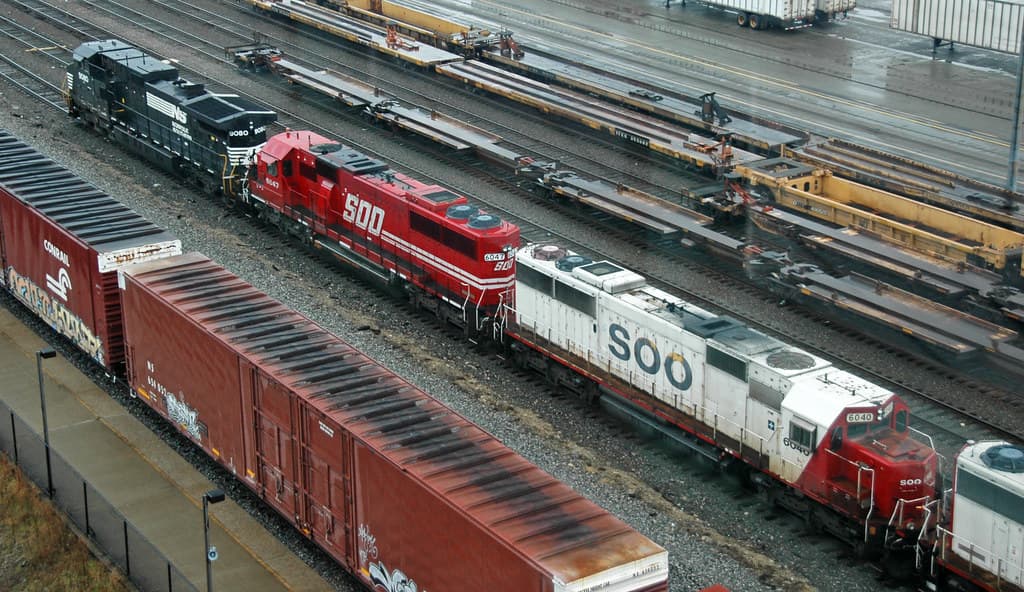
The second reason is Tower A. The terminal's original control tower occupies the fourth and fifth floors above the rotunda and once held what was described as the largest interlocking machine in service at the time, with 187 levers. From its windows you look straight down onto CSX's Queensgate Yard and Norfolk Southern's Gest Street Yard in the Mill Creek valley — Queensgate, dedicated on 20 October 1981, is a gravity hump yard running roughly five miles (8 km) with more than 70 miles (113 km) of track and over 50 classification tracks. Tower A is closed as a walk-up attraction, but Cincinnati Heritage Programs runs scheduled 45-minute guided visits to it for 10 dollars (members) or 15 dollars (non-members), and a far more demanding High Steel tour that climbs into the trusses carrying the half-dome and out to the clock, for 40 or 55 dollars.
The third reason is the Cincinnati Railroad Club, founded in 1938 and still based inside the terminal. The club held Tower A as its headquarters from 1989, restoring it at its own expense of more than 100,000 dollars, until the 2016 restoration forced it out to Spring Grove Village; it came back to Union Terminal in February 2022 and now meets in the historic Newsreel Theater on the first Thursday of most months at 7:30 p.m., with programmes open to the public. The club's own website states that it operates live camera views of part of the CSX and Norfolk Southern yards, streamed on its YouTube channel — which means you can watch the same view before you travel, and check whether anything is moving.
What to Expect
You arrive at a building that behaves like a museum, not a station. Cincinnati Museum Center is open daily from 10 a.m. to 5 p.m., closed on Thanksgiving and Christmas Day, and one Museum Admission ticket covers the Cincinnati History Museum, the Museum of Natural History & Science and The Children's Museum; the Robert D. Lindner Family OMNIMAX Theater, the Nancy & David Wolf Holocaust & Humanity Center and travelling exhibitions are ticketed separately. The rotunda itself is free to walk into, and most visitors spend their first ten minutes standing under it rather than moving.
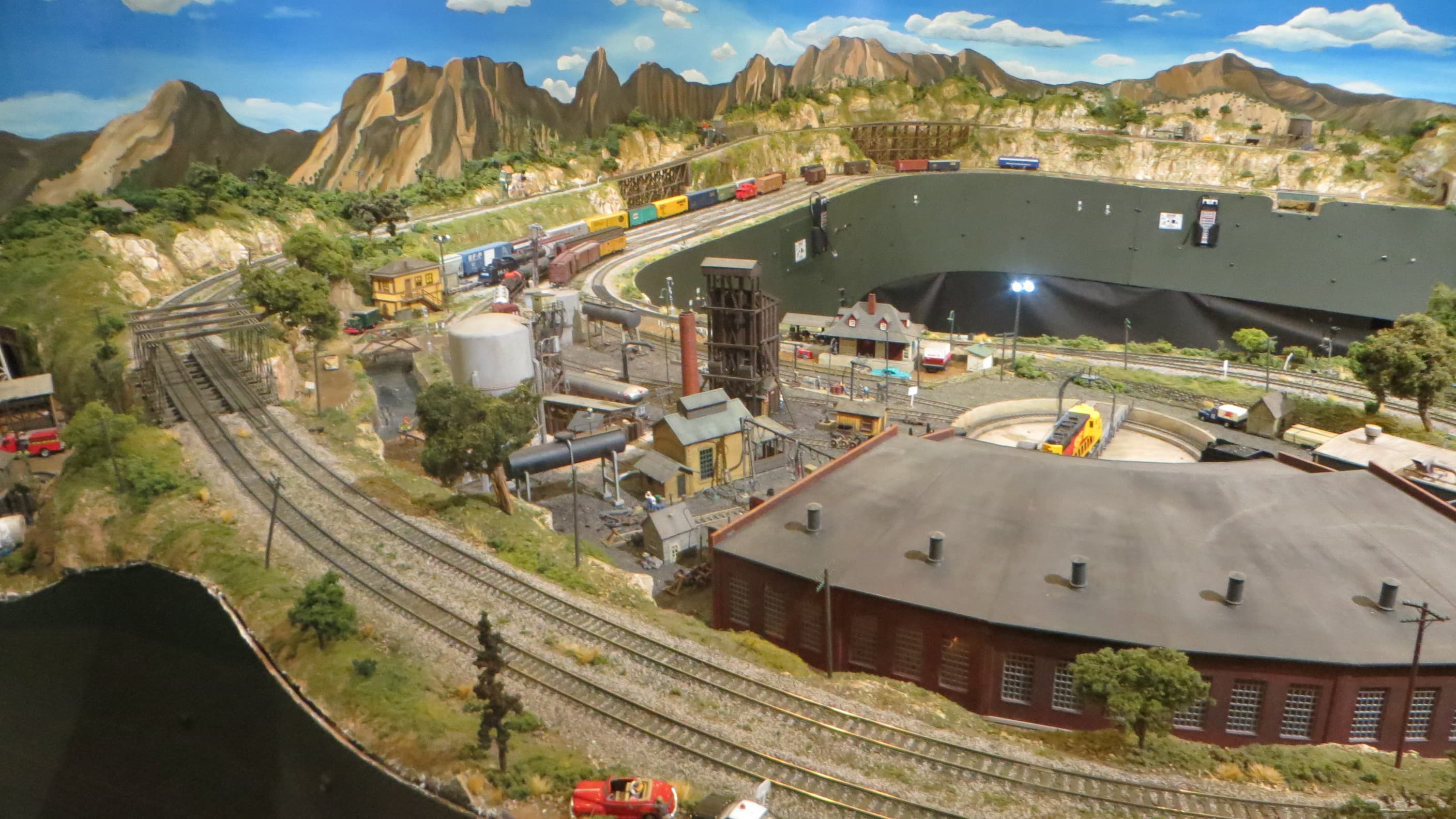
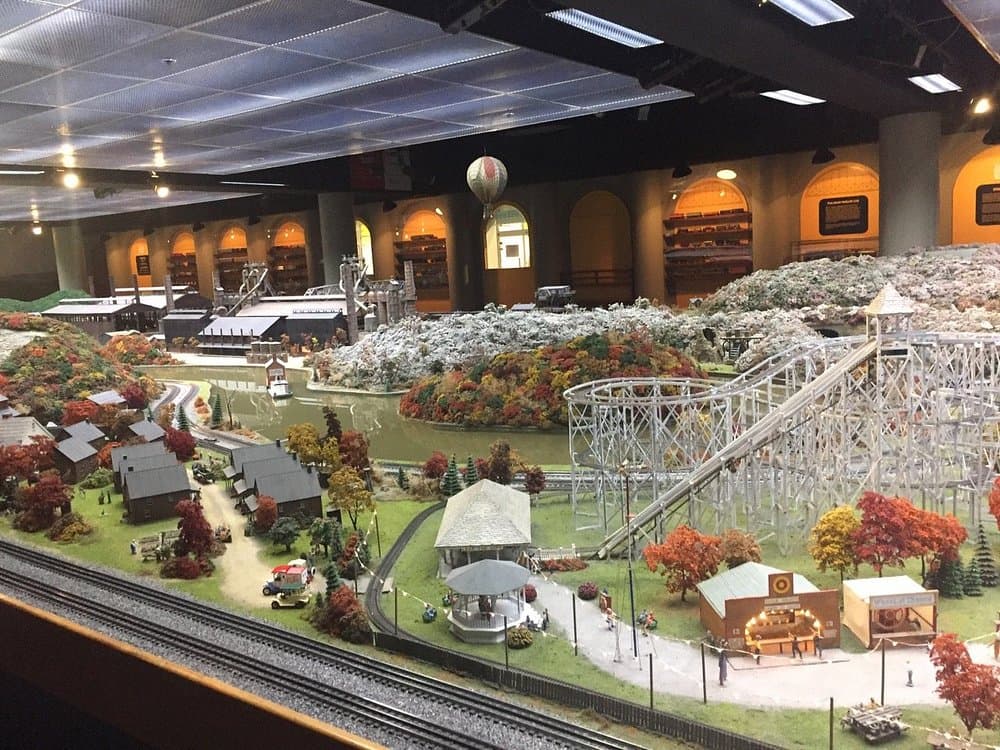
The rail content is concentrated in the Cincinnati History Museum. Cincinnati in Motion is a 1/64-scale (S scale) model of downtown Cincinnati in the 1940s, described by the museum as the nation's largest S-scale train model, with working streetcars and inclines and lighting that cycles between day and night; the Roebling Bridge, City Hall and Carew Tower are all in it. Public Landing rebuilds the 1850s riverfront, including a replica side-wheel steamboat, the Queen of the West, and the Shaping Our City gallery deals directly with how rivers, rails and roads made the city. From mid-November to early January the museum adds Holiday Junction featuring the Duke Energy Holiday Trains — the 79th edition ran from 14 November 2025 to 5 January 2026 with 50 locomotives and 300 rail cars covering more than 100,000 scale miles.
Plan on two to four hours for the museums, longer with children, and treat a Tower A or High Steel tour as a separate booking made in advance by telephone on (513) 287-7001 or by email to heritageprograms@cincymuseum.org. Weekends and school holidays fill the Children's Museum and the car park; a weekday morning is calmer. If your interest is the Cardinal rather than the museums, note that the museum will be closed when your train calls, and that the terminal's public areas are not a place to spend a night — arrive close to the scheduled time.
Best Time to Visit
Weekday mornings shortly after the 10 a.m. opening are the quietest hours in the rotunda and the easiest for photography. Book any Tower A or High Steel tour well ahead — they run on scheduled dates only, a handful of times a year, and sell out. If the Cincinnati Railroad Club interests you, aim for the first Thursday of the month, when its 7:30 p.m. meeting in the Newsreel Theater is open to the public. Late spring and early autumn give the mildest weather for combining the terminal with Findlay Market or Eden Park on the same day.
Frequently Asked Questions
QCan you still catch a train at Cincinnati Union Terminal?
Yes, but only three days a week and only in the middle of the night. Amtrak's Cardinal, trains 50 and 51, is the terminal's sole passenger service on its New York to Chicago run. The Chicago-bound train is scheduled into Cincinnati at about 1:31 a.m. and the New York-bound train at about 3:17 a.m., each departing roughly ten minutes later. The station recorded 10,846 boardings and alightings in fiscal year 2025. Check amtrak.com for the current timetable before travelling — the Cardinal's schedule changes and the train is frequently late.
QIs Tower A open to visitors?
Not as a walk-up attraction. Tower A, the terminal's original control tower on the fourth and fifth floors, is closed to the general public, but Cincinnati Heritage Programs runs scheduled 45-minute guided visits to it for $10 (members) or $15 (non-members). The tour involves about 35 steep steps and is not accessible. Dates are limited to a handful each year and sell out; book by calling (513) 287-7001 or emailing heritageprograms@cincymuseum.org.
QDo I need a ticket to see the rotunda and the mosaics?
No. The rotunda, with Winold Reiss's two large glass mosaic murals, is a public space you can walk into during the museum's opening hours, 10 a.m. to 5 p.m. daily. A Museum Admission ticket is only needed for the Cincinnati History Museum, the Museum of Natural History & Science and The Children's Museum; the OMNIMAX theater, the Holocaust & Humanity Center and travelling exhibitions are ticketed separately.
QWhat is there for a train enthusiast specifically?
The building itself, first — the 1933 terminal, its 180-foot (55 m) half-dome, the 18-foot (5.5 m) Verdin clock and the Reiss mosaics. Then Cincinnati in Motion in the Cincinnati History Museum, a 1/64-scale model of 1940s downtown Cincinnati that the museum describes as the nation's largest S-scale train model, with working streetcars and inclines. Then the Cincinnati Railroad Club, founded in 1938, which meets in the Newsreel Theater on the first Thursday of most months at 7:30 p.m. with programmes open to the public, and which streams live camera views of the neighbouring CSX and Norfolk Southern yards. From mid-November to early January, Holiday Junction featuring the Duke Energy Holiday Trains adds a large operating display.
QCan I watch trains from inside the terminal?
Not in any organised way. The only vantage point over CSX's Queensgate Yard and Norfolk Southern's Gest Street Yard is Tower A, and that requires a booked guided tour. The Amtrak platform is accessible only to ticketed passengers around train times. If you want the yard view without the tour, the Cincinnati Railroad Club's live cameras look out over the same territory.
QHow long should I plan for a visit?
Two to four hours covers the three museums included in Museum Admission at a comfortable pace, longer if you are visiting with children or adding an OMNIMAX film. If you have booked a Tower A tour, add 45 minutes; the High Steel tour, which climbs into the trusses supporting the half-dome and out to the clock, takes about two hours and involves more than 300 steps and ladders.
QAre dogs allowed at Cincinnati Union Terminal?
No. Cincinnati Museum Center admits only trained service animals — service dogs and miniature horses, in compliance with the ADA — and requires them to remain leashed or harnessed and under the handler's control. The museum's code of conduct states that animals other than licensed service animals are not permitted on the premises. Amtrak operates a separate pet policy for passengers travelling on the Cardinal.
QHow much is parking?
The museum's own lot in front of the terminal charges $6 per vehicle between 6 a.m. and 9 p.m. and $10 between 9 p.m. and 6 a.m., payable by cash or credit. Parking is free for members, and there are 20 accessible spaces available first come, first served. Allow extra time — it is a long walk from the lot to the building, and longer still to the Amtrak platform.
How to Plan Your Visit
Season and Schedule
Cincinnati Museum Center is open every day of the year except Thanksgiving and Christmas Day. Guided Union Terminal tours, including Tower A, run only on scheduled dates and must be booked separately.
- Operating Hours
- Daily 10 a.m. to 5 p.m. (closed Thanksgiving Day and Christmas Day)
- Peak Season
- Mid-November to early January, during Holiday Junction featuring the Duke Energy Holiday Trains
- Tower A
- Closed as a walk-up attraction; visited only on scheduled 45-minute guided tours
- Cincinnati Railroad Club
- Public meetings first Thursday of most months, 7:30 p.m., Newsreel Theater
Ticket Information
General admission rates are not published on the museum's website; tickets are sold through its own ticketing system. The prices below are the ones the museum does publish, and they are the ones that matter most to a railfan visit.
- Museum Admission covers
- Cincinnati History Museum, Museum of Natural History & Science and The Children's Museum
- Tower A guided tour
- $10 members, $15 non-members — 45 minutes
- High Steel of Union Terminal tour
- $40 members, $55 non-members — about 2 hours
- Group Museum Admission
- $19.50 adult (13+), $12.50 child (3-12), $12.50 senior (60+)
- Group Museum Admission + OMNIMAX
- $22.00 adult, $15.00 child, $15.00 senior
- Discounts
- $1 off Museum Admission for AAA members and for military; $3 per person under Museums for All with a food assistance or Medicaid card
- Tour bookings
- (513) 287-7001 or heritageprograms@cincymuseum.org
Accessibility Details
All public areas of the terminal are reachable by ramp, escalator, lift or elevator, and the museum keeps a detailed accessibility page. The historic tower and truss tours are the exception and are not accessible.
- Mobility
- Wheelchair rental $7; electronic convenience vehicle rental $27; elevators throughout; push-button door controls
- Accessible parking
- 20 spaces, first come first served
- Sensory
- Quiet zones in four locations with weighted blankets, noise-reducing earmuffs and fidgets; sensory tools on request in the OMNIMAX theater
- Deaf and hard of hearing
- ASL-interpreted tours during Deaf Days; closed captioning and descriptive audio; TTY (800) 750-0750
- Caregivers
- Free companion Museum Admission ticket for a caregiver accompanying a visitor with a disability
- Tower A tour
- About 35 steep steps; not accessible
What to Bring
This is an indoor visit with a long walk from the car park to the building, and a longer one to the Amtrak platform. Firearms, weapons, smoking and e-cigarettes are prohibited inside.
- Footwear
- Comfortable shoes — the forecourt, ramps and museum floors add up; the High Steel tour involves 300-plus steps and ladders
- Scanner
- Railfans monitoring Amtrak movements around the terminal use 160.230 and 161.100 MHz
- Cash or card
- Parking is payable by cash or credit at the lot
Photography Tips
The rotunda's ten-storey window wall is the single biggest exposure problem in the building. Shoot the Reiss mosaics from the mezzanine ramps rather than the floor.
- Best light
- Morning, with the window wall behind the camera
- Wide angle
- The dome spans 180 ft (55 m) and rises 106 ft (32 m) — plan for a very wide lens or a stitched frame
- Restrictions
- Tripods and selfie sticks are not permitted on the High Steel tour; confirm tripod or professional use with the museum in advance
- Exterior
- The 18 ft (5.5 m) clock face and Maxfield Keck's 1932 limestone reliefs read best in late-afternoon side light from the plaza
Traveling with Pets
Service animals only
Cincinnati Museum Center's accessibility page states that trained service animals required to perform tasks for or assist with a person with a disability are permitted in Cincinnati Museum Center, and that in compliance with the ADA the museum admits only service dogs and miniature horses. The animal must remain leashed or harnessed and under the handler's control at all times. The museum's code of conduct separately states that animals other than licensed service animals are not permitted on the premises. Accessibility questions can be sent to accessibility@cincymuseum.org.
Verified — operator's pet policy
Travel Information
By Air
Cincinnati/Northern Kentucky International Airport (CVG) is the nearest major airport and sits across the Ohio River in Kentucky. Five of Winold Reiss's rescued industrial mosaics from the demolished train concourse are installed there, so the airport is itself part of the terminal's story.
- Nearest Airport
- Cincinnati/Northern Kentucky International Airport (CVG)
- Distance
- About 12 miles (19 km), roughly 23 minutes by car
By Train
Amtrak's Cardinal, trains 50 and 51, is the only passenger service and calls three days a week in each direction, in the middle of the night. The Amtrak waiting room is just to the right of the OMNIMAX Theater entrance.
- Station code
- CIN — Cincinnati, OH (Union Terminal)
- Route
- Cardinal, New York - Washington - Charleston WV - Cincinnati - Indianapolis - Chicago, about 26 h 30 min end to end
- Frequency
- Three days per week in each direction
- Scheduled times
- Chicago-bound arrives about 1:31 a.m.; New York-bound arrives about 3:17 a.m.; each departs about ten minutes later — confirm on amtrak.com before travelling
- Annual ridership
- 10,846 boardings and alightings in fiscal year 2025
- Allow extra time
- It is a long walk from the car park to the platform
By Car
The terminal sits in Queensgate immediately west of downtown Cincinnati, at the head of Ezzard Charles Drive, with its own forecourt and lot.
- Address
- 1301 Western Avenue, Cincinnati, OH 45203
- From CVG airport
- About 12 miles (19 km), roughly 23 minutes
Parking
The museum operates its own lot in front of the building. Members park free.
- Daytime rate
- $6 per vehicle, 6 a.m. to 9 p.m.
- Overnight rate
- $10 per vehicle, 9 p.m. to 6 a.m.
- Members
- Free
- Accessible spaces
- 20, first come first served
Local Transportation
Cincinnati Metro buses serve the terminal from downtown; the free Connector streetcar does not — its 3.6-mile (5.8 km) loop links Over-the-Rhine, the central business district and The Banks, and stops short of Queensgate.
- Bus
- Cincinnati Metro (Go Metro) routes from Government Square downtown
- Streetcar
- The Connector is free to ride but does not serve Union Terminal
Nearby Lodging
Find places to stay near Cincinnati Union Terminal.
This lodging map is provided by Stay22, a third-party service that may set cookies. It loads only with your consent.
Accommodation results are provided by Stay22; we may earn a commission on bookings made through this map.
Nearby Attractions
- Cincinnati Music Hall1.7 km
An 1878 High Victorian Gothic concert hall designated a National Historic Landmark in 1975, home to the Cincinnati Symphony Orchestra, Cincinnati Opera, the May Festival and Cincinnati Ballet. Together with Union Terminal it makes Cincinnati one of the few American cities with two National Historic Landmark performance and transport buildings within walking distance.
- Findlay Market1.7 km
Ohio's oldest continuously operated public market, in Over-the-Rhine, open Tuesday to Sunday for produce, meat, specialty food and local makers. The obvious lunch stop between the terminal and downtown.
- National Underground Railroad Freedom Center2.7 km
Museum on the Ohio River waterfront at 50 East Freedom Way, open Wednesday to Sunday, telling the story of the Underground Railroad and of freedom movements since. It sits on the riverbank the railroads displaced.
- Cincinnati Art Museum3.6 km
General-admission-free art museum in Eden Park at 953 Eden Park Drive, closed Mondays, with free parking. A natural pairing with Union Terminal for a day built around Cincinnati's decorative arts, including Rookwood pottery.
- American Sign Museum3.7 km
A collection of vintage neon and painted American signage at 1330 Monmouth Avenue in Camp Washington, open Wednesday to Sunday. The nearest thing in the city to a second Art Deco graphics fix after the terminal's mosaics and lettering.
Official Resources
Photos

 daveynin
4

daveynin
4

daveynin
4

benagain_photos
5

benagain_photos
5

benagain_photos
5

benagain_photos
5

benagain_photos
5
More Videos
Cincinnati Railroad Club Live Railcam 1
Cincinnati Railroad Club Live Railcam 2
Live from Cincinnati Union Terminal Tower A
Cincinnati’s Union Terminal Train Station: An Iconic Art Deco Transportation Masterpiece
Help improve this page
Spotted something out of date or incorrect? Let our community know.
Explore more experiences: Browse all rail travel experiences.
Booking & Pricing
Quick Information
Country
Region
City
Cincinnati
Best Season
The terminal is entirely indoors, so the season decides atmosphere rather than access. Mid-November to early January is the strongest window: Holiday Junction featuring the Duke Energy Holiday Trains fills the museum with operating layouts, and the rotunda is at its most photographed. Ohio winters outside are cold and grey, which matters only for the forecourt and the exterior reliefs.
Visit Duration
2-4 hours for the museums; add 45 minutes for a Tower A tour or about 2 hours for the High Steel tour
Cost
General admission is sold through the museum's own ticketing system and is not published on its website. Guided Union Terminal tours run $10-$55; parking is $6 by day.
Tags
Contact
(513) 287-7000
information@cincymuseum.org