

Updated
Distance
573 km
Duration
≈12 hours
Max altitude
720 m
Gauge
1435mm
The Alaska Railroad's flagship train links Anchorage and Fairbanks on a 356-mile (573 km), roughly 12-hour summer run past Denali, Broad Pass and Hurricane Gulch.
About This Journey
The Denali Star is the Alaska Railroad's flagship passenger train, running 356 miles (573 km) between Anchorage and Fairbanks each summer day. Departing Anchorage around 8:20 a.m., the northbound train reaches Fairbanks roughly 12 hours later, with scheduled stops at Wasilla, Talkeetna and Denali National Park; a mirror-image southbound train makes the reverse run the same day. The route crosses two of Alaska's five geographic regions — Southcentral and the Interior.
Leaving Anchorage, the train crosses the Knik River with the Chugach Mountains behind it, then runs north through the Matanuska-Susitna valley to Wasilla and Talkeetna. Just south of Talkeetna the tracks open onto views of Denali — at 20,310 feet (6,190 m) the highest peak in North America — rising above the Susitna River. North of Talkeetna the line leaves the road system entirely and enters the remote Hurricane area, crossing Hurricane Gulch on a steel arch bridge nearly 300 feet (91 m) above the creek.
Beyond Hurricane the railroad climbs to Broad Pass, at 2,363 feet (720 m) the highest point on the entire Alaska Railroad, before descending toward the Denali depot near the national-park entrance. North of the park the train threads Healy Canyon, following the fast Nenana River, and finishes across the Tanana River at Nenana on the historic Mears Memorial Bridge before the final run into Fairbanks.
Passengers ride either single-level Adventure Class coaches or GoldStar upper-level glass-dome cars, both with a dining car and onboard tour guides. Because the train runs only from mid-May to mid-September, the Denali Star is very much a summer experience, built around long daylight and the chance — never guaranteed — of a clear view of Denali.
Why This Journey Is Iconic
Few trains are as tied to a single mountain as the Denali Star. Named for Denali, the 20,310-foot (6,190 m) high point of North America, the train is the classic way to reach Denali National Park by rail, and on a clear day the peak dominates the horizon south of Talkeetna and again near Broad Pass. As the Alaska Railroad's flagship, it is the busiest and best-appointed of the railroad's summer services.
The journey is also a passage over engineering history. In a single day it crosses the 918-foot (280 m) Hurricane Gulch steel arch, tops out at Broad Pass — the lowest pass through the Alaska Range yet the railroad's highest point at 2,363 feet (720 m) — and rolls across the 700-foot (213 m) Mears Memorial Bridge at Nenana, the span that completed the railroad in 1923. GoldStar dome cars with outdoor viewing platforms make it a bucket-list ride for rail travelers.
What to Expect
The Denali Star offers two classes. Adventure Class is a single-level coach with large picture windows, reclining seats and access to a dining car and a dedicated Adventure Class viewing area. GoldStar Service puts passengers in an upper-level car under a curved glass dome, with an outdoor viewing platform, priority dining downstairs and meals included in the fare.
Expect a full day aboard — about 12 hours end to end — with onboard tour guides narrating the passing landmarks, from the Knik River and the Susitna to Hurricane Gulch, Broad Pass and Healy Canyon. Baggage service is available at the four main depots (Anchorage, Talkeetna, Denali and Fairbanks). Many travelers ride only a segment, such as Anchorage to Talkeetna (about 2.5 hours) or Talkeetna to Denali (about 4 hours), rather than the whole route.
History
The Denali Star runs over the original Alaska Railroad main line, a federal project built between 1914 and 1923 to link the ice-free port of Seward with the Interior. The railroad was formally completed on July 15, 1923, when President Warren G. Harding drove a golden spike at Nenana. The final link was the crossing of the Tanana River there — the Mears Memorial Bridge, a 700-foot (213 m) Pennsylvania through-truss completed on February 27, 1923 and named for railroad engineer Frederick Mears.
The line's most dramatic structure, the Hurricane Gulch Bridge, had been finished earlier: the American Bridge Company erected the first steel in June 1921 and the first train crossed on August 15, 1921. It was the most difficult and expensive bridge on the railroad. The passenger service later branded as the Denali Star grew out of these summer runs to the Interior and the growth of tourism at Mount McKinley National Park, redesignated Denali National Park and Preserve in 1980.
Engineering Highlights
The Hurricane Gulch Bridge is the signature structure of the route: a 918-foot (280 m) steel arch carrying the single track roughly 296 feet (90 m) above Hurricane Creek. Built by the American Bridge Company with first steel set in June 1921, it was the costliest bridge on the Alaska Railroad.
At Nenana the line crosses the Tanana River on the Mears Memorial Bridge, a 700-foot (213 m) Pennsylvania through-truss designed by Modjeski and Angier — when completed in 1923 it was the longest truss span in the United States and its territories. Between the two, the railroad crests at Broad Pass, 2,363 feet (720 m), the highest point on the system and, paradoxically, the lowest pass across the Alaska Range. The route is standard gauge (4 ft 8½ in / 1,435 mm) and diesel-hauled, with a top speed around 60 mph (97 km/h).
Best Time to Travel
The Denali Star runs only in summer — mid-May to mid-September (in 2026, May 13 to September 17). Peak season is mid-June through mid-August, when daylight is longest and park facilities are fully open; the shoulder weeks in May and September bring lower "value-season" fares and thinner crowds.
Denali itself is famously shy: the summit is fully visible only about one day in three, so travelers hoping for the mountain should build in flexibility. Late-August and September trips add fall color across the tundra and better odds of early aurora near Fairbanks, at the cost of cooler, shorter days.
Practical Tips
Reserve early — GoldStar dome seating is limited and sells out first in peak summer. Seating is assigned, so you cannot freely switch sides; guides help point out Denali and the major landmarks as they appear. For the best mountain viewing, watch the stretch south of Talkeetna and again around Broad Pass on a clear day.
Baggage service is offered at Anchorage, Talkeetna, Denali and Fairbanks only. The full run is about 12 hours, so pack layers, snacks and a camera; a dining car and, in GoldStar, included meals are available. Many visitors ride one segment and combine it with an overnight in Talkeetna or at Denali rather than doing Anchorage–Fairbanks in a single day.
Traveling with Pets
Depends on the service
Animals travel, but not beside you: "All animals must be transported in the baggage car in a kennel (provided by the passenger). There is a $20.00 fee for transporting each kennel. Only Service Animals are permitted in passenger cars." The FAQ adds the kennel must be airline-approved. Access therefore depends on whether your station has checked-baggage service — the Denali Star has it at Anchorage, Talkeetna, Denali and Fairbanks, while the Hurricane Turn flag-stop train advertises no baggage service at all. On the Glacier Discovery, kennels may be left trackside at the Spencer Glacier whistle stop and collected on the return. Note that Alaska Railroad's trade-facing FAQ still says pets are prohibited outright; three consumer-facing official pages agree on the baggage-car rule, which appears to be the current one.
Verified — operator's pet policy
Route Stages
A 700-foot (213 m) Pennsylvania through-truss over the Tanana River at Nenana. Completed February 27, 1923, it was the final link of the Alaska Railroad and the longest truss span in the U.S. and its territories at the time.
The span that completed the railroad in 1923
Getting to Anchorage
By Air
The endpoints have Alaska's two largest airports. Ted Stevens Anchorage International (ANC) is about 10–15 minutes from the Anchorage depot; Fairbanks International (FAI) is about 15 minutes from the Fairbanks depot. Both have taxis, ride-hailing and hotel shuttles.
By Train
The Anchorage depot is the hub of the Alaska Railroad; the Denali Star connects there with the Coastal Classic (to Seward) and Glacier Discovery routes. In winter the Aurora Winter Train serves the same Anchorage–Fairbanks corridor on a weekend schedule.
By Car
The route parallels the Glenn and Parks highways (AK-1 and AK-3) as far as the Hurricane area, then runs through roadless backcountry. Because the train is a one-way, all-day trip, most riders do not drive their own car; those who do usually leave it at one depot and arrange a return.
Parking
Both the Anchorage and Fairbanks depots offer parking near the station. Confirm current daily/long-term parking options and rates with the Alaska Railroad when booking.
Where to Stay
Find places to stay near Fairbanks.
This lodging map is provided by Stay22, a third-party service that may set cookies. It loads only with your consent.
Accommodation results are provided by Stay22; we may earn a commission on bookings made through this map.
Videos
Photos
Denali Star Train in Denali Depot
Efficient Baggage Handling
The Alaska Railroad - Anchorage
ARR Denali Star Train
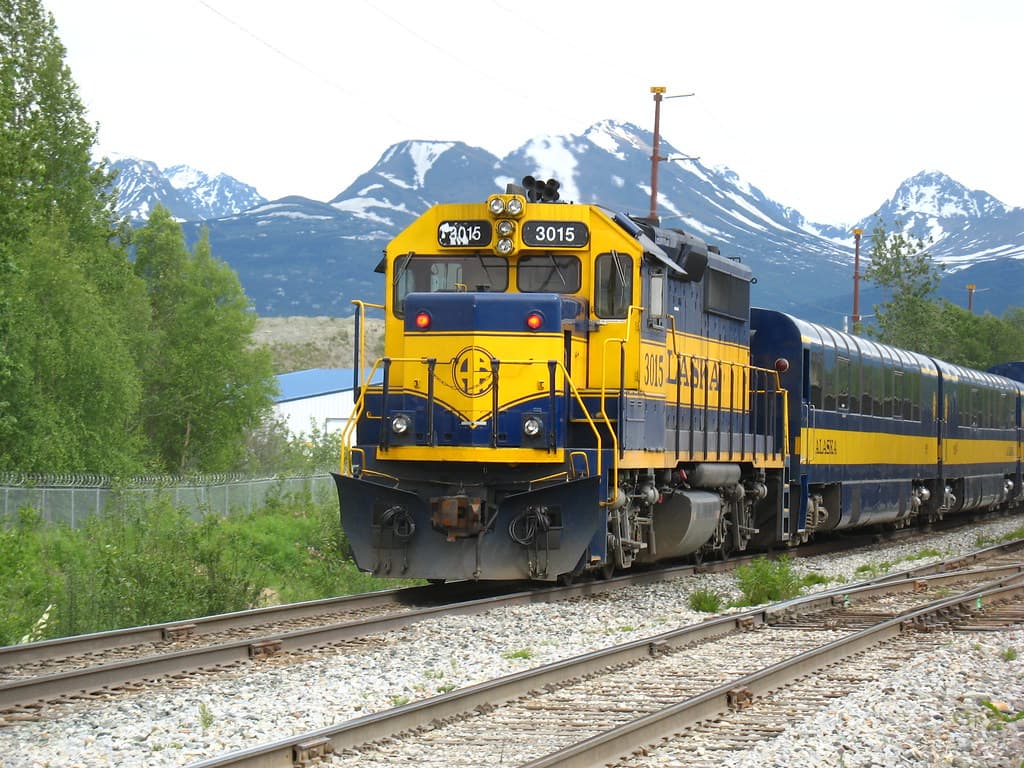
Denali Star in a curve
External Resources
Official resources
Heritage & history
Learn more
Frequently Asked Questions
How long is the Denali Star train ride?▾
When does the Denali Star run?▾
What is the difference between GoldStar and Adventure Class?▾
Can you see Denali from the train?▾
Does the train stop at Denali National Park?▾
How much does the Denali Star cost?▾
Do I need a reservation?▾
Help improve this page
Spotted something out of date or incorrect? Let our community know.
Related on Spotatrain
More National Park Journeys

Coast Starlight
Seattle to Los Angeles in 35 hours: Cascade summits, Mount Shasta and 104 miles of Pacific shoreline

TranzAlpine
Coast to coast across the Southern Alps in a single morning

Grand Canyon Railway
A 65-mile heritage train journey from Williams, Arizona to the South Rim of the Grand Canyon
Ffestiniog Railway
The world's oldest narrow gauge railway, from harbour to slate mountain
More Journeys Worldwide
California Zephyr
Chicago to San Francisco across the Rockies and Sierra Nevada
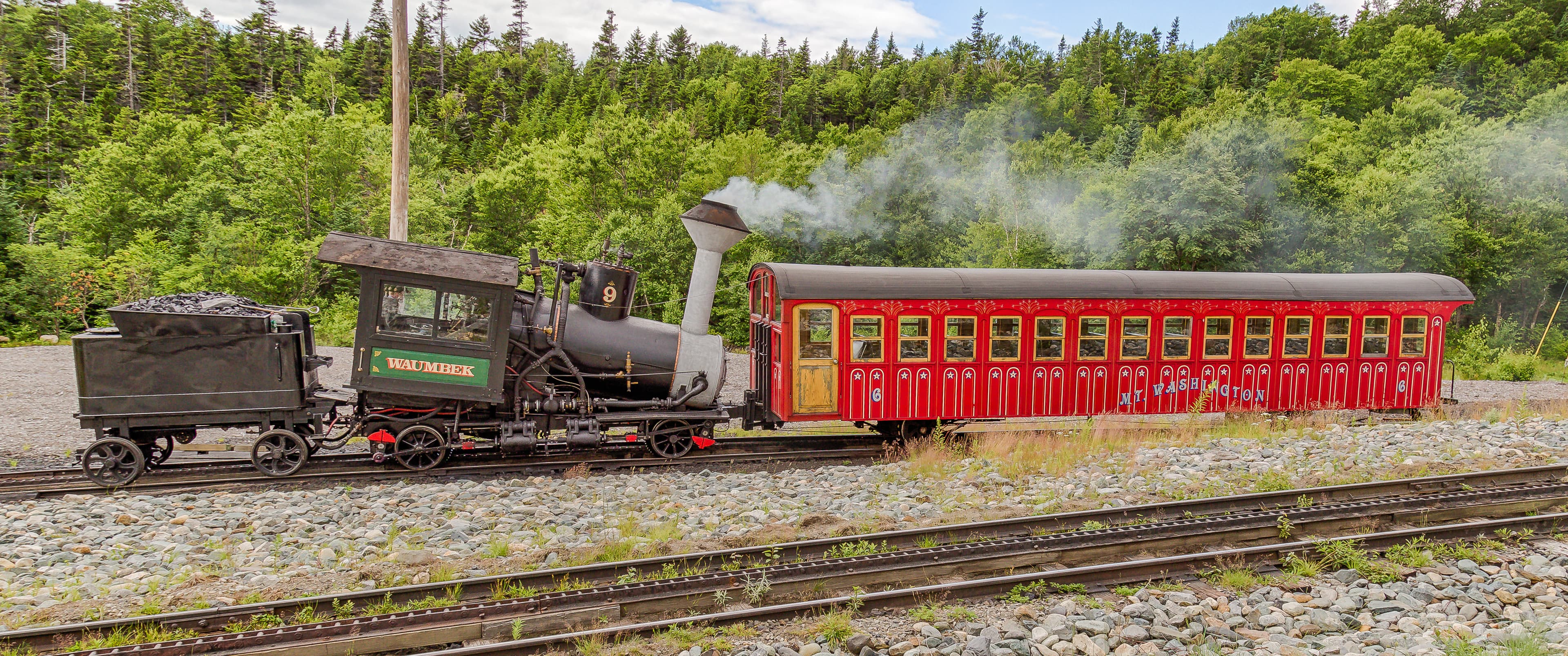
Mount Washington Cog Railway
World's first mountain-climbing cog railway — 1869, 37.41% grade, climbs to 6,288 ft
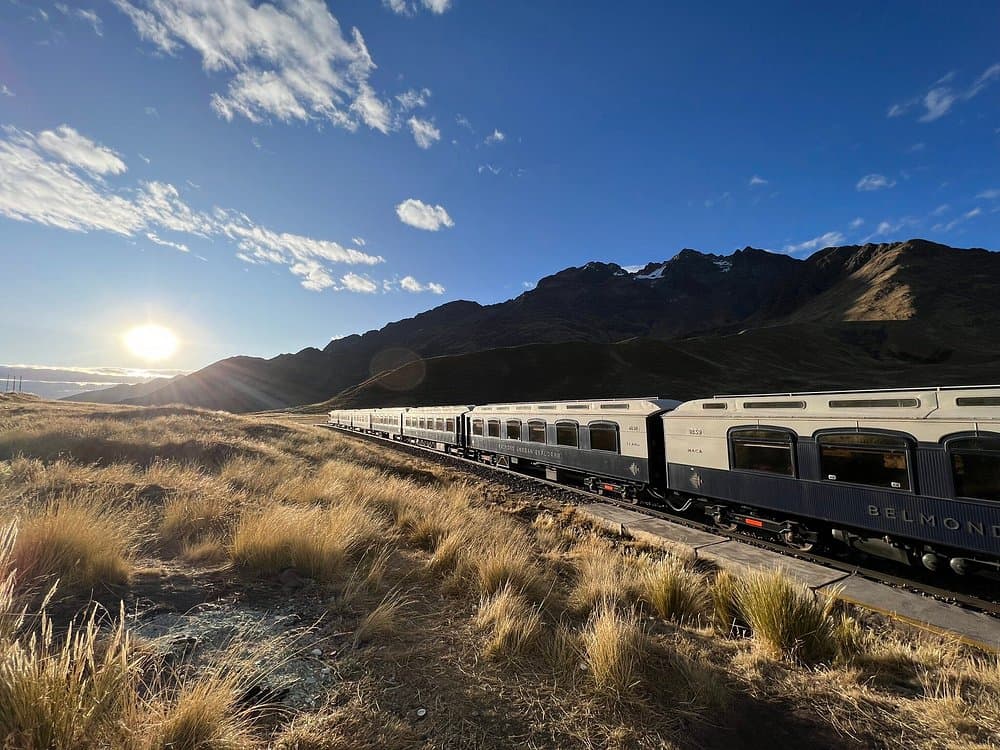
Belmond Andean Explorer
South America's first luxury sleeper train, across the roof of Peru

Tren a las Nubes
Argentina's rack-free climb to 4,220 m above the Puna
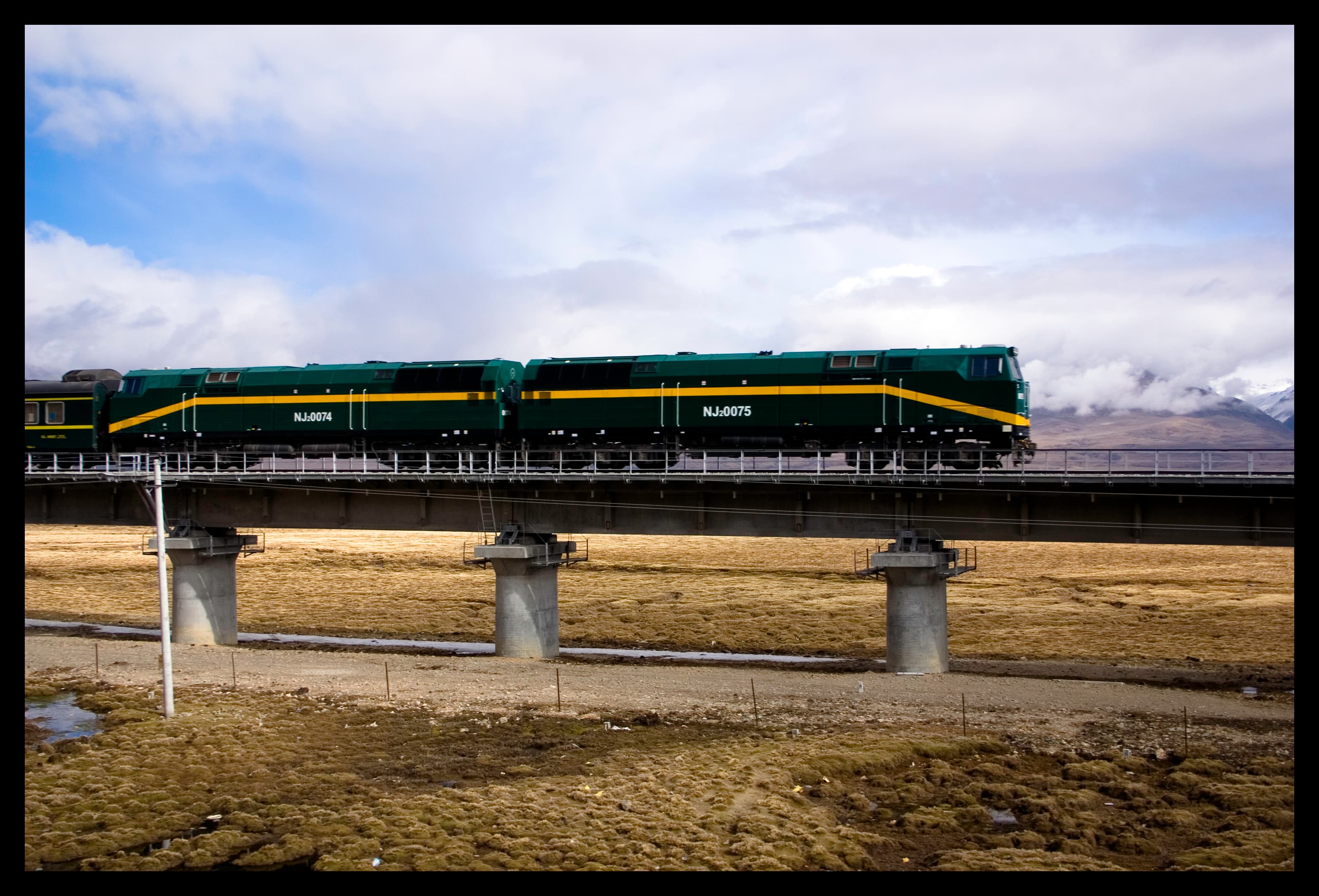
Qinghai-Tibet Railway
The world's highest railway, across the roof of the world to Lhasa

Bergensbanen
Oslo to Bergen across the roof of Norway
Spots Along the Route
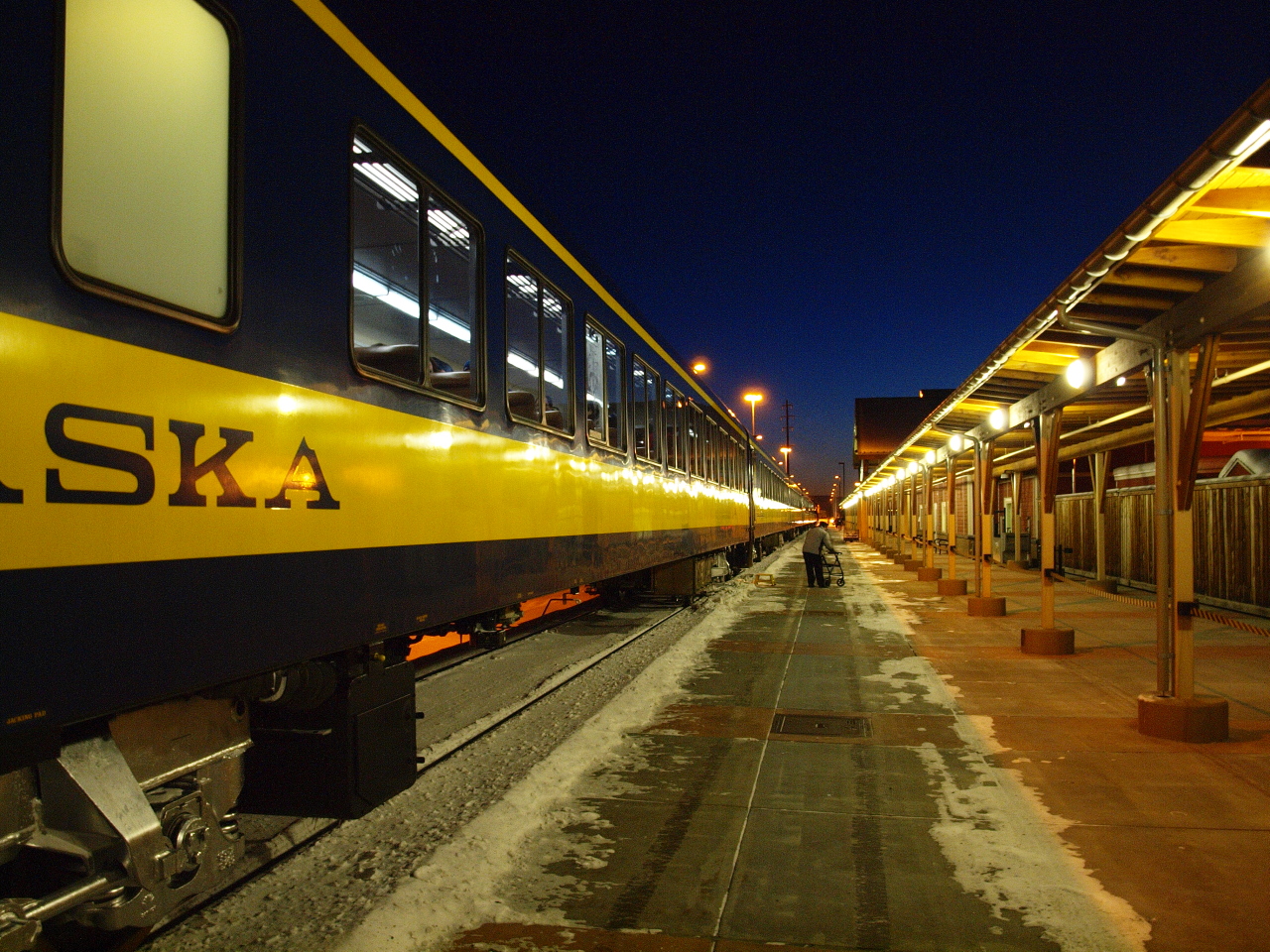
Fairbanks (ARR Yard)
Northern terminus of the Alaska Railroad at milepost 470. The Fairbanks yard includes a roundhouse, car shop, and freight operations serving the Eielson AFB and Fort Wainwright branches. Adjacent $22.5M depot opened in 2005.
Anchorage (Ship Creek)
Watch Alaska Railroad trains cross Ship Creek at milepost 114.3 in downtown Anchorage, the exact spot where a 1915 tent city gave birth to Alaska's largest city.
Explore around this route
3 places on Spotatrain within 25 km of this route — 2 spots and 1 event.