
Updated
Distance
2,216 km
Duration
35 hours (2 days, 1 night)
Max altitude
1,479 m
Gauge
1435mm
Amtrak's daily 1,377-mile (2,216 km) Superliner train from Seattle to Los Angeles, over the Cascades at Willamette Pass, past Mount Shasta and along 104 miles of Pacific coast south of San Luis Obispo.
Watch this route live
11 railway webcams cover this route — see what is running right now.
- Watch live
Chehalis, Washington — BNSF Seattle Subdivision
Halfway between Portland and Seattle, 45 to 55 movements a day
- Watch live
Chehalis, Washington — Historical Museum PTZ
PTZ view of the BNSF Seattle Subdivision from the Lewis County Historical Museum
- Watch live
Dunsmuir, California — Depot
The depot camera, running through the building works
- Watch live
Gervais, Oregon — UP Brooklyn Subdivision
Union Pacific's Willamette Valley main, with the Coast Starlight passing
- Watch live
Kelso, Washington — Amtrak Depot
BNSF Seattle Subdivision at the Kelso Multimodal Transportation Center (Amtrak Cascades/Coast Starlight)
- Watch live
Olympia-Lacey, Washington — BNSF Seattle Subdivision
A volunteer-staffed Amtrak station on the Seattle–Portland corridor
- Watch live
Redding, California — PTZ Camera
PTZ view of Union Pacific's Valley Subdivision hosted by the Redding Model Railroad Club
- Watch live
San Luis Obispo
The Coast Line’s mountain railroading at San Luis Obispo
- Watch live
Santa Clara, California — Santa Clara Tower
The 1926 Harriman tower still watches the Peninsula–Mulford junction
- Watch live
Vader, Washington — Tracks Bar & Grill
BNSF Seattle Subdivision grade crossing beside The Tracks Bar & Grill in Vader
- Watch live
Winlock, Washington — BNSF Seattle Subdivision
Fifty to sixty freights a day on the Seattle–Portland main
About This Journey
The Coast Starlight leaves Seattle's King Street Station (opened 1906, with its twelve-storey clock tower) every morning as train 11 and reaches Los Angeles Union Station (1939) the following evening, 1,377 miles (2,216 km) and about 35 hours later; train 14 makes the mirror-image trip northbound. Through Washington it runs on BNSF's Seattle Subdivision and, since November 18, 2021, the Point Defiance Bypass between Tacoma Dome and DuPont, then crosses the Columbia River into Portland Union Station (1896). Beyond Eugene the train turns onto Union Pacific's Cascade Subdivision, the former Southern Pacific Natron Cutoff completed on August 7, 1926, and climbs through Salt Creek canyon and 22 tunnels and snowsheds to Cascade Summit at 4,852 ft (1,479 m), the highest point of the journey, before dropping past Odell Lake to Chemult and Klamath Falls.
South of Klamath Falls the line skirts Upper Klamath Lake, crosses into California and circles 14,179 ft (4,322 m) Mount Shasta, then follows the upper Sacramento River canyon down through the Cantara Loop to Dunsmuir. Night hours cover Redding, Chico and Sacramento; by breakfast southbound passengers are in the Bay Area, calling at Martinez, Emeryville, Oakland Jack London Square and San Jose Diridon. The Salinas Valley leads to Paso Robles and the Cuesta Grade, where the railway drops 1,056 ft (322 m) in under 10 miles (16 km) through six tunnels (the longest 3,610 ft / 1,100 m) and the famous Horseshoe Curve, crossing the 930 ft (283 m) long, 80 ft (24 m) high Stenner Creek trestle of 1894 into San Luis Obispo.
The finale is the reason most people book: from Surf and Vandenberg Space Force Base to Santa Barbara the track runs for 104 miles (167 km) along the Pacific, much of it on a coast with no public road, over the 811 ft (247 m) Gaviota trestle of 1900. Ventura, Oxnard, the Simi Valley and the San Fernando Valley bring the train into Los Angeles at 9:11 pm. The consist is bi-level Superliner throughout: Coach, Roomette, Bedroom and Family Bedroom sleeping cars, a traditional dining car, a Cafe and the Sightseer Lounge with its wraparound windows, hauled since 2022 by 4,200 hp Siemens ALC-42 Charger diesels.
Why This Journey Is Iconic
No other North American train strings together three such different landscapes in one ticket: the volcanic Cascade Range at nearly 5,000 ft, Mount Shasta's 14,179 ft cone rising over the Sacramento River canyon, and then an unbroken 104-mile stretch of Pacific coastline south of San Luis Obispo that cannot be seen from any highway because Vandenberg Space Force Base keeps the shore closed to the public. The Gaviota trestle, 811 ft long and 80 ft above the creek mouth, is one of the most photographed spots on the entire Amtrak network.
The name itself carries Southern Pacific's streamliner heritage. Amtrak combined the Coast Daylight, the red-and-orange Los Angeles-San Francisco train inaugurated on March 21, 1937, with the Starlight to name the through service in 1971, and the Coast Daylight branding was finally dropped on May 19, 1974. Between 2008 and 2018 the train also carried the Pacific Parlour Cars, rebuilt 1956 Santa Fe Hi-Level lounges reserved for sleeping-car passengers; their retirement on February 4, 2018 prompted a public petition, a measure of how strongly riders identify with this train.
It is also a train that ordinary travellers actually use: 359,432 passengers rode it in fiscal 2024, up 6.3 percent, making it one of Amtrak's busiest long-distance routes, and its daily schedule means the coast is seen in daylight in both directions for most of the year.
What to Expect
Every car is a bi-level Superliner. Coach seats are wide, recline deeply and have leg rests; a Coach ticket also gives full access to the Sightseer Lounge, whose upper level is glassed from waist height to the roof and is the best place on the train for photography. Sleeping cars offer Roomettes (two facing seats that convert to bunks), Bedrooms with a private toilet and shower, Family Bedrooms spanning the width of the car, and Accessible Bedrooms; a car attendant makes up the beds and brings meals to the room on request.
Sleeping-car fares include all meals in the traditional dining car, served on real plates with a fixed menu that changes by meal; Coach passengers can buy from the Cafe on the lower level of the lounge or reserve a limited number of dining-car seats at a set price. Southbound, lunch is served leaving Washington, dinner in the Cascades, breakfast in the Bay Area and lunch along the Salinas Valley; the coast is reached after San Luis Obispo at about 3:37 pm and Santa Barbara at 6:12 pm, so in winter the second half of the shoreline passes after dark. Northbound train 14 sees the same coast between about 12:21 pm and 3:05 pm, which is why many photographers prefer that direction.
The train is popular and the lounge fills for the coastal run, so arrive there before San Luis Obispo (southbound) or Santa Barbara (northbound). Checked baggage is available at the larger stations, bicycles can be carried, and there is Wi-Fi of variable quality; expect the Cascade section to have no mobile signal for long stretches.
History
The Coast Starlight runs on rails laid by the Southern Pacific in two great construction efforts. The Coast Line south of the Bay reached Santa Margarita in April 1889 and then took five more years of hand drilling and dynamite to descend Cuesta Grade, blasting 1.1 million cubic yards of rock for six tunnels; the first train reached San Luis Obispo at 3:25 pm on May 5, 1894, and the Gaviota trestle of 1900 closed the coastal gap. The Cascade crossing came a generation later: the Natron Cutoff between Oakridge and Kirk was driven through 19 tunnels between Oakridge and Cascade Summit and finished on August 7, 1926, when general manager J. Dyer drove a golden spike east of Oakridge. Freight began on September 1, 1926, and passenger trains followed in spring 1927, once the roadbed had settled.
Southern Pacific's celebrated streamliners then owned these tracks: the Coast Daylight from March 21, 1937, the Shasta Daylight from 1949 to 1966, which covered the 713 miles between San Francisco and Portland in 15 hours 30 minutes, and the overnight Cascade. When Amtrak took over intercity service on May 1, 1971, it ran an initially unnamed Seattle-Los Angeles train over the same corridor, called it the Coast Daylight/Coast Starlight from November 14, 1971, and simplified the name to Coast Starlight on May 19, 1974.
A 2008 relaunch brought refurbished Pacific Parlour Cars and a 15 percent jump in ridership, from 353,657 to 406,398 passengers in a year. The Parlour Cars were withdrawn on February 4, 2018, the Point Defiance Bypass opened to the train on November 18, 2021 after the 2017 derailment inquiry, and Siemens ALC-42 Charger locomotives replaced the GE P42 diesels from 2022, the third Amtrak long-distance route to receive them.
Engineering Highlights
Cascade Subdivision (Oregon): the 1926 Natron Cutoff climbs from the Willamette Valley up Salt Creek canyon on steep grades to Cascade Summit at 4,852 ft (1,479 m). Between Oakridge and the summit alone there are 19 tunnels, and the crossing as a whole counts 22 tunnels plus concrete and timber snowsheds that protect the line from avalanches. The route was chosen because it is 25 miles shorter than Southern Pacific's older Siskiyou Line and much easier to work.
Cantara Loop (California): north of Dunsmuir the railway loses height into the upper Sacramento River canyon on a tight horseshoe that crosses the river; the loop entered the environmental record on July 14, 1991, when a derailed tank car spilled metam sodium into the river.
Cuesta Grade (California): from the Santa Margarita summit the Coast Line drops 1,056 ft (322 m) in less than 10 miles (16 km) using two horseshoe curves and six tunnels, the longest 3,610 ft (1,100 m) at Tunnel 6 under Cuesta Pass. The descent ends on the Stenner Creek trestle, 930 ft (283 m) long and 80 ft (24 m) high, fabricated in Pittsburgh in 1894 and shipped west on more than 50 freight cars; it remains the longest bridge on the Coast Line.
Gaviota trestle (California): an 811 ft (247 m) steel viaduct 80 ft (24 m) above Gaviota Creek, erected by Southern Pacific in 1900 where the creek meets the Pacific, carries the train onto the cliff-top run to Santa Barbara.
Best Time to Travel
The coastal section south of San Luis Obispo is the deciding factor. Northbound train 14 crosses it between roughly 12:21 pm (Santa Barbara) and 3:05 pm (San Luis Obispo) all year, in flat midday light. Southbound train 11 leaves San Luis Obispo at 3:37 pm and reaches Santa Barbara at 6:12 pm, glorious in summer with the sun over the ocean, but from November to February the second half of the shoreline is run after sunset.
The Cascade crossing is scheduled for the evening southbound (Eugene 5:15 pm, Chemult 8:13 pm) and the morning northbound (Chemult 8:59 am, Eugene 12:29 pm), so summer gives the longest daylight over Willamette Pass in both directions. Snow on Mount Shasta and the Cascades lasts well into June. Late spring and early autumn combine long days, mild weather and lighter loads than July and August, when Roomettes sell out months ahead. Winter brings the risk of weather delays in Oregon but the emptiest lounge cars.
Practical Tips
Book sleeping cars as early as possible, up to 11 months ahead, because Amtrak's fares rise with demand and Roomettes on summer dates are the first to go. For the ocean, sit on the left side travelling north (train 14) and the right side travelling south (train 11); for Mount Shasta and Upper Klamath Lake the mountain is on the east side. The Sightseer Lounge has seats facing both ways and is open to every passenger, so move there early for the coast and for the Cascade climb.
Bring layers and a power bank: Coach seats have outlets, but the lounge has fewer, and mobile coverage vanishes across the Cascades and along the Vandenberg coast. Sleeping-car passengers can take a shower on the lower level and should tell the attendant early if they want dinner in the room. The train reverses direction nowhere, so a seat facing forward stays forward.
Two checked bags and two carry-ons are allowed; checked baggage is handled at Seattle, Portland, Sacramento, Emeryville, Oakland, San Jose, San Luis Obispo, Santa Barbara and Los Angeles among others. Photographers should keep the camera ready between Surf and Santa Barbara, at the Gaviota trestle, on the Horseshoe Curve above San Luis Obispo and on the Cantara Loop, and use the lounge's upper-level windows rather than the tinted Coach glass.
Traveling with Pets
Depends on the service
Amtrak admits small dogs and cats (20 lb / 9 kg maximum, pet and carrier combined, carrier no larger than 19 x 14 x 10.5 in) in Coach class only, never in private rooms or food-service cars, and only on reservations of seven hours total travel time or less. The full Seattle-Los Angeles run takes about 35 hours, so a pet can ride only a short segment of the Coast Starlight (for example Seattle-Portland or Santa Barbara-Los Angeles), never the whole journey. One pet per customer, a pet fee is added at booking, and a Pet Release and Indemnification Agreement is signed at check-in. Service animals are welcome on all Amtrak services.
Verified — operator's pet policy
Route Stages
Getting to Seattle
By Air
Seattle-Tacoma International Airport (SEA) is about 14 miles (22 km) south of King Street Station; Sound Transit Link light rail runs from the airport to the International District/Chinatown station, a two-minute walk from the Amtrak platforms, in about 40 minutes. Los Angeles International Airport (LAX) is about 20 miles (32 km) from Union Station; the LAX FlyAway bus runs directly to Union Station, and the Metro K Line/C Line combination reaches the station via Metro rail. Hollywood Burbank Airport (BUR) has its own Amtrak stop, Burbank Airport-South, served by the southbound Coast Starlight.
By Train
King Street Station is the Seattle terminus of Amtrak Cascades (Vancouver BC-Portland-Eugene) and the Empire Builder from Chicago, and of Sounder commuter trains; Link light rail stops at the adjacent International District/Chinatown station. Los Angeles Union Station is the hub of Metrolink, Metro B/D subway and A/L light rail lines, Amtrak Pacific Surfliner trains to San Diego and the Southwest Chief and Sunset Limited long-distance routes. Intermediate connections include the Empire Builder at Portland, the California Zephyr at Sacramento, Davis, Martinez and Emeryville, and the San Joaquins at Martinez and Emeryville.
By Car
King Street Station is at 303 South Jackson Street, just south of downtown Seattle and east of the Pioneer Square exits from Interstate 5 and State Route 99. Los Angeles Union Station is at 800 North Alameda Street, immediately beside the US-101 freeway at the Alameda Street exit and a short walk from Olvera Street and Chinatown.
Parking
Seattle: there is no dedicated Amtrak lot at King Street Station; paid garages and surface lots around Pioneer Square and the stadiums offer daily and overnight parking, bookable in advance. Los Angeles Union Station: the East (Gateway Plaza) garage is the long-term option at $2 per 15 minutes with an $8 maximum per 24 hours and a 30-day limit; the West surface lots charge $2 per 15 minutes to a $16 daily maximum with no overnight parking (rates published February 2026, call 213-620-0115 to confirm).
Where to Stay
Find places to stay near Los Angeles.
This lodging map is provided by Stay22, a third-party service that may set cookies. It loads only with your consent.
Accommodation results are provided by Stay22; we may earn a commission on bookings made through this map.
Videos
Amtrak Coast Starlight Full Trip Seattle to Los Angeles
Get Away on Amtrak's Coast Starlight Train
Full Tour of Amtrak’s Coast Starlight from Los Angeles to Seattle
36 Hours from Los Angeles to Seattle on the Coast Starlight Train
Amtrak Coast Starlight: Crazy ride but never boring
Photos
Coast Starlight Journey
Coast Starlight Journey
Coast Starlight Journey
Coast Starlight Journey
Starlight Rounds the Bend
The Coast Starlight Roars Across the Santa Ynez River
SP 7352 and AMTK 392 with Train 14, the Coast Starlight at Heather, OR on July 29, 1987
Sun Setting Behind the Stenner Creek Road Trestle
Observation Car
Coast Starlight in the Cuesta Hills above San Luis Obispo, 1985 -- 4 Photos
Coast Starlight in the Cuesta Hills above San Luis Obispo, 1985 -- 4 Photos
Amtrak Coast Starlight in San Luis Obispo County
Coast Starlight Klamath Falls
Oakland, CA Amtrak Station - June 2023
Northbound Coast Starlight at Oakland (2), May 2023
Klamath Falls Station
Coast Starlight crossing the Santa Ynez River, July 2019
Southbound Coast Starlight at Oakland, January 2018
Coast Starlight passing Alviso Marina County Park, June 2017
Coast Starlight passing Alviso Marina, December 2013
Coast Starlight
Amtrak Superliner II Sightseer Lounge Car - Coast Starlight
Amtrak Superliner Coach Car - Coast Starlight
Coast Starlight parlour
Northbound Coast starlight Crossing the Columbia River - panoramio
Amtrak Coast Starlight north of Paso Robles Ca - panoramio
The Southbound Coast Starlight at horseshoe curve
External Resources
Official resources
Heritage & history
Frequently Asked Questions
How long does the Coast Starlight take from Seattle to Los Angeles?▾
Which side of the train should I sit on for the ocean?▾
Does the Coast Starlight run along the coast in daylight?▾
Are meals included?▾
Can I take my dog on the Coast Starlight?▾
What is the highest point on the route?▾
How far ahead should I book a Roomette?▾
Is there Wi-Fi and phone signal on board?▾
Help improve this page
Spotted something out of date or incorrect? Let our community know.
Related on Spotatrain
Journeys Near This Route
More Journeys Worldwide
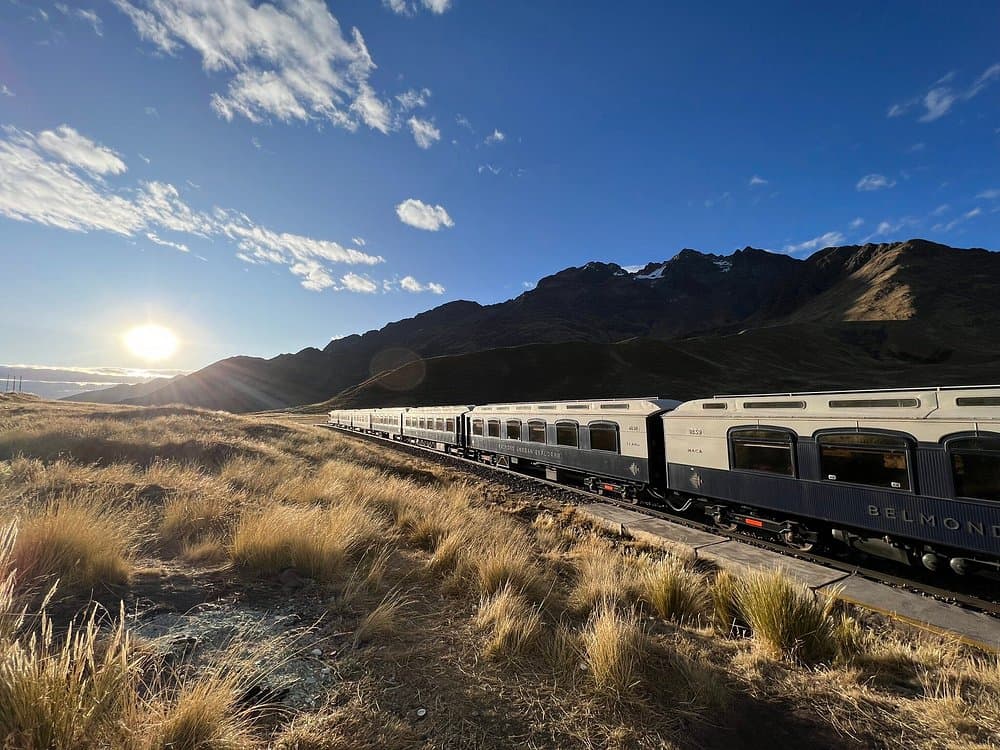
Belmond Andean Explorer
South America's first luxury sleeper train, across the roof of Peru
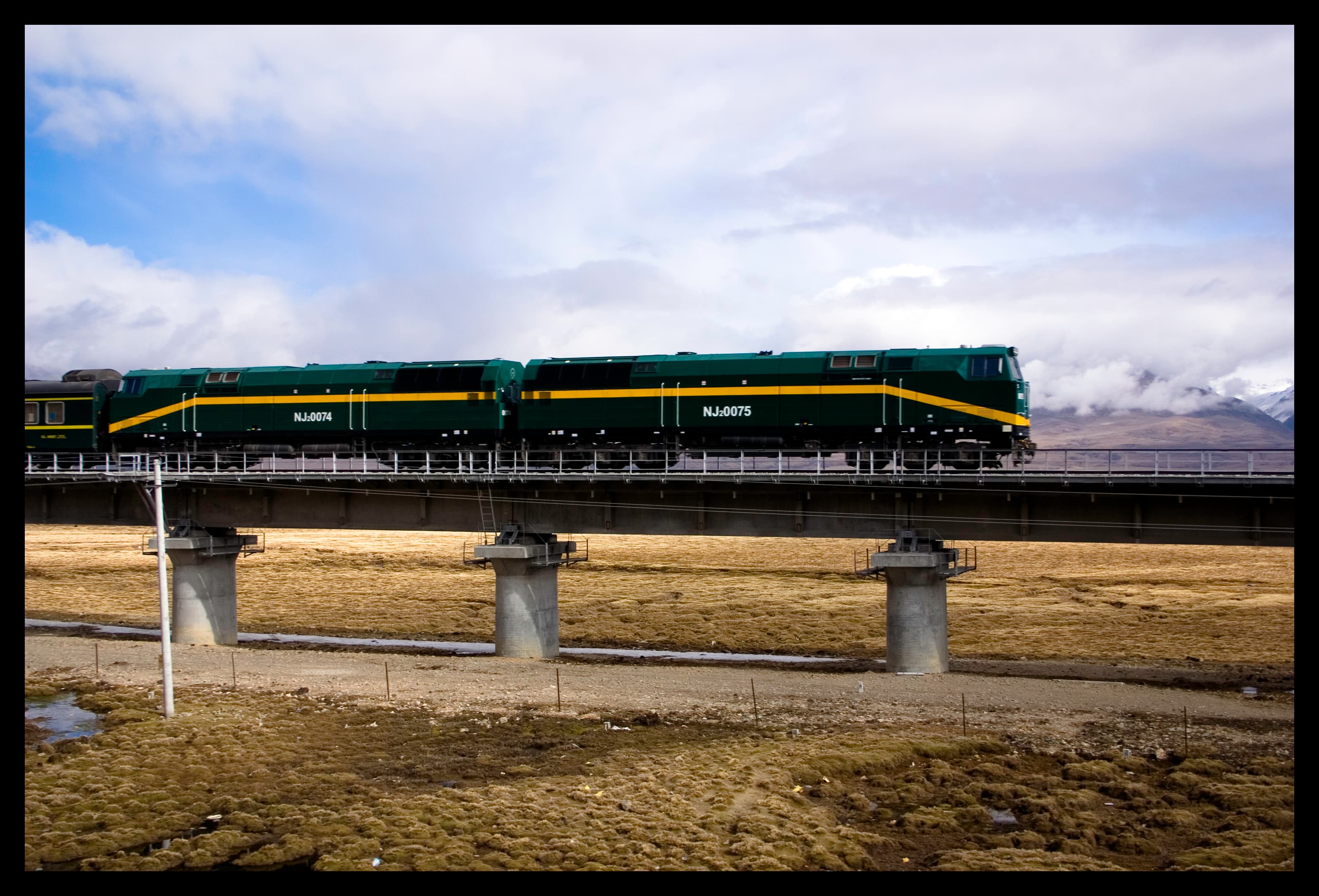

Qinghai-Tibet Railway
The world's highest railway, across the roof of the world to Lhasa

TranzAlpine
Coast to coast across the Southern Alps in a single morning

Tren a las Nubes
Argentina's rack-free climb to 4,220 m above the Puna
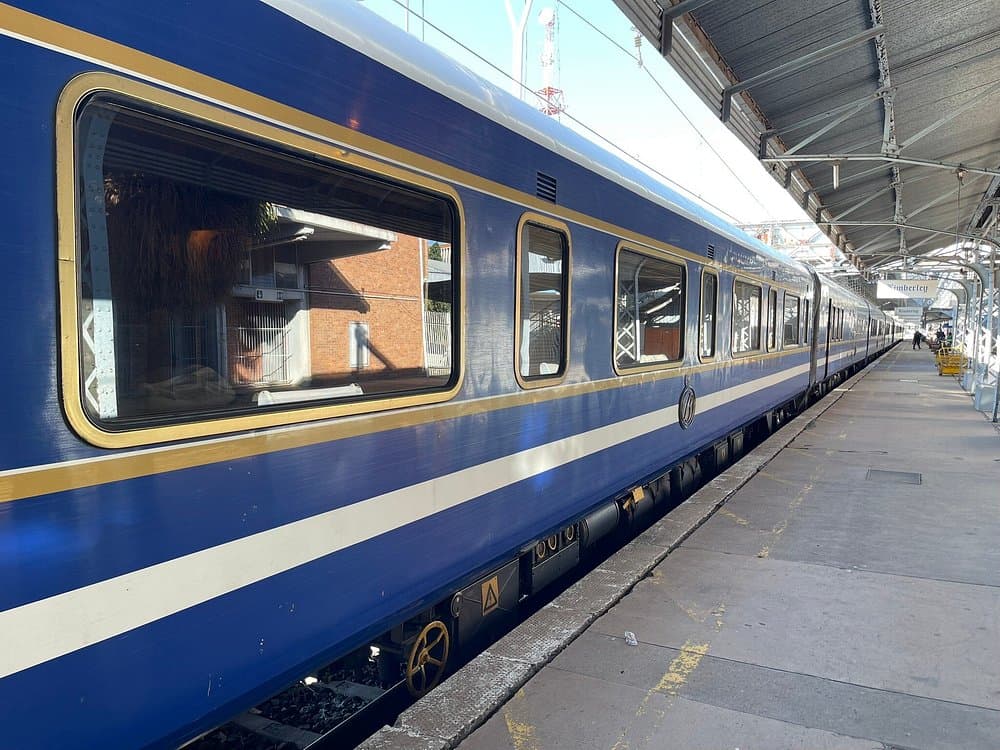
Blue Train
Pretoria to Cape Town in two nights, with a butler in every corridor

Bergensbanen
Oslo to Bergen across the roof of Norway
Spots Along the Route
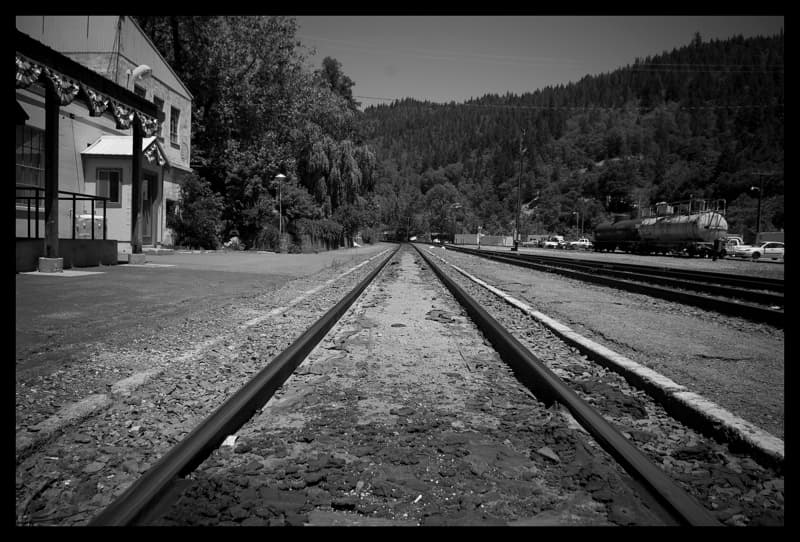
Dunsmuir (Downtown)
Historic UP crew change point on the Shasta Route in Northern California, where the Valley and Black Butte subdivisions meet. About 18 trains daily, with the town's downtown offering street-level proximity to the main line.
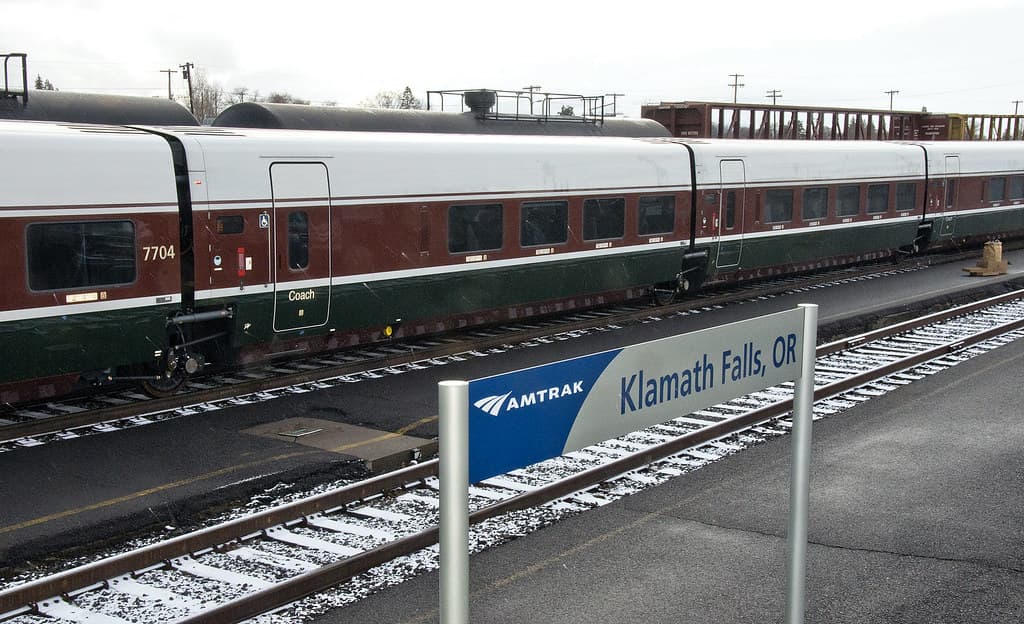
Klamath Falls (UP & Amtrak)
The Klamath Falls station and adjacent Union Pacific yard sit at 4,099 feet elevation in Oregon's high desert, where the UP Cascade Subdivision meets the BNSF Oregon Trunk Subdivision. Klamath Falls is a crew change and division point for Union Pacific, generating approximately 20 train movements daily from UP freight plus BNSF operations via trackage rights. The 1916 Southern Pacific depot at 1600 Oak Avenue remains in service as the southernmost Amtrak stop in Oregon, served daily by the Coast Starlight (Trains 11 and 14).
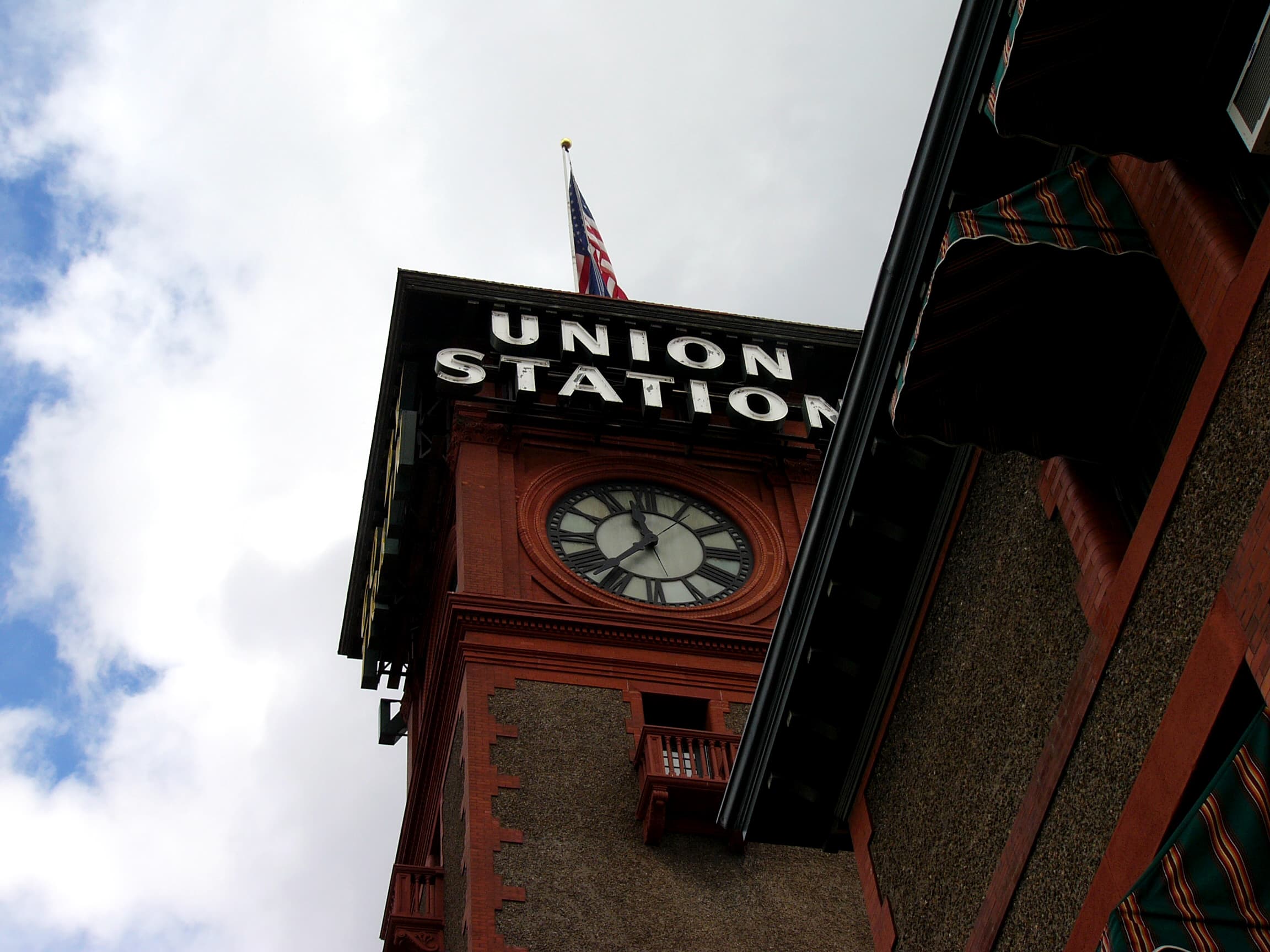
Portland (Union Station)
Portland Union Station, opened in 1896, is Oregon's oldest major passenger terminal. Its 150-foot Romanesque Revival clock tower with neon "Go By Train" signs is a Pacific Northwest icon. The station serves Amtrak Cascades, Coast Starlight, and Empire Builder routes alongside frequent Union Pacific and BNSF freight traffic.
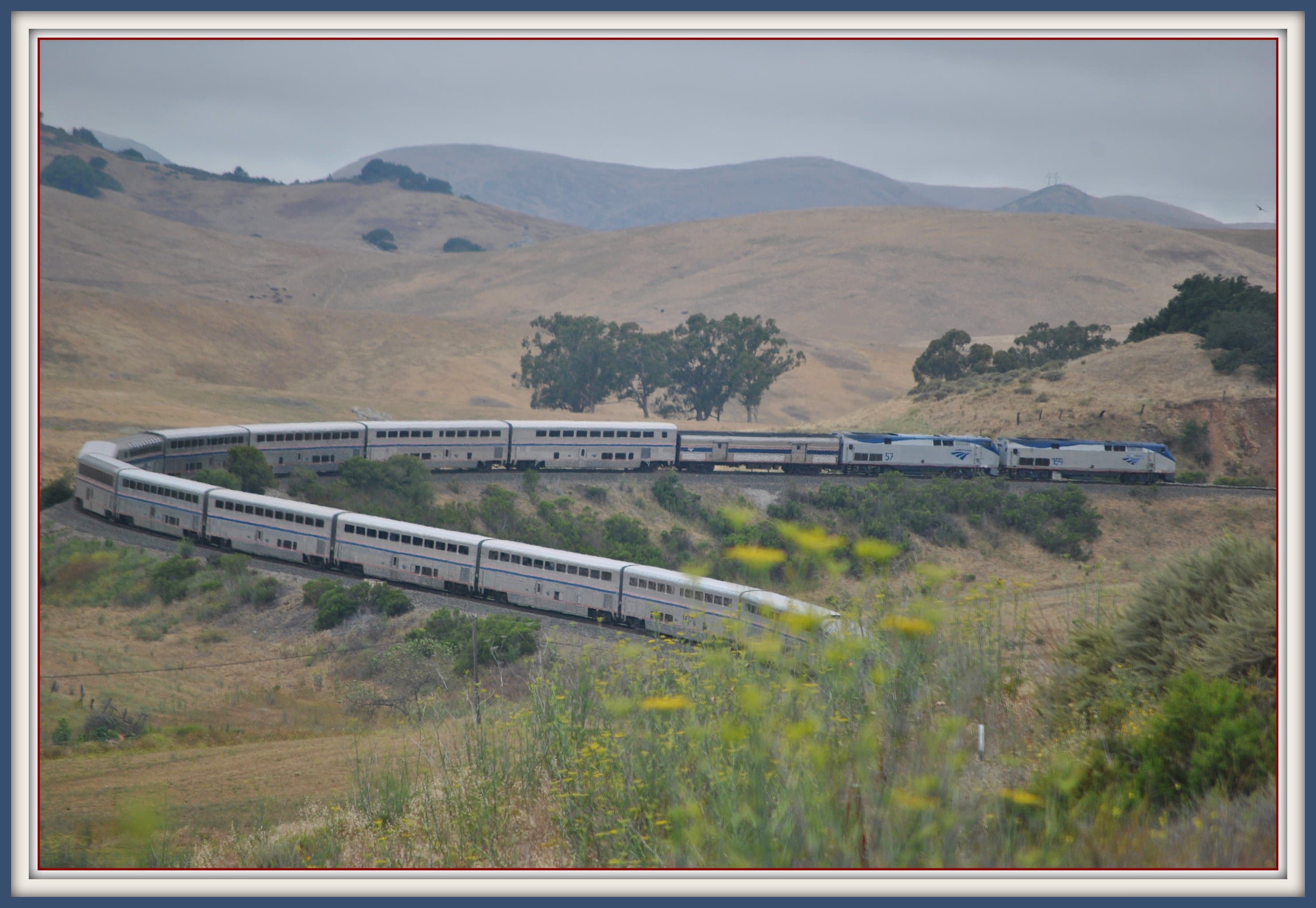
San Luis Obispo (Horseshoe Curve)
A dramatic horseshoe curve on UP's Coast Line where trains climb the steepest grade between LA and San Francisco — 2.2% through tunnels and tight curves in the Santa Lucia Range.
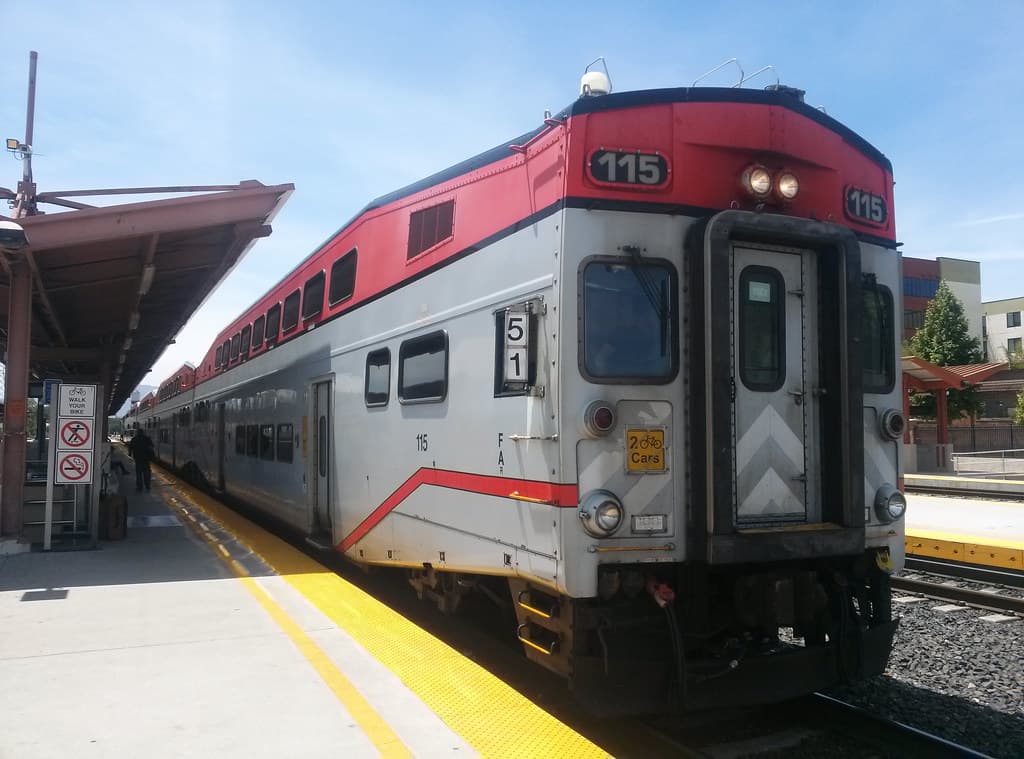
San José (Diridon Station)
San Jose Diridon Station is the central passenger rail hub for Silicon Valley, where Caltrain electric commuter trains, Amtrak Capitol Corridor, ACE commuter rail, the Coast Starlight, and VTA light rail all converge in a 1935 Italian Renaissance Revival depot listed on the National Register of Historic Places.
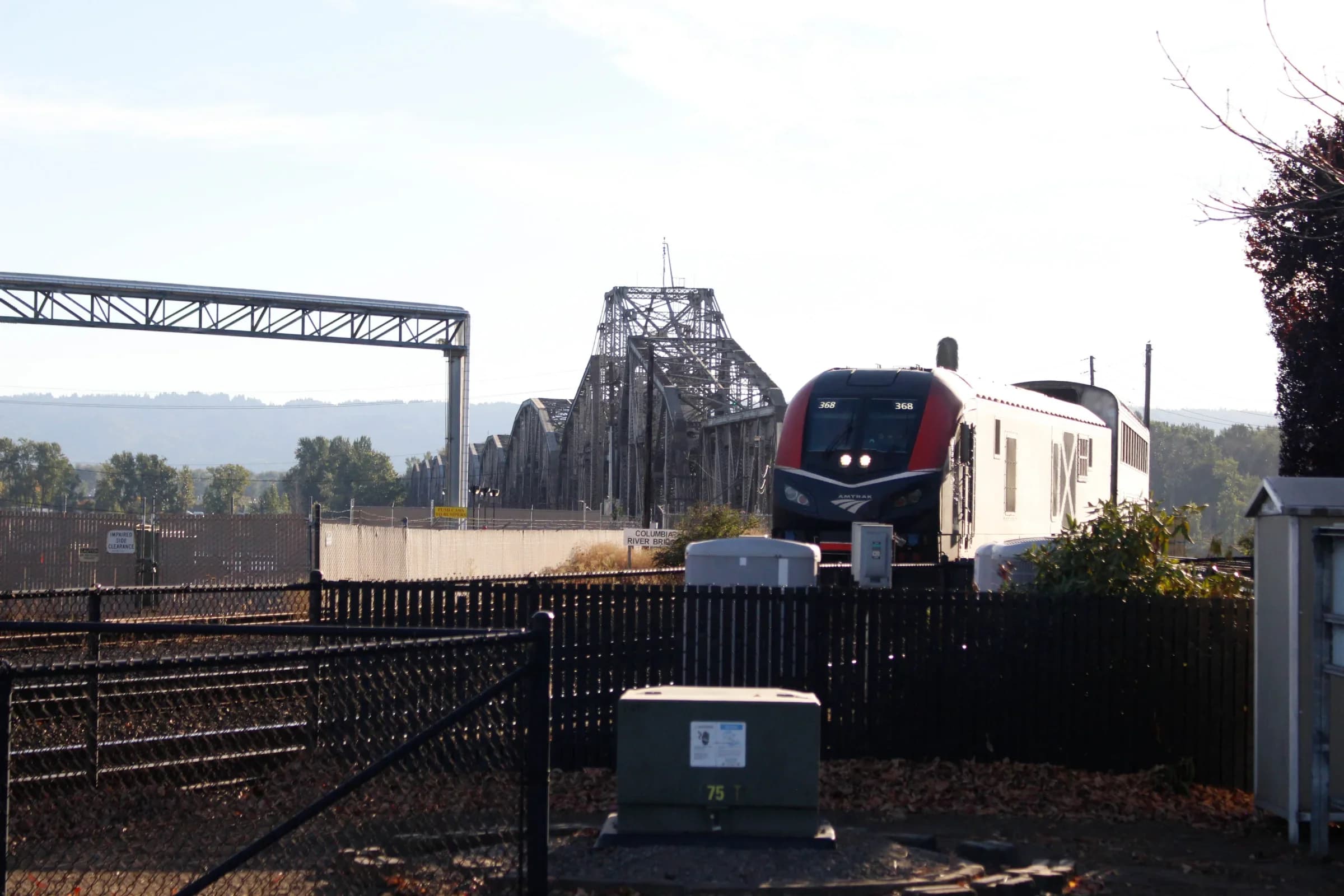
Vancouver (Columbia R. Crossing)
BNSF Railway Bridge 9.6, the first railroad bridge across the lower Columbia River, carries BNSF, Union Pacific, and Amtrak trains between Portland and Vancouver, WA. The adjacent Amtrak station — set inside a wye of two BNSF subdivisions — ranks among the Pacific Northwest's finest railfan perches.
Related Experiences & Mega-Projects
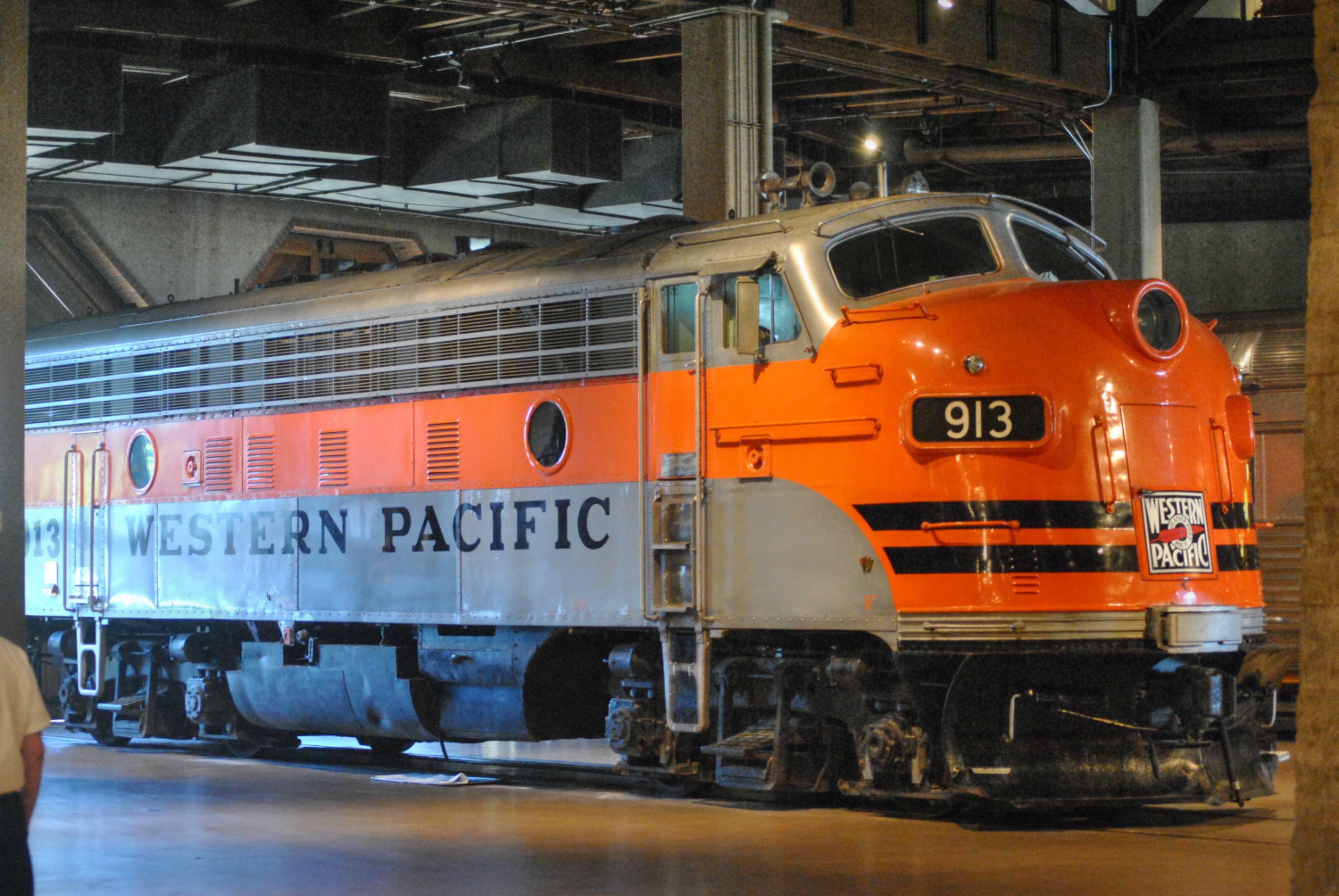
California State Railroad Museum
A world-class railroad museum in Old Sacramento featuring historic locomotives, rail cars, and immersive exhibits that bring California’s railroading past to life.

Seattle Center Monorail
The world's first full-scale monorail, gliding between downtown Seattle and the Space Needle since the 1962 World's Fair.
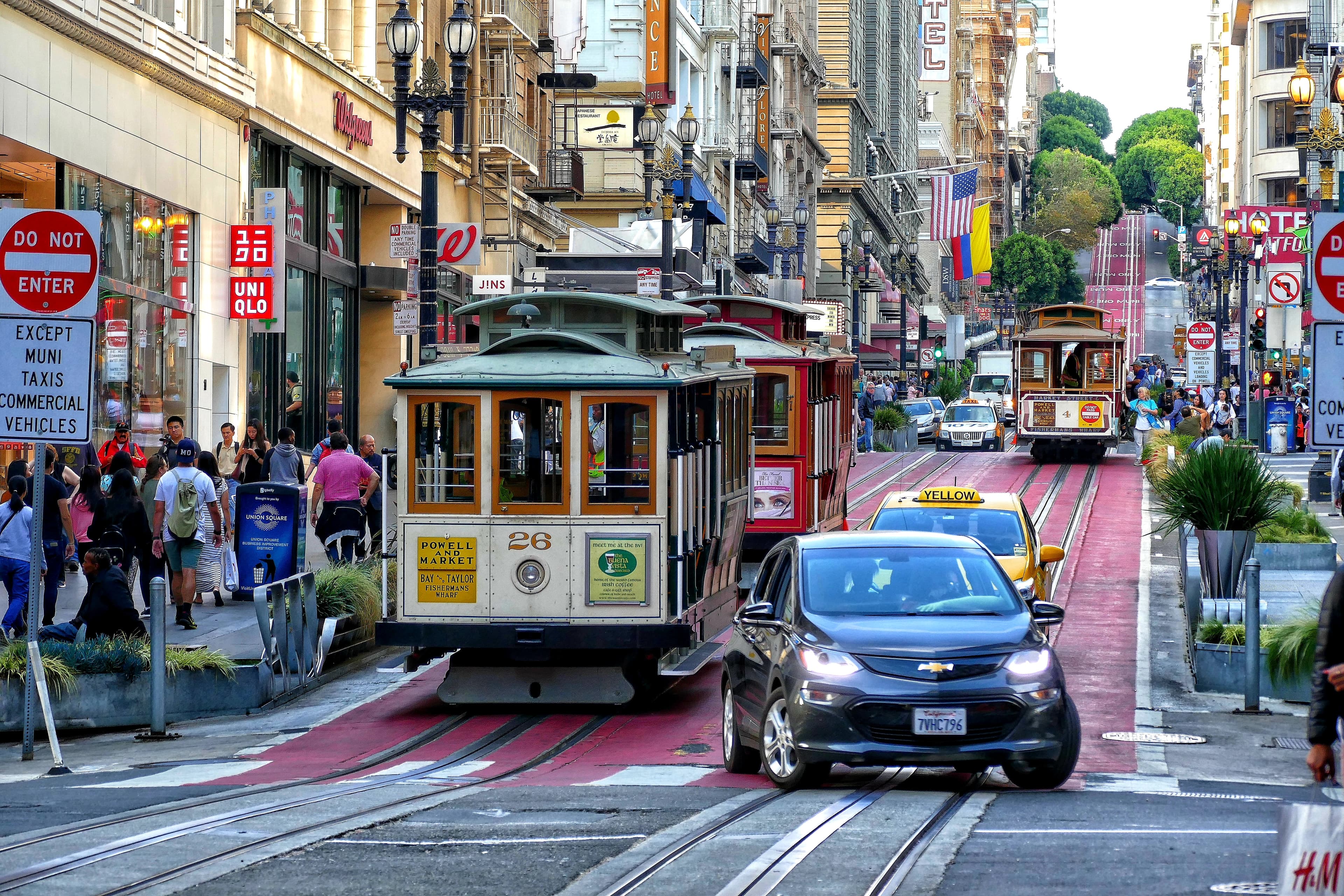
Powell–Hyde Cable Car Line
An iconic open-air cable car ride clanking up and down San Francisco’s steep hills, offering panoramic city and bay views on a historic moving landmark.
Explore around this route
38 places on Spotatrain within 25 km of this route — 15 spots, 4 experiences, 1 journey, 9 live cams and 9 events.
- Dunsmuir, California — Depot 1 m
- Dunsmuir (Downtown) 7 m
- Olympia-Lacey, Washington — BNSF Seattle Subdivision 11 m
- California Zephyr 19 m
- Kelso, Washington — Amtrak Depot 25 m
- Klamath Falls (UP & Amtrak) 30 m
- Portland (Union Station) 35 m
- San Luis Obispo (Horseshoe Curve) 47 m
- San José (Diridon Station) 114 m
- Vancouver (Columbia R. Crossing) 162 m
- California State Railroad Museum 334 m
- San Luis Obispo 338 m